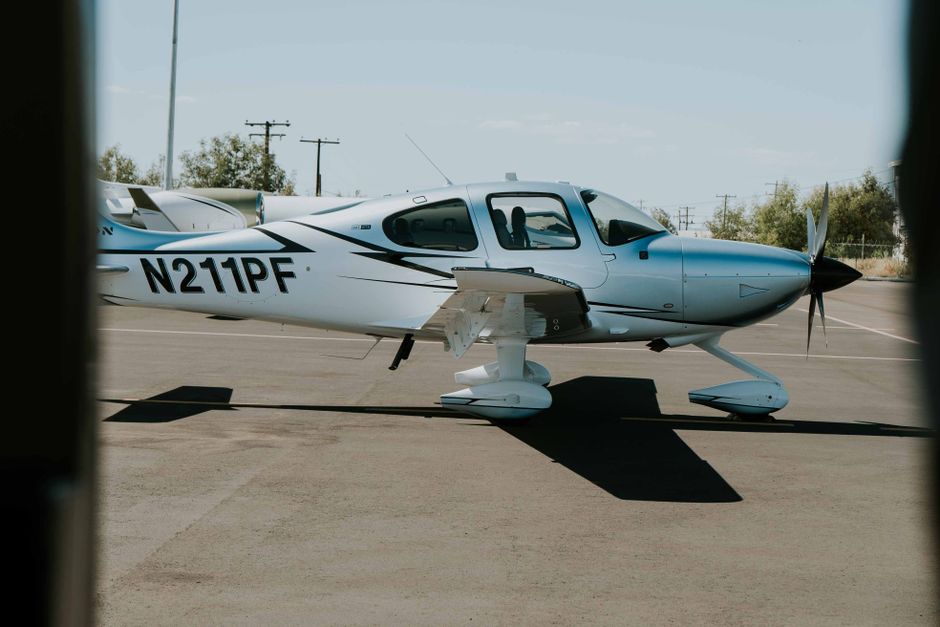
Picture two Cessna 182s parked nose-to-nose on the same ramp. Same year, same engine, same paint scheme. One owner just pumped 100LL out of the familiar blue hose. The other has a small placard by the filler cap that says the airplane is approved for unleaded fuel, a supplement tucked in the flight manual, and a logbook entry to match. From ten feet away you cannot tell them apart. The difference is a piece of paper, and that paper is starting to matter.
The lead is going away. The EPA issued a final endangerment finding in October 2023 covering lead emissions from piston-engine aircraft that burn leaded fuel, and the FAA-industry EAGLE initiative — short for Eliminate Aviation Gasoline Lead Emissions — is aiming for a safe, fleet-wide transition off leaded avgas by the end of 2030. California has already legislated a deadline of its own. So the question for owners is no longer whether this happens. It is what you sign up for when you do it early.
Switching your piston engine to unleaded avgas is, mechanically, one of the least invasive modifications you will ever make. Nothing gets removed. Nothing gets installed except placards. But the paperwork touches your engine warranty, your fuel system materials, occasionally your paint, and eventually the folder a buyer flips through during a pre-purchase inspection. Those are the parts worth understanding before you buy the STC.
This article walks through what the supplemental type certificate actually authorizes, where the real-world friction has shown up, and how any of it lands on your airplane's value when you sell.
Key Takeaways
An unleaded avgas STC is a paperwork approval, not a hardware change — it adds fuel grades to what your airplane and engine are legally allowed to burn, documented with filler-port placards, an airplane flight manual supplement, and a logbook entry. Two products dominate the conversation: GAMI's G100UL, approved under an approved-model-list STC that covers essentially the entire spark-ignition fleet, and Swift Fuels UL94, a 94-octane unleaded fuel meeting ASTM D7547 that fits lower-compression engines. Engine manufacturer warranty is the sharpest edge: Lycoming and Continental each publish their own approved-fuel documents, and a fuel approved by STC is not automatically a fuel approved by the engine builder. Paint compatibility became a real talking point after G100UL spills were reported to stain or soften some finishes, and prompt wipe-down is the standing advice. For resale, the STC transfers with the airframe and reads as a small plus, while sloppy documentation or fuel-stained paint reads as a minus.
| Item | 100LL (current standard) | GAMI G100UL | Swift Fuels UL94 |
| Octane | 100 motor octane, low lead | 100 octane class, no lead | 94 motor octane, no lead |
| Lead content | Up to about 2.1 grams per gallon | None | None |
| Specification path | ASTM D910 | FAA STC (engine and airframe) | ASTM D7547, plus STC |
| Fleet coverage | All certificated piston aircraft | AML STC covering essentially all spark-ignition types | Lower-compression engines; long AML but not the full fleet |
| Mixes with 100LL? | — | Yes, any proportion per GAMI | Yes, per Swift Fuels |
| Hardware changes | None | None — placards and AFM supplement | None — placards and AFM supplement |
| Availability | Nearly universal | Limited, expanding from California outward | Dozens of airports, mostly Midwest and West |
What the STC Actually Covers
Is it a modification if nothing gets installed?
Legally, yes. Your airplane's type certificate data sheet lists the fuel grades it is approved to burn, and your engine's data sheet does the same. Those lists are law. Pouring a fuel into the tanks that is not on either list, without an approval, makes the aircraft unairworthy — even if the engine runs perfectly.
An unleaded avgas STC amends that. It is issued against an approved model list, meaning one certificate covers hundreds of airframe or engine combinations rather than one serial number. GAMI holds two: an engine STC and an airframe STC, because the fuel touches both certificates. Buying the STC gets you a letter of authorization for your specific N-number, placards for each fuel filler port, and a flight manual supplement. Your mechanic installs the placards, makes a logbook entry, and the job is done in under an hour.
Think of it like adding a second approved tire size to your car. Nothing about the car changes. What changes is the list of things you are allowed to put on it, and the sticker in the door jamb that proves it.
Good to Know: This is not new territory. Petersen Aviation and EAA have been selling automotive-gasoline STCs for certificated airplanes since the 1980s using exactly the same mechanism — placards, flight manual supplement, logbook entry. Tens of thousands of aircraft have flown on an alternative-fuel STC for four decades.
Do I need a Form 337?
The required paperwork depends on the specific fuel approval. For GAMI's G100UL STCs, the installation instructions require FAA Form 337 for the airframe STC and for each engine STC, along with the required placards, flight manual supplement and maintenance-record entries. Other fuel approvals may use different documentation, so follow the paperwork supplied with the specific STC.
G100UL or UL94 — which one fits my engine?
The dividing line is compression ratio. Roughly two-thirds of the piston fleet by aircraft count runs engines that never needed 100 octane in the first place — the 150-horsepower O-320 in a Cherokee, the O-200 in a 150, the O-360 in a Skyhawk variant. Those engines are candidates for Swift's UL94, which is a true ASTM-spec unleaded fuel that has been in the field for years. The other third — turbocharged and high-compression engines, the IO-550s and TIO-540s that power the fastest single engine piston airplanes and most of the twin-engine piston fleet — burn the majority of the avgas sold and genuinely need a 100-octane-class fuel. That is the gap G100UL was built to close.
Check the approved model list before you spend anything. Both companies publish searchable lists by airframe and engine model. If your combination is not listed, no amount of enthusiasm makes the fuel legal.
Flying411 keeps aircraft listings, engine data and ownership guides in one place, so you can compare how a high-compression turbo single and a normally aspirated trainer will live with the same fuel transition.
Warranty: The Question Nobody Answers Casually
Does an FAA STC protect my engine warranty?
No. This is the single most misunderstood point in the whole discussion, so read it twice: an FAA approval and a manufacturer warranty are separate things issued by separate parties for separate reasons. The FAA says the fuel is safe enough to fly behind. The engine manufacturer decides, on its own terms, what it will pay to fix.
Lycoming publishes its approved fuel list in Service Instruction No. 1070, which is revised periodically and lists specified fuels by engine model. Continental publishes an equivalent service document. Before you buy an STC on a factory-new, factory-rebuilt or recently overhauled engine that still carries coverage, pull the current revision of the applicable document for your exact engine model and read what it says. If your fuel is not named there, ask the manufacturer or your authorized overhaul shop in writing.
Heads Up: Warranty exposure matters most on a new, rebuilt or recently overhauled engine that still has active coverage. Before using a fuel that is not listed in the engine manufacturer's approved-fuel documentation, check the applicable warranty terms and, if necessary, get guidance from the manufacturer or overhaul shop in writing.
What about insurance?
Insurers generally care whether the aircraft was airworthy and operated within its limitations. An STC properly installed and documented keeps you airworthy, which is the test that matters. What gets owners in trouble is the reverse case — burning an unleaded fuel without holding the STC, which puts the airplane outside its approved configuration and gives an adjuster a clean reason to ask hard questions. The paperwork costs a few hundred dollars. Do not skip it and then hope.
Paint, Seals and Fuel System Materials
Is it true that unleaded avgas damages paint?
Partly, and the nuance matters. As G100UL entered retail distribution in California, operators and at least one airframe manufacturer reported that spilled fuel left stains or softened certain painted finishes, particularly where fuel ran down a wing from an overfilled tank and sat. Cirrus advised its owners to hold off pending evaluation. GAMI has maintained that the fuel is compatible with aircraft materials and that spills should be wiped up promptly, which is the same advice that has always applied to 100LL — leaded avgas is not kind to paint either, it is just what everyone is used to.
The practical takeaway is behavioral. Do not top a warm tank to the brim on a hot ramp. Keep a rag in the baggage compartment. Wipe the wing after fueling. If you have a high-gloss custom paint job that cost more than a used Cherokee, follow the manufacturer's guidance and watch the discussion before you commit.
Pro Tip: Before your first unleaded fill, take dated photos of the wing upper surfaces, the fuel filler area and the belly. If a staining question ever comes up at resale, you want a before picture, not a memory.
What about fuel bladders, O-rings and tank sealant?
Elastomer and sealant compatibility is exactly the sort of thing the FAA examines during STC approval, and both fuel producers have run materials testing on the rubbers, sealants and coatings found in certificated fuel systems. In service, the reports that matter are the quiet ones — no widespread pattern of bladder failures or sealant breakdown has emerged from the fleet burning UL94, which has been in distribution the longest.
That said, an old airplane is an old airplane. If your Bonanza has 1970s bladders that are already stiff, or your wet wing has weeping rivets you have been watching for three years, a fuel change is a poor time to pretend the fuel system is healthy. Fix the known problem first. The same logic applies to any decision about whether to replace or overhaul an aging engine — you do not stack a new variable on top of a deferred one.
Why It Matters: Fuel system leaks are one of the most common squawks that turn a smooth pre-purchase inspection into a price renegotiation. Our piece on what makes a part unairworthy for resale walks through how a small discrepancy grows teeth when money is on the table.
What Changes in Day-to-Day Operation
Will my engine run differently?
Not in any way you will notice from the left seat, and that is the point. Both approved unleaded fuels are designed as drop-in replacements — same mixture procedures, same power settings, same leaning technique. Both are approved to be mixed with 100LL in any proportion, which is what makes a partial transition workable when the FBO on the other end of your trip only has the blue hose.
GAMI describes G100UL as slightly denser than 100LL, which nudges full-fuel weight a small amount. Check the flight manual supplement for the specific numbers on your airframe before you load four adults and full tanks. UL94, being a lower-octane fuel, must only go in engines on the approved list — it is not a universal substitute, and putting it in an engine that needs 100 octane risks detonation, which is the fast road to a burned piston.
Does going unleaded save me money on maintenance?
This is the underrated benefit. Tetraethyl lead is what fouls spark plugs, builds deposits on exhaust valve stems, forms lead sludge in the oil and drives the scavenging-agent chemistry that owners of high-compression engines fight constantly. Operators who have run UL94 for years consistently report cleaner plugs, less frequent plug rotation and cleaner oil analysis. Nobody has published a fleet-wide dollar figure, and you should be skeptical of anyone who quotes you one, but fewer fouled plugs on a run-up is a real thing owners describe.
Fun Fact: Leaded piston-engine aircraft are the largest single source of lead emissions to the air in the United States, accounting for roughly 70 percent of atmospheric lead emissions nationally.
Keep in Mind: None of this changes your overhaul clock. Time between overhauls is set by the engine manufacturer, not the fuel, and a cleaner-running engine does not extend a published TBO on paper. Our explainer on what TBO really means covers how that number works and where it does not.
Flying411 keeps engine specifications, overhaul guidance and cost-of-ownership breakdowns in one place, so you can see how a fuel decision fits the rest of your maintenance budget.
Resale: Does the STC Add Value?
Does the approval transfer to the buyer?
Yes. Fuel STCs are sold per aircraft and tied to the airframe, so when the airplane changes hands the approval goes with it, along with the placards and the flight manual supplement. The buyer does not repurchase anything. That is different from a maintenance item like a parachute repack, where the clock keeps running for the next owner — see our breakdown of CAPS repack cost and resale impact for a contrast.
How much is it worth at sale time?
Today, modestly. A few hundred dollars of documented approval does not move a six-figure airplane. What it does is remove a question mark. A buyer scanning listings in 2030, with a regulatory deadline in view and California already prohibiting leaded avgas sales at its general aviation airports from January 1, 2031 under state law, will treat "unleaded approved" the way buyers now treat ADS-B Out — not a premium so much as the absence of a discount.
Where it genuinely helps is in regions where the transition is happening first. If your airplane is based on the West Coast, or you sell to a buyer there, the approval is close to a requirement. If you are in a part of the country where no field within 300 miles sells anything but 100LL, the STC is a cheap option on the future rather than a selling point today.
Quick Tip: If you buy the STC, put the purchase documentation, the letter of authorization and a photo of the installed placards in the same folder as your weight and balance and your 337s. A buyer who has to ask whether the approval is real has already discounted it.
Can it hurt resale?
Two ways. First, visible fuel staining on paint from careless fueling will cost you at inspection, regardless of which fuel caused it. Second, a logbook entry claiming an unleaded approval with no supporting STC paperwork is worse than no entry at all — it tells a buyer the records are loose, and loose records shrink offers on everything else in the binder.
Flying411 keeps listings, valuation guides and pre-purchase checklists in one place, so you can see how documentation quality shows up in asking prices across comparable airframes.
Conclusion
For most owners, switching your piston engine to unleaded avgas is a small, reversible, well-documented decision. The STC is inexpensive, the installation is placards and paperwork, and both approved fuels mix freely with the 100LL you can still buy everywhere. The two things worth real caution are engine warranty — check Lycoming Service Instruction 1070 or the equivalent Continental document for your exact engine model before you assume you are covered — and paint, where the standing advice is to avoid spills and wipe them immediately when they happen.
The transition timeline is set. The EAGLE initiative targets the end of 2030, California has a 2031 statutory deadline for leaded avgas sales at its general aviation airports, and the EPA's endangerment finding is on the books. Buying the STC now is less about saving money this year and more about making sure your airplane is never the one on the ramp that cannot take on fuel.
When you are ready to compare listings, visitFlying411and see what is on the market today.
Frequently Asked Questions
Can I mix unleaded avgas with the 100LL already in my tanks?
Both GAMI and Swift Fuels state their products are miscible with 100LL in any proportion, which is essential during a transition when not every airport carries the same fuel. Your flight manual supplement will confirm the limitation for your specific airframe. Never mix a 94-octane unleaded fuel into an engine that requires 100 octane, even diluted, unless your approval specifically permits it.
Do I need a mechanic to install a fuel STC?
Yes. The placards must be installed and the aircraft records updated by an appropriately certificated mechanic, along with inserting the flight manual supplement. It is a short job, often done at an annual inspection, but it is not an owner-performed preventive maintenance item under Part 43 Appendix A.
Will unleaded avgas let me extend my oil change interval?
Not on its own. Oil change intervals come from the engine manufacturer's service documents and are based on hours and calendar time, not fuel type. Running unleaded does reduce lead sludge in the oil, which owners report shows up as cleaner filters and cleaner oil analysis, but the published interval stays the published interval until the manufacturer says otherwise.
Is unleaded avgas more expensive at the pump?
Where it has been available, unleaded avgas has generally carried a premium over 100LL, reflecting limited production and thin distribution. That gap is expected to narrow as volume grows, but budget on the assumption that early adoption costs a little more per gallon. Check current pricing at the specific airports you use before you commit.
What happens if I do nothing?
For now, nothing. 100LL remains available nationwide and remains the approved fuel on your type certificate. The risk is regional and gradual — individual airports have already stopped selling leaded fuel, and state-level deadlines exist. If your airplane is based somewhere that transition pressure is low, waiting costs you nothing but a future errand.
Does the STC cover my engine, my airframe, or both?
Both need coverage, because both carry fuel limitations on their respective type certificate data sheets. GAMI addressed this with separate engine and airframe STCs sold together. When you buy an approval, confirm the paperwork names both your airframe model and your engine model — not one or the other.