Owning a helicopter sounds like something reserved for billionaires and action movie characters. In reality, the market for recreational helicopters is broader, more accessible, and more interesting than most people realize.
There are two-seat piston machines priced like a modest home, used turbines that have logged decades of reliable service, and brand-new designs pushing what a personal rotorcraft can actually do.
The challenge is knowing which ones are genuinely worth your time and money. A wrong choice in this category is not cheap to undo.
Key Takeaways
Recreational helicopters cover a wide range of aircraft, from affordable two-seat piston models perfect for new pilots to high-performance turbine machines built for serious private owners. The best ones balance ease of handling, reasonable operating costs, useful range, and passenger capacity. Whether you're learning to fly or hunting for your dream personal rotorcraft, there's a machine on this list built for you.
| Helicopter | Seats | Engine Type | Best For |
| Robinson R22 | 2 | Piston | First-time buyers, student pilots |
| Robinson R44 Raven II | 4 | Piston | All-around private ownership |
| Robinson R66 | 5 | Turbine | Step-up buyers, cross-country flying |
| Guimbal Cabri G2 | 2 | Piston | Modern safety tech, training |
| Bell 206 JetRanger | 5 | Turbine | Classic turbine ownership |
| Enstrom 480B | 5 | Turbine | Smooth ride, exceptional build quality |
| Enstrom F28F | 3 | Piston | Budget-conscious piston buyers |
| Schweizer 300C | 3 | Piston | Rugged, proven, low-cost |
| Airbus H125 | 6 | Turbine | High-altitude, performance flying |
| Bell 505 Jet Ranger X | 5 | Turbine | Modern turbine, glass cockpit |
| Hill HX50 | 5 | Turbine | Next-generation private rotorcraft |
Flying411 is an aviation marketplace where private pilots and enthusiasts can browse helicopters, aircraft parts, and connect with certified aviation professionals all in one place.
Why Recreational Helicopters Are a Different Breed
A helicopter built for commercial operations and one designed for private recreational flying have very different priorities. Commercial machines are engineered around dispatch reliability, heavy-use cycles, and payload maximums. A recreational helicopter, by contrast, is built around the owner-pilot. Comfort, manageable operating costs, ease of handling, and personality all matter just as much as raw performance numbers.
For most private owners, the ideal recreational rotorcraft sits in the light-to-medium category. These are machines you can actually afford to fly regularly, maintain without a massive commercial MRO facility, and park in a reasonably sized hangar. Some buyers prioritize a low entry price. Others want the smooth power and range of a turbine. A few want the absolute latest in cockpit technology.
Every helicopter on this list covers a different corner of that market. There's no single right answer, which is exactly what makes shopping for one so interesting.
Good to Know: Helicopters are categorized by their powerplant — piston or turbine — and by their gross weight class. Piston helicopters use aviation-grade combustion engines, similar in concept to a car engine. Turbine (or jet) helicopters use gas turbine engines, which produce more power, run more smoothly, and are better suited for longer flights and higher altitudes.
What Makes a Helicopter Good for Recreation?
Before getting into specific models, it helps to understand what separates a strong recreational helicopter from one that's primarily a commercial or utility machine.
Handling ease: A recreational helicopter should be forgiving and predictable. Owners fly less frequently than professional pilots, which means the machine needs to feel stable and communicate clearly without requiring constant attention.
Manageable operating costs: Owning and flying any helicopter involves fuel, insurance, hangar fees, and maintenance. The best recreational models keep those costs within reach of serious enthusiasts, even if they're not cheap by everyday standards.
Passenger capacity: Most private owners want to bring at least one friend or family member along. A two-seat machine limits that. Models with three to five seats open up far more options for day trips, sightseeing, or fly-in adventures.
Range and cruise speed: A helicopter that can cover meaningful distance in a single flight makes ownership much more practical. Recreational pilots want to go somewhere, not just circle the field.
Availability of parts and support: Well-known models with large installed fleets are much easier to maintain. Parts are easier to find, mechanics are familiar with the systems, and resale value tends to hold up better.
Fun Fact: The Robinson Helicopter Company has produced more civilian helicopters than any other manufacturer in the world, with tens of thousands of aircraft delivered across its model lineup since the 1970s.
11 Best Recreational Helicopters Worth Knowing
The machines below cover the full spectrum of what the recreational helicopter market currently offers — from time-tested piston two-seaters to next-generation turbines aimed squarely at private owners. Each one is presented with its strengths, ideal buyer profile, and approximate specs so you can zero in on the options that actually match how you plan to fly.
Robinson R22
The R22 is the helicopter that introduced an enormous number of private pilots to rotary-wing flight. Robinson designed it from the ground up as a simple, affordable, and reliable two-seater, and the formula has proven remarkably durable. First flown in 1975 and entering production in the late 1970s, the R22 has since become the standard against which light piston helicopters are measured.
The R22 Beta II, the current production variant, is powered by a Lycoming O-360 piston engine. It seats two side by side, handles crisply, and feels wonderfully responsive for a machine this size. Its light controls are part of what makes it a favorite training helicopter, though they also mean it demands attentive flying. The R22 is not the most forgiving machine in crosswinds or low-G conditions, which is worth knowing before you buy.
What it's great for: First-time buyers, flight training, budget-conscious private ownership, and anyone who wants a small, manageable rotorcraft to develop skills.
Key specs (approximate):
- Seats: 2
- Engine: Lycoming O-360 piston
- Cruise speed: ~90 knots
- Range: ~200 nautical miles
Keep in Mind: The R22 has specific operational limitations, including a low-G warning system and mandatory pilot training requirements. Robinson requires all R22 pilots to complete a factory safety course before solo flight.
If you're comparing similar small recreational options, best small helicopters are worth a look alongside the R22.
Robinson R44 Raven II
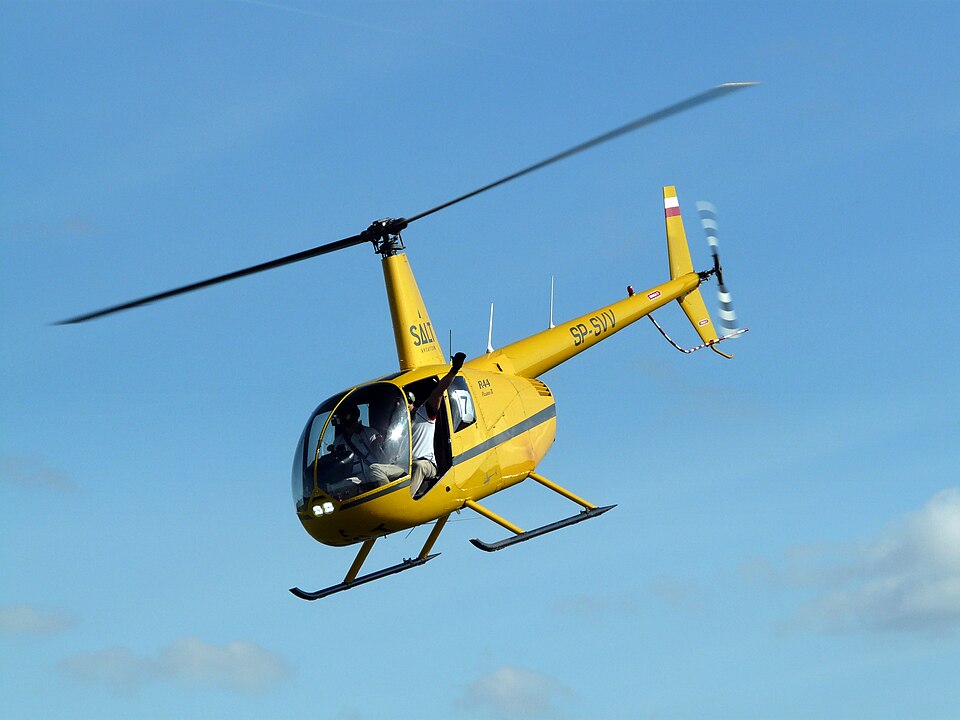
The R44 Raven II may well be the most popular recreational helicopter in the world. It takes everything the R22 established and scales it up into a genuinely capable four-seat machine. With a more powerful fuel-injected engine, better hot-and-high performance, and a roomier cabin, the R44 hits a sweet spot that has kept it at the top of private helicopter sales for decades.
The Raven II version introduced the fuel-injected Lycoming IO-540, replacing the earlier carbureted engine. The result is smoother starts, better reliability, and improved performance at altitude. The cabin fits four adults in reasonable comfort, which is a significant upgrade over the two-seat R22. Loading a family or group of friends for a weekend flight becomes genuinely practical.
What it's great for: All-around private ownership, sightseeing, personal transportation, and owners who want a proven, versatile machine without stepping into turbine territory.
Key specs (approximate):
- Seats: 4
- Engine: Lycoming IO-540 (fuel-injected piston)
- Cruise speed: ~105–110 knots
- Range: ~300+ nautical miles
If you're evaluating the R44 alongside other four-seat options, the best 4-seater helicopters roundup covers several strong competitors worth comparing.
Robinson R66
The R66 is Robinson's first turbine-powered helicopter, and it represents a meaningful step up from the piston models below it. Powered by a Rolls-Royce RR300 turboshaft engine, the R66 seats five, flies smoothly, and carries a cargo hold — the first in any Robinson model. It bridges the gap between entry-level private ownership and more serious cross-country transport capability.
Turbine power brings genuine advantages for recreational flying. Starts are smoother, power delivery is more consistent at altitude, and the overall vibration levels are lower than piston equivalents. The R66 also comes with optional glass cockpit avionics, making it a thoroughly modern machine despite being mechanically conservative in other respects. The R66 NxG refresh, unveiled in 2025, added a standard 2-axis autopilot, updated Garmin avionics, and premium interior options.
What it's great for: Experienced private owners who have outgrown piston helicopters, cross-country flying, and owners who want turbine reliability without stepping into much larger or more expensive machines.
Key specs (approximate):
- Seats: 5
- Engine: Rolls-Royce RR300 turboshaft
- Cruise speed: ~110 knots
- Range: ~350+ nautical miles
Pro Tip: If you're transitioning from a piston Robinson to the R66, Robinson offers a structured transition course. The turbine engine changes some procedural habits, and a structured checkout makes that shift much safer.
For a broader look at passenger-focused options, the best passenger helicopters comparison covers how the R66 stacks up against other five-seat choices.
Guimbal Cabri G2
The Guimbal Cabri G2 is the most technologically sophisticated light piston helicopter currently available for private purchase. Designed by Bruno Guimbal, a former Eurocopter engineer, the Cabri G2 packs a remarkable number of safety and engineering innovations into a compact two-seat package.
Its most distinctive feature is the fenestron (shrouded) tail rotor, a design borrowed from larger Airbus/Eurocopter helicopters. This replaces the exposed conventional tail rotor with an enclosed fan-in-fin design that is safer around ground personnel and more efficient in many flight conditions. The G2 also uses a fully articulated three-blade main rotor, crash-resistant fuel tanks, and a reinforced composite airframe. These features give the Cabri a safety profile that meaningfully exceeds most of its piston competitors.
What it's great for: Safety-conscious private buyers, pilots who want modern engineering in a light helicopter, and owners interested in a distinctive machine with strong European design roots.
Key specs (approximate):
- Seats: 2
- Engine: Lycoming O-360-J2A piston
- Cruise speed: ~100 knots
- Range: ~350+ nautical miles
Fun Fact: The Cabri G2's fenestron tail rotor is the same design concept used on many full-size Airbus military and commercial helicopters, scaled down to fit the two-seat light helicopter category.
Bell 206 JetRanger
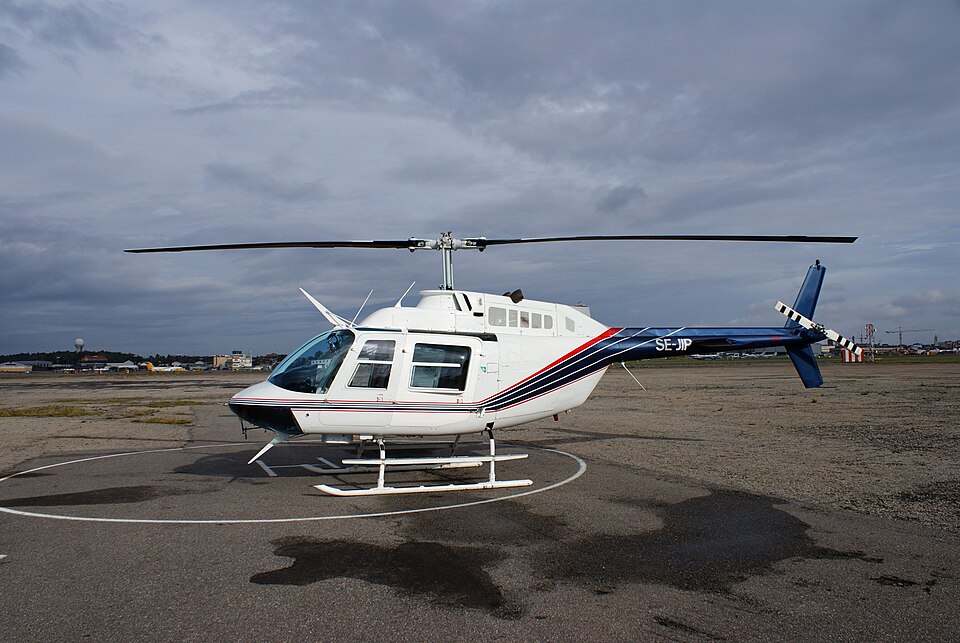
The Bell 206 JetRanger is one of the most iconic helicopters ever produced. Originally developed as a military observation helicopter in the 1960s, the JetRanger became a massive civilian success, with thousands of examples operating across decades in roles ranging from news reporting to corporate transport to private ownership.
For recreational buyers, the JetRanger offers something the Robinson lineup cannot: turbine power in a five-seat machine with decades of aftermarket support. Used examples are widely available, parts are plentiful, and virtually every A&P mechanic with helicopter experience has worked on one. The ride is smooth, the design is time-tested, and the Bell 206 has an almost legendary reputation for reliability.
What it's great for: Private owners who want a proven turbine machine, buyers comfortable with used aircraft, and anyone who values the JetRanger's unmatched track record and support infrastructure.
Key specs (approximate):
- Seats: 5
- Engine: Allison 250-C20J turboshaft
- Cruise speed: ~120 knots
- Range: ~300+ nautical miles
Why It Matters: With more than 7,000 units produced over its production run, the Bell 206 JetRanger has accumulated tens of millions of flight hours. That heritage means an enormous pool of experienced mechanics, parts availability, and documented maintenance history — a significant advantage for buyers considering used turbine ownership.
The JetRanger sits naturally alongside other business helicopter options for buyers who want a machine that doubles as professional transport.
Enstrom 480B
The Enstrom 480B is a turbine helicopter that has quietly built one of the strongest safety reputations in the light helicopter category. Built by hand in Michigan, the 480B runs a derated Rolls-Royce 250-C20W turboshaft engine mated to a fully articulated three-blade main rotor system. The result is a helicopter that handles more like a large machine than its dimensions suggest.
The articulated rotor system gives the 480B unusually high rotor inertia for a light helicopter, which translates into more time and options during autorotation training and emergencies. The ride is notably smooth. The cabin is roomy for its class, seating up to five occupants including the pilot. And the 480B Elite trim level, launched in 2025, brings full glass cockpit avionics, Garmin G500H instrumentation, GPS mapping, and an autopilot system to what was already a solid platform.
What it's great for: Private owners who prioritize safety engineering, buyers who want a turbine machine with forgiving handling, and anyone who values meticulous American craftsmanship in their aircraft.
Key specs (approximate):
- Seats: 5
- Engine: Rolls-Royce 250-C20W turboshaft (derated)
- Cruise speed: ~108 knots
- Range: ~165 nautical miles
Good to Know: The Enstrom 480B's belt-driven tail rotor is a design feature that contributes to lower tail rotor maintenance costs compared to conventional shaft-driven systems. It's one of several practical engineering choices that make the 480B appealing to cost-conscious owners.
Enstrom F28F
The Enstrom F28F is a three-seat piston helicopter that has been quietly serving private owners, flight schools, and law enforcement agencies for decades. It occupies a niche that few other manufacturers have targeted: a slightly larger-than-two-seat piston machine with a roomy cabin, forgiving handling, and famously approachable ownership costs.
The F28F is powered by a Lycoming HIO-360 piston engine and features the same fully articulated three-blade rotor system that defines Enstrom's lineup. That rotor system is one of the key reasons the F28F has such an excellent safety record. The helicopter is gentle in handling, very stable on approach, and well regarded for its autorotation characteristics. It does not have the performance ceiling of the Robinson R44 or the Cabri G2, but its operational simplicity and robustness make it a genuinely enjoyable recreational machine.
What it's great for: Buyers who want a three-seat piston machine with strong safety credentials, owners stepping up from two-seaters without committing to four-seat complexity, and those who prefer American-built piston helicopters.
Key specs (approximate):
- Seats: 3
- Engine: Lycoming HIO-360 piston
- Cruise speed: ~90–95 knots
- Range: ~200 nautical miles
Schweizer 300C
The Schweizer 300C (also known as the Hughes 300 in its earlier iteration) is one of the most dependable light helicopters ever produced. It has been a fixture of flight training programs and private hangars for generations, valued for its rugged simplicity, honest handling, and low operating costs.
The 300C is a piston-powered three-seater with a conventional, no-frills design. There is nothing flashy about it. The rotor system is conventional, the engine is familiar to mechanics everywhere, and the cockpit is straightforward. That simplicity is exactly the point. For a recreational owner who wants a dependable, easy-to-maintain helicopter that holds its value and keeps repair bills manageable, the 300C is hard to argue with.
What it's great for: Value-oriented buyers, new private owners, and anyone who wants a proven platform with broad mechanic familiarity and minimal complexity.
Key specs (approximate):
- Seats: 3
- Engine: Lycoming HIO-360 piston
- Cruise speed: ~80–85 knots
- Range: ~170 nautical miles
Quick Tip: Used Schweizer 300C helicopters can be found at relatively accessible price points in the used market. For buyers on a tighter budget who still want a certified, proven machine, the 300C is one of the strongest value options available.
Airbus H125
The Airbus H125 (previously known as the AS350 B3e) is a step up from the light category into medium-light turbine territory. It has earned a reputation in some of the world's most demanding operating environments, including high-altitude mountain operations and powerline patrol work. For recreational owners who want genuine performance headroom, the H125 delivers it.
The H125 is powered by a Turbomeca Arriel 2D turboshaft engine and seats up to six occupants. Its high-altitude performance is exceptional. It is widely regarded as one of the most capable single-engine turbines available for owner-pilots who regularly fly in hot, high, or challenging conditions. The price point is significantly higher than anything else on this list, but so is the capability envelope.
What it's great for: Experienced owners who fly in challenging terrain, high-altitude environments, or demanding conditions, and buyers who want a machine with genuine utility alongside recreational use.
Key specs (approximate):
- Seats: 6
- Engine: Turbomeca Arriel 2D turboshaft
- Cruise speed: ~130 knots
- Range: ~350+ nautical miles
The H125's broader role in the rotorcraft world overlaps with both cargo helicopter operations and family transport missions. Those comparisons give useful context if the H125 is on your shortlist.
Why It Matters: The Airbus H125 holds several high-altitude performance records and has been used extensively for glacier operations, summit landings, and mountain rescue. That kind of real-world pedigree is rare in the civilian helicopter market.
Bell 505 Jet Ranger X
The Bell 505 is Bell's answer to the modern private turbine market. Introduced as the spiritual successor to the legendary JetRanger line, the 505 pairs a Safran Arrius 2R turboshaft engine with a fully modern Garmin G1000H NXi glass cockpit avionics suite. The result is one of the most technologically current turbine helicopters available for private buyers.
The 505 seats five, cruises efficiently, and handles well across a wide range of conditions. Its cockpit feels closer to a modern fixed-wing aircraft than most of its rotary competitors, which is exactly what many buyers stepping up from piston or glass-panel fixed-wing backgrounds want. Bell has also worked hard on interior quality, giving the 505 a cabin finish that feels appropriate for its price bracket.
What it's great for: Buyers who want a modern turbine helicopter with the latest avionics, owners transitioning from glass-panel fixed-wing backgrounds, and anyone who wants a machine that blends technology and practicality.
Key specs (approximate):
- Seats: 5
- Engine: Safran Arrius 2R turboshaft
- Cruise speed: ~125 knots
- Range: ~370+ nautical miles
Pro Tip: The Bell 505's Garmin G1000H NXi avionics package is one of the most capable glass cockpit systems available in a light turbine helicopter. Pilots familiar with G1000 from fixed-wing backgrounds will find the transition very manageable.
For buyers exploring the family and group transport angle, the best family helicopters article covers how the Bell 505 compares in that context.
Hill HX50
The Hill HX50 is the most talked-about new entry in the personal helicopter market in many years. Designed from the ground up by Hill Helicopters in the United Kingdom specifically for private owner-pilots, the HX50 approaches helicopter design from a completely different angle. Instead of adapting commercial or military requirements to a private market, Hill built entirely around what an individual owner actually needs.
The HX50 runs a bespoke GT50 turboshaft engine developed entirely in-house. It is designed to run for an extended time between overhauls compared to equivalent turbine competitors, reducing long-term ownership costs. The cockpit features twin 15-inch full-color digital displays, haptic feedback controls that stiffen as power limits approach, and an automated startup sequence. Cruise performance targets are significantly higher than the Robinson R66. Maximum range is stated at around 700 nautical miles, which is exceptional for a personal helicopter.
Hill's approach to ownership is also distinctive. Buyers participate in a construction experience during the build process and receive comprehensive maintenance training, so owners understand the aircraft they're flying.
What it's great for: Forward-thinking buyers who want the most modern technology available, owner-pilots interested in deeply understanding their aircraft, and anyone willing to wait for a machine that represents a genuine step change in personal rotorcraft.
Key specs (targets):
- Seats: 5
- Engine: Hill GT50 (bespoke turboshaft)
- Target cruise speed: 140 knots
- Target range: ~700 nautical miles
Heads Up: The Hill HX50 is in development and working through certification. Buyers placing orders should expect wait times and should follow Hill's certification progress before committing. That said, the level of pre-order interest suggests this machine has struck a genuine chord with the private owner market.
The HX50 also fits naturally into the best-looking helicopters category — the carbon-fiber body and sweeping lines are unlike anything else currently flying.
If you're seriously considering buying a helicopter, Flying411 is a great place to browse listings and connect with sellers, flight schools, and service professionals who know these machines.
How to Choose the Right Recreational Helicopter
Picking the right machine depends on answering a handful of honest questions about how you actually plan to fly.
How many passengers do you need to carry? Two-seaters like the R22 and Cabri G2 are ideal for solo flights and occasional passenger hops. For regular family flying or group trips, a four- to five-seater is much more practical.
Piston or turbine? Turbine helicopters cost more to buy but are often smoother, more powerful, and better for longer trips. Piston machines are less expensive to purchase and maintain at lower utilization rates. The right answer depends heavily on how many hours per year you plan to fly and what kind of terrain you'll cover.
New or used? The used market offers real savings, especially on well-established models like the R44 and JetRanger. New machines come with warranties and the latest features, which matters more for buyers considering the Bell 505 or a reservation on the Hill HX50.
Operating costs: Beyond the purchase price, factor in fuel burn, insurance, scheduled maintenance, and the 2,200-hour TBO cycles that apply to most Robinson piston models. Turbine engines have different (and often longer) overhaul intervals but higher labor costs when service is due.
Where will you fly? High-altitude terrain, hot climates, or challenging weather favor turbine machines with stronger performance margins. Flat terrain and cooler conditions are where piston helicopters compete most effectively.
Fun Fact: Helicopter TBO (Time Between Overhaul) cycles are a significant part of ownership cost planning. Engines and main rotor components each have defined service lives, and building those reserve costs into your per-hour budget is essential for avoiding surprises.
Looking to buy or sell a helicopter? Flying411.com connects buyers, sellers, and aviation professionals in a marketplace built specifically for general aviation.
Electric Helicopters: The Future of Recreational Flying
It would be incomplete to discuss the future of recreational helicopters without mentioning electric and hybrid designs. Several manufacturers are working on electrically powered rotorcraft aimed at the personal and sightseeing market, with ranges and flight times still limited but improving steadily.
For most buyers in the near term, electric recreational helicopters remain a niche. The range, payload, and weather limitations of current battery technology make them practical primarily for short scenic hops and training scenarios rather than the kind of cross-country flying most private owners envision.
That said, the trajectory is clear. The best electric helicopters category is worth tracking for buyers with a longer planning horizon who want to understand where the technology is heading.
Conclusion
Recreational helicopters span an enormous range of capability, cost, and character. The Robinson R22 and R44 remain foundational choices that have introduced countless pilots to personal helicopter ownership for good reason. The Bell JetRanger carries decades of proven turbine reliability. The Enstrom 480B rewards buyers who appreciate precise engineering. The Cabri G2 brings modern safety technology to the light piston category. And the Hill HX50 hints at what personal rotorcraft could look like in the decade ahead.
No single machine suits every recreational pilot. The right helicopter for you depends on how you fly, where you fly, how many seats you need, and what you're willing to invest. But any machine on this list is a genuine choice worth exploring carefully.
Ready to find your next helicopter? Flying411 makes it easy to browse aircraft listings, compare models, and connect with the professionals who can help you make the right call.
FAQs
What is the cheapest recreational helicopter to buy new?
The Robinson R22 remains one of the most affordable new certified helicopters on the market, though even entry-level certified rotorcraft represent significant investment. Used examples of the R22 and Schweizer 300C can be found at considerably lower price points.
Do I need a special pilot certificate to fly a recreational helicopter?
Yes. Flying a helicopter requires at minimum a Private Pilot Certificate with a helicopter rating in the United States. Some light sport helicopter categories have different requirements, but most of the machines on this list require a standard helicopter pilot certificate.
How many hours does a recreational helicopter typically fly per year?
Private helicopter owners typically fly far fewer hours annually than commercial operators. Many recreational owners average anywhere from 50 to 200 hours per year, depending on their schedule, local conditions, and how they use the aircraft.
Are piston or turbine helicopters better for recreational use?
It depends on your budget and flying profile. Piston helicopters generally cost less to buy and maintain at low utilization rates. Turbine helicopters offer smoother power, better high-altitude performance, and often longer overhaul intervals, but they come at a significantly higher purchase price. Buyers who fly frequently and over long distances typically favor turbines.
How much does it cost to maintain a private helicopter annually?
Maintenance costs vary widely by model, engine type, and how many hours are flown. Beyond scheduled inspections, owners should budget for component reserves tied to TBO cycles, insurance, hangar or tie-down fees, and fuel. Working with an A&P mechanic familiar with your specific aircraft model will help you build an accurate budget before you buy.