When a job calls for moving tons of gear into a place no truck can reach, only one type of aircraft fits the bill. Cargo helicopters carry artillery, water tanks, building materials, troops, and even other aircraft into spots that runways simply can't serve. They show up after earthquakes, fly fire-suppression missions over burning forests, and haul fuel to remote drill sites. Picking the best cargo helicopter for a job depends on payload, range, terrain, and budget. A single rotor disc can mean the difference between a successful lift and an aborted mission.
These machines aren't just bigger versions of regular helicopters. They are engineered around lift, with reinforced floors, heavy-duty hooks, and engines that can pull staggering loads off the ground. Some look like flying skeletons, built around a cargo bay you can drive a truck through. Others carry their loads slung underneath on long lines, dangling beneath the rotor wash like clockwork.
A 20-ton load swinging beneath a rotor changes the math on what counts as possible in the sky.
Key Takeaways
The best cargo helicopters are heavy-lift workhorses like the Mil Mi-26, Boeing CH-47 Chinook, and Sikorsky CH-53K King Stallion, designed to carry massive payloads across military, civilian, and humanitarian missions. They differ in lift capacity, rotor design, and operating cost, but each one fills a role no other aircraft can match.
| Helicopter | Origin | Primary Use | Notable Strength |
| Mil Mi-26 | Russia | Military and civilian heavy lift | Largest payload capacity in serial production |
| Boeing CH-47 Chinook | USA | Military and civilian transport | Tandem rotor design, broad mission range |
| Sikorsky CH-53K King Stallion | USA | USMC heavy lift | Most powerful US military helicopter today |
| Sikorsky CH-53E Super Stallion | USA | USMC amphibious assault | Proven heavy-lift platform |
| Sikorsky S-64 Skycrane | USA | Civilian aerial crane | Open-frame external load specialist |
| Vertol 234 | USA | Civilian heavy lift | Civilian version of the Chinook |
| Kaman K-MAX | USA | Precision external load | Intermeshing rotors, no tail rotor |
| Mil Mi-17 | Russia | Multirole transport | Rugged, widely operated worldwide |
| Airbus H225 Super Puma | France | Offshore and utility | Long-range capable, twin-engine reliability |
| AgustaWestland AW101 | Italy/UK | Military and civilian utility | Three-engine reliability, large cabin |
| Changhe Z-18 | China | Chinese military transport | Modern Chinese heavy-lift platform |
Want to see real listings of aircraft like these? Flying411 hosts a marketplace for helicopters and parts, where buyers and sellers connect directly without the noise.
What Counts as a Cargo Helicopter?
A cargo helicopter is built mainly to move freight, equipment, or large groups of people from one place to another. Some are designed for the military. Others are built for industrial work like logging, construction, or firefighting. A few do both.
What sets them apart from regular helicopters is the focus on payload. Designers strip out fancy interiors, beef up the floors, and add big rear ramps or external hooks so loads can be moved fast. Many have tandem rotors or extra engines to lift weight that would ground smaller aircraft.
You can usually spot a cargo helicopter by its boxy fuselage, large rear doors, and a cabin tall enough to roll in a Humvee or a pallet stack. A few notable examples skip the cabin entirely and just hang the load underneath on a long line.
Good to Know: Many cargo helicopters can switch between internal and external loads. A Chinook, for example, can carry troops inside the cabin and a sling load below at the same time. That flexibility is part of why these machines are so useful in disasters and combat alike.
How Cargo Helicopters Earn Their Keep
Most cargo helicopters fall into one of three groups. Heavy-lift military transports like the CH-53K and Mi-26 move tanks, artillery, and large troop formations. Civilian aerial cranes like the S-64 Skycrane handle precision lifts for construction, logging, and firefighting. Multirole transports like the Mi-17 split their time between cargo, troop movement, medevac, and search and rescue.
The lines blur often. A Chinook hauling humanitarian aid one week might carry artillery the next. An S-64 dropping water on a wildfire might be lifting air conditioners onto a skyscraper the following month. Versatility is part of what makes a cargo helicopter worth its price tag.
Operators choose between rotor configurations based on the mission. Tandem rotors give stability and lift in a long, narrow profile. Single main rotors are simpler and faster. Intermeshing rotors trade speed for incredibly precise hovering. Each design has trade-offs that matter the moment a heavy load swings beneath the aircraft.
For a wider look at the rotorcraft world beyond freight haulers, the classic moments in helicopter history help explain how today's cargo platforms came to be.
11 Best Cargo Helicopters Worth Knowing
Cargo helicopters span a wide range of sizes, missions, and operators. Some are built for war zones. Others spend their lives over forests, ocean rigs, or city skylines. The 11 below stand out for their lifting power, history, or sheer versatility.
Each one earns its spot for different reasons, and the right pick always depends on the job.
1. Mil Mi-26 Halo
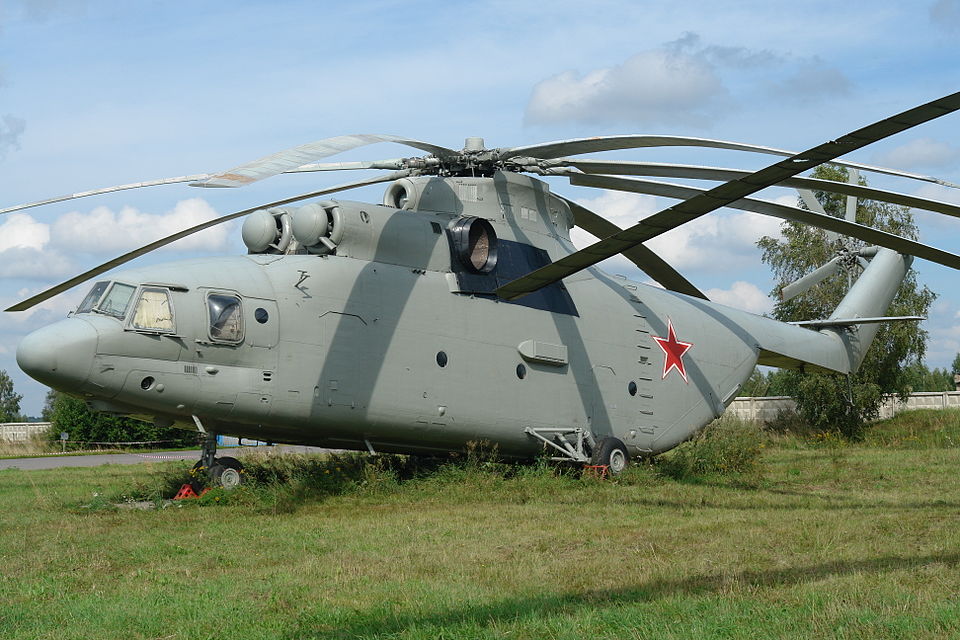
The Russian-built Mil Mi-26, NATO-named "Halo," is widely considered the most powerful production helicopter ever built. It can carry roughly 20 metric tons of cargo internally or externally, and its cabin is large enough to swallow loads that no other helicopter can take on. The Mi-26 has carried oil and gas equipment in Siberia, earthquake-relief gear in China, and at one point, even the frozen remains of a prehistoric animal recovered from the ice.
Two huge turboshaft engines drive an eight-blade main rotor. The helicopter is operated by both military and civilian users in many countries. Its sheer size limits where it can land, but in remote areas with no roads, no rails, and no time, the Mi-26 often becomes the only option.
Fun Fact: The Mi-26 is sometimes described as a flying truck, and the comparison is fair. It can carry payloads that rival small fixed-wing cargo aircraft, all while landing on a patch of dirt.
2. Boeing CH-47 Chinook
The Boeing CH-47 Chinook is one of the most recognizable cargo helicopters in the world. Its tandem-rotor design has been a fixture of US Army aviation for decades, and it's also flown by allied forces across Europe, Asia, and the Middle East. The two big rotors give it stability, lifting power, and the ability to handle high winds and tight landing zones.
The Chinook can move troops, vehicles, artillery, fuel, and humanitarian supplies. It carries loads inside the cabin or hangs them underneath using three external cargo hooks. That flexibility is part of why the platform has been continuously updated for more than half a century.
- Tandem-rotor stability
- Three external cargo hooks
- Used in combat, disaster relief, and construction
- One of the longest-serving heavy-lift helicopters in the world
3. Sikorsky CH-53K King Stallion
The Sikorsky CH-53K King Stallion is the newest heavy-lift helicopter in US military service. Built for the US Marine Corps by Lockheed Martin's Sikorsky division, it replaced the older CH-53E and brought a major jump in lifting power. Three GE T408 engines produce around 7,500 shaft horsepower each, giving the King Stallion the muscle to carry up to 36,000 pounds externally under certain conditions.
The CH-53K uses fly-by-wire flight controls, composite rotor blades, and a glass cockpit. The cabin is wider than the older CH-53E, big enough for a Humvee or two heavy pallets. It is also designed to land and take off in degraded visual environments, which matters in dust storms and brownout landings.
Why It Matters: The CH-53K's ability to land and take off in poor visibility makes a real operational difference. Dust, smoke, and snow have grounded heavy lifters in the past. New sensors and controls help the King Stallion keep flying when older platforms cannot.
4. Sikorsky CH-53E Super Stallion
The Sikorsky CH-53E Super Stallion is the workhorse the King Stallion is replacing, but it remains in service today. Three engines, a seven-blade main rotor, and a canted tail rotor give it impressive lifting power. The Super Stallion has been a key part of US Marine Corps heavy-lift squadrons for decades and has supported amphibious assault, humanitarian missions, and equipment movement.
It can carry a 155mm howitzer along with its crew and ammunition, which gives a sense of the kind of loads it handles. The Super Stallion is large, complex, and expensive to operate, but its lifting record is hard to argue with. Crews who fly it tend to respect its raw power.
5. Sikorsky S-64 Skycrane
The Sikorsky S-64 Skycrane, now built by Erickson Inc., is a civilian heavy-lift helicopter built around the idea of external loads. Its open-frame design lets the pilot look directly down at the cargo, which makes precision lifting easier. The Skycrane has been used for logging, construction, and especially aerial firefighting, often with a large fixed retardant tank attached to its belly.
The S-64 can drop large volumes of water on wildfires and refill its tank quickly from rivers or lakes through a snorkel. Erickson has made many improvements to the airframe and systems over the years, and the Skycrane remains a sought-after platform in the civilian heavy-lift world.
Pro Tip: The Skycrane's open belly and pilot-down visibility make it a favorite for placing rooftop HVAC units, antennas, and other oversized cargo that needs to land exactly on target.
6. Vertol 234
The Vertol 234 is the civilian cousin of the Chinook. It uses the same tandem-rotor layout and similar lifting power, but it's set up for civilian work. Operators use it for logging, construction, oil and gas support, and cargo flights into remote areas. It has seen heavy use in places like Alaska and Canada, where road access is limited and weather is brutal.
Tandem rotors give the 234 stability in high winds and on uneven terrain. The cabin is large enough for crew and gear, and the external load hook can handle serious weight. For operators who want Chinook-style performance without the military spec, the Vertol 234 has long been a strong option.
For a closer look at how various rotorcraft compare across passenger and cargo roles, the top business helicopter picks round out the broader market view.
7. Kaman K-MAX
The Kaman K-MAX is a different kind of cargo helicopter. Instead of one big rotor or two tandem rotors, it uses a pair of intermeshing rotors. That design removes the need for a tail rotor and lets the K-MAX put all its engine power into lifting. The result is a slim, single-seat helicopter built almost entirely around precision external loads.
The K-MAX is a favorite for logging, construction, and firefighting in tight spots. It can hover with great precision, place loads exactly where needed, and run repetitive cycles efficiently. The Marine Corps even tested an unmanned version of the K-MAX in Afghanistan, ferrying supplies to forward bases without a pilot on board.
- Intermeshing rotor design
- No tail rotor needed
- Built for repetitive precision lifts
- Single-seat cockpit focused on the load
8. Mil Mi-17
The Mil Mi-17 is one of the most widely operated helicopters in the world. It evolved from the earlier Mi-8 and is found in service across Asia, Africa, Latin America, and the Middle East. The Mi-17 carries troops, cargo, fuel, and supplies. It can also be configured for medevac, search and rescue, and even gunship roles.
What makes the Mi-17 stand out is its toughness and simplicity. It can operate from rough fields, mountain helipads, and high-altitude bases without much fuss. Maintenance is manageable in less-developed environments, which is part of why so many operators around the world keep flying them.
Heads Up: While the Mi-17 doesn't match the heavy-lift numbers of the Mi-26 or CH-53K, its real strength is being good enough at many missions instead of perfect at one. That balance is part of why it's so common.
9. Airbus H225 Super Puma
The Airbus H225 Super Puma is best known for offshore oil and gas work, but it also serves in military and utility roles. The Super Puma family has been a staple in North Sea operations for decades, ferrying workers and gear between platforms and shore. It can also be configured for cargo, search and rescue, troop transport, and VIP missions.
Twin turbine engines, modern avionics, and a long range make the H225 reliable for over-water missions. Its lift capacity is more modest than the dedicated heavy haulers on this list, but its mission flexibility and offshore-tested reliability earn it a spot among the workhorses of the rotorcraft world.
10. AgustaWestland AW101
The AgustaWestland AW101 (sometimes called the Merlin in British service) is a large, three-engine helicopter built for both military and civilian use. It has been adopted by several NATO countries for roles ranging from anti-submarine warfare to VIP transport and search and rescue. The cargo and troop-transport variants give it real utility in moving people and equipment over long distances.
Three engines provide redundancy and lift. The cabin is large enough to handle stretchers, cargo, or troops, and the rear ramp makes loading and unloading quick. The AW101 isn't the largest cargo helicopter, but it brings a strong mix of capability and reliability to the mission.
11. Changhe Z-18
The Changhe Z-18 is a Chinese heavy-lift helicopter developed for military transport and naval roles. It evolved from earlier Chinese rotorcraft designs and includes a larger fuselage, more powerful engines, and modern avionics. The Z-18 is meant to support amphibious operations, troop and cargo transport, and various utility missions for the Chinese armed forces.
The Z-18 represents China's growing investment in domestic rotorcraft design. While it does not match the lifting numbers of the Mi-26 or CH-53K, it gives the Chinese military a homegrown heavy-lift option that fits its operational needs. Variants exist for naval, search and rescue, and command roles.
Looking to buy or sell a heavy-lift helicopter or its parts? Flying411 connects aircraft owners, operators, and certified A&P mechanics through one streamlined marketplace.
How Operators Pick the Right Cargo Helicopter
Picking the best cargo helicopter for a mission goes well beyond lifting power. Operators weigh a long list of factors before choosing what to fly. The biggest ones include:
- Payload capacity, which is how much weight the helicopter can lift, both internally and externally
- Range, meaning how far it can fly before needing to refuel
- Operating environment, including high altitude, hot weather, cold weather, salt air, or dusty terrain
- Cabin size and shape, since the load may need to fit inside or be sling-carried
- Operating cost, including fuel burn, maintenance hours, and crew requirements
- Mission flexibility, or how many different roles the platform can handle
- Spare parts and support, since that affects how easy it is to keep flying year after year
A helicopter that's perfect on paper can be the wrong choice if there's nowhere to get parts. A platform with massive lift may not fit in tight landing zones. Smart operators match the helicopter to the actual mission, not just the brochure.
Keep in Mind: Operating cost per flight hour can vary widely between cargo helicopters. Heavy lifters burn a lot of fuel and need specialized crews. The cheapest helicopter to buy isn't always the cheapest to fly.
Military vs Civilian Cargo Helicopters
Military cargo helicopters and civilian ones share a lot of DNA, but they serve different masters. Military platforms are built to survive in hostile environments. They have armor, defensive systems, secure communications, and often more powerful engines than they technically need. Civilian helicopters skip most of that and focus on cost per ton-mile, reliability, and parts availability.
Some helicopters cross the line. The Chinook has a civilian version, the Vertol 234. The Mi-26 flies for both armies and oil companies. The S-64 Skycrane has been pitched for autonomous military cargo missions. Where the two worlds meet, the result is usually a flexible, proven platform that delivers on lifting promises.
| Feature | Military Cargo Helicopters | Civilian Cargo Helicopters |
| Typical missions | Troop transport, artillery, combat resupply | Construction, firefighting, logging, oil and gas |
| Survivability features | Armor, defensive systems, secure comms | Minimal or none |
| Cost focus | Mission capability first | Cost per flight hour |
| Maintenance | Often deeper support chain | Lean, operator-funded |
| Operating environment | Hostile zones, austere bases | Permitted airspace, planned routes |
To get a feel for how heavy-lift performance compares to speed-focused rotorcraft, the rundown of the fastest helicopters in service offers a useful contrast.
Common Missions Cargo Helicopters Handle
Cargo helicopters aren't picky about the work. They show up wherever heavy stuff needs to move and a runway isn't an option. The list of common missions includes:
- Military resupply to forward bases and ships at sea
- Disaster relief after earthquakes, floods, and hurricanes
- Aerial firefighting with water tanks, retardant drops, and ground crew support
- Logging operations in steep or remote terrain
- Construction of bridges, towers, and rooftop installations
- Oil and gas support offshore and in remote drilling sites
- Search and rescue in mountains, oceans, and disaster zones
- Medical evacuation with stretcher-equipped cabins
- Power line and pipeline support in places trucks can't reach
- Heavy equipment placement for civil and industrial projects
A single platform might do several of these jobs over its lifetime. The Skycrane that fights a wildfire in summer might lift HVAC units onto skyscrapers in winter. That's the kind of versatility that keeps cargo helicopters earning their place in the air.
Quick Tip: When watching aerial firefighting coverage on the news, look for the long line dangling beneath the helicopter. That's the same external load gear used in construction and military resupply. Same hardware, different missions.
Costs, Crews, and What It Takes to Operate One
Operating a cargo helicopter is not cheap. Fuel burn is high, crew requirements are real, and maintenance is intensive. A heavy-lift mission often needs:
- Two pilots for safety and workload sharing
- A flight engineer or loadmaster to manage the cargo
- Ground crew to rig loads and clear landing zones
- Mechanics to keep complex systems flying
Costs per flight hour vary widely. Light cargo helicopters can run a few thousand dollars per hour. Heavy lifters like the CH-53K or Mi-26 can cost much more, especially when fuel, parts, and crew are added up. Civilian operators charge by the mission or by the hour, and the rates reflect both the equipment and the risk.
Helicopter operators also have to budget for inspections, scheduled overhauls, and unscheduled repairs. The bigger the helicopter, the more parts to track and the more downtime each major service involves. Buyers should plan for the full life-cycle cost, not just the purchase price.
For pilots looking to break into the helicopter world, picking the right training path matters as much as picking the right aircraft. The top helicopter flight schools across the US cover everything from private licenses to advanced commercial work.
What's Next for Cargo Helicopters
The cargo helicopter world keeps evolving. New designs are pushing into autonomous operations, hybrid propulsion, and even electric power for lighter platforms. The Marine Corps' work with the unmanned K-MAX in Afghanistan showed that pilotless cargo missions are possible. Erickson has pitched an autonomous version of the S-64 Skycrane for similar military roles.
Larger trends include:
- Fly-by-wire controls that reduce pilot workload and improve safety
- Composite materials that cut weight and increase lift
- Hybrid and electric propulsion for smaller platforms
- Improved sensors for degraded visual environments
- Optionally piloted designs that can fly with or without humans on board
For people more interested in lighter platforms, the best electric helicopter models show where battery-powered rotorcraft are heading. These won't replace heavy lifters anytime soon, but they hint at where the smaller end of the market is going.
Why It Matters: Autonomous and optionally piloted cargo helicopters could change military logistics. Pilots are valuable and limited. A helicopter that can fly resupply without one frees up crews for missions that truly need a human in the seat.
Ready to find your next aircraft? Browse the helicopter and parts marketplace at Flying411 to connect with sellers, mechanics, and aviation pros across the industry.
Bringing It All Together
The best cargo helicopter is the one that fits the mission, the budget, and the operating environment. The Mi-26 dominates raw lifting numbers. The Chinook brings unmatched flexibility. The CH-53K represents the leading edge of US heavy lift. The Skycrane and K-MAX rule the civilian aerial crane world. The Mi-17, Super Puma, AW101, and Z-18 fill out the field with their own strengths.
What ties them all together is purpose. None of these helicopters were built to be glamorous. They were built to move heavy things from one place to another, often into spots where no other aircraft can go. They keep showing up because the job keeps needing them, year after year.
If you're shopping for a cargo helicopter or its parts, the right marketplace matters as much as the right aircraft. Flying411 connects buyers, sellers, and aviation pros across the rotorcraft world, so you can spend less time hunting and more time flying.
Frequently Asked Questions
What's the largest cargo helicopter ever produced?
The Mil Mi-26 is widely considered the largest and most powerful helicopter in serial production, with an external lift capacity of around 20 metric tons. Larger prototypes have flown, but the Mi-26 is the biggest one you can actually operate today.
Can civilians buy heavy-lift cargo helicopters?
Yes, civilians can buy certain heavy-lift cargo helicopters like the Sikorsky S-64 Skycrane or Vertol 234, often through specialized brokers and operators. Military variants like the CH-53K are restricted to government buyers, but their civilian cousins remain available on the open market.
How much does a cargo helicopter cost?
Costs vary widely depending on size, condition, and configuration, with smaller used cargo helicopters available for a few million dollars and new heavy-lift platforms costing tens of millions or more. Operating costs per flight hour can run from a few thousand to well over twenty thousand dollars for the largest platforms.
What's the difference between internal and external cargo loads?
Internal loads are carried inside the helicopter's cabin, while external loads hang beneath the aircraft on a sling line or cargo hook. External loads allow oddly shaped or oversized cargo to be moved, but they reduce speed and demand precise pilot control.
Do cargo helicopters need special landing zones?
Cargo helicopters can usually land on prepared helipads, but many missions involve unprepared sites like clearings, fields, or rooftops with reinforced landing pads. Larger helicopters need bigger, firmer landing areas and clear approach paths because of their rotor wash and weight.