Two engines come off a Beechcraft Premier at the same time, and the bill for putting them back on can land somewhere near half of what the airplane is worth. That is the number that catches new owners off guard. A single Williams FJ44-2A overhaul is commonly quoted in the mid-six figures, and a Premier carries two of them, so the event you are saving for is not one overhaul — it is a matched pair.
Williams originally published a 3,500-hour time between overhauls for the FJ44-2A, with a hot section inspection at about 1,750 hours, and extended all FJ44 models to 5,000 and 2,500 hours for engines on its Total Assurance Program in 2014. Budget realistically and the whole engine story on a Premier works out to something like $350 to $600 per flight hour for both engines combined whether you pay it to a program every month or into your own account. The bottom of that range belongs to a high-utilization airplane on a mature hourly program with clean life-limited parts. The top belongs to a 150-hour-a-year airplane whose owner self-funds and gets handed a surprise.
What Williams Actually Publishes: TBO and the Mid-Life
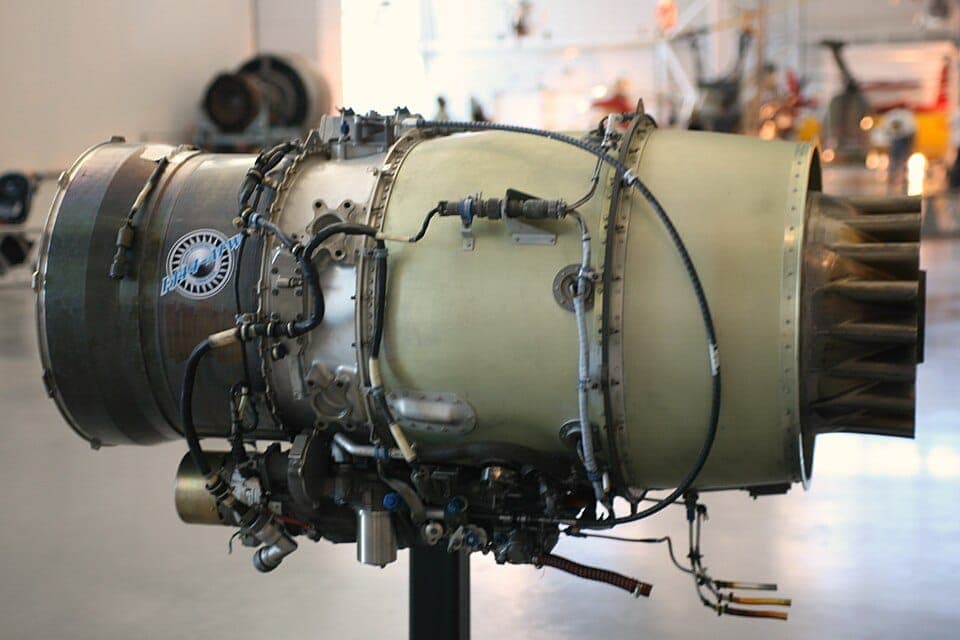
The FJ44-2A is a 2,300-pound-thrust turbofan with dual-channel FADEC, and it is the engine Beechcraft hung on both the Premier I and the Premier IA. Williams originally listed a 3,500-hour TBO for the variant, with a hot section inspection (Check 3) at about 1,750 hours. In 2014 it extended all FJ44 models to a 5,000-hour overhaul interval and a 2,500-hour hot section inspection for customers enrolled in its Total Assurance Program. That inspection is often called the mid-life.
The mid-life is a hot section inspection, which Williams calls Check 3, and it can usually be performed on the wing at an authorized service center, much like a PT6-style hot section. The hot hardware gets inspected and repaired or replaced, and what the inspection finds drives the bill. If you are used to turboprop language, think of the FJ44 schedule as having two big events per TBO cycle instead of one, with the first one costing roughly a quarter to a third of the second. Our breakdown of PT6A hot section versus full overhaul is a useful mental model, but the dollar figures do not transfer.
Keep in Mind: TBO is a manufacturer recommendation, not a legal ceiling for a Part 91 operator. That sounds like freedom until you try to insure, finance or sell a Premier with time-expired engines. The same dynamic we describe in flying past TBO applies here, only with a lot more zeros attached.
Williams has extended published intervals on several FJ44 models over the years, and individual engines can carry different limits depending on configuration, service bulletin status and program enrollment. Before you build a budget around any single number, have your maintenance tracking provider pull the actual status sheet for your two serial numbers. The engines on a 2003 Premier I and a 2010 Premier IA are the same basic model, but their accumulated life-limited part cycles rarely match.
The Overhaul Itself: What One FJ44-2A Costs
Shops and owners working with Williams-authorized facilities generally put a full FJ44-2A overhaul somewhere between $400,000 and $700,000 per engine as of 2025. That is a wide band, and the width is the honest part of the answer. Three things move you inside it.
Life-limited parts. Rotating hardware in the FJ44 carries cycle limits, and cycles accumulate on takeoffs and landings, not hours.A Premier flown on 45-minute legs burns cycles more than two and a half times as fast per hour as one flown on two-hour legs. If several LLPs expire at the same shop visit, the parts bill alone can add a hundred thousand dollars or more to an otherwise ordinary overhaul.
What the inspection finds. Quoted overhaul prices are usually a baseline that assumes serviceable hardware. Corrosion, foreign object damage, or a turbine section that has lived a hot life all get billed on top. Our piece on why engine overhaul quotes differ by thousands covers the mechanics of this in piston terms; on a turbofan the same gap shows up with an extra zero.
What the quote excludes. Removal, crating, freight both ways, reinstallation and the post-maintenance test flight are frequently quoted separately. Figure another $15,000 to $40,000 per engine for the airplane-side labor and logistics, plus whatever downtime costs you.
Heads Up: Because the Premier has two engines, most owners stagger the shop visits so the airplane is never down for both. Staggering preserves dispatch, but it also means you are writing a large check twice in a few years instead of once. Plan the cash flow, not just the maintenance.
Flying411 keeps Premier I and Premier IA listings in one place, so you can compare engine times, program status and asking price side by side instead of chasing specs across a dozen tabs.
The Mid-Life Core Zone Inspection
Owners who budget only for overhaul get surprised by the CZI, and it is the single most common planning mistake on this airframe. Reported costs for a core zone inspection on an FJ44-2A generally run $100,000 to $250,000 per engine, again depending on what comes out of the hot section and whether any LLPs happen to expire at the same time.
The mid-life is the roof on a house. You know roughly when it is due, waiting does not make it cheaper, and skipping it quietly turns a scheduled expense into an unscheduled one. On a pair of engines, the two CZIs together typically cost about as much as one full overhaul — which is why the honest per-hour reserve number for a Premier is so much higher than a quick "overhaul price divided by TBO" calculation suggests.
Why It Matters: A Premier advertised at "1,800 hours since new" has just passed, or is just about to pass, the mid-life on both engines. Ask for the CZI paperwork specifically. An airplane that is mid-life-complete and an airplane that is mid-life-due look identical on a spec sheet and differ by a few hundred thousand dollars in near-term cost.
Williams TAP and TAP Blue: Paying By the Hour Instead
Most Premiers in service are enrolled in a Williams hourly maintenance program. The baseline program is TAP, the Total Assurance Program; TAP Blue is the broader tier that bundles in more of the unscheduled work, line replaceable units and labor. Williams structures these as a rate per engine flight hour, billed monthly, which converts the lumpy overhaul-and-CZI cycle into a predictable line item.
Program rates for the FJ44-2A have generally been quoted in the range of $200 to $300 per engine per hour as of 2025, so roughly $400 to $600 per hour for the pair on a Premier. Rates escalate annually, vary by coverage tier, and depend on whether the engines were enrolled from new or bought in later.
Two details matter more than the headline rate:
- Back-enrollment cost. Putting a mid-time, previously unenrolled engine onto a program usually requires a buy-in that reflects the life already consumed. On a 2,000-hour FJ44-2A that figure can be substantial, and it is often negotiated as part of an aircraft purchase.
- Minimum annual hours. Programs typically bill a minimum number of hours per year whether you fly them or not. An owner flying 120 hours a year on a 200-hour minimum is paying for 80 hours of nothing. That is exactly the scenario where self-funding deserves a second look.
Good to Know: Program coverage is a transferable asset. Buyers and lenders treat an on-program Premier as materially lower risk, and that shows up in both the price and how quickly the airplane sells. It is one of the few maintenance expenditures that reliably returns part of itself at closing.
Line Maintenance Between the Big Events
Between shop visits, the FJ44 is a relatively undemanding engine by light-jet standards. It is small, it is FADEC-controlled, and the Premier carries no thrust reversers — the airplane stops on lift-dump spoilers and anti-skid brakes — which removes a whole category of actuator and cascade maintenance that operators of jets with reversers pay for.
What remains is routine: scheduled borescope inspections, oil analysis, igniter and fuel nozzle attention, FADEC software compliance, and the occasional accessory. Budget on the order of $3,000 to $12,000 per engine per year for scheduled engine line items on a moderately flown airplane, more if a bleed valve, starter-generator or fuel control decides to retire early.
The expensive unscheduled item is an off-wing event before TBO. If it happens and you are not on a program that supplies one, a lease engine plus the removal and installation labor can run $25,000 to $75,000 before a single repair dollar is spent.
Flying411 keeps light jet maintenance and ownership guides in one place, so you can compare what an FJ44, a TFE731 and a PT6 actually demand of an owner before you commit to a type.
Key Takeaways
Plan on a 3,500-hour TBO with a hot section inspection near 1,750 hours on older limits, or 5,000 and 2,500 hours on engines covered by Williams' extended intervals, and treat the Premier as a two-engine problem throughout. One full FJ44-2A overhaul realistically lands between $400,000 and $700,000, one CZI between $100,000 and $250,000, and removal, freight and reinstallation add $15,000 to $40,000 per engine per event. Rolled over a TBO cycle, that is roughly $170 to $270 per hour per engine in true engine cost, which is why Williams TAP and TAP Blue rates of about $200 to $300 per engine hour are not a markup so much as the same money with the volatility removed. For a Premier flying 200 to 300 hours a year, expect the engines alone to account for something close to $350 to $600 of your hourly operating cost, a large slice of the total we break down in the Premier 1 operating cost guide. The single biggest variable is not the shop you choose; it is how many life-limited parts come due at the same visit, and that is driven by your average leg length.
| Cost item | Realistic low | Realistic high | Fixed or per hour |
| Full overhaul, per engine | $400,000 | $700,000 | Event, approx. every 5,000 hr (3,500 hr on older limits) |
| Core zone (mid-life) inspection, per engine | $100,000 | $250,000 | Event, approx. every 2,500 hr (1,750 hr on older limits) |
| Life-limited parts at a shop visit | $40,000 | $200,000+ | Cycle-driven, per engine |
| Removal, freight, reinstall, test flight | $15,000 | $40,000 | Per engine, per event |
| Williams TAP / TAP Blue rate | $200 per hour | $300 per hour | Per engine flight hour |
| Self-funded reserve equivalent | $170 per hour | $270 per hour | Per engine flight hour |
| Scheduled engine line maintenance | $3,000 per year | $12,000 per year | Fixed, per engine |
| Unscheduled removal with lease engine | $25,000 | $75,000 | Event, if not program-covered |
| Program back-enrollment (mid-time engine) | $75,000 | $400,000+ | One-time, per engine |
Ranges reflect figures reported by owners and shops as of 2025. Get written quotes against your specific serial numbers before committing to any of them.
Ways to Spend Less
Fly longer legs. Cycles, not hours, drive life-limited part replacement. An owner who routinely flies 400-nautical-mile trips instead of 150-nautical-mile hops will reach TBO with meaningfully fewer cycles burned. The trade is obvious: you do not get to choose where your business is.
Buy an airplane already on program. Back-enrollment on a mid-time engine is expensive, and sellers who have been paying the monthly rate for a decade often do not get full credit for it. The trade is that on-program airplanes ask more up front, so you are financing the coverage rather than expensing it. Our used Premier IA buyer's guide walks through how to weigh that at the negotiating table.
Self-fund if you fly very few hours. If you are flying 100 to 150 hours a year against a program minimum of 200, you are buying hours you will never use. Setting the money aside yourself can come out ahead — provided you actually set it aside. The discipline required is the same one described in our guide to how much to set aside per flight hour. The trade is real risk: one unscheduled core event can wipe out five years of savings, and the airplane sells for less off program.
Stagger the engines deliberately. If both engines are within a hundred hours of each other, consider timing one shop visit early so the next pair of events never collide. You lose a little remaining life, but you avoid a year in which the airplane is down twice and the bank account is hit twice.
Watch your operating technique. Reduced-thrust takeoffs where runway and conditions genuinely allow, disciplined starts, and attention to FADEC-reported exceedances all extend hot section life. None of it is dramatic by itself. Over 1,750 hours it is the difference between a routine CZI and a long conversation with the shop.
Pro Tip: Ask any Premier seller for the engine trend monitoring data, not just the hours. Trend data over the last several hundred hours tells you where the engines are heading. Logbook totals only tell you where they have been.
Flying411 keeps Beechcraft Premier listings, specifications and cost guides in one place, so you can check engine status against asking price before you spend money on a pre-buy.
Budgeting the Pair, Not the Engine
The practical takeaway for a Premier owner is to stop thinking in single-engine numbers. Over one full 3,500-hour cycle, two engines will consume roughly $1.2 million to $2 million in scheduled events, parts and logistics in current dollars. Spread over 7,000 engine hours of flying, that is roughly $170 to $285 per engine hour, or $350 to $575 for the pair, which sits inside the $350-to-$600 range you started with, and it holds up whether you pay Williams monthly or pay a shop in lumps.
That is also the number to carry into any comparison shopping. A Williams FJ44-2A overhaul is expensive in absolute terms, but the FJ44 is a simple, modern engine with no thrust reversers to maintain and a strong factory support network — and the cost per hour sits in the same neighborhood as the Garrett and Honeywell alternatives on comparable airframes, as our look at TFE731 overhaul costs shows. What differs between owners is not the engine. It is whether the reserve account was funded from day one.
When you are ready to compare listings, visitFlying411and see what is on the market today.
Frequently Asked Questions
What is the TBO on a Williams FJ44-2A?
Williams publishes a 3,500-hour time between overhauls for the FJ44-2A, with a core zone inspection roughly halfway through at about 1,750 hours. Individual engines can carry different limits depending on configuration and service bulletin status, so confirm against your own serial numbers rather than the published figure alone.
Can I legally fly a Premier past engine TBO under Part 91?
In most cases yes — TBO is a manufacturer recommendation for Part 91 operations, not an airworthiness limit, though life-limited parts and any limits written into the type certificate data sheet are mandatory regardless. The practical limits are your insurer, your lender and your eventual buyer, all of whom treat time-expired turbofans as a serious discount.
Is a Williams engine program worth it on a Premier?
For most owners flying more than about 150 hours a year, yes. Program rates of roughly $200 to $300 per engine hour are close to the true self-funded cost, and the program absorbs the risk of an early core event while making the airplane easier to sell. Below that utilization, the annual hour minimums start working against you.
Does the Premier I use a different engine than the Premier IA?
No. Both use two Williams FJ44-2A engines rated at 2,300 pounds of thrust each. The differences between the models are in the avionics, systems and weights, which we cover in our comparison of the Premier 1 versus Premier 1A.
How much should I reserve per hour for engines alone?
Somewhere between $170 and $270 per engine flight hour, so roughly $350 to $550 per hour for the pair, covering overhaul, mid-life, life-limited parts and removal and installation. Add scheduled line maintenance and the risk of an unscheduled removal on top if you are not on a program.