A small plane does not have to be slow. Some of the fastest small planes in the sky can cover ground at speeds that would have sounded impossible a few decades ago. We are talking about single-engine aircraft that cruise close to the speed of a light jet, all while sipping a fraction of the fuel and landing on runways a jet would never touch.
That kind of performance comes from a careful blend of strong engines, slippery airframes, and clever design. A four-seat plane that fits in a modest hangar can now carry you across several states in a single afternoon. The numbers behind these little speed machines are surprisingly close to the big iron parked next to them on the ramp.
Key Takeaways
The fastest small planes today are single-engine turboprops like the Epic E1000 GX and Daher TBM 960, which cruise around 330 knots, while the fastest piston single, the Mooney Acclaim Ultra, reaches about 242 knots. Speed comes down to engine power, a clean airframe, and how high the plane can fly. Turboprops win on raw speed, but fast piston singles cost far less to buy and run.
| Category | Speed Range (approx.) | Standout Example | Best For |
| Fast piston single | 200 to 245 knots | Mooney Acclaim Ultra | Personal travel on a budget |
| Single-engine turboprop | 290 to 335 knots | Epic E1000 GX | Fast business and family trips |
| Experimental or kit | 270 to 330 knots | Lancair Evolution | Hands-on builders chasing speed |
| Modified racer (record holder) | 500-plus mph | P-51 "Voodoo" | Pure speed competition |
Flying411 is an online aviation marketplace where buyers and sellers connect over aircraft, engines, and parts, with helpful buyer guides along the way.
What Counts as a Small Plane?
Before we rank anything, it helps to agree on what a "small plane" actually is. There is no single rule, but most people mean a light aircraft built for personal or small-business use. These planes usually carry between two and six people. They run on one engine, sometimes two, and weigh far less than an airliner or a midsize jet.
In everyday terms, a small plane is the kind you might see at a local airport. Think of a sleek four-seat single parked beside a flight school. These aircraft fall under the broad label of general aviation aircraft, which covers almost everything that is not an airliner or a military jet.
Small planes come in a few main flavors:
- Piston singles. One piston engine turning a propeller, like a car engine with wings. Most common and most affordable.
- Turboprop singles. One turbine engine spinning a propeller. Faster, higher-flying, and pricier.
- Light twins. Two engines for extra power and backup, though many are slower than the fast singles below.
- Experimental or kit planes. Built by owners from a kit, often with eye-popping performance.
If you want a wider look at the categories, the different types of small planes range from humble trainers to pressurized rockets. The point is simple. Small does not mean weak, and it definitely does not mean slow.
Good to Know: A plane can be small and still fly high. Many of the fastest small singles climb above 25,000 feet, where thin air cuts drag and lets them stretch their legs. That is the same altitude band where some business jets cruise.
What Makes a Small Plane Fast?
Speed in a small plane is not magic. It comes from a handful of clear ingredients working together. Change one of them, and the top speed changes too. Let's break the recipe into bite-sized parts so it is easy to follow.
The Engine
The engine is the heart of the whole thing. More power usually means more speed, but the type of engine matters just as much as the horsepower number.
A turbocharged piston engine keeps its power high even as the air gets thin. That is why the quickest piston singles almost always wear a turbo. A turbine engine, the kind found in a single-engine turboprop, takes this even further. It produces smooth, steady power at high altitude and can push a small plane well past 300 knots.
The Airframe
A clean airframe slips through the air with less effort. Designers obsess over smooth surfaces, tight seams, and shapes that reduce drag. Composite materials like carbon fiber help here, since they can be molded into sleek forms with very few rivets or bumps to grab the wind.
Two planes with the same engine can fly very differently based on airframe alone. A slick body, a good propeller, and saved weight can add ten to twenty knots of cruise speed.
The Altitude
Higher air is thinner air. Thinner air means less drag, so a plane can go faster on the same power. The catch is that a normal engine loses power as it climbs, which is why turbocharging and turbine power matter so much for fast flying.
Why It Matters: Speed is not only about bragging rights. A faster small plane reaches more places in a day, climbs above rough weather sooner, and often burns less fuel per mile because it spends less time in the air. Speed buys you time, comfort, and flexibility all at once.
Piston vs Turboprop: Two Paths to Speed
When people picture a fast small plane, they usually imagine one of two machines. There is the high-performance piston aircraft, and there is the turboprop. Both can move quickly, but they get there in different ways and at very different price points.
A piston single is the more familiar choice. It runs on avgas, costs less to buy and maintain, and is easier to step into for many owners. The fastest ones top out around 240 knots. That is plenty quick for personal travel, and the running costs stay friendly.
A turboprop aircraft plays in a higher league. It burns jet fuel, flies higher, and cruises 80 to 130 knots faster than the best pistons. The trade-off is cost. A new single-engine turboprop often runs into the millions, and the fuel and upkeep bills climb to match.
Here is a quick side-by-side to make the contrast clear:
| Feature | Fast Piston Single | Single-Engine Turboprop |
| Typical cruise speed | 200 to 245 knots | 290 to 335 knots |
| Fuel | Avgas | Jet-A |
| Typical altitude | Up to 25,000 ft | Up to 31,000 to 34,000 ft |
| Rough new price | Several hundred thousand | A few million |
| Best fit | Personal cross-country | Fast business and family travel |
If you are weighing the engine choice itself, a closer look at small turboprop planes shows how much performance a single turbine can pack into a compact body.
Fun Fact: The all-out speed record for a piston propeller plane belongs to a heavily modified North American P-51 Mustang named Voodoo, which is recognized for reaching roughly 531 mph in 2017. That machine is a racer, not a personal plane, but it shows just how far propeller-driven speed can be pushed.
The 10 Fastest Small Planes Flying Today
Now for the part most readers came for. Below are ten of the fastest small planes you can find, ranked roughly from quickest to merely very quick. Speeds are approximate and depend on altitude, weight, and how the plane is flown. Even so, this list captures the front of the pack.
1. Epic E1000 GX
The Epic E1000 GX is often called the fastest certified single-engine turboprop in production. It can cruise at about 333 knots, which is roughly 383 mph. That speed comes from a powerful Pratt & Whitney PT6A-67A turbine and a sleek carbon-fiber airframe.
Pilots love how it climbs, often pushing past 4,000 feet per minute. It carries up to six people and can reach a ceiling of 34,000 feet, higher than many rivals. In short, it flies a lot like a jet while keeping the simplicity of a single propeller.
2. Daher TBM 960
The Daher TBM 960 is the latest in a long and respected family of fast turboprops. It cruises around 330 knots at altitude, putting it neck and neck with the Epic. Its digitally controlled PT6E engine smooths out power changes and reduces pilot workload.
The TBM 960 also includes a safety feature that can land the plane on its own if the pilot becomes unable to fly. Inside, the cabin feels like a high-end car, with leather seats and large touchscreens. Many owner-pilots pick it for that mix of speed, comfort, and confidence.
3. Lancair Evolution
The Lancair Evolution is a homebuilt that performs like a factory turboprop. In its turbine form, it can cruise around 300 knots, with some builders reporting numbers higher than that. It is a four-seat, pressurized, carbon-fiber design powered by a Pratt & Whitney PT6A engine.
Because it is built from a kit, the owner gets a hands-on bond with the machine and a lower price than a comparable certified plane. The catch is real work. Building one takes many hundreds of hours. For the right pilot, the speed and the satisfaction are worth it.
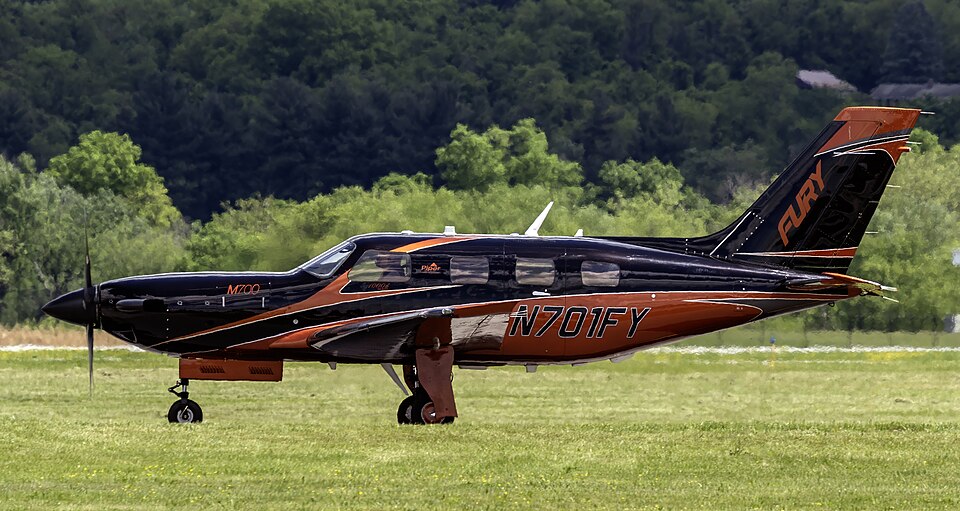
4. Piper M700 Fury
The Piper M700 Fury is the newest and most powerful member of Piper's long-running M-class line. With a 700-horsepower PT6A-52 turbine up front, it lives up to its name. Its maximum cruise speed reaches about 301 knots.
The Fury adds smart avionics, a strong structure, and the comfort Piper is known for. It gives pilots a true turboprop step-up without the complexity of a jet. For buyers moving up from a fast piston single, it is a natural next rung on the ladder.
5. Pilatus PC-12 NGX
The Pilatus PC-12 NGX is the big-cabin workhorse of this group. Its top cruise sits around 290 knots, a touch slower than the speed kings above, but it makes up for that with room and toughness. It can land on short or rough strips that jets simply cannot use.
This plane shows up everywhere, from business travel to cargo runs to medical flights. Inside, it feels more like a small private jet than a propeller plane. Its blend of range, speed, and reliability has earned it a loyal following.
6. Mooney Acclaim Ultra
Now we cross from turbines back to pistons, and the Mooney Acclaim Ultra leads that pack. It is widely regarded as the fastest single-engine production piston plane, with a top speed of about 242 knots, or roughly 278 mph. That comes from a turbocharged Continental engine paired with Mooney's famously slick airframe.
Mooney has long been considered one of the speed kings of the piston world. The Ultra version added larger doors and a more modern cabin to soften old complaints about tight quarters. For pilots who care most about raw speed in a piston single, it stands at the very front.
Pro Tip: When you compare brochure speeds, check the altitude listed next to each number. A turbocharged plane's headline speed often happens up at 24,000 or 25,000 feet. Down low where many flights actually happen, real cruise speed can be noticeably slower.
7. Cessna TTx
The Cessna TTx is a composite four-seater that cruises just over 230 knots at altitude. It carries a 310-horsepower engine, a slick body, and a modern Garmin cockpit. It even uses a sidestick control, like the one in a fighter jet, which gives it a sporty feel.
Cessna ended TTx production several years ago, so today it is mostly a used-market find. That said, its speed and clean design keep it popular among pilots hunting for a quick, good-looking single. Built strong as a utility-category airplane, it has the structure to back up its pace.
8. Cirrus SR22T
The Cirrus SR22T is one of the most popular high-performance singles in the world, and for good reason. Its top speed lands near 213 knots, and it pairs that pace with a turbocharged engine and advanced avionics. It is not the absolute fastest piston, but it may be the best-rounded.
The SR22T's signature feature is a whole-airframe parachute that can lower the entire plane to the ground in an emergency. That system has made the Cirrus a favorite for owner-pilots who want speed with peace of mind. The idea of small planes with parachutes helped reshape how buyers think about safety in this class.
9. Piper M350
The Piper M350 brings something the others on this list mostly skip: a pressurized cabin. That means passengers breathe comfortably at high altitude without oxygen masks. Its turbocharged engine pushes the M350 to a top speed of about 213 knots.
The M350 leans toward luxury and refinement. Its cabin and systems suit owners who fly longer trips and want airline-style comfort in a single. For travelers who value a calm, quiet ride at altitude, it is a strong pick among fast pistons.
10. Mooney Ovation Ultra
Rounding out the list is the Mooney Ovation Ultra, which holds a special title. It is recognized as the fastest normally aspirated single-engine piston in production, cruising around 197 knots without a turbocharger. That is remarkable speed from a simpler, non-turbo engine.
The Ovation also flies far on its fuel, thanks to that efficient design and Mooney's clean airframe. It is the choice for a pilot who wants real speed and long range without the extra complexity of turbocharging. Classic Mooney styling comes along for the ride.
Looking to compare real listings and dig into the specs of these fast singles? The Flying411 marketplace lets you browse aircraft and engines side by side, at your own pace.
How Speed Is Measured in Small Planes
Speed numbers can get confusing fast, so a quick guide helps. Most aviation speeds are given in knots, not miles per hour. One knot equals one nautical mile per hour, which is about 1.15 regular miles per hour. So 242 knots is roughly 278 mph.
There are also a few different "speeds" for any one plane, and they do not all mean the same thing:
- Cruise speed. How fast the plane travels on a normal, efficient power setting. This is the number that matters most for trip planning.
- Maximum cruise speed. The fastest steady speed at a sensible power setting. Brochures love this one.
- Top speed. The highest speed the plane can reach, often only briefly.
- Vne. The "never exceed" speed. This is a safety limit set by the airframe's strength, not a cruise target.
A higher Vne can hint at a strong, well-built airframe. It does not automatically mean the plane cruises faster, though. Cruise speed reflects steady efficiency, while Vne reflects a structural limit. They serve different jobs and should not be mixed up.
Heads Up: Two planes can advertise nearly identical top speeds and still feel very different in real life. A turbocharged model holds its speed better up high, while a non-turbo model fades as it climbs. Always look at the altitude tied to a speed claim before you compare.
What Fast Small Planes Cost to Own
Speed has a price, and it climbs steeply as you move from piston to turbine. A new fast piston single often runs into the high hundreds of thousands of dollars. A new single-engine turboprop can cost several million. Used examples cost less, but upkeep on a turbine still runs higher than on a piston.
Beyond the sticker price, owners plan for ongoing costs:
- Fuel. Turboprops burn jet fuel by the dozens of gallons per hour. Pistons sip avgas at a gentler rate.
- Maintenance. Turbine engines are reliable but expensive to inspect and overhaul. Piston upkeep is more wallet-friendly.
- Insurance. Faster, pricier planes usually mean higher premiums, especially for newer pilots.
- Hangar and storage. A safe home for the plane adds a steady monthly cost.
For a fuller breakdown of the numbers, a guide on how much small planes cost lays out the buying and running side in plain terms. The short version is that piston singles offer the friendliest path into fast personal flying.
Keep in Mind: Aircraft prices move around with the market, the model year, and the equipment on board. Any figure you see, including the rough ranges here, is a snapshot in time. Always confirm current pricing on real listings before you set a budget.
Who Flies Fast Small Planes?
Fast small planes attract a wide mix of pilots, and the reasons are practical as much as they are fun. The common thread is people who value their time and want flexibility that the airlines cannot match.
Business travelers use these planes to hit several cities in a single day. A fast single can take off from a small field, reach a major hub, do the meeting, and return home by dinner. That is freedom an airline schedule rarely allows.
Families like the comfort and reach of a quick single. A turboprop can cross most of a continent with a stop or two, turning a long drive into a short hop. Pressurized models keep everyone comfortable up high.
Owner-pilots chase the joy of flying a high-performance machine themselves. Many step up over time, moving from a trainer to a faster piston and eventually to a turboprop. The progression is half the fun. Plenty of these aircraft live in the world of small single-engine planes, which keep flying simple while still delivering serious speed.
Ready to start your own search? Browse the listings on Flying411 to see what fast singles and turboprops are available right now.
The Future of Fast Small Planes
The race for speed is far from over. Builders keep finding small gains in aerodynamics, propellers, and engine tuning. Better avionics also help, since they reduce pilot workload and let the plane fly closer to its efficient sweet spot.
New power sources are entering the picture too. Early small electric planes are still slower than the speed kings here, but the technology is moving quickly. Hybrid designs may one day blend electric smoothness with turbine punch.
For now, the formula stays familiar. Strong engines, clean airframes, and high altitude still rule. The planes get a little quicker each year, and the gap between a fast small single and a light jet keeps narrowing.
Conclusion
The fastest small planes prove that you do not need a jet to move fast. A turbocharged piston single can cruise near 240 knots, and a single-engine turboprop can push past 330. These compact machines blend speed, range, and comfort into a package that fits a small hangar and a real-world budget.
Picking the right one comes down to your mission and your wallet. Pistons offer friendly costs and plenty of pace for personal trips. Turboprops trade higher bills for jet-like speed and high-altitude reach. Either way, the performance hiding inside these little airplanes is something special.
Whatever speed you are chasing, find your next aircraft on Flying411, where the marketplace and the know-how live under one roof.
Frequently Asked Questions
What is the fastest single-engine plane you can buy?
Among certified production aircraft, the Epic E1000 GX turboprop is often cited as the fastest single-engine plane, cruising around 330 knots. For piston-powered singles, the Mooney Acclaim Ultra leads at roughly 242 knots.
Are fast small planes harder to fly?
Faster planes do ask more of a pilot, since things happen more quickly at higher speeds. Most owners handle this with proper transition training, and modern avionics help reduce workload and keep the flying manageable.
How fast is a small plane in miles per hour?
A typical fast piston single cruising at about 213 knots travels roughly 245 mph. A quick turboprop at 330 knots moves around 380 mph, since one knot equals about 1.15 miles per hour.
Do fast small planes use a lot of fuel?
It depends on the engine. Fast piston singles burn avgas at a fairly modest rate, while turboprops burn jet fuel by the dozens of gallons per hour. Higher speed often means better fuel use per mile, though, because the plane spends less time in the air.
Can a small plane fly as fast as a jet?
Some fast turboprops come close to the speed of a small jet, cruising in the 300-to-335-knot range. Light jets still pull ahead at higher speeds and altitudes, but the gap between a top turboprop and an entry-level jet is smaller than many people expect.