A lot of shoppers pay extra for the Piper name on the nose of a PiperSport and get nothing for the money. It is the same airplane, built in the same factory in Kunovice, Czech Republic, with a different sticker on the tail — and Piper walked away from the deal after roughly a year, so the badge buys you no dealer network and no parts advantage.Buyers who do not know that story routinely overpay by thousands, and then discover the aircraft is behind on factory service bulletins or safety directives that may reveal unresolved maintenance or safety issues. This guide walks you through what a used Czech Sport SportCruiser actually costs to buy and own, the handful of known trouble spots, and how it lines up against a Cessna 162 Skycatcher or a Flight Design CT.
The short version: it is one of the roomiest, best-riding two-seaters in the light sport class, it burns about five gallons an hour, and the airframe is still in production — but the paperwork and the nose gear are where deals go wrong.
Start With the Data Plate: S-LSA, E-LSA, or Homebuilt
Three legally different airplanes wear the SportCruiser name, and they are not interchangeable. Czech Aircraft Works and its successor Czech Sport Aircraft sold factory-built special light-sport aircraft (S-LSA), sold kits that were finished as experimental amateur-built, and some owners later converted factory aircraft to experimental light-sport (E-LSA). Which one you buy decides who can sign the annual, whether you can rent or instruct in it, and how a buyer three years from now will value it.
- Read the airworthiness certificate, not the ad. Good: a pink Special Airworthiness Certificate marked "Light-Sport" with the operating limitations attached. Bad: an ad that says "LSA" while the certificate says Experimental Amateur-Built, which cannot be rented out or used for paid instruction.
- Match the aircraft to your plans. Good: S-LSA if you want the broadest options for flight-school or rental use, subject to the applicable operating and inspection requirements.
- Ask who has been signing the condition inspections. Good: an A&P, or a repairman with the LSA maintenance rating, on an S-LSA. Bad: an owner-signed inspection on an S-LSA — the 16-hour LSA inspection rating only covers aircraft you own that are certificated experimental light-sport.
- Get the factory's current service bulletin and safety-directive history and check it against the logs. Good: applicable items are documented and any unresolved safety issues are understood before purchase. Bad: "I think the dealer did those." Under the post-MOSAIC rules, manufacturer-issued safety directives are no longer automatically mandatory for continued operation, but they remain important evidence of known safety issues and maintenance history.
Heads Up: Czech Sport Aircraft has issued bulletins over the years touching the nose landing gear, control system hardware and fuel system fittings. There is no central FAA database for LSA bulletins the way there is for airworthiness directives, so the burden is on you to request the list from the factory or its US distributor before the money moves.
Variants and What Changed
The design comes from Milan Bristela, who later left to create the BRM Aero Bristell — which is why the two look like cousins. The lineage matters when you are reading a listing:
- CZAW SportCruiser (roughly 2006–2009). Earliest factory aircraft and kits. Simpler panels, often analog gauges or first-generation Dynon glass. Expect more accumulated bulletin work.
- PiperSport (2010). Piper announced US distribution at the Sebring expo in January 2010 and ended the agreement in January 2011. Same Kunovice airframe, Piper paint and placards. Think of it as a store-brand label on a national-brand product.
- Czech Sport SportCruiser (2011 onward). Back to the original name, generally better panels, Dynon SkyView or Garmin glass, and a longer bulletin history already embodied.
- PS-28 Cruiser. The type-certificated European version aimed at flight schools. Rarely seen on the US used market, but the name shows up in listings and is not the same certification basis as a US S-LSA.
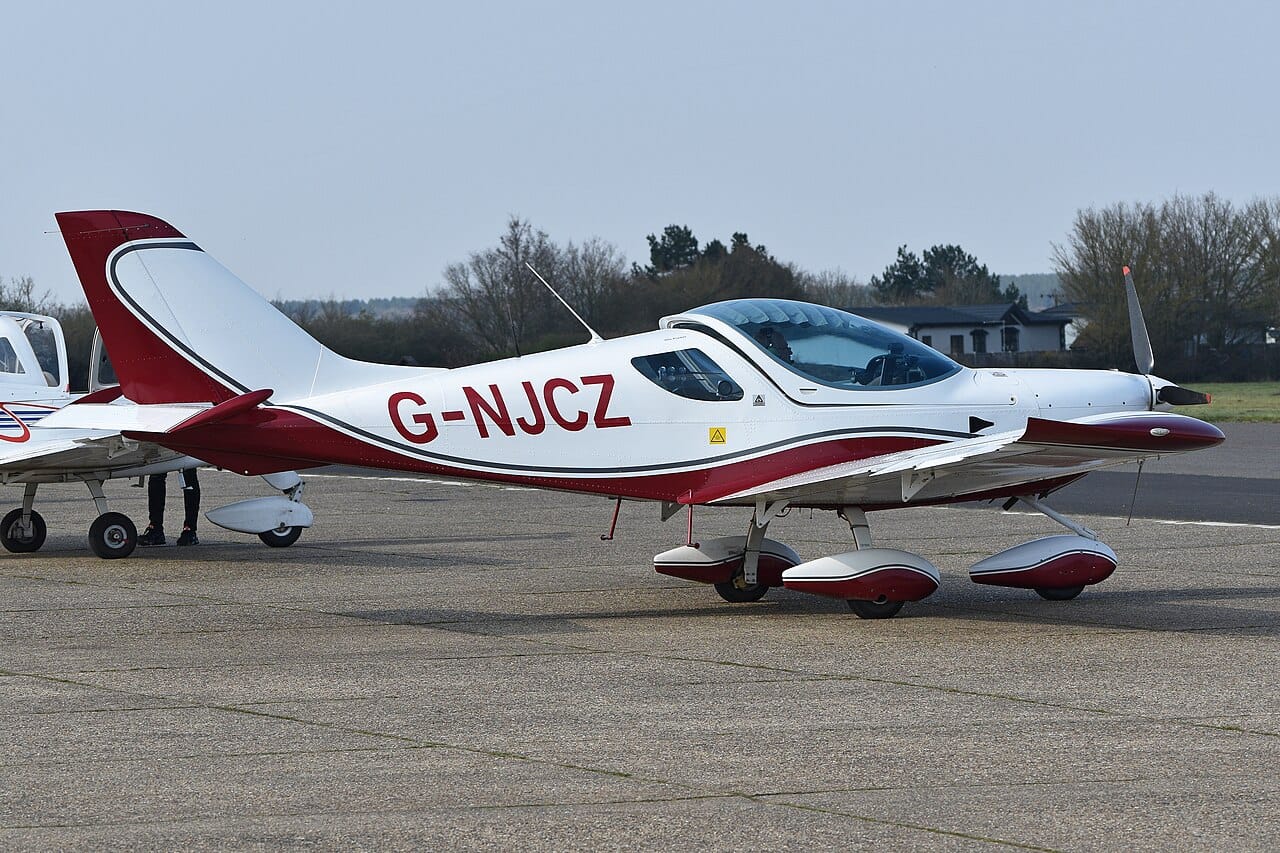
All versions are all-metal, low-wing, tricycle gear, with a one-piece forward-hinged canopy and a cabin of roughly 49 inches across — noticeably wider up front than a Cessna 172. Power is the Rotax 912ULS at 100 horsepower, later aircraft sometimes with the fuel-injected 912iS. Gross weight is the light sport limit of 1,320 pounds, fuel is about 30 gallons in two wing tanks, and owners report true airspeeds of 110 to 115 knots on about five gallons an hour.
Flying411 keeps SportCruiser, PiperSport and other light sport listings in one place, so you can compare panels, engine time and certification basis side by side instead of tab by tab.
Airframe: Nose Gear, Canopy, and Hard-Landing History
This is a light airplane with a fairly slender nose leg, and a large share of the fleet has spent time on flight school ramps. The nose gear is the single most common source of expensive surprises, and damage from a firm arrival does not always look obvious from ten feet away.
- Sight down the nose gear leg and check the firewall behind it. Good: straight leg, flat firewall, no oil-canning or popped rivets. Bad: any wrinkle in the firewall skin or a row of smoked rivets, which points to a hard landing that may never have been logged.
- Lift the cowl and look at the engine mount tubes where they meet the firewall. Good: intact paint at every weld. Bad: cracked or flaking paint at a weld, the classic tell of a stressed mount.
- Grab the wingtips and check for corrosion under the paint, especially on coastal aircraft. Good: clean skins, no blistering along rivet lines. Bad: filiform "worm track" corrosion creeping out from fasteners.
- Open and close the canopy several times. Good: smooth latch, firm gas struts, no crazing around the frame. Bad: a canopy that needs persuading to latch, or crack lines radiating from a corner — a replacement canopy is a four-figure part before labor.
- Check flap and aileron hinge play and control cable tension at the stick. Good: crisp, minimal slop. Bad: audible knock or visible rod-end wear.
Pro Tip: Ask for the aircraft's rental or instruction history in writing.An S-LSA used to provide flight training for compensation or hire requires a 100-hour inspection in addition to the annual condition inspection, so a former trainer should have a substantial inspection history. A thin log on a high-time airframe means the hours happened somewhere the paperwork did not.
The Rotax 912: Calendar Time Beats Hobbs Time
Pilots coming from Lycoming and Continental engines tend to read the tach and stop. That is the wrong instrument for a Rotax. The 912ULS has a published 2,000-hour TBO, while applicable calendar-life limits and scheduled replacement requirements depend on the engine's serial number and current Rotax service instructions. A low-hour older engine can therefore still carry significant age-related maintenance obligations, and Rotax service instructions call for replacing rubber parts — coolant hoses, fuel lines, carburetor sockets — on a five-year cycle. A 900-hour engine from 2009 should not automatically be treated as a young engine; check its serial number, applicable calendar-life guidance and age-limited maintenance items before assigning value to the low hours.
- Find the engine's date of manufacture, not just its hours. Good: a logged rubber replacement within the last five years and clear calendar life remaining. Bad: original hoses on a 15-year-old installation, which is a deferred bill of several thousand dollars.
- Look for the 200-hour gearbox items and the overload clutch friction check in the logs. Good: documented at each interval by a Rotax-trained shop. Bad: no mention of the gearbox anywhere.
- Ask what fuel it has been burning. Good: mostly 91-octane or better unleaded auto fuel, which Rotax prefers and which lets you stretch oil changes. Bad: a steady 100LL diet with 100-hour oil changes — Rotax shortens the interval to 50 hours when leaded fuel is a large share of the mix, and lead builds sludge in the gearbox.
- Check the exhaust springs, radiator and oil cooler. Good: intact springs, clean fins. Bad: a broken spring or a weeping coolant joint, both cheap parts that signal thin maintenance.
- Confirm who does the work near your home field. Good: a Rotax-authorized shop within an hour. Bad: the nearest one is three states away — a Rotax is not a Lycoming, and the wrong mechanic learning on your engine is expensive.
What It Costs to Own
The operating math is the reason people buy these. Five gallons an hour on mogas is roughly half the fuel burn of a 180-horsepower Cessna, and the airframe is light enough that brakes and tires last. The fixed costs are where you should be honest with yourself.
- Annual condition inspection. Owners commonly report $1,000 to $2,000 at a shop that knows the type, more in any year the five-year rubber replacement comes due.
- Engine reserve. Work backward from a replacement or overhauled 912ULS, which has been a five-figure proposition in recent years. Spread over 2,000 hours, setting aside $10 to $15 per flight hour is a sane starting point.
- Insurance. Quotes hinge almost entirely on your hours in type. Brokers typically want to see a checkout and some time in the airplane before hull rates come down, and low-wing, bubble-canopy LSAs are not treated as cheaply as a 172.
- Hangar. Budget for one. The canopy and the composite tips do not enjoy years of sun, and the paint on these airframes is thin by design.
Keep in Mind: Useful load, not dollars, is the real limit. With a typical empty weight in the 780 to 830 pound range and full fuel weighing about 180 pounds, two average adults plus bags will often put you over the 1,320-pound gross weight. You fly it with partial fuel, which is fine — the airplane still has plenty of range — but plan for it rather than discover it.
The FAA's MOSAIC final rule, published in 2025, widens what a sport pilot may fly, and that changes the used market around this airplane. MOSAIC removed the old regulatory weight limit for newly qualifying light-sport category aircraft, but it does not automatically increase the approved operating weight of an existing SportCruiser. Any higher weight must be supported by the aircraft's applicable manufacturer and certification documentation rather than assumed from the new rule. If a seller claims a higher gross, ask to see the paperwork. Our guide to which planes a sport pilot can fly under MOSAIC covers where the lines now fall.
How It Stacks Up Against a Skycatcher or a CT
These are the three airplanes most buyers cross-shop, and each loses on a different point.
| Item | Czech Sport SportCruiser | Cessna 162 Skycatcher | Flight Design CT (CTSW/CTLS) |
| Construction | All-metal, low wing | All-metal, high wing | Composite, high wing |
| Engine | Rotax 912ULS 100 hp (912iS on some) | Continental O-200-D 100 hp | Rotax 912ULS 100 hp |
| Typical cruise | 110–115 kt | Cessna claimed about 118 kt | 115–120 kt |
| Cabin width | About 49 in | About 44 in | About 49 in |
| Fuel | About 30 gal | About 24 gal | About 34 gal |
| Production status | Airframe still built in Czechia as the PS-28 | Ended 2013, about 275 delivered | Built in volume; corporate history has had interruptions |
| Main buyer worry | Nose gear, bulletin compliance | Parts and factory support | Composite repair shops, quick handling |
The Skycatcher is the cautionary tale. Cessna stopped building it in 2013 after roughly 275 deliveries and later scrapped remaining airframes, so support has been thin ever since — the purchase price may look friendly, and then a single hard-to-source part parks the airplane. If you are weighing that one, our Cessna 162 vs 172 comparison puts the trade-offs next to a known quantity. The CT flies faster and farther on less weight, but it is quicker on the controls, it floats, and composite damage needs a shop that does composite work. The SportCruiser sits between them: docile, wide, metal, and backed by a factory that never stopped building the design.
Flying411 keeps light sport inventory from multiple sellers in one place, so you can see how a SportCruiser's asking price tracks against a CT or a Skycatcher with similar hours.
The Checklist at a Glance
| Check | What good looks like | Red flag |
| Airworthiness certificate | Special, Light-Sport, limitations attached | Experimental category in an ad selling it as S-LSA |
| Factory service bulletins | Current list in hand, each item logged and signed | Seller cannot produce the list |
| Condition inspection signatures | A&P or LSA maintenance rating on an S-LSA | Owner-signed inspections on an S-LSA |
| Nose gear and firewall | Straight leg, flat skin, tight rivets | Wrinkled firewall, smoked rivets, cracked mount paint |
| Rotax calendar life | Rubber replaced within five years, date of manufacture known | Original hoses on a 15-year-old engine |
| Gearbox records | 200-hour items and clutch check documented | No gearbox entries at all |
| Canopy | Latches cleanly, struts firm, no crazing | Cracks at frame corners, sagging struts |
| Weight and balance | Current sheet reflecting installed avionics | Original factory sheet after a panel upgrade |
| Rental history | Logged 100-hour inspections matching the hours | High time, thin logbook |
Before You Sign
Treat incomplete bulletin and safety-directive records as a major pre-buy warning, especially where they involve known structural, landing-gear, control-system or fuel-system issues. Unlike a certified Cessna, where the AD list is public and a mechanic can reconstruct it in an afternoon, LSA bulletin history lives with the factory and in the logs. A gap there is not a negotiating point, it is an unpriced liability — and the same goes for an undocumented hard landing, because the repair you cannot see is the one that shows up on the next annual.
Pay a Rotax-authorized shop to do the pre-buy, not just any A&P. The airframe is straightforward metal work, but the engine has its own culture, its own tooling and its own calendar rules, and a mechanic who has never synced a pair of Bing carburetors will miss things that cost real money. Budget a day of labor plus a compression and borescope check, and have the shop pull the cowl and inspect behind the firewall. If you are considering putting the airplane on a school line to offset costs, read our piece on buying an airplane for flight training first — the inspection burden changes the math.
Bought carefully, a Czech Sport SportCruiser is one of the better values in two-seat flying: a wide, comfortable cockpit, modern glass in most examples, honest handling, and fuel bills closer to a motorcycle than an airplane. Bought carelessly, it is a paperwork puzzle with a bent nose leg. If you are still narrowing the field, our roundups of the best light sport aircraft and small sport planes for affordable flying are a good place to start.
Flying411 keeps SportCruiser listings alongside the rest of the light sport fleet, so you can compare engine time, avionics and certification basis before you book a pre-buy.
When you are ready to compare listings, visitFlying411and see what is on the market today.