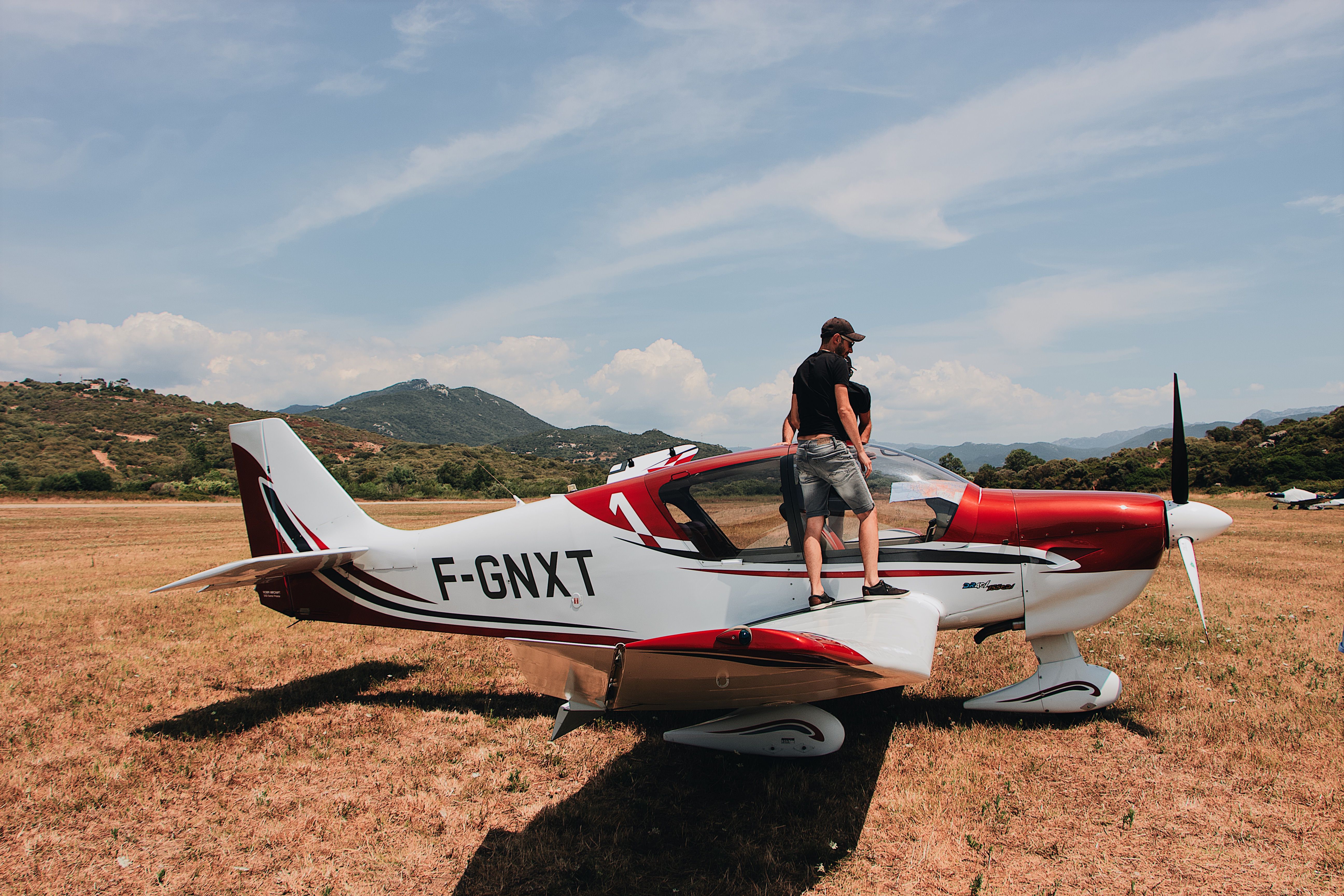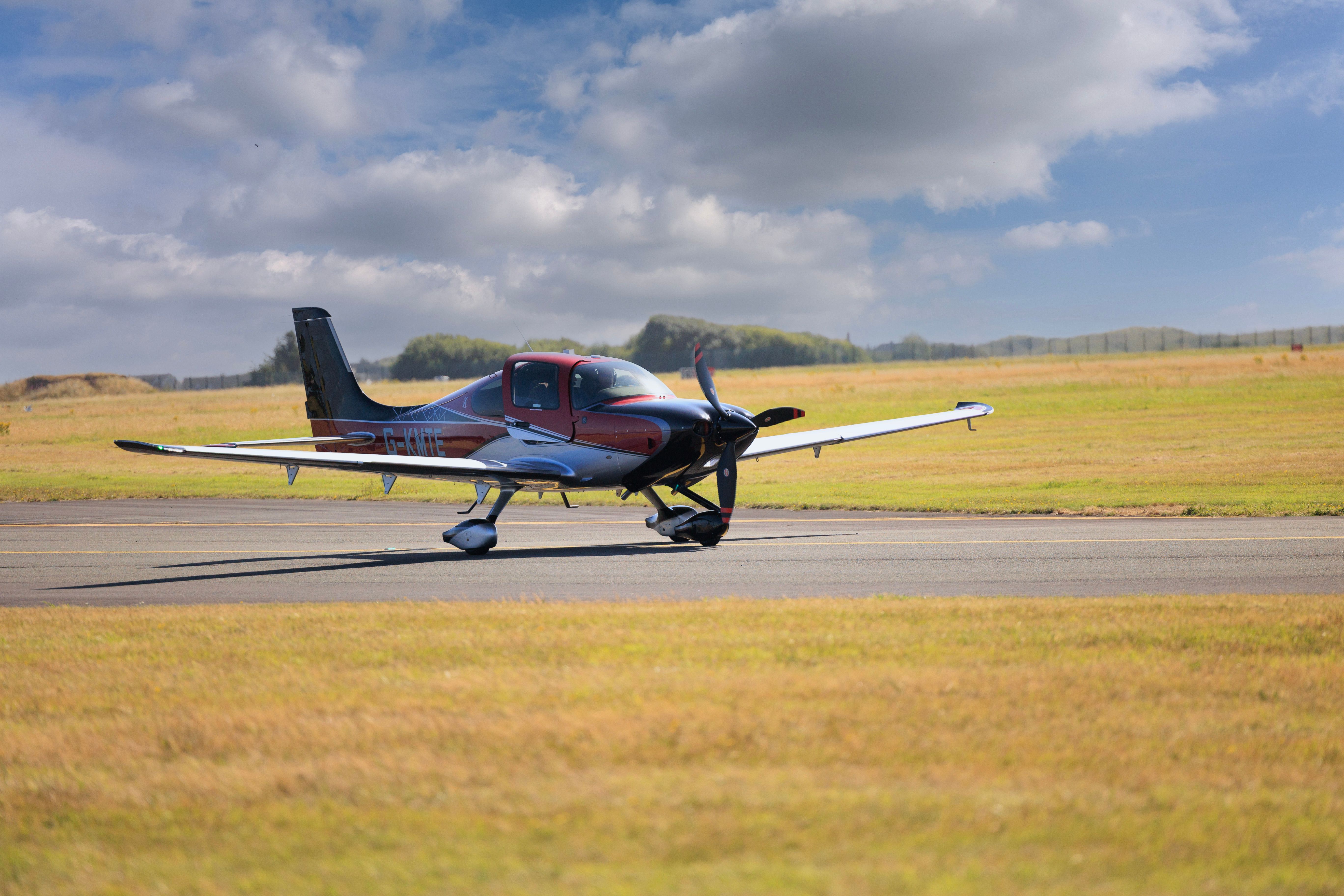
Picture two airplanes parked nose to nose on the same ramp. On the left, a shiny two-seat light sport with a glass panel and a $180,000 price tag. On the right, a 1978 Cessna 172N with faded paint, a mid-time engine, and a $79,000 asking price. Until recently, a pilot holding a sport pilot certificate could legally fly only the one on the left. The 172 next to it — slower to stall, docile, and the most-flown training airplane in history — was off limits because it weighed too much.
That line moved. The FAA's Modernization of Special Airworthiness Certification rule, which nearly everyone calls MOSAIC, threw out the old 1,320-pound weight cap on what a sport pilot may fly and replaced it with a performance test. The question is no longer "how heavy is it?" but "how slowly does it stall?" And that single change pulled a huge slice of the used piston market into reach for pilots flying on a driver's license instead of an FAA medical.
If you are shopping right now, this matters in dollars. Knowing exactly which certified aircraft a sport pilot can fly under MOSAIC tells you whether the used Cessna or Piper in front of you is an airplane you can legally act as pilot in command in, or an expensive lawn ornament until you finish a private certificate. It also tells you something about where prices on legacy four-seaters are heading.
This article is about the buyer's side of the rule. If you want the full regulatory walkthrough, we already covered that in FAA MOSAIC Rule Explained. Here we are answering the practical question: can I fly this specific airplane, and should I buy it?
Key Takeaways
MOSAIC replaced the sport pilot weight limit with a stall-speed limit, so eligibility now depends on the airplane's clean stall speed at maximum gross weight rather than what it weighs empty. That change brings the vast majority of two- and four-seat legacy trainers — Cessna 150s, 152s, 172s, Cardinals, most 182s, and the Piper Cherokee and Warrior and Archer family — into sport pilot territory, as long as the specific model's published numbers fall under the limit. You still may carry only one passenger no matter how many seats the airplane has, you are still day VFR unless you earn the new night endorsement, and you still need endorsements for retractable gear and a constant-speed propeller. Buying a standard-category Cessna or Piper does not change how it is maintained: annuals by an A&P with inspection authorization, airworthiness directives, and Part 43 rules all still apply. For buyers, the practical effect is a much bigger shopping list and steady demand pressure on clean, well-documented legacy singles.
| Quick question | Short answer |
| What decides eligibility now? | The airplane's stall speed in the clean configuration (VS1) at max gross weight, in calibrated airspeed |
| Is there still a weight limit? | No. The 1,320 lb / 1,430 lb seaplane cap is gone for sport pilot privileges |
| How many seats? | Up to four seats, but a sport pilot may carry only one passenger |
| Can I fly a Cessna 172? | Yes — every common 172 model's clean stall speed sits comfortably under the limit |
| Can I fly a Piper Archer or Warrior? | Yes for the common PA-28 models; verify the exact figure in that airplane's POH |
| Retractable gear, like an Arrow? | Allowed with specific training and a logbook endorsement, if the airplane meets the stall limit |
| Do I need a medical? | No, a valid U.S. driver's license still works — with the usual denial and revocation caveats |
| Does the airplane's maintenance change? | No. A standard-category airplane stays standard-category: annual inspections and ADs |
What MOSAIC Actually Changed for Sport Pilots
The FAA announced the MOSAIC final rule at EAA AirVenture in July 2025. The pilot-privilege portions took effect roughly three months after Federal Register publication, while the new manufacturing standards for light-sport aircraft phase in about a year out. That split matters: the expanded flying privileges arrived first, which is why the used market reacted before any new airplane rolled off a line.
What replaced the weight limit?
The old rule defined a light-sport aircraft mostly by mass: 1,320 pounds maximum takeoff weight, two seats, fixed gear, fixed-pitch prop. MOSAIC scrapped the weight number entirely for sport pilot operating privileges and substituted a handling-quality yardstick — the airplane's clean stall speed, meaning flaps up, gear down or retracted as applicable, at maximum certificated gross weight, expressed in calibrated airspeed. The FAA's reasoning, stated throughout the rulemaking, is that stall speed is a far better proxy for how demanding an airplane is to fly and how much energy is in a crash than empty weight ever was.
The final number landed at 59 knots calibrated airspeed (VS1) — up from the 54 knots the agency proposed in 2023, and high enough to bring many four-seat legacy singles within the limit.
Heads Up: Before you buy an airplane specifically because you believe it qualifies, read the current text of 14 CFR 61.315 and compare it to the stall speed printed in that airplane's approved flight manual. A two-knot difference between calibrated and indicated airspeed, or a gross-weight-increase STC in the logbooks, can flip an airplane from eligible to not eligible.
What did not change?
Plenty. A sport pilot still may carry only one passenger, even in a four-seat airplane. You are still limited to day VFR unless you complete the required night training and endorsement and hold at least a third-class medical certificate or qualify under BasicMed, still restricted to 10,000 feet MSL (or 2,000 feet above the terrain, whichever is higher), still need at least three statute miles of visibility and flight with visual reference to the surface, and still need an endorsement to operate in Class B, C, and D airspace. No Class A, no flight in instrument conditions, and no towing. For airplane privileges, a sport pilot remains limited to the appropriate single-engine class, but MOSAIC no longer imposes the old reciprocating-engine restriction.
The medical rule also survived intact: a valid U.S. driver's license serves in place of an FAA medical certificate, provided you have never had a medical application denied, or a certificate suspended or revoked, and provided your most recent special issuance has not been withdrawn. That exception trips up more pilots than any other part of the sport pilot path.
Why It Matters: The passenger limit is the detail buyers most often miss. A MOSAIC-eligible Cessna 182 is a wonderful airplane, but as a sport pilot you can fill exactly two of those four seats. If the goal is flying a family of four, you are shopping for a private certificate first and an airplane second. Our roundup of best family planes under $100K is written for that reader.
Which Used Cessnas and Pipers Likely Qualify
Think of the stall-speed test like a height bar at an amusement park ride. It does not care how much the airplane weighs, how many seats it has, or what it cost. It cares about one measured number. Most of the airplanes on any Midwest flight line duck under that bar with room to spare.
The Cessna side of the ramp
Cessna's high-wing singles are famously slow to stall, which is exactly why they became trainers in the first place. The 150 and 152 publish clean stall speeds in the high 40s knots calibrated. The 172, across essentially every model from the straight-tail through the current 172S, publishes clean stall figures in the mid-to-high 40s calibrated — the 172S flight manual, for example, lists a flaps-up stall at maximum weight in that range. The 177 Cardinal and the 182 Skylane sit around the low 50s. None of those are close calls.
The Piper side
The PA-28 family behaves the same way. Cherokee 140s, 150s, 160s and 180s, the Warrior, and the Archer all publish clean stall speeds in the low 50s knots. The heavier PA-28 variants — including the 235 and Dakota — climb toward the middle and upper 50s and deserve a careful look at the actual flight manual rather than a magazine number. The six-seat PA-32 family is outside sport-pilot eligibility because MOSAIC limits qualifying airplanes to four seats. Piper's classic taildraggers and the Cub family are nowhere near the limit. If you are weighing the two most common choices head to head, our Cessna 172 vs Piper Archer comparison covers the ownership differences that survive the regulation change.
| Model | Typical published clean stall (KCAS, gross) | Sport pilot outlook |
| Cessna 150 / 152 | High 40s | Clearly inside |
| Cessna 172 (all common models) | Mid-to-high 40s | Clearly inside |
| Cessna 177 Cardinal | Around 50 | Clearly inside |
| Cessna 182 Skylane | Low 50s | Inside, verify by model year |
| Cessna 170 / 180 | Upper 40s to mid 50s | Likely inside; tailwheel endorsement needed |
| Cessna 206 | ------- | Not eligible — six-seat configuration exceeds the four-seat limit |
| Cessna 210 | Upper 50s to low 60s | Likely outside; also needs retract endorsement |
| Piper PA-28-140 / 160 / 180 Cherokee | Low 50s | Clearly inside |
| Piper PA-28-161 Warrior / PA-28-181 Archer | Low 50s | Clearly inside |
| Piper PA-28-235 / Dakota | Mid 50s | Inside on most; verify |
| Piper PA-28R Arrow | Mid to upper 50s | Verify; retract and constant-speed endorsements required |
| Piper PA-32 Cherokee Six / Saratoga | ------- | Not eligible — six-seat configuration exceeds the four-seat limit |
| Piper J-3 Cub / PA-18 Super Cub | 30s to low 40s | Clearly inside |
Treat that table as a shopping filter, not a legal document. Published stall speeds vary by model year, by gross weight, and by whether the manual quotes calibrated or indicated airspeed. The airplane's own FAA-approved flight manual and the type certificate data sheet are the authority.
Flying411 keeps used Cessna and Piper listings in one place, so you can compare model years, gross weights and equipment side by side before you start checking stall speeds against the rule.
How do I check a specific airplane?
Work through it in this order. First, open the POH or AFM for that serial number and find the stall speed chart — not the marketing brochure and not a forum post. Second, confirm whether the figure is calibrated or indicated; many older Cessna and Piper manuals list both, and the calibrated number is usually a few knots lower at stall. Third, check the weight and balance section and the logbooks for a gross weight increase STC. Raising maximum takeoff weight raises stall speed, and an airplane that was comfortably inside the limit at book gross can slide outside it after the modification. Fourth, look for anything that alters the wing: vortex generators, STOL kits, tip extensions. These only change your legal stall number if the flight manual supplement says so.
Pro Tip: Ask the seller for a scan of the flight manual and the most recent weight and balance before you book a trip to see the airplane. It costs nothing and it answers the eligibility question in ten minutes.
What This Means If You Are Buying a Used Cessna or Piper
Does the airplane's maintenance change because a sport pilot is flying it?
No, and this is the single most expensive misunderstanding floating around hangars right now. Certification category belongs to the airplane; privileges belong to the pilot. A 1975 Cherokee 180 with a standard airworthiness certificate stays in the standard category forever. It needs an annual inspection signed by an A&P holding inspection authorization, it complies with every applicable airworthiness directive, and any 100-hour inspections still apply if it is used for hire or for flight instruction provided by the owner. You do not get light-sport repairman privileges on it, and you cannot do condition inspections in place of annuals. As the owner-pilot, you may still perform the preventive maintenance listed in Part 43 Appendix A — oil changes, tires, spark plug service — same as any other Part 91 owner.
So budget like a normal owner. A 172 or a Cherokee does not get cheaper to keep because you hold a sport pilot certificate. Our used airplane buying checklist and our guide to checking a used aircraft engine apply exactly the same way.
What happens to prices?
Nobody should promise you a number, but the direction is not mysterious. Demand for clean, low-corrosion, well-documented legacy four-seaters has grown because the population of pilots legally allowed to fly them grew. Brokers and type clubs have reported firmer asking prices on tidy 172s and PA-28s since the rule landed. At the same time, some older two-seat special light-sport airplanes lost their exclusivity — a buyer who would once have paid a premium for an S-LSA to fly without a medical can now consider a 172 for less money.
The trap is paying a "MOSAIC premium" for an airplane whose condition does not justify it. A corroded airframe with a run-out engine is a bad buy whether or not a sport pilot may legally fly it. If a seller is pricing on the rule change rather than on logs and compression numbers, walk. When the number really matters — financing, insurance, a partnership buy-in — read our piece on when a certified aircraft appraiser is worth it.
Good to Know: The airplanes benefiting most are the ordinary ones — mid-time engine, decent paint, honest logs, a used GPS in the panel. That is the profile most first-time buyers should be shopping anyway, and our list of reasons to buy used holds up under the new rule.
What about insurance?
Underwriters move slower than regulators. Expect to be asked for total time, time in type, and a dual checkout with a named instructor before you get a quote on a four-seat single as a sport pilot. That is not a punishment; it is the same treatment any low-time pilot gets in a new-to-them airplane. Ten hours of dual in the make and model is a good thing to have in your logbook before you call an agent, and it will usually pay for itself in the premium.
Flying411 keeps listings, ownership costs and buying guidance in one place, so you can compare an S-LSA and a used 172 on the same screen instead of guessing which one fits your certificate.
Endorsements, Training and the Honest Trade-offs
What extra training do I need for a bigger airplane?
Under the old rules, a sport pilot in a fixed-gear, fixed-pitch two-seater needed no additional sign-offs beyond airspace endorsements. MOSAIC opens the door to more capable machines, and each capability comes with a training requirement and a logbook endorsement from a qualified instructor. Retractable landing gear is one. A controllable-pitch propeller is another. Night flying is a third, and it comes with its own training syllabus and equipment requirements. Tailwheel airplanes still require the standard tailwheel endorsement under 14 CFR 61.31.
Think of it like a driver's license with trailer and motorcycle endorsements on the back. The base license is the same; each new capability is proven separately.
Keep in Mind: An endorsement is a minimum, not a measure of comfort. Moving from a 100-horsepower two-seater to a 230-horsepower Skylane is a genuine step up in speed, weight and workload. Most instructors will want more than the regulatory minimum, and they are right.
Should I just get a private certificate instead?
Run the honest comparison. Sport pilot requires a minimum of 20 hours of flight time and no FAA medical; private requires a minimum of 40 hours and a third-class medical or BasicMed. If your medical history is clean and you plan to carry three passengers or fly at night regularly and eventually add an instrument rating, the private certificate is the cheaper route in the long run. If you cannot hold a medical, or you simply want to fly locally on nice days with one friend aboard, MOSAIC just made sport pilot dramatically more useful than it was.
There is also a middle path: earn the sport pilot certificate now, buy the airplane, and add on to the certificate later. Hours flown as a sport pilot count toward the private certificate, and the airplane you bought works for both.
Fun Fact: The Cessna 172 has been in production, on and off, since 1956 and more than 44,000 have been built — more than any other aircraft type in history. It spent almost seventy years as the definition of a "real" airplane before a rule change quietly made it a sport pilot machine.
Is a light-sport airplane still worth considering?
Absolutely, for the right buyer. Purpose-built LSAs burn four to six gallons an hour, most have modern avionics standard, and many are newer airframes with no corrosion history. A 1976 Cherokee is cheaper to buy and more expensive to modernize. If you are weighing the two, our roundups of the best light sport aircraft and the best small sport planes are the other half of this decision.
Quick Tip: Fuel burn is where the two categories really separate. At current avgas prices, the gap between a 5-gallon-per-hour LSA and a 9-gallon-per-hour Skylane is roughly the cost of a hangar payment if you fly 150 hours a year.
A Practical Pre-Purchase Sequence
Here is the order that keeps buyers out of trouble. Confirm eligibility on paper first: flight manual stall speed in calibrated airspeed at max gross, checked against the current rule text, plus a logbook search for gross-weight STCs. Then do the normal used-airplane work — a pre-purchase inspection by a shop that knows the type and does not work for the seller, a full AD compliance review, a title and lien search, and a careful read of the engine's history including any long periods of inactivity. Then get an insurance quote in writing before you sign, because a quote you cannot afford changes the deal. Finally, book the transition training with an instructor who has real time in the make and model.
Heads Up: Corrosion is the quiet killer in fifty-year-old airframes, especially aircraft that lived near salt water or sat outside for a decade. Spar carry-through structure on the PA-28 and the lower fuselage and strut attach areas on Cessnas deserve a flashlight and a mirror, every time.
Flying411 keeps maintenance guidance, ownership cost articles and aircraft listings in one place, so you can price the annual before you price the airplane.
Conclusion
MOSAIC did not turn a Cessna 172 into a light-sport aircraft. It changed who is allowed to fly one. By swapping a weight limit for a stall-speed limit, the FAA quietly opened the largest and best-supported used piston fleet in the world to pilots flying on a driver's license — and left every maintenance, inspection and airworthiness requirement exactly where it was. Understanding which certified aircraft a sport pilot can fly under MOSAIC comes down to three habits: read the flight manual, check the logs for gross-weight modifications, and verify the current rule text before you write a check.
Buy the airplane on its condition and its paperwork. The rule only tells you whether you may fly it; the prebuy tells you whether you should own it.
When you are ready to compare listings, visitFlying411and see what is on the market today.
Frequently Asked Questions
Can a sport pilot fly a Cessna 172 under MOSAIC?
Yes. Every common 172 model publishes a clean stall speed well under the MOSAIC limit, and the old weight cap that used to disqualify it is gone. You may carry one passenger, and you are limited to day VFR unless you meet the night-training and endorsement requirements and hold at least a third-class medical certificate or qualify under BasicMed. The airplane still requires standard-category annual inspections.
Does my airplane become a light-sport aircraft if it qualifies?
No. A standard-category Cessna or Piper keeps its standard airworthiness certificate and all the maintenance rules that go with it. MOSAIC changed sport pilot operating privileges, not the certification basis of existing type-certificated airplanes.
How do I find my airplane's official stall speed?
Use the FAA-approved flight manual or POH for that specific model and serial range, and look for the stall speed table at maximum gross weight with flaps up. Note whether the figure is calibrated or indicated airspeed. The type certificate data sheet is the other authoritative source, and any flight manual supplement from an STC can supersede the original number.
Can a sport pilot fly a four-seat airplane with three passengers?
No. The rule allows the airplane to have up to four seats, but a sport pilot may carry only one passenger. Two people on board, total, regardless of how many belts are installed.
Do I need a medical certificate to fly a used Cessna as a sport pilot?
Not if you exercise sport pilot privileges with a valid U.S. driver's license. The catch is the history rule: if you have ever had an FAA medical application denied, or a certificate suspended or revoked, or a special issuance withdrawn, you cannot use the driver's license option until that is resolved.
Will MOSAIC push used Cessna and Piper prices up?
It has added demand to the pool of clean, well-documented legacy singles, and brokers have reported firmer pricing on the best examples. It has not made a corroded airframe or a run-out engine worth more. Price the airplane on condition, logs and engine time, and treat eligibility as a bonus rather than a valuation line item.