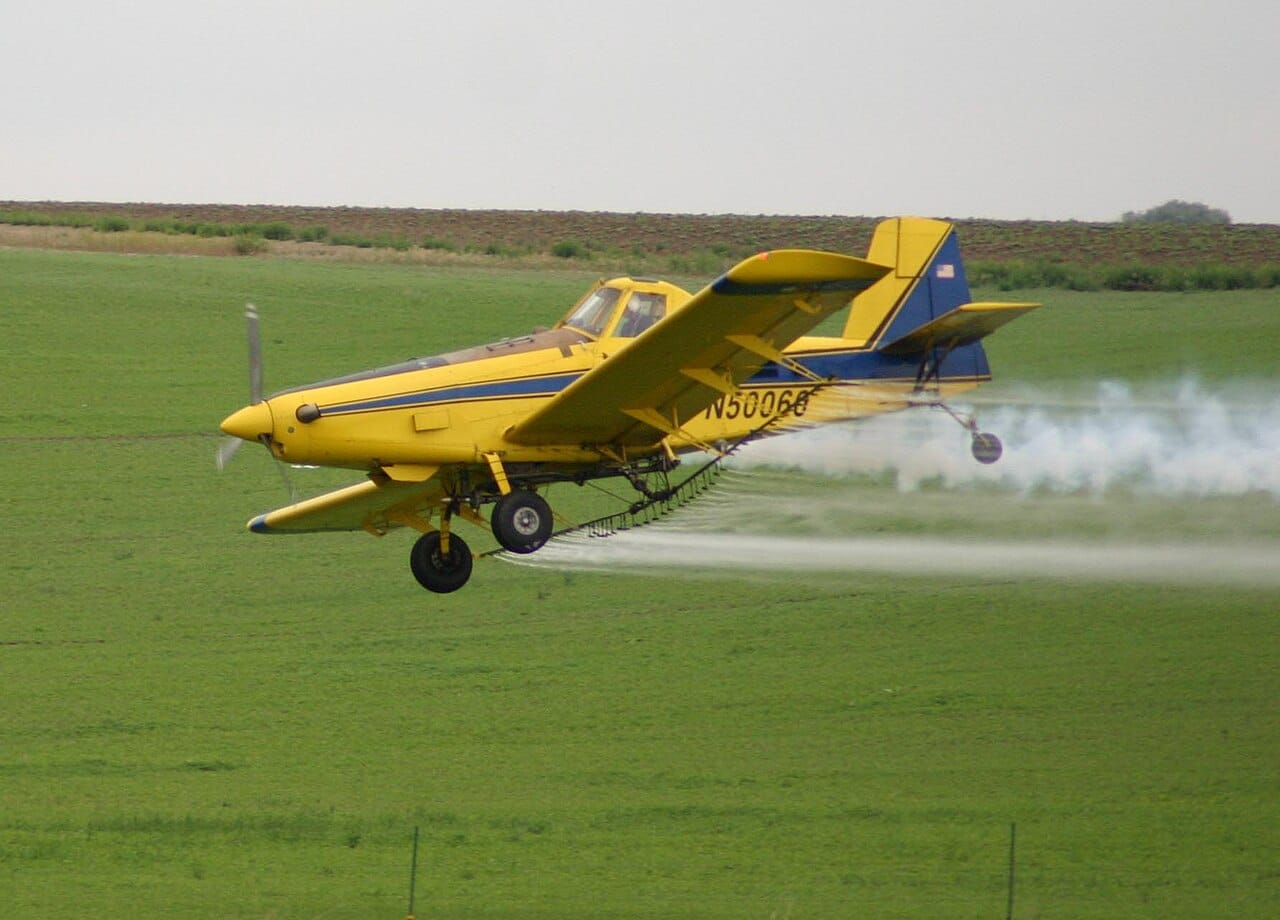
How much does it really cost to overhaul the Pratt & Whitney R-1340 radial in an Air Tractor AT-401, and would that money be better spent converting to a PT6A turbine? Shops that specialize in radials generally quote somewhere in the $70,000 to $110,000 range for a quality R-1340 overhaul with a prop overhaul on top, while a complete PT6A conversion — engine, mount, cowling, prop, fuel system and labor — lands well north of $300,000. That gap is the whole decision, and for most buyers it points one way: fix the radial, or buy an airframe that already has a turbine on the nose.
The catch is that the numbers only tell you half the story. A radial is a little like a well-kept farm truck. It is cheap to buy, easy to find someone who knows it, and you will spend a lot of Saturdays with the cowling off. Here is how to inspect an AT-401 and price the engine decision before you write a check.
Start With the Engine Paperwork, Not the Hour Meter
Time since major overhaul is the first number every seller quotes and the least useful one on a radial. Two R-1340s with 400 hours since overhaul can be worth $60,000 apart depending on who did the work, what went into it, and how the airplane was stored between seasons. Ag airplanes sit idle for months at a time, and corrosion does not care about the tach.
- Who signed the overhaul. Good: a named radial specialist with a work order listing parts by number — shops like Covington Aircraft in Okmulgee, Oklahoma, or Air Repair in Cleveland, Mississippi, are the names you want to see. Bad: "overhauled" in the logbook with no shop, no teardown report and no parts list.
- New versus serviceable parts. Good: new or PMA-new cylinders, new pistons and rings, a yellow-tagged crankshaft with dimensions recorded. Bad: "serviceable" across the board, which can mean everything was cleaned, measured and put back. That is a legal overhaul and a short one. Our guide on overhauled versus serviceable parts explains why the tag wording matters.
- Oil consumption trend. Good: a steady quart to a quart and a half per hour with a clean screen. Bad: climbing consumption, a wet belly that got worse over one season, or metal in the oil filter or sump screen with no follow-up entry.
- Compression and borescope results. Good: a recent differential compression check on all nine cylinders plus borescope photos showing clean exhaust valves. Bad: one or two low jugs "that always read that way" and no borescope.
- Storage between seasons. Good: preservation oil, dehydrator plugs, a hangar. Bad: tied down outside in a humid climate, flown 150 hours a year, prop pulled through by hand every few weeks at best.
Fun Fact: The R-1340 Wasp first ran in 1925 and went on to power the T-6 Texan that trained a generation of World War II pilots. Parts support exists today mostly because the ag and warbird worlds both still need it — the same PMA cylinder can end up on a Texan or an Air Tractor.
What an R-1340 Overhaul Really Costs
Most operators plan an R-1340 overhaul around 1,200 hours, though many run on condition with a good oil analysis and borescope program. At 200 to 400 hours a season, that is three to six seasons between overhauls — which means the overhaul is a calendar event as much as an hours event, and calendar time is where corrosion shows up.
- The engine itself. Expect roughly $70,000 to $110,000 exchange for a full overhaul from a shop that does nothing else, depending on cylinder condition, crankcase repairs and how many accessories come back new. Ask for a written quote with a not-to-exceed figure before teardown.
- The propeller. The Hamilton Standard hub and blades are a separate bill. Budget a hub and blade overhaul on its own line, and confirm the blade model is still supported before you assume it is a routine job.
- Accessories. Magnetos, carburetor, starter, generator and the oil cooler all add up. A "cheap" overhaul quote that excludes accessories is not the number you will pay.
- Removal, install and test. Shop labor to pull the engine, hang the replacement, rig the controls and run it off is real money and is almost never in the exchange price.
- Parts risk. Good: the shop stocks crankcases, cylinders and cranks. Bad: a six-month wait on a master rod bearing during spray season, which costs far more in lost revenue than the part.
Heads Up: Leaded avgas is a long-term risk to radial economics. The FAA and industry EAGLE initiative is working toward an unleaded replacement for the piston fleet, and GAMI's G100UL holds an approved model list STC, but availability at a private ag strip is a different question from availability at a busy FBO. If you fuel from your own tank, ask your supplier what they expect to deliver five years out.
Flying411 keeps agricultural aircraft listings and general aviation singles in one place, so you can compare a piston AT-401 against a turbine AT-402 without juggling five tabs.
What a PT6A Conversion Really Costs
Turbine conversions of the AT-401 do exist under supplemental type certificates, but buyers should verify the exact approved conversion rather than assume it uses a PT6A. One current FAA-listed example, STC SA01281CH, replaces the AT-401's radial with a GE Aviation Czech M601E-11 turbine and matching Avia propeller. Other conversions may exist, but the engine, propeller, approved model applicability, and installation data must be checked against the actual STC for that airplane.
- The engine. The turbine is the single biggest line item, and its cost depends entirely on the approved conversion installed. For example, an AT-401 converted under STC SA01281CH uses the M601E-11 rather than a PT6A, so overhaul intervals, hot-section requirements, propeller support, and shop availability must be budgeted for that specific engine.
- The kit. Engine mount, cowling, exhaust stacks, firewall changes, oil and fuel plumbing for Jet A, torque and ITT instrumentation, new control quadrant. Good: an STC holder who supplies a complete, documented kit and has done this conversion on your serial number. Bad: a one-off field approval with hand-drawn drawings.
- The propeller. A turbine needs a different prop, usually a three-blade ag propeller. That is a five-figure item all by itself.
- Labor. Hundreds of shop hours. Ask for a firm quote and a completion date in writing, with a penalty if the airplane misses the season.
- Serial number eligibility. Confirm the STC's approved model list covers your exact airframe and gross weight. Good: your serial number is listed. Bad: "it should be fine, we will do a field approval."
Add it up honestly and most conversions land somewhere from $300,000 to well over $500,000 all in. At that point, run the comparison the seller will not run for you: what does an already-approved turbine-powered 400-gallon Air Tractor cost on the open market today? If the answer is close to your conversion quote, the conversion rarely makes sense unless you already own the airframe outright and found an unusually good engine.
Why It Matters: A turbine conversion gives you power, not necessarily payload. Unless the STC also raises maximum takeoff weight, you are still limited to the same gross the type certificate allows — you just get there faster and out of shorter strips. Ask specifically what the STC does to the weight limits before you assume you are buying a bigger hopper load.
The Hourly Math, Side by Side
Here is the part that surprises people. When you spread the overhaul across the TBO, the reserve per hour for a radial and a small ag PT6A are closer than the sticker prices suggest. The turbine's real advantage is not a cheaper engine reserve — it is fuel price, dispatch reliability, and the fact that it turns more acres per hour.
| Item | R-1340 radial | PT6A ag variant |
| Typical overhaul cost | About $70,000–$110,000 | Multiples of the radial; verify with the overhaul shop |
| Typical interval | Around 1,200 hours, many run on condition | Around 3,500 hours, hot section near the midpoint |
| Engine reserve per hour | Roughly $60–$95 including accessories | Broadly similar once the hot section is included |
| Fuel | Roughly 35–45 gph of 100LL in ag work | Higher gallons per hour, but Jet A is cheaper per gallon |
| Oil | A quart or more per hour, plus the cleanup | Negligible by comparison |
| Cold start | Priming, coaxing, oil dilution in winter | Push the button |
| Unscheduled downtime | Cylinders, mags, carb — common in season | Rare, but expensive when it happens |
| Parts lead time | Specialist shops only; plan ahead | Global network, deep used market |
If you fly 250 hours a season, the turbine's fuel savings per hour are real but modest, and they do not repay a $400,000 conversion in any timeframe that makes financial sense. If you fly 600 hours in a long season and every hour of downtime costs you a contract, the math changes. Be honest about which operator you are. Our breakdown of PT6A hot section versus full overhaul costs is worth reading before you build the turbine side of your spreadsheet.
Airframe, Hopper and Dispersal Gear
An ag airplane spends its life in chemical mist, dust and low-level turbulence. The airframe, not the engine, is what kills the deal on most pre-buys. A 400-gallon hopper holds over 3,300 pounds of water, and that load goes through the same structure thousands of times a season.
- Wing spar status. Air Tractor airframes are subject to several model- and serial-specific structural inspections and Airworthiness Directives, so the buyer should run the exact AT-401 serial number through the FAA AD database and verify compliance with every applicable spar, fuselage, and flap-system requirement. Do not rely on a generic statement that the “spar inspection was done.”
- Corrosion in the belly and hopper area. Good: clean, repainted structure with no chemical staining around the hopper sump. Bad: white powder on aluminum skins, rust weeping from the steel tube fuselage under the cockpit, or fresh paint that conveniently covers the lower fuselage.
- Hopper condition. Good: no crazing, no cracked corners, a gate that seals. Bad: patched fiberglass around the gate box or a hopper that has been repaired more than once.
- Dispersal system. Good: a complete, matched setup — pump, booms, nozzles, spreader or gate box — that suits the work you actually do. Bad: a mixed pile of parts and a promise that "it all works." Replacing a spreader or a fire gate is a five-figure surprise.
- Damage history. Good: repairs done by an Air Tractor–experienced shop with 337s on file. Bad: wire strikes, gear collapses or overturns with vague paperwork. Ag airplanes hit things; what matters is who fixed it and how.
- Gear legs and attach points. Good: no cracking at the attach fittings, tailwheel assembly tight. Bad: elongated bolt holes, evidence of repeated hard landings on rough strips.
Pro Tip: Wash the airplane before the pre-buy inspection — and be there when it happens. Chemical residue hides corrosion, and a seller who refuses a wash and a good look at the bare belly is telling you something.
Flying411 keeps specialty and utility aircraft alongside mainstream singles and twins, so you can compare what a working airplane costs against the rest of the market before you commit.
Restricted-Category Paperwork and Insurance
This is the section buyers coming from a Bonanza or a Cessna skip, and it is the one that can ground the airplane. An AT-401 carries a restricted-category airworthiness certificate for agricultural operations, not a standard one, and that changes what you may legally do with it.
- Airworthiness certificate and operating limitations. Good: the original restricted certificate with the operating limitations document attached and legible. Bad: missing limitations pages, which have to be reissued before the airplane flies.
- 14 CFR 91.313 rules. Restricted-category aircraft may not carry persons or property for compensation or hire, with narrow exceptions, and flight over densely populated areas is restricted. Make sure your intended use fits before you buy.
- Part 137 certificate. Dispensing agricultural chemicals commercially requires a Part 137 operating certificate in your name — the airplane's history does not transfer it. Good: you already hold one or have started the process. Bad: assuming the purchase includes it.
- Insurance quote before offer. Good: a written quote in hand based on your actual ag and tailwheel time. Bad: finding out after the deposit that underwriters want 500 hours of ag experience you do not have. Ag hull and liability is a small market and pilot experience drives it more than the airplane does.
- Logbook completeness. Good: continuous airframe, engine and prop records, current weight and balance reflecting the installed dispersal gear. Bad: rebuilt logs, or a weight and balance that does not match the equipment bolted to the airplane.
Keep in Mind: An STC'd turbine conversion almost never resells for what a factory-built turbine airframe brings, even with an identical engine. Buyers pay for the type certificate and the paperwork trail, not just the powerplant. Factor that discount into your conversion math as a cost, because you will feel it the day you sell.
The Checklist at a Glance
| Check | What good looks like | Red flag |
| R-1340 overhaul record | Named radial shop, itemized parts list, teardown report | "Overhauled" with no shop name or parts detail |
| Cylinders | New or PMA-new, good compressions, clean borescope | All-serviceable jugs, one weak cylinder "that always reads low" |
| Oil consumption | Steady, roughly a quart to a quart and a half per hour | Rising trend, metal in the screen, no follow-up entry |
| Propeller | Recent hub and blade overhaul, ADs signed off | Prop time unknown or "due soon" with no quote |
| Wing spar caps | Current inspection results, hours remaining stated | No eddy current records, AD status unclear |
| Corrosion | Clean belly, repainted structure, no chemical staining | Fresh paint on the lower fuselage only, rust at tube joints |
| Hopper and gate | No crazing, gate seals, sump clean | Repeated fiberglass repairs around the gate box |
| Dispersal gear | Complete matched system for your work | Mismatched parts, missing spreader or fire gate |
| Damage history | Ag-experienced shop repairs with 337s on file | Wire strike or overturn with vague paperwork |
| Restricted certificate | Certificate plus legible operating limitations attached | Limitations pages missing |
| Insurance | Written quote based on your real ag hours | No quote until after the deposit |
| Turbine conversion (if fitted) | STC lists your serial number, complete kit documentation | One-off field approval, no gross weight clarity |
Before You Sign
Walk away when the spar inspection status cannot be established from the records. Everything else on an ag airplane can be bought, repaired or negotiated, but structure with an unknown history in a machine that pulls hard turns 12 hours a day is not a risk worth pricing. Walk away too if the seller will not let an independent shop pull the cowling and borescope all nine cylinders. A radial with nothing to hide gets inspected in an afternoon.
Get a professional opinion in two places specifically. First, a shop that works on R-1340s every week, not a general A&P who will do their best — the difference between a good radial and a tired one is measured in details only a specialist sees. Second, an Air Tractor–experienced airframe shop for the spar, hopper and gear attach structure. Budget for both inspections as a cost of shopping, not a cost of buying, because the one that talks you out of a bad airplane has paid for itself several times over. If the deal survives, our used aircraft price negotiation playbook covers how to turn inspection findings into dollars off, and our guide to reading an aircraft listing will help you spot what sellers leave out.
On the engine question itself, the honest answer for most buyers is this: overhaul the radial if the airframe is sound and you fly a normal season, and if you want turbine reliability, buy a turbine airframe instead of converting one. Converting makes sense in a narrow case — you already own a strong, low-time-airframe Air Tractor AT-401, you found a good engine at the right price, and the STC covers your serial number cleanly. Outside that case, the conversion quote is usually the down payment on a better airplane. Owners who have run both, including operators who moved up to turbine twins, describe the same pattern we cover in our King Air F90 operating cost breakdown and the MU-2 buyer's guide: the turbine is not cheaper per hour, it is more productive per hour.
Flying411 keeps turbine and piston listings side by side, so you can compare what a converted airframe is asking against what a factory turbine actually sells for.
When you are ready to compare listings, visitFlying411and see what is on the market today.