If you've been shopping for an aircraft or trying to understand what's under the cowling, you've probably run into a confusing situation. Both Continental and Lycoming make an engine called the IO-360. They even share the same displacement. But that's where the similarities pretty much end.
The Continental IO-360 vs Lycoming IO-360 debate has gone on for decades in hangars and forums across general aviation. One is a six-cylinder powerhouse known for silky smoothness. The other is a rugged four-cylinder workhorse with a reputation for lasting forever. Both are fuel-injected. Both push out serious horsepower. But they are built differently, behave differently, and fit different aircraft.
Knowing which one is in the plane you're buying — or choosing for a conversion — can make a big difference in performance, maintenance costs, and long-term reliability. This guide breaks it all down in plain language so you can make an informed call.
Key Takeaways
The Continental IO-360 is a six-cylinder, fuel-injected engine typically rated around 210 hp, while the Lycoming IO-360 is a four-cylinder engine available in 180 hp (parallel valve) and 200 hp (angle valve) versions. Both have 360 cubic inches of total displacement, but they are completely different in design, configuration, and application. The Lycoming IO-360 generally earns higher marks for long-term reliability and comes with a factory TBO of around 2,000 hours, while the Continental IO-360's TBO varies by model — often in the 1,400–2,000 hour range. Overhaul costs also tend to run higher for the Continental due to its extra two cylinders and more complex fuel delivery system.
| Feature | Continental IO-360 | Lycoming IO-360 |
| Cylinders | 6 | 4 |
| Horsepower | ~180–210 hp (model dependent) | ~180–200 hp (model dependent) |
| Displacement | 360 cu. in. | 360 cu. in. |
| Fuel System | Fuel injected (no carb version) | Fuel injected (IO-); carbureted versions also exist (O-360) |
| TBO (typical) | 1,400–2,000 hrs (varies by model) | ~2,000 hrs |
| Common Aircraft | Cessna 337, Cessna 172XP, Cirrus SR-20 | Piper Arrow, Mooney M20, Cessna 172S |
| Turbo Available? | Yes (TSIO-360) | Yes (TIO-360) |
| Overhaul Cost | Generally higher | Generally lower |
If you're comparing engines or researching your next aircraft purchase, Flying411 is a great resource for aircraft listings, tips, and guidance tailored to general aviation pilots and buyers.
Wait — Why Do They Have the Same Name?
This trips up a lot of people, even experienced pilots. The naming makes sense once you understand the system.
Both manufacturers follow a similar designation logic for their aircraft engines:
- I = Fuel injected
- O = Horizontally opposed (flat engine layout)
- 360 = 360 cubic inches of displacement
That's all the name means. It says nothing about how many cylinders are used, how the valve train is configured, or how the crankshaft is designed. Continental and Lycoming each independently landed on 360 cubic inches as a displacement target and built completely different engines to hit it.
Fun Fact: Continental achieved 360 cubic inches using six smaller cylinders, while Lycoming used four larger ones. Same total volume, entirely different architecture.
This means comparing the Continental IO-360 to the Lycoming IO-360 is almost like comparing a V6 car engine to a four-cylinder — same category on paper, very different machines in practice.
Breaking Down the Continental IO-360
A Six-Cylinder Engine With a Smooth Personality
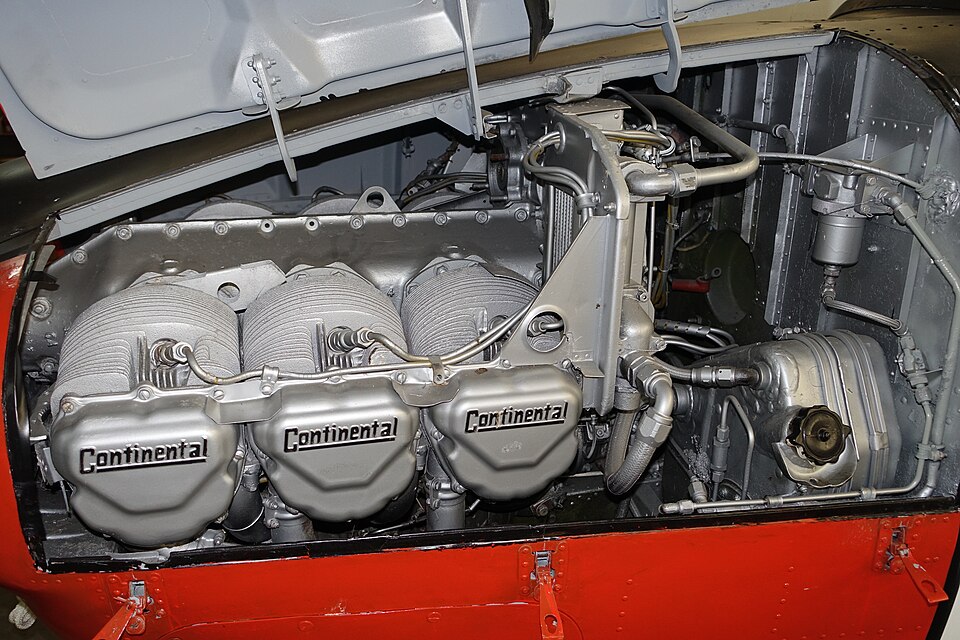
The Continental IO-360 is a six-cylinder, air-cooled, horizontally opposed, fuel-injected engine. It was first certified by the FAA in 1962 and has been produced under Continental Motors — also known as TCM (Teledyne Continental Motors) — ever since.
Most naturally aspirated versions are rated at 210 hp at 2,800 rpm with a compression ratio of 8.5:1. Some lower-compression or alternative-fuel variants produce around 180 hp. There is no carbureted version of this engine — the base model is the IO-360, making fuel injection standard across the entire family.
Aircraft That Use the Continental IO-360
The Continental IO-360 found a home in several well-known platforms:
- Cessna 337 Skymaster — The push-pull twin used a pair of these engines in both front and rear positions
- Cessna 172XP (R172K) — The IO-360-KB gave the 172 a noticeable performance boost over its Lycoming counterpart
- Cirrus SR-20 — The IO-360-ES powers one of general aviation's most popular modern trainers
- Piper Seneca (turbocharged TSIO-360 variants) — A popular light twin platform
Good to Know: The Continental IO-360 is also available in turbocharged form as the TSIO-360. These engines power aircraft like the Piper Seneca II and Mooney 231, producing up to 200+ hp with the added boost of a turbocharger.
Fuel Injection System: The Continental Way
Continental uses a continuous-flow fuel injection system that pumps more fuel than the engine actually uses at any given moment. The excess fuel gets returned to a small header tank, which then feeds back into the main tanks. This is why many Continental-powered aircraft require a fuel return line — an installation detail that adds a layer of complexity compared to the Lycoming setup.
The TCM fuel injector meters fuel based on throttle position and mixture setting, and the system is generally smooth and effective. However, Continental fuel injection systems have a reputation for being trickier to hot start than Lycoming's setup, because residual heat can vaporize fuel in the lines.
Pro Tip: If you're flying a Continental IO-360-powered aircraft in warm weather, mastering the hot-start procedure will save you a lot of frustration on the ramp. Every pilot learns it differently — ask a CFI or type-savvy mechanic for the technique that works for your specific model.
Continental IO-360 TBO and Overhaul Costs
TBO on the Continental IO-360 varies significantly by model. Some naturally aspirated versions list a TBO of around 1,500 hours (such as the IO-360-KB), while the IO-360-ES used in the Cirrus SR-20 is listed at around 2,000 hours. Turbocharged versions typically fall in the 1,200–1,800 hour range.
Because the Continental IO-360 has six cylinders, overhaul costs tend to run higher. More cylinders means more parts — more pistons, more valves, more connecting rods. Some shops have historically estimated six-cylinder Continental overhauls in the range of $25,000–$40,000 or more depending on condition, parts needed, and shop rates. These figures can shift significantly based on current parts pricing and labor, so always get a current quote.
Heads Up: Some earlier Continental IO-360 models had crankshaft-related issues that led to airworthiness directives (ADs). Before buying an aircraft with one of these engines, check the AD history carefully with a knowledgeable A&P or IA.
Breaking Down the Lycoming IO-360
A Four-Cylinder Legend
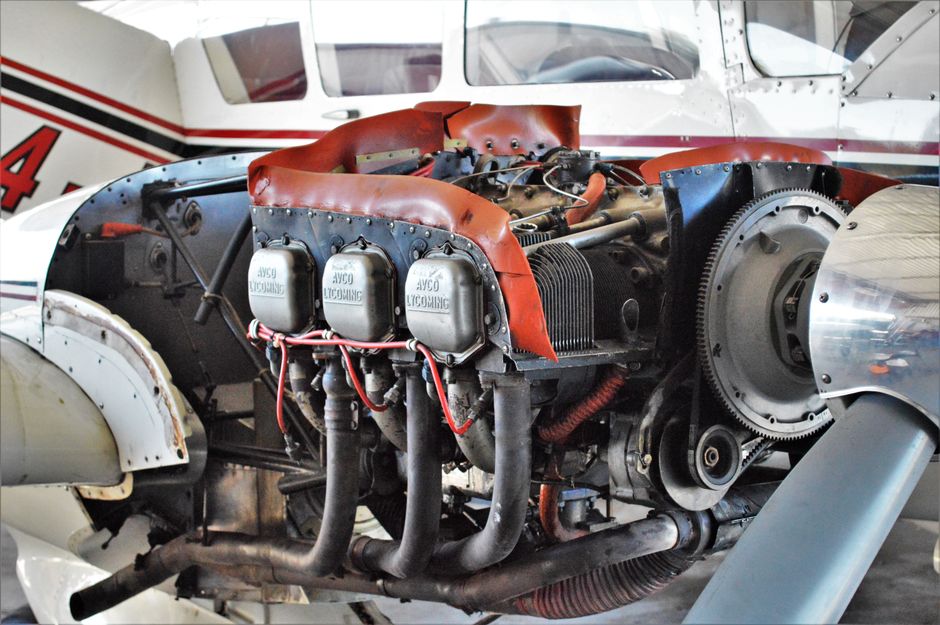
The Lycoming IO-360 is a four-cylinder, air-cooled, horizontally opposed, fuel-injected engine. It's part of the broader O-360 family, which has been powering general aviation aircraft since the mid-1950s. The IO-360 specifically refers to the fuel-injected version; carbureted versions carry the O-360 designation.
The Lycoming engine comes in two main flavors within the IO-360 family:
- Parallel-valve IO-360 — Rated at 180 hp at 2,700 rpm. Compression ratio around 8.5:1. This is the simpler, more common design found in aircraft like the early Piper Arrows and some Mooneys.
- Angle-valve IO-360 — Rated at 200 hp at 2,700 rpm. Compression ratio of 8.7:1. This higher-output version is found in aircraft like the Mooney M20J and SOCATA TB-200.
Fun Fact: The Lycoming IO-360 engine family has been certified for use in hundreds of aircraft types. The parallel-valve 180 hp version, in particular, is often cited by overhaul shops as one of the most reliable and cost-effective engines in all of general aviation.
Aircraft That Use the Lycoming IO-360
The Lycoming IO-360 shows up in a wide range of respected platforms:
- Piper PA-28R Arrow — The IO-360-B1E powered early Arrows beautifully
- Mooney M20E and M20F — The IO-360-A1A gave the Mooney its zippy cruise performance
- Cessna 172S (newer models with the IO-360-L2A) — A highly regarded pairing
- Grumman American AA-5B Tiger — The angle-valve 200 hp version lives here
If you want to go deeper on how the IO-360 compares to its naturally aspirated sibling, the Lycoming O-360 vs IO-360 comparison is a solid read.
Fuel Injection System: The Lycoming Way
Lycoming uses a Bendix RSA (now Precision Airmotive) fuel injection system on most IO-360 models. Unlike Continental's continuous-flow setup, Lycoming's system uses a flow divider to meter fuel to each cylinder individually. Importantly, there is no return line — fuel that enters the system gets burned, which simplifies installation significantly.
This difference matters if you're considering an engine conversion. The Continental IO-360 requires a fuel return line and a header tank. The Lycoming IO-360 does not. Fewer plumbing components generally means fewer potential failure points.
Why It Matters: The absence of a fuel return line in the Lycoming IO-360 installation makes it mechanically simpler and somewhat easier to troubleshoot. For aircraft builders and conversion shops, this can reduce both installation time and long-term maintenance complexity.
Lycoming fuel injection also tends to handle hot starts more predictably once a pilot learns the technique — though "hot-starting a fuel-injected Lycoming" is still a rite of passage for many pilots.
Lycoming IO-360 TBO and Overhaul Costs
The Lycoming IO-360 carries a factory-recommended TBO of 2,000 hours (or 12 years, whichever comes first). Many operators under Part 91 report their engines running well past TBO with good oil analysis and regular maintenance.
Because it has only four cylinders, overhaul costs for the Lycoming IO-360 are typically lower than the Continental six. A reputable shop overhaul on a parallel-valve Lycoming IO-360 has historically run in the range of $15,000–$25,000 or more depending on condition and parts. As with any overhaul, current pricing will vary — but the savings compared to a Continental six-cylinder overhaul are generally real.
For a broader look at how Lycoming and Continental compare across the board, the Lycoming vs Continental vs Rotax aircraft engines overview breaks it down in a useful side-by-side format.
Continental IO-360 vs Lycoming IO-360: Head-to-Head Comparison
Here's where the rubber meets the runway. Let's line these two engines up across the factors that matter most to pilots and aircraft owners.
1. Cylinder Count and Smoothness
The Continental IO-360 wins the smoothness contest on paper. Six cylinders fire more frequently per revolution than four, which produces less vibration. Aviation Consumer has noted that the Continental IO-360-KB in the Cessna 172XP provided a performance punch that far exceeded the Lycoming-powered equivalent, and ran noticeably smoother than a four-cylinder engine.
That said, a properly balanced four-cylinder Lycoming engine with a good prop balance job can come extremely close. Pilots who've flown both often say the gap in smoothness is smaller than expected in real-world flying.
2. Horsepower and Power Delivery
The Continental IO-360 typically produces 210 hp in its standard naturally aspirated form. The Lycoming IO-360 produces 180 hp (parallel valve) or 200 hp (angle valve).
That's a 10–30 hp advantage for the Continental, which translates to a measurable difference in climb performance and cruise speed in comparable airframes. However, pilot reports and engine test data suggest that Lycoming tends to produce its rated horsepower reliably — sometimes exceeding it. Continental engines have sometimes been noted as producing slightly less than their rated figure in real-world conditions.
Keep in Mind: More horsepower isn't automatically better. The right amount of power depends on your aircraft's gross weight, mission profile, and airframe limitations. A 180 hp Lycoming in the right airframe will outperform an overpowered engine in the wrong one.
3. TBO: Time Between Overhaul
| Engine | Typical TBO |
| Lycoming IO-360 (most models) | 2,000 hours |
| Continental IO-360 (N/A models) | 1,500–2,000 hours (model dependent) |
| Continental TSIO-360 (turbocharged) | 1,200–1,800 hours |
| Lycoming TIO-360 (turbocharged) | ~1,800 hours |
The Lycoming IO-360 generally holds an edge in TBO consistency. Many operators regularly exceed the 2,000-hour mark under Part 91 with proper care. Continental TBO figures vary more widely across models, and turbocharged versions tend to carry shorter overhaul intervals.
4. Overhaul Costs
The Lycoming IO-360's four cylinders keep overhaul costs lower than the Continental's six. More cylinders means more pistons, more valves, more exhaust components, and more labor time at the shop. If long-term cost of ownership matters to you — and it should — the Lycoming generally wins this round.
If you're weighing bigger Lycoming engines, the Lycoming IO-540 vs Continental IO-550 comparison offers another useful data point on how the two brands compare at higher power levels.
5. Fuel Injection System Complexity
The Continental IO-360's fuel injection system uses a continuous-flow design with a return line and header tank. The Lycoming uses a simpler, flow-divider system with no return line required. For maintenance and installation, simpler is often better.
Both are fuel injected engines that eliminate the risk of carb ice — a real advantage over carbureted O-360 setups. The carburetor icing risk is eliminated in both of these engines, which is meaningful for IFR flying and operations in moist or cold conditions.
6. Parts Availability and Support
Both Lycoming and Continental actively support their IO-360 families. That said, the Lycoming IO-360 has been installed in thousands of aircraft since the mid-1950s, which means the parts ecosystem is enormous. Nearly any mechanic or overhaul shop in the country has experience with it.
The Continental IO-360 is less common overall, particularly in the six-cylinder normally aspirated form. This can sometimes mean longer parts lead times and fewer shops with deep familiarity.
7. Weight Considerations
The Continental IO-360, with its six cylinders, tends to weigh more than the four-cylinder Lycoming IO-360. Exact weights vary by variant and configuration, but the difference can be meaningful for weight-and-balance calculations — particularly on lighter airframes. If you're doing a conversion on a lighter aircraft, the weight difference between a six-cylinder Continental and a four-cylinder Lycoming could affect useful load noticeably.
8. Turbocharged Variants
Both manufacturers offer turbocharged versions:
- Continental TSIO-360 — Found in aircraft like the Piper Seneca II and Mooney 231. These engines deliver solid turbocharged performance but come with shorter TBOs and higher maintenance demands.
- Lycoming TIO-360 — Less common, but available. Used in the turbocharged Seminole, among others.
The turbocharged Continental IO-360 family has a broader installed base in twin-engine applications, particularly through the TSIO-360-E and related variants. If you're shopping for a turbocharged twin, the Continental TSIO-360 is a more common find on the used market.
For a look at how Continental's turbocharged engines compare within their own lineup, the Continental IO-550 vs TSIO-550 breakdown shows how turbocharging changes the equation at higher displacement.
Quick Tip: If you're considering a turbocharged aircraft, budget for more frequent overhaul cycles and higher operational costs. Turbocharged engines generally have shorter TBOs and are more sensitive to operating technique — especially during cool-down procedures after flight.
9. Common Aircraft Applications
Knowing which engine is in a specific aircraft helps you make smarter buying decisions.
| Aircraft | Engine |
| Cessna 337 Skymaster | Continental IO-360 (both positions) |
| Cessna 172XP (R172K) | Continental IO-360-KB (195 hp) |
| Cirrus SR-20 | Continental IO-360-ES |
| Piper Arrow I/II | Lycoming IO-360-B1E (180 hp) |
| Piper Arrow III/IV | Lycoming IO-360-C1C (200 hp) |
| Mooney M20E/F | Lycoming IO-360-A1A (180 hp) |
| Mooney M20J (201) | Lycoming IO-360-A3B6D (200 hp) |
| Grumman Tiger AA-5B | Lycoming IO-360-A1B6 (180 hp) |
| Cessna 172S | Lycoming IO-360-L2A (180 hp) |
For a detailed comparison of the naturally aspirated Lycoming O-360 versus its fuel-injected IO-360 sibling, the Lycoming O-360 vs IO-360 guide is a helpful starting point.
Which Engine Has a Better Reputation?
This is where the hangar talk gets interesting. In online forums, maintenance shops, and buyer conversations, the Lycoming IO-360 tends to receive more consistent praise for long-term reliability.
Aviation Consumer has reported that engine overhaulers consistently point to Lycoming's four-cylinder, parallel-valve models — especially the IO-360-L2A — as among the most reliable and cost-effective engines in general aviation, with some examples reportedly reaching well beyond 2,000 hours.
The Continental IO-360 has had a more checkered history, particularly earlier models used in the Cessna 337 and Cessna 172XP. Some early Continental IO-360 versions experienced issues including lightweight crankshafts and connecting rod problems, as well as overheating concerns related to specific airframe installations. Many of those early issues were addressed through service bulletins and airworthiness directives over the years, and newer models have a much better track record.
The Continental IO-360 used in the Cirrus SR-20, for instance, has generally performed well with proper care. The key is knowing which specific model and variant you're dealing with — and checking the AD and service bulletin history before any purchase.
Good to Know: The Continental IO-360-ES in the Cirrus SR-20 carries a 2,000-hour TBO and has a solid operational record in that specific installation. Not all Continental IO-360 models are created equal — variant matters a lot.
Curious how the smaller Lycoming engines compare before stepping up to the 360 family? The Lycoming O-235 vs O-320 comparison and the Lycoming O-320 vs O-360 breakdown offer useful context for understanding the full Lycoming lineup.
Cost of Ownership: The Long View
When you add it all up over a decade of flying, the choice between these two engines can have a real dollar impact. Here's a rough framework for thinking about it:
Lycoming IO-360 (4-cyl) tends to win on:
- Lower overhaul labor cost (fewer cylinders)
- More shops familiar with the engine
- Longer real-world service life at lower cost
- Simpler installation (no return fuel line)
- Broadly available used and overhauled examples
Continental IO-360 (6-cyl) tends to win on:
- Higher horsepower output
- Smoother vibration characteristics
- Availability in turbocharged configurations for twins
- Specific airframes where it's the only certified option
If you're buying an aircraft and have a choice, the Lycoming-powered option will often be cheaper to keep flying over time. But if the aircraft you want comes with a Continental IO-360 and it's well-maintained with good logs, don't walk away just because of the nameplate.
For perspective on how these engines compare at the high end of the horsepower spectrum, the Lycoming IO-540 vs Continental IO-550 guide is worth a look.
Whether you're evaluating a Continental-powered Cessna or a Lycoming-equipped Mooney, Flying411 can help you find the right aircraft with the right powerplant for your mission and budget — browse listings and resources at Flying411.
How to Decide: Questions to Ask Before You Buy
Before committing to an aircraft or engine, run through this checklist:
- What does the type certificate allow? Many airframes are STC'd or type-certificated for one engine family only. You may not have a choice.
- What's the time since overhaul (SMOH)? A freshly overhauled Continental can be a better buy than a run-out Lycoming — or vice versa.
- What's the AD and service bulletin history? Have a knowledgeable A&P review the logs, especially for earlier Continental IO-360 models.
- What's your annual flying rate? Engines that sit do more damage than engines that fly. Both of these engines benefit from regular use.
- What's your overhaul budget? If you're on a tighter budget, factor in the six-cylinder Continental's higher overhaul cost.
- What's the parts and service availability in your area? Both brands are well-supported nationally, but local shop familiarity can matter for turnaround time.
- Is the aircraft a twin? If so, the TSIO-360 Continental may be the only game in town for that specific platform.
Conclusion
The Continental IO-360 and the Lycoming IO-360 share a name and a displacement figure, but they take fundamentally different approaches to the same goal: reliable, fuel-injected power for general aviation aircraft. The Continental delivers its performance through six cylinders, smooth operation, and higher peak horsepower. The Lycoming earns its stripes through a simpler four-cylinder design, strong long-term reliability, and lower overhaul costs.
For most pilots shopping for a personal aircraft, the Lycoming IO-360 offers a compelling combination of performance and cost-effectiveness. But context matters. The Continental IO-360 is the right engine for certain airframes, and when it's well-maintained, it delivers excellent service.
The best engine is the one that fits your aircraft, your budget, and your flying mission — not just the one with the most bragging rights on the ramp.
If you want help sorting through the options, Flying411 is a great place to start — with aircraft listings, buyer resources, and practical guidance to help you make the smartest choice for your next airplane.
Frequently Asked Questions
Are the Continental IO-360 and Lycoming IO-360 interchangeable?
No. Despite sharing a name and total displacement, these are completely different engines with different mounting configurations, fuel systems, and airframe certifications. Swapping one for the other typically requires a Supplemental Type Certificate (STC).
Why does the Continental IO-360 have six cylinders while the Lycoming has four?
Both manufacturers designed their engines independently to achieve 360 cubic inches of displacement. Continental used six smaller cylinders; Lycoming used four larger ones. The result is the same total displacement but very different engine architectures.
Which is cheaper to overhaul — the Continental IO-360 or the Lycoming IO-360?
The Lycoming IO-360 is generally less expensive to overhaul due to its four-cylinder design. Fewer cylinders means fewer parts and less labor. Continental's six-cylinder IO-360 overhaul tends to cost more, though exact pricing varies by shop, condition, and current parts costs.
Does the Lycoming IO-360 require a fuel return line like the Continental?
No. The Lycoming IO-360's Bendix RSA-style fuel injection system does not require a return line. Continental's continuous-flow fuel injection returns excess fuel to a header tank, which adds plumbing complexity to the installation.
What is the TBO of the Lycoming IO-360?
The Lycoming IO-360 carries a factory-recommended TBO of 2,000 hours or 12 years, whichever comes first. Many operators under Part 91 operate beyond TBO with proper maintenance and favorable oil analysis results.
Which aircraft commonly use the Continental IO-360?
The Continental IO-360 is found in the Cessna 337 Skymaster, Cessna 172XP (R172K), and the Cirrus SR-20, among others. Turbocharged TSIO-360 variants power the Piper Seneca II and the Mooney 231.
Is the Continental IO-360 a good engine?
It can be, depending on the specific variant and maintenance history. Earlier models had some reliability concerns that were addressed over time with service bulletins and design changes. Newer installations — like the IO-360-ES in the Cirrus SR-20 — have a much stronger track record. Always check the AD and service history for the specific model you're evaluating.