The most expensive mistake buyers make on a used IAI Astra 1125SPX is shopping on airframe hours and asking about the engines last. Two TFE731-40 engines sitting close to their next shop visit, with no Honeywell program behind them, can represent more money than the airplane itself is worth on the ramp — a six-figure surprise per side, arriving on a schedule you do not control. This guide walks through what the SPX actually costs to buy and to own, where the engine money hides, and how the numbers compare with the other fast midsize bargain buyers keep circling: the Learjet 31A.
The short version, as of 2025: expect an acquisition somewhere in the $1.5 million to $3 million band, direct operating costs of roughly $2,000 to $3,300 per flight hour, and an all-in annual budget near $800,000 to $1.2 million if you fly 300 hours behind a two-pilot crew. Engine program status, not total time, is what pushes a given airplane to the top or the bottom of those ranges.
Why the SPX Exists, and Who It Suits
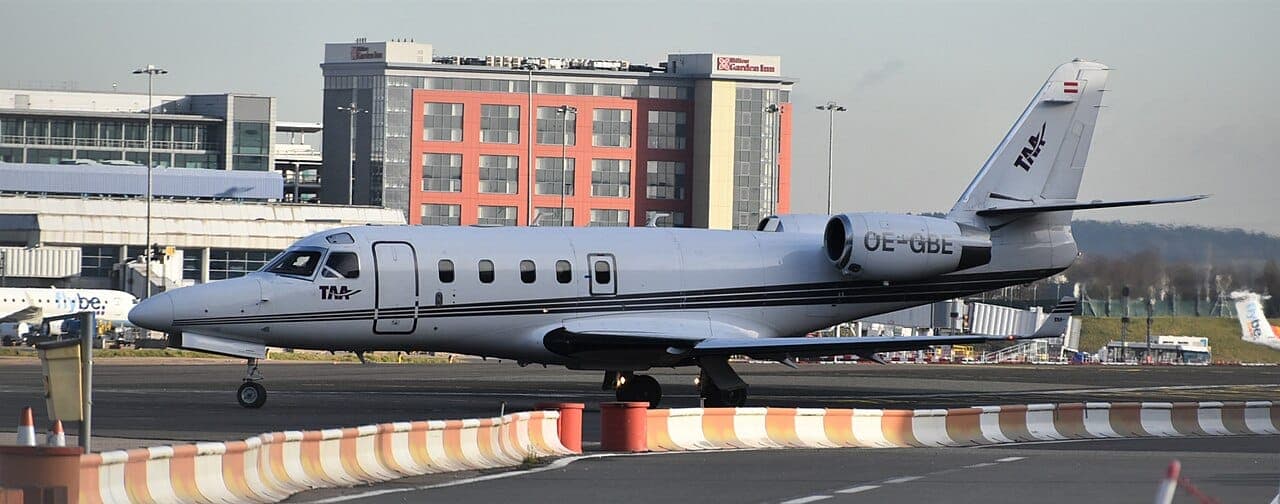
Israel Aircraft Industries developed the Astra as a long-range replacement for its Westwind. The 1125SPX, delivered from the mid-1990s, was the final major Astra variant before the aircraft became the Gulfstream G100. It brought more thrust, winglets, a maximum takeoff weight of 24,650 pounds, and Collins Pro Line 4 avionics. Published range figures vary with payload and operating assumptions, but roughly 2,500–2,700 nautical miles is a more useful planning reference for passenger-carrying missions with NBAA IFR reserves. Longer distances may be achievable under favorable conditions or with reduced payload.
The engines are the headline change. Where the Astra SP used the 3,650-pound-thrust TFE731-3C, the SPX carries the TFE731-40R-200G at roughly 4,250 pounds of thrust per side. That extra push buys better hot-and-high runway numbers and a faster climb to the mid-forties. If you want the variant-by-variant detail, we cover it in Astra 1125 vs Astra SP vs SPX, and the badge question in Astra SPX vs Gulfstream G100 — the G100 is the same airplane after Gulfstream acquired the program in 2001.
Who it suits: an owner flying 200–400 hours a year who wants coast-to-coast capability, a relatively spacious cabin for an older midsize jet, and is willing to trade brand cachet for capability per dollar. The Astra SPX has a cabin height of approximately 5 feet 6 inches, so most adults will need to bend when moving around. Who it does not suit: the owner who wants cheap, because nothing with two TFE731s is cheap.
Fun Fact: The Astra's supercritical wing descends from IAI's cancelled Lavi fighter program. That engineering heritage is why a 1980s-designed midsize jet still cruises in the Mach 0.80 range without burning like one — we dig into it in the Astra supercritical wing story.
Purchase Price: What Moves a $1.5M Airplane to $3M
Asking prices on the SPX vary more than almost any midsize jet, and the spread has little to do with total airframe time. As of 2025, tired examples with off-program engines and dated cabins sit at the low end of the roughly $1.5 million to $3 million range. Airplanes with both engines enrolled on a Honeywell plan in good standing, recent paint and interior, FANS 1/A for oceanic routing, and a clean damage history live at the top — and a G100-badged airframe typically asks a premium over an identical SPX.
Treat the asking price as one half of a single number. A jet priced $400,000 under the market with engines 300 hours from a major shop visit is not a bargain; it is a bill with wings attached. Build your offer as purchase price plus the present cost of getting the engines to a known, covered state.
Heads Up: Ask for the Honeywell program status letter before you ask for anything else. It shows enrollment, hours flown, rate, and whether the account is current. Arrears must be settled before Honeywell will approve a transfer, and that is a negotiation you want to have before the pre-buy, not during it.
Flying411 keeps Astra, G100 and other midsize jet listings in one place, so you can compare engine program status and total time side by side instead of chasing one broker at a time.
The TFE731-40 Reserve: Hot Section, MPI and CZI
Buyers coming from turboprops ask about the "hot section" because that is how PT6A and TPE331 maintenance is structured — a scheduled mid-life peek at the hot end, then a full overhaul. The TFE731 is organized differently, and confusing the two is how budgets go wrong.
What the words actually mean
On the TFE731-40, the major scheduled shop visits are the Major Periodic Inspection (MPI) and Core Zone Inspection (CZI). The standard intervals are 2,500 hours for MPI and 5,000 hours for CZI, but qualifying engines can receive extensions to 3,000/6,000 or 3,500/7,000 hours after completing the required service bulletins. These inspections involve extensive engine disassembly and examination of affected components, with additional repairs depending on condition. Before buying an SPX, verify each engine's current MPI and CZI intervals, completed service bulletins, inspection history and remaining time against Honeywell's applicable maintenance instructions.
Typical shop costs as of 2025: an MPI on a TFE731-40 generally runs in the $300,000 to $550,000 per engine range, and a CZI-level visit in the $700,000 to $1.1 million per engine range, with the spread driven by parts condition, life-limited component replacement and which authorized service center does the work. Life-limited parts alone can add six figures if several come due in the same visit.
Those are the numbers that make the purchase price look small. For a deeper breakdown of the shop-visit side, see Astra 1125 TFE731 engine overhaul cost and the background piece on the TFE731 on the Astra. If you want the contrast with turboprop practice, PT6A hot section vs overhaul explains why the two programs are not comparable line for line.
Keep in Mind: Low-utilization jets can reach calendar-based inspection requirements before they reach hour limits. An SPX flying 120 hours a year is not "saving" engine money the way the hour meter suggests — confirm calendar status, not just hours since new or since last shop visit.
MSP, MSP Gold and the Cost of Staying Off Program
Honeywell's Maintenance Service Plan (MSP) converts those lumpy shop visits into an hourly rate. You pay per engine, per flight hour, and the plan covers scheduled events and defined unscheduled work. MSP Gold extends coverage further, typically adding life-limited parts, broader unscheduled coverage and loaner engine support. Think of it as a prepaid plan: you are not avoiding the cost, you are smoothing it and transferring the risk of a bad teardown.
As of 2025, MSP rates on TFE731-40 engines commonly fall in the $275 to $450 per engine per flight hour range depending on plan tier, utilization and escalation history, which means roughly $550 to $900 per hour for the pair. Honeywell sets and adjusts rates by engine model; get the actual rate in writing from the current operator's invoices.
Enrolling an off-program engine is the expensive part. Honeywell generally requires a buy-in that reflects hours already flown, plus an inspection to establish condition. For an engine well past mid-life, that buy-in can approach the cost of the shop visit you were trying to spread out. Buying an off-program SPX is like buying a house with the original roof — the price looks good right up until weather arrives.
Why It Matters: Engine program status is the single largest swing factor in SPX resale value. An on-program airplane sells faster and holds more of its number, because the next buyer's bank and insurer both understand what they are underwriting.
Fuel, Airframe Maintenance and the Calendar Items
Fuel burn on the SPX runs near 1,500 pounds in the first hour and settles toward 1,100–1,250 pounds per hour in cruise — call it about 180 to 210 gallons per hour on a typical trip. At retail Jet A pricing of roughly $6.00 to $8.00 per gallon in 2025, that is $1,100 to $1,600 per hour, and contract fuel agreements commonly take a dollar or more per gallon off that at participating FBOs.
Airframe maintenance on the SPX follows a phased inspection program. Budget $60,000 to $180,000 a year for scheduled inspections at a typical 250–300 hour utilization, with heavier phases and the occasional structural item pushing the top of that. Then add the calendar-driven big-ticket items that newcomers forget: landing gear overhaul, which lands in the $100,000 to $250,000 range for the set including wheels, brakes and actuators, and the APU where fitted, which has its own Honeywell program and its own hourly rate.
What to Inspect Before You Sign
A proper pre-buy at an experienced Astra or G100 shop runs $35,000 to $75,000 and is the cheapest insurance in this transaction. Make sure it covers: borescope of both engines with the images given to you, not just described; complete engine and APU program status letters; corrosion inspection of the lower fuselage and wing attach areas; landing gear and life-limited component status against calendar dates; AD and service bulletin compliance records on the airframe and engines; Pro Line 4 display and line-replaceable-unit condition, since legacy EFIS tubes and spares get harder to source every year; and current RVSM, ADS-B Out and TCAS II Change 7.1 compliance. If the airplane is destined for oceanic work, confirm FANS 1/A and CPDLC capability, because retrofitting it is a five- or six-figure project.
Our general checklist in 13 things to check before buying a used aircraft engine applies here too, scaled up.
Crew, Hangar and Insurance
The SPX is certified for a two-pilot crew, and there is no single-pilot path. Two full-time pilots cost $180,000 to $320,000 a year combined in 2025 depending on market and experience; contract crew typically runs $1,000 to $1,600 per pilot per day plus expenses, which is the cheaper answer below roughly 150 hours a year. Recurrent simulator training for two pilots adds $18,000 to $35,000 annually.
Hangar for an airplane with a 54-foot wingspan runs $25,000 to $70,000 a year depending on the field. Insurance on a hull valued near $2 million, flown by a qualified two-pilot crew under Part 91, generally falls between $18,000 and $45,000 a year; low-time crews, Part 135 operations and international exposure all push it higher. Add $8,000 to $20,000 for navigation database subscriptions, charts, software and the administrative odds and ends.
Flying411 keeps listings, specifications and ownership-cost guidance in one place, so you can test a budget against real airplanes before you ever call a broker.
Key Takeaways
Put the pieces together and an SPX flown 300 hours a year can carry substantial annual costs. Using the estimates in this guide, fixed expenses for crew, training, hangar, insurance and administration range from roughly $249,000 to $490,000 annually. Scheduled airframe inspections add another $60,000 to $180,000, while fuel, engine programs and other variable reserves total approximately $1,885 to $3,100 per flight hour. At 300 hours, that produces an illustrative annual budget of about $875,000 to $1.6 million, or roughly $2,900 to $5,300 per flight hour after spreading annual expenses across utilization. Actual costs depend heavily on aircraft condition, utilization, fuel pricing and maintenance events. The decisive variable remains the engines: an SPX with current MSP coverage offers more predictable costs, while off-program engines approaching MPI can expose the buyer to major unplanned expenses. For hour-by-hour detail on the family, see IAI Astra 1125 operating cost per hour.
| Cost item | Low | High | Basis |
| Acquisition (2025) | $1,500,000 | $3,000,000 | One-time |
| Pre-buy inspection | $35,000 | $75,000 | One-time |
| Two full-time pilots | $180,000 | $320,000 | Fixed, annual |
| Recurrent training (2 crew) | $18,000 | $35,000 | Fixed, annual |
| Hangar | $25,000 | $70,000 | Fixed, annual |
| Insurance (hull + liability) | $18,000 | $45,000 | Fixed, annual |
| Subscriptions, charts, admin | $8,000 | $20,000 | Fixed, annual |
| Scheduled airframe inspections | $60,000 | $180,000 | Annual, utilization-linked |
| Fuel (180–210 gph) | $1,100 | $1,600 | Per flight hour |
| Honeywell MSP, both engines | $550 | $900 | Per flight hour |
| APU program or reserve | $45 | $110 | Per flight hour |
| Unscheduled maintenance, parts | $150 | $400 | Per flight hour |
| Landing gear overhaul reserve | $40 | $90 | Per flight hour (event: $100k–$250k) |
| TFE731-40 MPI, if off program | $300,000 | $550,000 | Per engine, per event |
| TFE731-40 CZI / overhaul-level visit | $700,000 | $1,100,000 | Per engine, per event |
Astra SPX vs Learjet 31A: Where the Money Differs
The Learjet 31A is the other airplane in this conversation, and it is a different tool. Produced from 1991 until 2003, it pairs TFE731-2-3B engines of about 3,500 pounds thrust with Learjet's delta-fin wing, climbs like a rocket, and certifies to 51,000 feet. It is also substantially smaller: a cabin a little over 12 feet long against the Astra's roughly 17 feet, and range closer to 1,400–1,600 nautical miles with four aboard versus the SPX's near-3,000.
On the engine side, the -2 series carries shorter published intervals than the -40 and its MSP rates per engine are lower, but the 31A's shorter legs mean more cycles per hour flown. If your mission is 600-mile hops, the Lear accumulates cycles and landings quickly; if it is coast to coast, the Astra does the trip nonstop while the Lear stops for fuel — and a fuel stop costs you an hour of crew time, a landing fee, and a cycle on each engine.
| Astra 1125SPX | Learjet 31A | |
| Engines | 2 × TFE731-40R, ~4,250 lbf | 2 × TFE731-2-3B, ~3,500 lbf |
| Cabin length (approx.) | ~17 ft | ~12.4 ft |
| Typical passengers | 6–8 | 5–7 |
| Range, 4 pax (approx.) | About 2,700 nm with NBAA IFR reserves | About 1,400–1,600 nm, depending on conditions |
| Max cruise | Mach 0.80–0.85 class | Mach 0.81 class |
| Certified ceiling | 45,000 ft | 51,000 ft |
| MTOW | ~24,650 lb | ~17,000 lb |
| Fuel burn (typical) | 180–210 gph | 155–180 gph |
| Direct cost per hour (2025) | $2,000–$3,300 | $1,700–$2,700 |
The honest summary: the 31A is cheaper per hour and more fun to fly, the SPX carries more people farther with a cabin adults can stand up in, and the gap in hourly cost is smaller than the gap in capability. If your trips regularly exceed 1,200 miles or you routinely fill the seats, the Astra usually wins on cost per seat-mile. Our comparisons with the Learjet 60 and the Hawker 800 round out the midsize picture.
Ways to Spend Less
Buy on program and pay for it. Paying $250,000 more for an airplane with both engines on MSP in good standing is usually cheaper than the buy-in on an identical off-program jet. The trade: a higher purchase price and a hard hourly cost you cannot defer in a slow year.
Use contract crew below 150 hours a year. Day rates of $1,000–$1,600 per pilot beat two salaries until roughly the 150-hour mark. The trade is availability and continuity — your preferred crew may be flying somebody else's airplane the week you need them.
Join a contract fuel program. Savings of $0.75 to $1.50 per gallon at participating FBOs is real money at 200 gallons an hour. The trade is that you fly where the program works, and the best rates are rarely at the most convenient FBO on the field.
Consider a tired-cabin, strong-engine airplane. Paint and interior refurbishment is predictable work you can schedule; an unplanned CZI is not. The trade is that you will look at worn leather for a few years, and resale buyers do judge cabins.
Base somewhere with cheaper hangar and no personal property tax on aircraft. The spread between metro and secondary-field hangars can exceed $30,000 a year. The trade is a longer drive to your own airplane, which quietly erodes the reason you bought it.
Pro Tip: Before you commit, price the two most likely next five years — one where nothing unusual happens, one where an engine comes off at year three. If the second scenario breaks you, the airplane is too much airplane regardless of what the asking price says.
Making the Decision on an SPX
A used IAI Astra 1125SPX gives you transcontinental range and a stand-up cabin for the price of a well-equipped light jet, and that bargain is real — but only if you treat the two TFE731-40s as the main asset and the airframe as the wrapper around them. Get the program status letter, borescope both engines, check calendar limits as carefully as hours, and build an offer that reflects the next shop visit rather than the last annual inspection. Do that and the SPX is one of the better value propositions in the midsize market. Skip it and you have bought someone else's deferred bill. If you are still deciding whether this is the right first jet at all, our guide on whether the Astra 1125 makes a good first jet is the place to start.
When you are ready to compare listings, visitFlying411and see what is on the market today.
Frequently Asked Questions
How much does a TFE731-40 hot section cost on an Astra SPX?
The TFE731 does not have a standalone hot section inspection the way a PT6A does. The mid-life shop visit is the Major Periodic Inspection, which includes hot section restoration, and it typically runs $300,000 to $550,000 per engine as of 2025. The full-life Core Zone Inspection runs considerably more, commonly $700,000 to $1.1 million per engine depending on life-limited parts.
Is an off-program Astra SPX ever worth buying?
Yes, if the discount genuinely exceeds the cost of the next shop visit plus a contingency, and if your utilization is high enough that you will reach the event on a schedule you can plan around. Get a Honeywell buy-in quote during the inspection period so you are comparing real numbers rather than hopeful ones.
Does MSP transfer to a new owner?
Transfer requires Honeywell's approval and typically a fee, and any arrears on the account must be cleared first. Make the transfer a written condition of closing rather than an assumption.
Can one pilot fly an Astra SPX?
No. The aircraft is certified for a two-pilot crew, and that requirement drives a significant share of the fixed cost. Budget for two qualified, type-rated pilots and their recurrent training.
Is a Gulfstream G100 more expensive to operate than an SPX?
Operationally they are the same airplane with the same engines, so hourly costs are effectively identical. The G100 badge usually commands a higher asking price and can be slightly easier to resell, but it does not change your fuel burn or your MSP rate.