Some airplanes hide a good story inside their shape. The IAI Astra is one of them. From the outside, it looks like a tidy midsize business jet built to carry a small group of passengers in comfort. Look closer at the wing, though, and you find a piece of fighter jet thinking bolted onto a corporate airframe. The Astra supercritical wing is the part that makes this jet special, and its roots reach straight into one of Israel's boldest military projects.
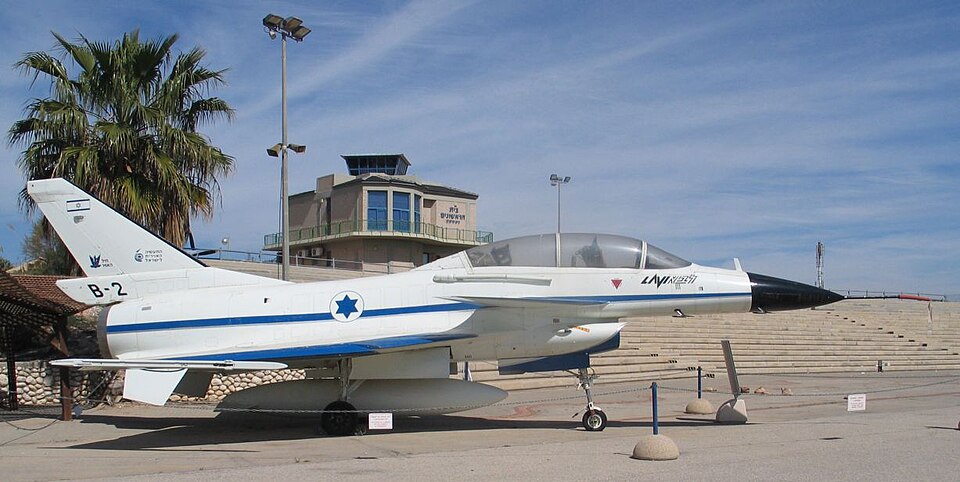
That project was the Lavi, a home-grown fighter that never made it into service. Its engineers were chasing speed, sharp handling, and efficiency at the very edge of what a wing could do.
When that same know-how fed into a business jet, the result was an airplane that flew faster and smoother than the model it replaced. A corporate jet quietly wearing a fighter program's homework is a stranger tale than most cabin passengers will ever hear.
Key Takeaways
The Astra supercritical wing is a high-speed wing design that is widely credited to aerodynamic work tied to the IAI Lavi fighter program. A supercritical wing is shaped to cut the drag that piles up as a plane nears the speed of sound. By carrying fighter-era design thinking into a business jet, Israel Aircraft Industries gave the Astra better speed, longer legs, and smoother high-altitude cruising than its older Westwind cousin.
| Topic | Key Point |
| Astra supercritical wing | A high-speed wing whose design is credited to Lavi-era aerodynamic work |
| What it does | Reduces wave drag as the plane approaches the speed of sound |
| The Lavi link | Both programs ran at IAI in the 1980s, and fighter know-how fed the jet |
| Main benefit | Faster cruise, better range, and a smoother ride up high |
| Legacy | Lived on through the Astra SP, SPX, and the Gulfstream G100 |
If digging into aircraft design and history is your thing, Flying411 is a friendly place to browse aircraft, engines, parts, and aviation know-how all in one spot.
Meet the Astra: A Business Jet With Fighter DNA
The IAI Astra 1125 is a twin-engine midsize business jet built by Israel Aircraft Industries. It grew out of an older jet called the Westwind, which itself started life in the United States before the program moved to Israel. The Astra kept a few pieces of the Westwind, like the tail and the engine mounts. Almost everything else was new, and the biggest change of all was the wing.
The first Astra prototype took to the air in March 1984. Production models followed, the jet earned its certification, and customer deliveries began in the mid-1980s. It was powered by a pair of trusty turbofan engines tucked into the rear of the fuselage. You can read more about the Westwind and Astra lineage and how one grew into the other.
Here is the fun part. The Astra was not built to be a race plane. It was built to carry business travelers across long distances in a comfortable cabin. Yet the engineers gave it a wing that would look right at home on a high-performance aircraft. That choice shaped how the whole jet flew.
Fun Fact: The Astra prototype flew in 1984, which was before the Lavi fighter made its own first flight in late 1986. The two projects were being worked on at the same time, so the fighter's design ideas were flowing into the jet even before the Lavi itself left the ground.
The Astra sits in the midsize class, a sweet spot between small light jets and big heavy ones. That class is crowded and competitive. To stand out, a jet needs to fly fast, go far, and sip fuel wisely. The wing is where a lot of that magic happens, so it made sense to put serious engineering muscle into it.
Before we get into the fighter connection, it helps to understand what a supercritical wing is and why it matters so much.
What a Supercritical Wing Does
A supercritical wing is a special wing shape built to fly well at high speeds, close to the speed of sound. To see why it is clever, you first need to understand a problem that all fast planes run into.
Why Speed Creates Drag
When a plane flies, air speeds up as it flows over the top of the wing. The faster the plane goes, the faster that air moves. At some point, even though the plane itself is still slower than sound, the air over the wing can reach the speed of sound. When that happens, a shock wave forms right on top of the wing.
That shock wave is bad news. It creates a kind of drag called wave drag, which acts like a sudden brake. It can also cause the smooth airflow to peel away from the wing, which hurts lift and makes the ride rough. For years, this was the wall that kept planes from flying efficiently near the speed of sound.
Think of it like a boat pushing a wave in front of it. The faster the boat goes, the bigger the wave, and the harder the engine has to work. A plane near the speed of sound fights a similar wall of resistance.
How the Supercritical Shape Helps
A supercritical wing solves this in a smart way. Instead of the classic wing shape that is rounded on top, a supercritical wing looks almost flattened on the upper surface. The bottom is more curved, and the back of the wing curves down more sharply. The front edge is rounder and blunter than you might expect.
This shape does a few helpful things at once:
- It keeps the air over the top from speeding up too much, so the shock wave forms later and stays weaker.
- It pushes the shock wave farther back along the wing, where it does less harm.
- It helps keep the airflow stuck to the wing instead of peeling away.
- It lets the plane fly faster before wave drag becomes a real problem.
The idea traces back to research done at NASA, where an engineer named Richard Whitcomb helped pioneer the shape. His wing looked so odd that people joked it seemed upside down. Over time, it proved its worth, and versions of it spread across airliners and business jets around the world.
Good to Know: According to NASA research, supercritical wing shapes can improve fuel efficiency at high speeds by roughly 15 percent. That is a big saving over the life of an aircraft, which is why so many modern jets use some form of this design.
The payoff is simple to picture. A jet with a supercritical wing can cruise faster and burn less fuel while doing it. For a business jet trying to get people across a continent quickly and cheaply, that is a huge advantage. Now the question becomes where the Astra's version of this wing came from.
The Lavi: Israel's Ambitious Fighter Program
To understand the Astra's wing, you have to meet the Lavi. The name means "young lion" in Hebrew, and the project carried the hopes of an entire national industry.
The IAI Lavi fighter was a bold plan to build a modern, home-grown warplane from a clean sheet. Israel had built fighters before, but those were often based on other countries' designs. The Lavi was meant to be truly Israeli, tuned to the country's own needs, and packed with the latest technology. Work on it ramped up in the early 1980s.
The Lavi had a striking shape. It used a tailless delta wing with small wings up front called canards. This layout gives a fighter sharp, quick handling and strong lift. The trade-off is that the plane becomes hard to fly by hand, so the Lavi used a computer-driven fly-by-wire system to keep it steady. It was a serious, cutting-edge machine.
Here is a quick look at the two aircraft side by side:
| Feature | IAI Lavi | IAI Astra |
| Type | Multirole fighter | Midsize business jet |
| Wing layout | Tailless delta with canards | Swept low-mounted wing |
| Purpose | Combat and speed | Passenger comfort and range |
| First flight | Late 1986 | 1984 |
| Fate | Cancelled in 1987 | Built and sold for years |
The Lavi flew for the first time on the last day of 1986, and early testing reportedly went well. Sadly, the program did not last. The cost was enormous, and there was heavy pressure from abroad because the fighter could have competed with American jets on the export market. In August 1987, the Israeli cabinet voted to cancel the Lavi. The vote was famously close, decided by a single vote.
Why It Matters: Even though the Lavi never entered service, the engineering brains and design work behind it did not vanish. That deep well of aerodynamic knowledge found new homes, and one of those homes was the wing of a business jet.
Only a small number of Lavi prototypes were ever built, and a couple survive today in museums. The fighter is remembered as one of aviation's great "what if" stories. Yet its influence lived on in quieter ways, which brings us to the heart of this story.
How the Lavi Design Shaped the Astra Supercritical Wing
Here is where the two threads come together. During the 1980s, Israel Aircraft Industries was running both the Lavi fighter project and the Astra business jet project at the same time. The same company, the same era, and in many cases overlapping pools of engineering talent. When it came time to design a fast new wing for the Astra, the advanced aerodynamic thinking from the Lavi effort was right there to draw on.
Reports across aviation sources widely credit the Astra's supercritical wing to design knowledge borrowed from the Lavi. In plain terms, the fighter program helped teach the jet program how to build a better wing. The result was a wing that gave the Astra a real edge over its older Westwind roots. Here is what that fighter-influenced wing brought to the business jet:
- Higher cruise speed. The supercritical shape let the Astra push closer to the speed of sound before drag got in the way, so it could fly faster in normal service.
- Lower wave drag. By taming the shock wave that forms at high speed, the wing cut the drag penalty that slows most jets down as they speed up.
- Better fuel efficiency. Less drag means the engines work less hard to hold a given speed, so the jet burned fuel more sparingly on long trips.
- Longer range. Saving fuel and cutting drag translated into a jet that could carry people farther on a single tank.
- Smoother high-altitude flight. Keeping the airflow attached to the wing helped the Astra ride more smoothly in the thin air where business jets like to cruise.
- A cleaner, more modern airfoil. The Astra's wing was a fresh design rather than a warmed-over old shape, which gave engineers room to get the details right.
- A low-mounted wing that freed up cabin space. The new wing sat low on the fuselage instead of through the middle, which opened up headroom and made the cabin feel roomier.
- A strong foundation for future models. The wing worked so well that it became the base for later, even more capable versions of the aircraft.
That is a long list of wins from one smart design choice. The airplane that came out the other side was quicker, more efficient, and more comfortable than the jet it replaced. If you want to see how it stacked up in the real world, it is worth looking at the Astra against the Learjet 60 and compared with the Citation VII, two rivals from the same class.
Keep in Mind: Borrowing a design idea is not the same as copying a part. The Astra did not use a Lavi wing. It used the aerodynamic lessons and design methods that the fighter program developed, then applied them to a very different kind of aircraft.
The engines mattered too. A great wing works best behind reliable power, and the Astra used a well-regarded turbofan family to get the most out of its airframe. You can read more about its TFE731 engines and why they suited the jet so well.
Curious what a specific airframe and engine combination is worth on today's market? Flying411 offers aircraft valuation tools that help owners and buyers price a jet with confidence.
Astra vs. Westwind: What the New Wing Changed
To really feel the impact of the supercritical wing, it helps to compare the Astra to the jet it grew out of. The Westwind was a solid aircraft for its time, but it carried an older wing design that had its limits.
The Astra kept the Westwind's tail and engine setup, then paired them with an all-new wing and a reworked fuselage. The wing was the star of the upgrade. Here is a simple side-by-side of what changed:
| Feature | Older Westwind | Newer Astra |
| Wing design | Older, conventional airfoil | Modern supercritical wing |
| Wing position | Mid-mounted through the cabin | Low-mounted below the cabin |
| High-speed drag | Higher near top speed | Lower, thanks to the new shape |
| Cabin headroom | More limited | Increased with the low wing |
| Overall performance | Good for its era | Faster and more efficient |
Notice how many of the gains trace back to that one wing. Moving the wing lower did more than help airflow. It also cleared space inside the cabin, since the wing structure no longer had to pass through the middle of the passenger area. That gave riders a taller, airier cabin, which is a big deal on longer flights.
The change was so successful that the Astra earned a strong reputation among midsize jets. It became a real contender in a class full of tough competition. If you like this era of aircraft, it lines up well with top midsize jets of that time, many of which leaned on similar high-speed wing ideas.
Heads Up: A supercritical wing is more complex and costly to build than a plain wing. The back part of the wing carries heavy loads over a thin structure, so it takes careful engineering. That extra effort is one reason this design shows up on jets rather than small hobby planes.
The lesson here is clear. A single well-chosen upgrade can lift an entire aircraft. The Astra did not need a brand-new tail or brand-new engines to leap ahead of the Westwind. It needed a better wing, and fighter-era thinking helped deliver exactly that.
The Wing That Kept On Giving: From Astra to Gulfstream
A good design rarely stops with one aircraft, and the Astra's wing is a fine example. Once the base airplane proved itself, Israel Aircraft Industries kept refining it through a series of improved models.
First came the Astra SP, which arrived at the end of the 1980s with upgraded avionics, a modern cockpit, and small aerodynamic tweaks. Then came the Astra SPX, which added more powerful engines, winglets on the wingtips, and further polish. Each step built on the same core wing philosophy that started the whole family. You can dig into how the SP and SPX differ from the original.
The story did not end there. The SPX was later renamed and sold as the Gulfstream G100 after Gulfstream took over the program. That means an aircraft with roots in an Israeli fighter's aerodynamics ended up wearing one of the most respected names in business aviation.
There is even a military chapter. A version of the jet served as a small transport and medical aircraft, showing the design's flexibility. You can read about the C-38A variant that put the airframe back into uniform.
Here is a quick timeline of how the family grew:
- Astra 1125: The original, with the fresh supercritical wing and low-mounted layout.
- Astra SP: Better avionics, updated cockpit, and refined aerodynamics.
- Astra SPX: Stronger engines, winglets, and modern systems.
- Gulfstream G100: The SPX under a new name and a famous brand.
- Follow-on designs: The wing's ideas helped shape later, larger IAI business jets.
Pro Tip: When you shop for an aircraft in a long-running family like this one, learn how the variants differ before you compare prices. A newer model with winglets and updated engines can offer very different performance from an early example, even if the two look almost the same on the ramp.
That long life is the mark of a truly good design. The wing kept earning its keep across model after model, decade after decade. For fans of unusual aircraft heritage, it sits alongside some of the rare aircraft still flying that carry surprising stories in their shapes.
Who Flies the Astra Today, and Is It Worth Owning?
Plenty of Astras remain in service around the world, doing the work they were built for. They carry business travelers, serve as private jets, and fill charter roles. The combination of a strong wing, decent range, and midsize comfort keeps them useful even years after they rolled off the line.
For buyers, the appeal is value. Older midsize jets like the Astra can cost far less to purchase than a brand-new aircraft while still offering solid transcontinental performance. That makes them a popular pick for owners stepping up from lighter jets or turboprops.
Of course, buying a jet is about more than the sticker price. You have to think about the numbers behind daily flying. It helps to study hourly operating costs before you commit, since maintenance, fuel, and inspections all add up over a year of use.
If you already own an Astra or a similar jet and want to know what it is worth, it pays to value your aircraft with real market data rather than a rough guess. Prices in the used jet market move over time, so a fresh look keeps you grounded in reality.
Quick Tip: Before any purchase, arrange a thorough pre-buy inspection with a trusted mechanic. The wing and airframe on these jets are proven, but every individual aircraft has its own history, and a careful check protects your wallet.
The Astra also holds up well against its old rivals. Buyers who cross-shop the class often line it up next to the Hawker 800 to weigh speed, cabin size, and cost against one another. Each jet has its strengths, and the Astra's efficient wing remains one of its calling cards.
Ready to buy, sell, or research a jet like the Astra? Flying411 puts aircraft listings, engines, parts, and trusted aviation services in one convenient place, so you can move forward with clarity.
Conclusion
The Astra supercritical wing is proof that great ideas travel in surprising directions. A wing born from the study of high-speed fighter flight found a second life carrying business travelers in comfort. The Lavi may have ended as one of aviation's famous almosts, but its aerodynamic thinking soared on inside a jet that flew for decades and even earned a Gulfstream badge. That is a fitting legacy for a fighter called the young lion.
The next time you see a midsize business jet slicing cleanly through the sky, remember that its calm, efficient flight might owe a quiet debt to a warplane that never went to war. Good engineering has a way of outliving the projects that create it.
Want to keep learning about aircraft with stories worth telling, or find your own next jet? Visit Flying411 and browse a marketplace built for people who love to fly.
FAQs
Is the Astra supercritical wing the same as the Lavi's wing?
No, they are not the same physical wing. The Astra used a modern supercritical airfoil, while the Lavi used a delta wing with canards. The connection is in the shared aerodynamic design knowledge, not in identical parts.
Why is a supercritical wing curved on the bottom?
The rounded lower surface and flatter top help control how fast air moves over the wing at high speed. This shape keeps the shock wave weaker and farther back, which lowers drag near the speed of sound.
What engines does the IAI Astra use?
The Astra is powered by two turbofan engines from the TFE731 family, mounted on the rear of the fuselage. Later models like the SPX received more powerful versions of these engines.
What happened to the Astra after Gulfstream got involved?
The Astra SPX was renamed and sold as the Gulfstream G100 after Gulfstream acquired the program. The wing and airframe carried on under the new name and brand.
Are IAI Astra jets still flying today?
Yes, many Astras remain in service as private, business, and charter aircraft. Their efficient wing and solid range keep them useful and popular on the used market.