Owning a private helicopter is no longer a fantasy reserved for billionaires and heads of state. The market has grown, the technology has improved, and the options today span everything from approachable four-seat piston machines to ultra-luxury twin-engine cabins that rival a flying penthouse. If you have been wondering what the world's best helicopter for private use actually looks like, the honest answer is: it depends entirely on what you need.
Some buyers want a nimble, affordable machine for weekend flying and pilot training. Others want a cabin that seats ten executives with Wi-Fi, leather armchairs, and a bar. Most buyers fall somewhere in the middle, looking for a solid balance of comfort, range, safety, and cost of ownership. All of those needs are valid, and the good news is that today's private helicopter market has a strong answer for every one of them.
This article breaks down the top contenders across every category, walks you through what to look for before you buy, and gives you a clear picture of what owning one actually costs.
Key Takeaways
The best helicopter for private use is the one that matches your budget, mission, and how often you plan to fly. The Robinson R44 Raven II remains the most popular and affordable entry point for private owners, with a purchase price starting around $375,000 to $400,000 for a new model and relatively low operating costs. At the luxury end, models like the Bell 525 and Sikorsky S-92 deliver executive cabin experiences with price tags well into the tens of millions. For buyers looking for a turbine step-up without breaking the bank, the Robinson R66, Airbus H130, and Bell 429 each represent strong middle-ground options.
| Model | Class | Approx. Starting Price | Passengers | Best For |
| Robinson R44 Raven II | Light Piston | ~$375,000 - $400,000 (new) | Up to 4 | First-time owners, training, sightseeing |
| Robinson R66 NxG | Light Turbine | ~$1.1M (new) | Up to 5 | Step-up turbine buyers, personal transport |
| Airbus H130 (ACH130) | Light Turbine | ~$3M+ | Up to 7 | Eco-conscious, VIP tours, urban routes |
| Bell 429 | Medium Twin | ~$7M+ | Up to 7 | Executive travel, EMS, high-performance use |
| Leonardo AW109 GrandNew | Medium Twin | ~$7M+ | Up to 7 | Luxury private transport, style-focused buyers |
| Airbus ACH160 | Heavy Twin | Starting ~$15M+ | Up to 10 | Long-range VIP, corporate fleets |
| Bell 525 Relentless | Super-Medium | Contact manufacturer | Up to 16 | C-suite travel, superyacht owners |
| Sikorsky S-92 Executive | Heavy | ~$27M+ | Up to 10 | Heads of state, ultra-high net worth buyers |
At Flying411, we help aviation enthusiasts and buyers stay informed about the aircraft market, from beginner rotorcraft to top-tier private machines. Bookmark our blog for guides, tips, and in-depth comparisons.
Why Private Helicopter Ownership Has Changed
For a long time, owning a helicopter felt like a privilege locked behind an impossible price wall. That wall has not disappeared, but it has gotten a lot shorter in the right places.
Modern manufacturing, smarter materials, and more efficient engines have pushed several excellent models into ranges that a serious aviation enthusiast with the right income can genuinely afford. At the same time, the luxury end of the market has gone in the opposite direction, investing heavily in cabin experience, bespoke interiors, and technology that feels closer to a business jet than a traditional rotorcraft.
The private helicopter market in 2025 and 2026 is also seeing the early arrival of hybrid-electric concepts and increased automation in cockpit systems, which will reshape what buyers expect in the years ahead.
Good to Know: Several manufacturers now offer factory customization programs, allowing buyers to spec interiors, color palettes, entertainment systems, and even brand collaborations before taking delivery.
What to Think About Before You Buy
Choosing a private helicopter is not just about picking your favorite model from a list. The right machine depends on a handful of practical factors that are easy to overlook in the excitement of shopping.
Intended Use and Mission Profile
This is the single most important question. Are you flying for personal recreation on weekends? Commuting between cities? Running a small charter or tour operation? Traveling to remote properties?
A weekend pilot who wants to hop between islands or explore the countryside has very different needs from an executive who needs a quiet, connected cabin for working in-flight. The mission drives everything: range, passenger capacity, comfort, and how much you will realistically spend per hour in the air.
Range and Endurance
Helicopters are not long-haul machines by nature, but some models stretch impressively far. The Leonardo AW139, for example, has a range of up to around 776 miles, which opens up routes that smaller machines simply cannot complete. If your use case involves crossing large distances, range needs to be near the top of your checklist.
For shorter regional hops, a light piston model with 300-plus miles of range is often more than enough.
Fun Fact: The word "helicopter" is said to derive from the Greek words helix (spiral) and pteron (wing), making it literally a "spiral wing" machine.
Passenger Capacity and Cabin Comfort
A Robinson R44 carries four people including the pilot. A Sikorsky S-92 can carry up to ten passengers in executive configuration. The number of seats matters, but so does the quality of those seats.
If you are flying clients or family members regularly, comfort factors like noise insulation, legroom, seat materials, climate control, and window size matter more than you might expect on paper. A bumpy, loud ride in a small machine gets old fast.
Operating Costs: The Number Most Buyers Underestimate
Purchase price is just the beginning. The real financial commitment is the ongoing cost of ownership.
For a Robinson R44, total annual operating costs at around 100 flight hours per year are estimated in the range of $35,000 to $42,000, according to cost calculators based on manufacturer data. At 200 hours annually, that figure climbs considerably as fuel, maintenance reserves, and overhaul provisions scale up.
Turbine-powered machines cost significantly more per hour to operate due to higher fuel burn, more complex maintenance requirements, and costlier overhaul schedules. Before committing to any model, run a full cost-of-ownership analysis based on your expected annual hours.
Pro Tip: Many first-time helicopter buyers underestimate overhaul reserve costs. Life-limited components on any helicopter must be replaced at set intervals regardless of condition, and setting aside reserves per flight hour from day one is the smartest financial habit you can build.
Parts Availability and Maintenance Support
A helicopter that is hard to maintain is a helicopter that sits on the ground. Before buying, research whether qualified mechanics in your area are trained on your chosen model, and how readily available parts are. Robinson helicopters, for example, have an enormous global service network. Some rarer European turbine models can have longer wait times for parts and fewer certified technicians in certain regions.
The World's Best Helicopters for Private Use
Here is a close look at the top private helicopter models available today, organized from the most accessible to the most exclusive.
Robinson R44 Raven II: The People's Champion
If there is one helicopter that has done more to make private ownership realistic for regular pilots, it is the Robinson R44. It has long been described as the benchmark for affordable, reliable rotorcraft, and that reputation is well-earned.
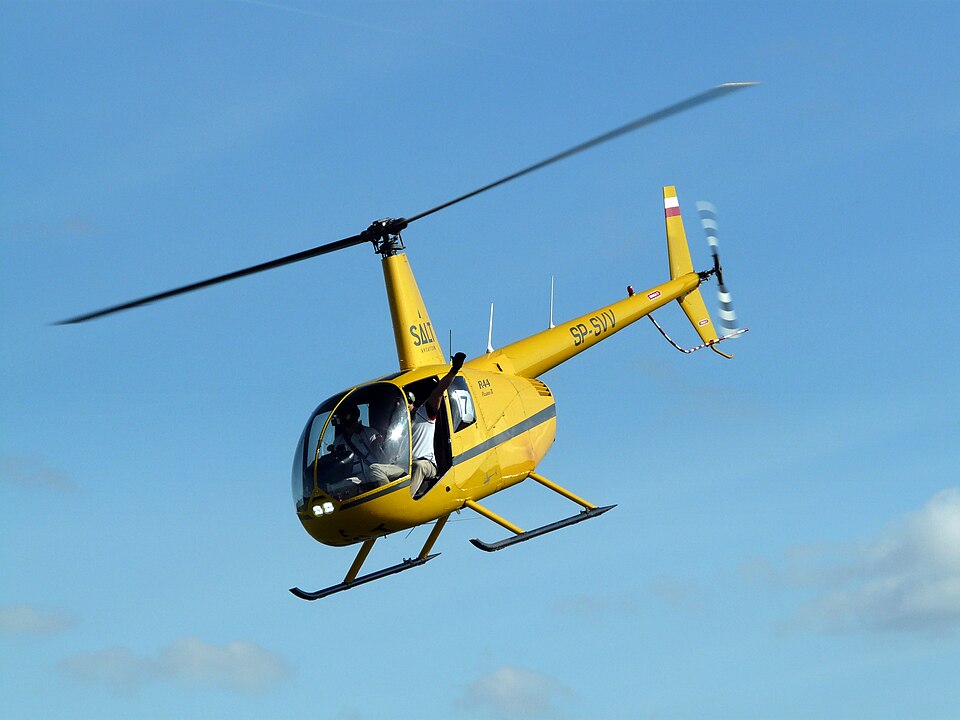
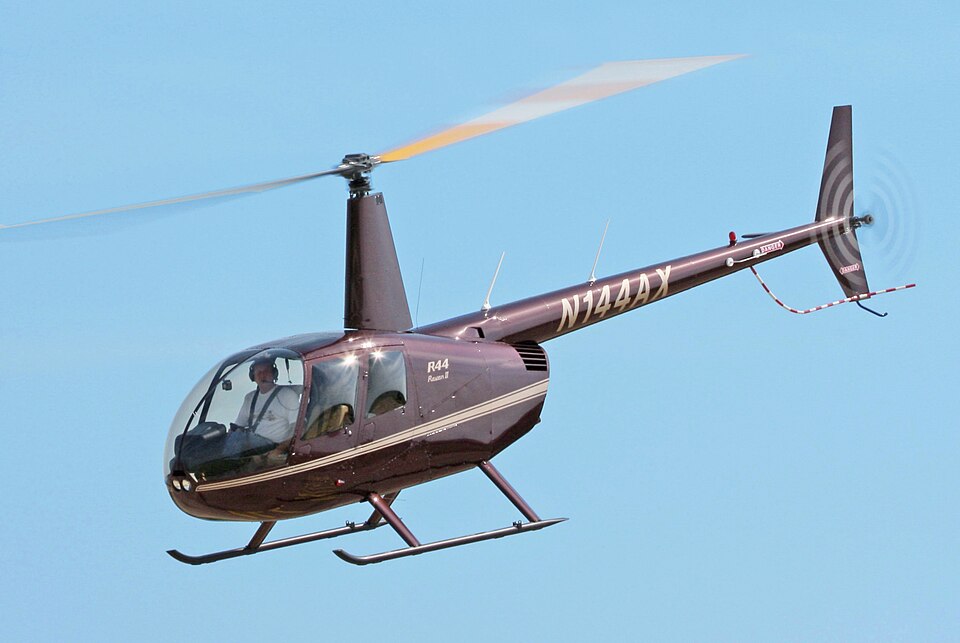
The R44 Raven II seats up to four people including the pilot, reaches a maximum speed of around 149 mph (240 km/h), and has a range of approximately 348 miles (561 km). New models start in the range of $375,000 to $400,000, and a healthy used market offers earlier examples at significantly lower prices.
Operating costs are among the lowest of any private helicopter. Robinson's own published estimates put fixed annual costs at around $14,135 (based on insurance and fixed-cost items), with fuel running approximately $98 per hour at average consumption rates. Setting aside overhaul reserves per hour brings the full picture into view, but the R44 still comes in well below comparably capable turbine machines on a cost-per-hour basis.
What makes it special is simplicity. Between 100-hour inspections, very little routine service is required. The machine is responsive, honest to fly, and backed by one of the largest service networks in general aviation.
For pilots curious about smaller, more compact personal rotorcraft, our guide to one-person mini helicopters is a great starting point for understanding the lighter end of the market.
Keep in Mind: The R44 uses a piston engine, which burns about half the fuel of a comparable small turbine. This is a major financial advantage for owners who prioritize keeping operating costs low.
Robinson R66 NxG: The Turbine Step-Up
The R66 NxG, refreshed and relaunched in 2025, is Robinson's answer for buyers ready to move from piston to turbine power without jumping into the multi-million-dollar bracket. It seats up to five people, cruises at around 120 knots, and bridges the gap between light personal transport and more capable commercial-grade machines.
The 2025 refresh added a 2-axis autopilot, updated Garmin avionics, an impact-resistant windshield, and new premium interior materials, available across three trim levels: the base Southwood, the mid-tier Palo Verde, and the limited-edition Riviera.
For pilots who have outgrown the R44 and want turbine reliability without the complexity and cost of larger twin-engine machines, the R66 NxG is a compelling choice.
Airbus H130 / ACH130: Clean, Quiet, and Refined
The Airbus H130, sold in its premium ACH130 corporate configuration, has become one of the most recognizable light turbine helicopters in the world. It accommodates up to seven passengers, uses Airbus's Fenestron shrouded tail rotor for significantly reduced noise, and delivers a clean, modern cabin with large panoramic windows.
In its standout ACH130 Aston Martin Edition, the interior is finished with signature Aston Martin leather, bespoke trim, and custom color options, bridging the worlds of luxury automotive design and aviation in a way that few other aircraft have managed.
It is particularly popular for VIP tours, urban corporate transport, and buyers who want a helicopter that is as quiet for the community below as it is elegant inside.
Fun Fact: The ACH130 Aston Martin Edition is said to be one of the first aircraft to result from a full design collaboration between a luxury automaker and a helicopter manufacturer, producing an interior that is unmistakably inspired by the brand's signature car aesthetics.
Bell 429: Twin-Engine Performance for Serious Missions
The Bell 429 is a twin-engine light helicopter with a strong reputation for smooth ride quality, advanced avionics, and a spacious, configurable cabin. It seats up to seven passengers, and its dual-engine setup offers the additional safety margin that many private buyers and charter operators prioritize.
It is a favorite for executive charter, emergency medical service, and high-performance private travel. Its quiet operation and modern cockpit make it a strong all-arounder for buyers stepping into the medium-class segment.
At Flying411, we cover everything from beginner-friendly rotorcraft to top-tier executive machines. Check out our best helicopters for beginner pilots guide if you are just starting your journey.
Leonardo AW109 GrandNew: Italian Luxury in the Sky
The AW109 GrandNew is the flagship of Leonardo Helicopters' lighter lineup, and it carries all the craft and elegance you would expect from an Italian manufacturer. It accommodates up to seven passengers, reaches speeds of around 177 mph, and can travel approximately 589 miles per flight.
It is available in a standard executive configuration and in special versions, including a Versace edition with handcrafted leather upholstery and bespoke interior design that is genuinely unlike anything else in the sky at its price point.
If style, refinement, and Italian engineering matter to you, the AW109 GrandNew is hard to ignore.
Airbus ACH160: The Long-Range Performer
The twin-engine ACH160 is built for buyers who need serious range without sacrificing anything on the comfort side. It accommodates up to ten passengers, has a range of approximately 460 nautical miles, and cruises at around 178 mph. Its Fenestron tail rotor keeps noise levels low, and double-pane windows further dampen the in-cabin sound environment.
The cockpit uses Airbus's Helionix avionics suite with a four-axis autopilot and traffic-collision avoidance systems, making it one of the most technologically complete light-to-medium private helicopters on the market.
Why It Matters: The ACH160 holds around 68 patents, reflecting the depth of engineering investment Airbus has made in this platform. For buyers who want cutting-edge technology alongside genuine range and comfort, it is one of the most complete packages available.
Bell 525 Relentless: The Flying Boardroom
The Bell 525 is in a class of its own when it comes to cabin volume. Its flexible interior can seat up to 16 passengers plus two pilots, and can be fully reconfigured to suit anything from a corporate boardroom setup to a lounge-style entertainment space. Optional high-speed Wi-Fi, near-silent cabin noise levels, and energy-absorbing seats make it genuinely productive in the air.
It is positioned at the top of Bell's super-medium lineup, and it targets superyacht owners, C-suite executives, and buyers who want the closest thing to a business jet experience in a rotorcraft package.
Sikorsky S-92 Executive: Presidential Standard
The Sikorsky S-92 is the helicopter that has been used to transport sitting U.S. presidents, and that lineage says something about its standards. In its executive head-of-state configuration, it carries up to ten passengers with reclining leather seats, high-speed internet, a premium audio system, and a stocked bar.
At a price of over $27 million, it sits at the very top of the private helicopter market. For buyers at that level, it is arguably the most complete, most proven, and most refined private helicopter in production.
Comparing the Top Models at a Glance
| Model | Engine Type | Max Passengers | Approx. Range | Key Strength |
| Robinson R44 Raven II | Piston | 3 + pilot | ~348 miles | Affordability, simplicity |
| Robinson R66 NxG | Turbine | 4 + pilot | ~325 NM | Value turbine step-up |
| Airbus H130 / ACH130 | Turbine | 7 | ~390 NM | Quiet, scenic, refined |
| Bell 429 | Twin Turbine | 7 | ~400 NM | Safety, performance |
| Leonardo AW109 GrandNew | Twin Turbine | 7 | ~589 miles | Italian luxury |
| Airbus ACH160 | Twin Turbine | 10 | ~460 NM | Range, technology |
| Bell 525 Relentless | Twin Turbine | 16 | High | Cabin volume, boardroom use |
| Sikorsky S-92 Executive | Twin Turbine | 10 | Long | Prestige, proven heritage |
What Does Private Helicopter Ownership Actually Cost?
Buying the helicopter is step one. Understanding the annual cost of keeping it in the air is what separates buyers who thrive as owners from those who get surprised.
Fixed Annual Costs
These are the costs you pay regardless of how many hours you fly. They typically include:
- Insurance: Ranges widely by model, pilot experience, and coverage type. For an R44, annual insurance costs are estimated at roughly $12,000 to $14,000 when combining liability and hull coverage. Larger turbine machines carry significantly higher premiums.
- Hangar or tie-down fees: Depending on location, hangar rental can run from around $100 to $300 per month for smaller machines, and considerably more for larger aircraft in busy metro areas.
- Annual inspections: Required by regulation and typically factored into fixed costs.
Variable Costs Per Hour
These scale with how much you fly:
- Fuel: The R44 burns roughly 13 to 15 gallons per hour. At current fuel prices, hourly fuel costs can run in the range of $90 to $105. Turbine machines burn significantly more.
- Maintenance reserves: Setting aside funds per flight hour for eventual overhauls is essential. On the R44, overhaul reserve contributions are estimated at around $139 per flight hour when accounting for both engine and airframe.
- Unscheduled repairs: Budgeting a per-hour reserve for unexpected maintenance is a smart practice for any aircraft owner.
Heads Up: Many first-time helicopter owners focus only on purchase price and fuel, overlooking the mandatory overhaul costs that come with life-limited components. These are non-negotiable and must be planned for from the start.
Full Annual Budget Estimate (R44 as a Baseline)
At approximately 100 flight hours per year, total operating costs for a Robinson R44 are estimated in the range of $35,000 to $42,000 annually. At 200 hours, that figure increases as variable costs scale up. Financing the purchase price adds additional monthly debt service on top of operating expenses.
For turbine aircraft, budget significantly higher. A medium twin-engine machine might easily run two to four times that figure annually depending on hours flown.
If you are researching aircraft ownership costs and market options, Flying411 has a growing library of practical guides designed to help you make confident, informed decisions.
Safety, Licensing, and Key Considerations for Private Owners
Pilot Licensing Requirements
In most countries, operating a private helicopter requires a valid helicopter private pilot license (PPL-H) at minimum. This involves ground school, a set number of flight hours, written exams, and a practical flight test. Commercial operations require additional ratings and certifications.
If you are new to rotary-wing flying, the R44 and R22 are widely used as training platforms precisely because they are approachable and well-supported. You can read more about approaches and safe practices around helicopters in our dedicated safety guide.
Weather, Environment, and Operational Limits
Private helicopters, like all aircraft, have operational limits in extreme weather. Strong crosswinds, icing conditions, and very high altitudes all impose real constraints. Understanding those limits before you fly is not optional.
There are reasons, for example, why helicopters cannot simply fly to the top of Everest despite what the movies suggest. Altitude, air density, and rotor performance are intertwined in ways that affect every helicopter at high elevations.
Weather events are also worth understanding. Knowing what happens if a helicopter gets struck by lightning can help new owners and pilots feel more grounded in their situational awareness.
Good to Know: Modern helicopters are built to handle lightning strikes with specially designed bonding and protection systems, but understanding the risks and avoidance strategies is always part of good aeronautical decision-making.
Maintenance and Airworthiness
Every helicopter must undergo regular inspections to remain legally airworthy. These are not optional suggestions. Keeping up with required maintenance schedules, working with certified mechanics, and using approved parts are all conditions of legal flight. Skipping or delaying maintenance is both illegal and dangerous.
The Future of Private Helicopters
The private helicopter market is not standing still. Several trends are shaping what buyers will see in the coming years.
Electric and hybrid propulsion is moving from concept to early production. While fully electric helicopters capable of meaningful range and payload are still in development, hybrid systems are beginning to appear in demonstrators and smaller personal aircraft. The environmental and cost-efficiency advantages are significant.
Increased automation in cockpit systems is making modern helicopters easier and safer to fly. Multi-axis autopilots, enhanced ground proximity warning systems, and synthetic vision are becoming standard on mid-range and higher models rather than premium extras.
Autonomous rotorcraft technology is advancing in commercial applications and is expected to eventually filter into private aviation in some form, though meaningful autonomous private helicopters for general use are still likely years away.
For buyers who want something truly compact and futuristic right now, there are also interesting personal aviation concepts emerging. Our breakdown of single-person helicopter concepts looks at some of the more experimental directions the market is heading.
Pro Tip: If you are buying a helicopter with long-term resale value in mind, established brands with large global fleets and robust service networks tend to hold value better than rarer or more exotic models with limited support infrastructure.
Conclusion
Finding the world's best helicopter for private use is really about finding the best helicopter for your private use. The Robinson R44 is a genuine marvel of affordable personal aviation. The Sikorsky S-92 is a marvel of prestige and capability. And everything in between exists on a spectrum that rewards buyers who take the time to match the machine to the mission.
Do your homework on total cost of ownership, not just the sticker price. Know how many hours you actually plan to fly. Think about where you live, what routes matter to you, and how much support infrastructure exists for your chosen model in your region. Those answers will point you to the right rotorcraft faster than any feature list.
When you are ready to go deeper, Flying411 is your resource for honest, practical aviation guidance, whether you are buying your first helicopter or upgrading to something that makes even your pilot friends jealous.
Frequently Asked Questions
What is the most affordable helicopter for private use?
The Robinson R44 Raven II is widely considered the most accessible quality helicopter for private ownership, with new models starting in the range of $375,000 to $400,000 and a used market that offers earlier examples at lower prices. Its relatively low operating costs make it a popular starting point.
Do I need a special license to fly a private helicopter?
Yes. In most countries, you need at minimum a helicopter private pilot license (PPL-H) to legally fly a helicopter. This requires flight training, written exams, and a practical flight test administered by an aviation authority.
How much does it cost to maintain a private helicopter each year?
Annual costs vary widely by model and usage. For a Robinson R44 flown at around 100 hours per year, total operating costs are estimated in the range of $35,000 to $42,000 annually, covering fuel, insurance, maintenance, and overhaul reserves. Turbine-powered machines typically cost significantly more per year.
Can a private helicopter fly long distances?
It depends on the model. Lighter piston helicopters like the R44 have a range of around 300 to 350 miles per flight. Larger turbine models like the Leonardo AW139 can travel considerably further, with ranges approaching 700 to 800 miles in some configurations. For truly long-distance travel, refueling stops are generally planned into the route.
What is the difference between a piston helicopter and a turbine helicopter?
Piston helicopters use a gasoline-burning piston engine, similar in concept to a car engine. They are less expensive to operate and maintain, making them popular for personal and training use. Turbine helicopters use a jet-fuel-burning turboshaft engine, which delivers more power, higher reliability at altitude, and greater performance, but at significantly higher fuel and maintenance costs. Most medium and large private helicopters use turbine power.