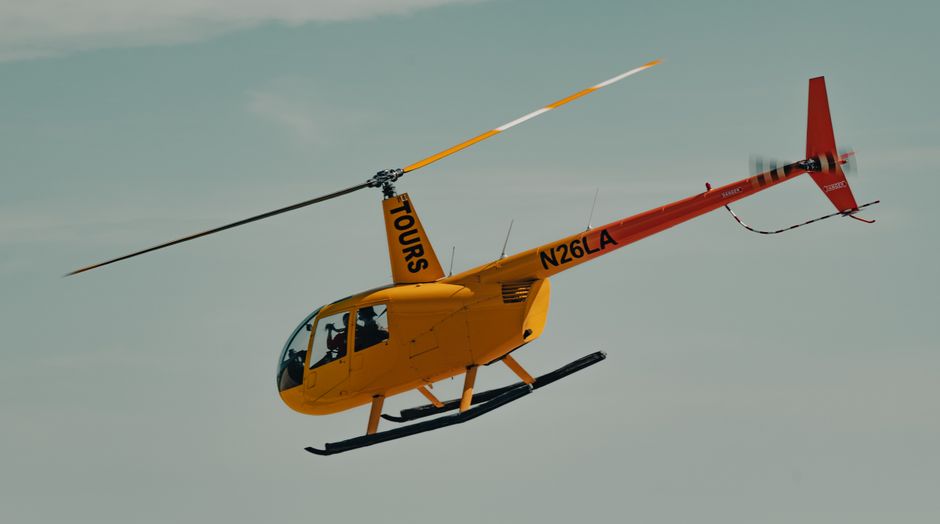
A private owner who flies 60 hours a year will hit the Robinson R22's 12-year calendar overhaul with roughly 720 hours on a 2,200-hour airframe — paying for a full rebuild with about two-thirds of the machine's life unused. That single line in the maintenance manual explains most of the difference in the Robinson R22 vs Schweizer 300CBi question, and it is the part most first-time helicopter buyers never see coming.
Both are two-seat piston trainers. Both burn 100LL. Both have taught tens of thousands of people to hover. But they are costed in completely different ways, and the right answer depends far more on how many hours a year you will actually fly than on which one you like the look of.
The Short Answer
If you are a flight school, a time-building CFI, or anyone putting 300 or more hours a year on the aircraft, the R22 is almost always cheaper per hour — it burns less fuel, flies faster, has a huge parts network, and spreads its overhaul cost across a lot of flying. If you are a private owner who flies 50 to 100 hours a year for fun, the Schweizer 300CBi can still be cheaper to own because it does not have the R22’s whole-aircraft 12-year overhaul requirement. Its Lycoming engine does carry calendar-time overhaul guidance, however, and individual components still have their own life limits and inspection requirements. The Robinson is a cost-per-hour machine. The Schweizer is a cost-per-year machine. Match that to your flying and the decision mostly makes itself.
What You Pay to Get In
Neither of these is a cheap aircraft, and used prices for both swing wildly on one variable: time remaining before major components run out. On an R22, a machine with 1,900 hours on a 2,200-hour clock and ten years on the calendar is worth a fraction of an identical-looking airframe fresh out of overhaul. Buyers who shop on sticker price alone routinely overpay by the cost of an overhaul.
The Schweizer market is thinner. Sikorsky stopped building the 300 line and the type certificate passed to Schweizer RSG in Fort Worth, Texas, in 2018, which now supports the fleet and builds to order. Fewer airframes change hands each year, so you may wait months for the right one, and comparables are harder to find when you are trying to judge whether an asking price is sane.
Fleet size matters here too. Robinson says it has delivered more than 4,600 R22s since 1979, against something over 3,000 of the Hughes 269 and Schweizer 300 family across six decades. More R22s means more sellers, more shops that know the type, and a more liquid resale market when you are finished with it.
Edge: R22, on availability and resale liquidity — but only if you buy time remaining, not just an airframe.
The Overhaul Clock: Where the Money Really Goes
This is the heart of the comparison. Robinson's maintenance manual requires a complete overhaul of the R22 at 2,200 hours or 12 years, whichever comes first. Not the engine — the aircraft. Rotor blades, gearboxes, drive system, airframe inspection, the lot. It is closer to a factory rebuild than to what a fixed-wing owner thinks of as a top-end or a TBO.
Operators commonly budget somewhere in the region of $80 to $110 per flight hour for that reserve, which implies a total overhaul bill in the high five figures to low six figures depending on what the inspection finds and whether you go to the factory or an approved shop. Run the aircraft 200-plus hours a year and that reserve is money you genuinely use. Run it 50 hours a year and the calendar limit arrives first, which means you are effectively paying for hours you never flew.
The Schweizer 300CBi has no equivalent whole-aircraft 12-year overhaul. Its Lycoming HIO-360-G1A has a current 2,000-hour operating-hour TBO under Service Instruction 1009BF and a 12-calendar-year TBO recommendation, subject to the Part 91 provisions in that instruction. The rest of the helicopter is maintained through scheduled inspections, component overhaul limits and individual life-limited parts rather than a single fleet-wide airframe overhaul. Owners typically set aside somewhere in the $40 to $60 per hour range to cover engine, transmission and timed components, and there is no R22-style requirement to send the entire helicopter through a wholesale 12-year overhaul. For an owner flying 60 hours a year, that difference is the whole ballgame.
Why It Matters: Two identical-looking helicopters can have a six-figure gap in the money you owe the shop over the next decade, and none of it shows up on a walkaround. Always price a light helicopter as airframe plus remaining component life, never as airframe alone.
Edge: Schweizer 300CBi for the low-utilization private owner; R22 for anyone flying 250 hours a year or more.
| Specification | Robinson R22 Beta II | Schweizer 300CBi |
| Seats | 2 | 2 |
| Engine | Lycoming O-360-J2A, carbureted, derated to 131 hp takeoff | Lycoming HIO-360-G1A, fuel injected, derated for training duty |
| Rotor system | 2-blade teetering, low inertia | 3-blade fully articulated, high inertia |
| Max gross weight | 1,370 lb | 1,750 lb |
| Typical empty weight | About 860 lb | About 1,100 lb, equipment-dependent” |
| Typical useful load | Roughly 500 lb | About 650 lb” |
| Cruise speed | About 96 kt max cruise | About 75–80 kt |
| Typical fuel burn | 8–10 gph | 10–12 gph |
| Usable fuel | About 30 US gal (main plus aux) | About 30 US gal |
| Overhaul basis | Whole-aircraft overhaul at 2,200 hr or 12 years, whichever first | No airframe overhaul; engine TBO 2,000 hr, components on condition and life-limited |
| Special FAA training rule | Yes — SFAR 73 applies | No type-specific SFAR |
| Production status | In production, Robinson Helicopter Company | Type certificate with Schweizer RSG, Fort Worth, built to order |
Flying411 keeps light helicopter listings and the ownership guides that go with them in one place, so you can compare hours remaining, overhaul status and asking price side by side instead of piecing it together from five tabs.
Flying Them: Speed, Load and Handling
The R22 is the quicker, lighter, twitchier machine. It cruises around 96 knots against roughly 75 to 80 for the Schweizer, and it does it on less fuel. On a 100-nautical-mile trip the Robinson gets there noticeably sooner and burns a couple of gallons less doing it. The controls are sensitive and the rotor has low inertia, which is exactly why it rewards a light touch and punishes a heavy one.
The 300CBi is the bigger, slower, steadier aircraft. Its three-blade fully articulated head carries far more inertia, which gives a student more time to react in an autorotation and is the main reason so many schools, police units and military training programs chose the type. It also has 400 pounds more gross weight to play with — two full-sized adults plus fuel is a genuine non-event in the Schweizer and a real weight-and-balance exercise in the R22.
Keep in Mind: The R22's useful load of roughly 500 pounds has to cover two people, fuel and anything you carry. Top the tanks and a pair of 200-pound occupants puts you at or over the limit. This is the single most common reason owners move up to a four-seat machine, which is covered in our R44 vs R22 comparison.
There is one regulatory difference you cannot design around. SFAR 73, the FAA's special training and experience rule attached to Part 61, applies to the R22. It sets minimum experience and endorsement requirements for pilots acting as pilot in command and for instructors. Pilots who do not meet the SFAR’s higher R22 experience threshold must complete an R22 flight review within the preceding 12 calendar months to continue acting as PIC. The Schweizer carries no such rule. For a low-time owner-pilot, that is extra recurrent training to schedule and pay for every single year.
Edge: R22 on speed and fuel; Schweizer 300CBi on load, autorotation margin and regulatory simplicity. Call it a draw overall, decided by your mission.
Insurance, Parts and Keeping It Flying
Hull and liability quotes for light piston helicopters track pilot experience far more than model, but brokers who write this segment consistently say low-time owner-pilots find the Schweizer easier to place, and that the R22's low-inertia rotor and mast-bumping history still show up in underwriting questions. Expect either aircraft to be expensive to insure under 500 total helicopter hours, and expect the premium to fall sharply as you build time in type.
Parts tell the opposite story. Robinson builds most of the R22 in-house and ships worldwide, with a dense network of service centers and factory-trained mechanics. Schweizer parts come from a much smaller operation, and owners report lead times and prices that reflect that. A cheap airframe is not a bargain if an AOG part takes eight weeks.
Heads Up: Before you commit to either type, phone the two nearest helicopter shops and ask whether they work on it, whether they have the special tooling, and what their current backlog is. A 200-mile ferry for every annual quietly adds thousands a year to your ownership cost.
Edge: R22 on parts and support. Schweizer on insurability for the low-time pilot.
Flying411 keeps maintenance, ownership-cost and pre-purchase guidance alongside the listings, so you can check what a type really costs to run before you put money down.
Which One Should You Buy?
The flight school or high-utilization operator. Buy the R22. At 400 to 600 hours a year the overhaul reserve gets consumed as intended, the lower fuel burn compounds across thousands of hours, student demand for R22 time is strong because so many employers fly Robinsons, and you can sell the airframe quickly when it is due. The SFAR 73 requirements are routine paperwork for a school that already has the instructor qualifications in place.
The private owner flying 50 to 100 hours a year. Buy the Schweizer 300CBi. Nothing expires on your airframe because the calendar turned over, two adults and full fuel is a non-issue, and the forgiving rotor system is kinder to a pilot who goes three weeks between flights. You will be slower and burn a little more fuel per hour, but you will fly so few hours that the difference is noise next to a calendar-driven overhaul you did not need.
The time-building pilot aiming at a commercial job. Buy the R22 and plan to run it hard. The hours are more marketable, the type is everywhere, and the economics only work in your favour if the aircraft flies. If you cannot commit to at least 200 hours a year, you are better off renting and letting someone else carry the overhaul clock. If your plan is really to carry passengers or do light utility work, look at four-seat options first — our guide on what it costs to own an R44 Raven and the R44 Raven vs Schweizer 300 comparison lay out that step.
Good to Know: If you are still deciding between rotary and fixed wing at all, the arithmetic is worth seeing before you shop. Our breakdown of plane versus helicopter ownership costs covers why the gap is wider than most buyers expect.
Making the Call
The honest summary of Robinson R22 vs Schweizer 300CBi is that there is no cheaper helicopter in the abstract — there is only a cheaper helicopter for your annual hours. Write down the number of hours you will realistically fly in a year, multiply by twelve, and see which side of the 2,200-hour line you land on. If you comfortably clear it, the Robinson wins on economics and resale. If you do not come close, the Schweizer stops charging you for flying you never did. And whichever way you lean, have a shop that knows the type inspect the logbooks and component cards before you sign anything; on a light helicopter, remaining life is the asset you are actually buying. The same discipline applies across the segment, as our Robinson pre-purchase inspection guide shows.
Flying411 keeps two-seat trainers and four-seat piston helicopters in one place, so you can compare hours, component status and equipment without guessing at what a listing leaves out.
When you are ready to compare listings, visitFlying411and see what is on the market today.
Frequently Asked Questions
Does the R22's 12-year overhaul apply even if the hours are low?
Yes. Robinson's requirement is 2,200 hours or 12 years, whichever comes first, and the calendar limit applies regardless of how little the aircraft has flown. This is why low-time, high-calendar R22s sell at a steep discount — the buyer inherits an overhaul that is due soon on an airframe with plenty of hours left.
Is the Schweizer 300CBi easier to learn to hover in?
Most instructors say yes. The three-blade articulated rotor is less sensitive and carries more inertia, which gives a student a fraction more time to correct. The trade-off is that pilots who learn on the Schweizer often need a few extra hours of adjustment when they move to a Robinson.
What is SFAR 73 and will it affect me as an owner?
SFAR 73 is the FAA's special training and experience rule covering Robinson R22 and R44 helicopters. It sets experience minimums and endorsement requirements for pilots in command and instructors. Pilots who do not meet the higher experience threshold must complete an R22-specific flight review within the preceding 12 calendar months to continue acting as PIC. As a lower-time R22 owner-pilot, you may need to budget for that recurrent training every year until you meet the SFAR’s higher experience threshold. The Schweizer has no equivalent rule.
Are Schweizer 300 parts still available?
Yes. The type certificate is held by Schweizer RSG in Fort Worth, Texas, which supports the existing fleet and builds aircraft to order. It is a much smaller operation than Robinson, so check lead times on common consumables and life-limited parts with your maintenance shop before you buy.