Flying a military aircraft is never exactly a relaxing commute. But some planes pushed the limits so far that even experienced test pilots and combat veterans held their breath every time they climbed into the cockpit. These machines were fast, powerful, and — in many cases — terrifyingly difficult to keep in the air.
The most dangerous military aircraft to fly weren't always failures. Some were engineering marvels that simply asked too much of the humans flying them. Others had design flaws that took years — and too many lives — to understand. And a few were just raw, unfiltered speed and power with very little room for error.
Here's a look at 11 aircraft that earned their fearsome reputations the hard way.
Key Takeaways
The most dangerous military aircraft to fly share a common thread: they were built to push boundaries, often before the technology to safely manage them existed. Several of these planes had fatal accident rates during early testing and service. Others were so physically demanding that pilots required special training, pressure suits, or sheer nerve just to survive a mission. Whether the danger came from speed, instability, mechanical failure, or extreme altitude, these aircraft changed what it meant to fly — and not always gently.
| Aircraft | Primary Danger | Era |
| Lockheed F-104 Starfighter | Extreme speed, poor handling at low speed | 1950s–1980s |
| North American X-15 | Hypersonic speeds, reentry risk | 1950s–1960s |
| Convair B-58 Hustler | High-speed instability, complex systems | 1960s |
| Douglas A-4 Skyhawk | Combat vulnerability, no backup systems | 1950s–1980s |
| Lockheed YF-12 / SR-71 | Extreme altitude and speed | 1960s–1990s |
| Republic F-105 Thunderchief | High combat loss rate in Vietnam | 1960s |
| Heinkel He 162 | Poor structural integrity, rushed design | 1940s |
| Convair F-102 Delta Dagger | Transonic instability | 1950s |
| McDonnell F3H Demon | Engine failure, poor climb rate | 1950s |
| Northrop YB-49 | Aerodynamic instability | 1940s |
| Mikoyan-Gurevich MiG-21 | High accident rate, maintenance complexity | 1960s–present |
At Flying411, we love aviation in all its forms — from the wildly dangerous to the beautifully reliable. If you're curious about what makes aircraft tick, you're in the right place.
Why Some Military Aircraft Were So Dangerous
Not every dangerous plane was a bad design. Many were just ahead of their time.
During the Cold War especially, both the United States and the Soviet Union were racing to build faster, higher-flying, and more powerful aircraft than anyone thought possible. The technology to fully understand — let alone control — these machines often lagged years behind the ambition that created them.
Why It Matters: Pilots in the 1950s and 1960s were essentially test subjects for aerodynamic ideas that engineers were still working out on paper. The aircraft on this list reflect both the courage of the people who flew them and the limits of what technology could safely achieve at the time.
Several key factors made military aircraft especially risky:
- Aerodynamic instability — some designs were intentionally unstable to improve maneuverability, but this made them unforgiving of pilot error
- Engine failure rates — early jet engines were unreliable, especially at extreme altitudes or speeds
- Pilot workload — complex systems with no automation meant pilots had to manage dozens of variables at once
- Combat exposure — aircraft designed for speed or altitude weren't always built to survive enemy fire
- Rushed production — wartime and Cold War pressure meant some planes entered service before design issues were fully resolved
The 11 Most Dangerous Military Aircraft to Fly
Some of these planes were engineering marvels that simply asked too much of the humans flying them. Others had flaws that took years — and lives — to fully understand. A few were just raw speed and power with almost no room for error. What they all share is a reputation earned in the cockpit, not just on paper.
Here are 11 aircraft that made even seasoned pilots think twice.
Lockheed F-104 Starfighter — The Missile With a Man in It
The F-104 Starfighter is probably the most infamous aircraft on this list when it comes to pilot fatalities. Its nickname — "the missile with a man in it" — says everything. Designed for raw speed, it had tiny, razor-thin wings that generated almost no lift at low speeds.
Landing the F-104 was a high-wire act. One small mistake on approach could send the plane into an unrecoverable spin. In West Germany especially, the accident rate was catastrophic, with the aircraft earning the grim nickname "the Widowmaker." Over the course of its service with the German Air Force, the F-104 claimed the lives of a significant number of pilots — the loss rate per flight hour was among the highest of any NATO aircraft of its era.
Fun Fact: The F-104's ejection seat — in early variants — fired downward, which was essentially useless at low altitude. Later versions corrected this, but it came too late for many crews.
The plane's ejection system wasn't the only problem. Its engine was notoriously finicky, and a flameout at low altitude left pilots with almost no options. Even experienced airmen found it demanding in ways that other jets simply weren't.
North American X-15 — The Edge of Space
The X-15 wasn't a combat aircraft, but it was absolutely a military experimental plane — and one of the most dangerous flying machines ever built. It flew to the edge of space, reaching altitudes where the atmosphere essentially disappears and speeds exceeding Mach 6.
At those speeds, aerodynamics stop working the way pilots expect. The X-15 had to use rocket thrusters to maneuver, and reentry into the atmosphere was a controlled fall that required extreme precision. One deviation from the correct angle and the aircraft could skip off the atmosphere or burn up.
Good to Know: The X-15 program is sometimes cited as the bridge between aviation and spaceflight. Several of its pilots qualified for astronaut wings based on altitude alone.
One pilot, Michael Adams, was killed in 1967 when the aircraft entered a hypersonic spin during reentry. It was a sobering reminder of just how thin the margin for error was at those speeds.
For a look at some of the more reliable flying machines aviation has produced, check out the most reliable aircraft ever built — a fascinating contrast to this list.
Convair B-58 Hustler — America's First Supersonic Bomber
The B-58 Hustler was a stunning aircraft — sleek, futuristic, and blazingly fast. It was also extremely difficult to fly and had a loss rate that made Air Force leadership quietly nervous throughout its service life.
The problem wasn't just speed. The B-58 was designed with a delta wing configuration that made it aerodynamically unstable at subsonic speeds. Pilots had to constantly fight to keep it level during low-speed phases like takeoff and landing.
Heads Up: The B-58 required a three-person crew, and each member had a separate escape capsule rather than a traditional ejection seat. The system was innovative but added significant complexity — and its reliability in emergency situations was not fully tested in real-world conditions.
The aircraft's systems were also among the most complex of its era. A combination of high pilot workload, aerodynamic instability, and the unforgiving nature of supersonic flight led to a number of fatal accidents over its service life. The B-58 was retired relatively early compared to other strategic bombers.
Republic F-105 Thunderchief — The Thud
The F-105 Thunderchief — known to pilots simply as "the Thud" — was the primary strike aircraft used by the United States Air Force during the early years of the Vietnam War. It flew more combat missions over North Vietnam than any other aircraft, and it paid a terrible price.
The F-105 was a big, heavy, fast aircraft designed to deliver nuclear weapons at low altitude and high speed. In Vietnam, it was repurposed for conventional bombing missions — a role it wasn't entirely suited for. North Vietnamese air defenses were far more capable than anyone expected, and the F-105 suffered losses that shocked military planners.
Pro Tip: The F-105 actually held its own in dogfights when handled well — its pilots were credited with shooting down a significant number of MiG fighters. But the sheer volume of missions and the intensity of the threat environment made attrition inevitable.
By some estimates, the F-105 lost a substantial portion of its total fleet to combat and operational accidents during the Vietnam conflict. It was a brave aircraft flown by brave pilots in an extraordinarily dangerous environment.
If you're curious about how the best modern stealth designs compare to the aircraft of this era, the best stealth aircraft in history is worth a read.
Heinkel He 162 — The Rushed Wonder
The He 162 was one of the world's first operational jet fighters — and one of the most structurally questionable aircraft ever fielded in combat. Germany rushed it into production near the end of World War II with a desperate urgency that left little time for proper testing or refinement.
The results were predictable. The He 162 suffered from structural failures, engine flame-outs, and a high accident rate during its brief operational career. The airframe used materials and bonding agents that weren't always up to the stresses of high-speed flight, and wing failures were reported in some aircraft.
Fun Fact: The He 162 was sometimes called the "Volksjäger" — or "People's Fighter" — because it was theoretically simple enough to be flown by pilots with minimal training. In practice, it was anything but simple.
The aircraft had genuine potential. Its performance, when everything worked, was impressive for its era. But "when everything worked" was a significant caveat with the He 162.
Lockheed SR-71 Blackbird — Fast Enough to Outrun Missiles
The SR-71 Blackbird is one of the most iconic aircraft ever built. It held speed and altitude records that, by some accounts, have never been surpassed by a piloted aircraft in operational service. It could cruise at altitudes above 85,000 feet and at speeds exceeding Mach 3.
So what made it dangerous? Simply the extremity of its operating environment.
At Mach 3-plus, the aircraft's skin heated to temperatures that would have melted conventional aluminum. The titanium airframe expanded significantly during flight — so much so that the aircraft actually leaked fuel on the ground because the panels hadn't yet expanded to seal properly. Pilots wore full pressure suits similar to astronauts.
Keep in Mind: A loss of engine power at SR-71 operating altitude and speed would give pilots very few options. The aircraft's performance envelope was so extreme that survivable emergency procedures were limited.
Despite these challenges, the SR-71 had a remarkably good safety record compared to some aircraft on this list — largely due to rigorous crew selection, extensive training, and meticulous maintenance. But it remains one of the most physically and technically demanding aircraft any pilot ever strapped into.
Convair F-102 Delta Dagger — Transonic Trouble
The F-102 Delta Dagger looked fast. It had a dramatic delta wing, a sleek fuselage, and a lot of promise. The problem was that it initially couldn't break the sound barrier — a somewhat serious issue for a supersonic interceptor.
The original design hit a "transonic drag barrier" that no one fully understood at the time. Engineers had to redesign the fuselage using a principle called the "area rule" — essentially pinching the body in the middle like a Coke bottle to reduce drag. The redesigned F-102 finally went supersonic, but it remained challenging to fly and had an accident rate that concerned its operators.
Good to Know: The area rule discovery, applied to the F-102, was a major breakthrough in aerodynamics. It's now a standard principle in supersonic aircraft design — but the F-102 pilots who flew during its troubled development paid the cost of learning it.
The aircraft also had limited engine-out options and a relatively unforgiving handling profile, particularly in unusual attitudes.
McDonnell F3H Demon — The Engine That Wasn't There
The F3H Demon started life with an engine that was genuinely underpowered for the airframe — the Westinghouse J40, which turned out to be far less capable than advertised. Early Demons had such poor climb rates and so many engine failures that the Navy grounded the fleet and the J40 program was eventually cancelled entirely.
The Demon was reworked with a different engine and did see service, but its early reputation was essentially that of an aircraft that couldn't be trusted to get you off the ground safely.
Heads Up: The J40 engine problems weren't just a performance issue — they contributed to a number of fatal crashes before the problem was properly diagnosed and addressed. The Demon's early service history is a cautionary tale in defense procurement.
Even in its improved form, the Demon was never considered forgiving. It demanded respect and rewarded lapses in concentration with unpleasant consequences.
Northrop YB-49 — The Flying Wing That Couldn't Quite Fly
The YB-49 was a flying wing — a radical design where the entire aircraft essentially is the wing, with no separate fuselage. It was visually remarkable and aerodynamically fascinating. It was also deeply unstable.
Flying wing designs struggle with a fundamental challenge: without a tail, they lack the natural pitch and yaw stability that conventional aircraft get for free. The YB-49 required constant, tireless control inputs to stay on course, which made it exhausting and dangerous to fly — especially for long-duration missions.
Fun Fact: The YB-49 is considered a distant ancestor of the modern B-2 Spirit stealth bomber. Modern fly-by-wire computers solve the stability problems that made the YB-49 so difficult — the B-2 would be unflyable without its flight control computers making thousands of corrections per second.
The aircraft crashed twice during testing, killing both crews. The flying wing design was shelved for decades before technology caught up with the concept.
Douglas A-4 Skyhawk — Small, Fast, and Exposed
The A-4 Skyhawk was a tough, agile little attack aircraft that served in conflicts from Vietnam to the Falklands. Its danger came less from its flying characteristics — which were actually considered fairly good — and more from what it was asked to do.
The A-4 flew low, fast strike missions against heavily defended targets. It had no terrain-following radar, no electronic warfare suite in early variants, and limited redundancy in its systems. If it took a hit, the pilot was largely on their own.
Pro Tip: The A-4 was famously simple to maintain — a key reason it was exported to so many air forces worldwide. But simplicity also meant fewer backup systems when things went wrong in combat.
Vietnam and the Falklands both claimed significant numbers of A-4s. Its pilots needed to be precise, calm, and willing to fly into situations that modern aircraft wouldn't be asked to handle without significant electronic support.
If you want to compare how different aircraft handle demanding long-range missions, the best planes for long flights offers a different but equally fascinating perspective.
Mikoyan-Gurevich MiG-21 — A Global Accident Record
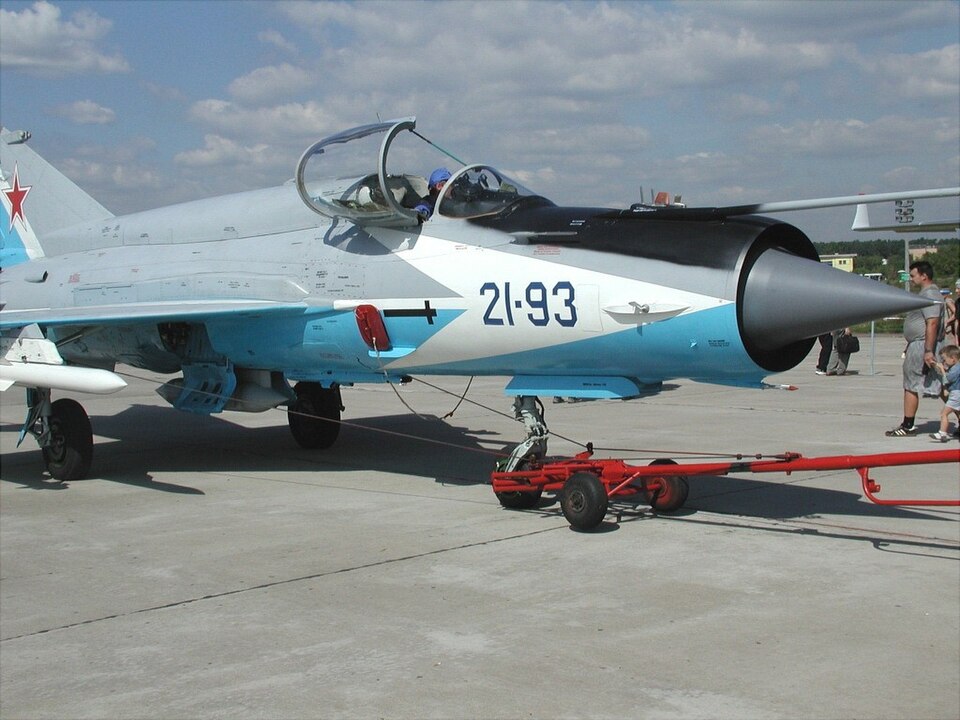
The MiG-21 has been flown by more countries than almost any other jet fighter in history. It's also been involved in more accidents than almost any other jet fighter in history. That combination tells its own story.
The MiG-21 was fast and nimble, but it had a notoriously short fuel range, unpredictable stall characteristics, and landing gear that required careful handling. Its cockpit was cramped and instrument layout was not always intuitive. In the hands of a highly trained pilot with access to good maintenance, it was a capable aircraft. In the hands of a less experienced pilot, or in a country with limited maintenance infrastructure, it could be lethal.
Why It Matters: India, which operated the MiG-21 for decades, reportedly lost a very large number of aircraft to accidents over the aircraft's service life — earning the jet a grim nickname in the Indian press. The MiG-21's accident history is a reminder that operational context matters as much as raw aircraft design.
The MiG-21 is still in limited service with some air forces today, making it perhaps the oldest actively-flown aircraft with a dangerous reputation still earning new entries in accident reports.
How Danger Was Measured — Then and Now
The way militaries evaluate aircraft danger has evolved enormously over the decades.
In the early jet age, accident rates were often accepted as an inevitable cost of pushing the envelope. The loss of test pilots and early operational crews was tragic but sometimes considered an acceptable price for technological progress.
Keep in Mind: Modern military aircraft benefit from fly-by-wire control systems, advanced simulation training, redundant safety systems, and decades of aerodynamic research. The aircraft that killed pilots in the 1950s and 1960s helped build the knowledge base that makes today's jets far safer.
Today, accident rates are tracked meticulously, and aircraft with high mishap rates face intense scrutiny. The contrast with early jet-age attitudes is stark — and worth remembering when looking at that list of the world's safest aircraft, which reflects how far aviation safety has come.
Dangerous by Design vs. Dangerous by Circumstance
It's worth separating aircraft that were dangerous by design from those that became dangerous through circumstance.
| Category | Examples | Primary Cause of Danger |
| Dangerous by design | F-104, YB-49, He 162 | Aerodynamic instability, structural flaws |
| Dangerous by speed/altitude | X-15, SR-71, B-58 | Extreme operating envelope |
| Dangerous in combat | F-105, A-4 Skyhawk | Mission profile, threat environment |
| Dangerous by engine | F3H Demon, MiG-21 | Unreliable or underpowered propulsion |
| Dangerous by concept | F-102, YB-49 | Unresolved aerodynamic challenges |
Understanding which category an aircraft falls into tells you a lot about whether its problems could be fixed — and whether the lessons learned made future aircraft safer.
What Made Pilots Agree to Fly Them?
This is a fair question. Why would anyone willingly climb into a plane with a reputation like some of these?
The honest answer is a mix of duty, training, pride, and — sometimes — a lack of full information. Test pilots, in particular, were often working at the frontier of human knowledge, flying aircraft whose problems weren't yet fully understood.
Fun Fact: Many of the pilots who flew the most dangerous aircraft in history speak about those experiences with pride rather than resentment — even those who had harrowing close calls. The challenge was part of the appeal.
Combat pilots often didn't have the luxury of choosing a different aircraft. When the F-105 was the primary strike platform in Vietnam, F-105 pilots flew the F-105. The aircraft's reputation was something you learned to live with, not something you could opt out of.
Curious about which aircraft demanded the most from their pilots in terms of pure skill? The jets that can do the Cobra maneuver is a look at extreme aircraft performance that connects directly to this tradition.
At Flying411, we believe understanding aviation history — including its dangerous chapters — makes you a more informed and appreciative reader of everything happening in the sky today.
The Legacy of Dangerous Aircraft in Aviation History
Every aircraft on this list contributed something to aviation knowledge — even the ones that cost lives.
The F-104's problems advanced understanding of low-speed handling for high-performance aircraft. The X-15 laid groundwork for the space program. The YB-49's failures shaped the technology that eventually made the B-2 possible. The B-58's complexity pushed advances in aircraft systems management that benefited later designs.
Why It Matters: Dangerous aircraft weren't just tragedies — they were data points. Every crash investigation, every pilot debrief, and every near-miss added to a growing body of knowledge that made subsequent generations of aircraft measurably safer.
The pilots who flew these aircraft — and especially those who didn't come back — were not victims of bad luck alone. They were, in a real sense, contributors to a process of learning that the aviation world is still benefiting from today.
If you're interested in how short-range aircraft design has evolved in parallel, the best planes for short flights shows how different design priorities shape very different aircraft.
Conclusion
The most dangerous military aircraft to fly tell a story about human ambition, technological limits, and the courage of the people who pushed both. From the razor-winged F-104 to the hypersonic X-15, these planes asked more of their pilots than almost any other machines in history — and many pilots gave everything they had in return.
Understanding these aircraft isn't just about marveling at their danger. It's about appreciating what their stories contributed to aviation as a whole. Every hard lesson learned in the cockpit of an He 162 or a YB-49 helped make today's aircraft safer, smarter, and more survivable.
If this kind of deep aviation history is your thing, you'll find plenty more to explore at Flying411 — where the stories behind the aircraft are just as interesting as the machines themselves.
Frequently Asked Questions
What is considered the most dangerous military aircraft ever built?
The Lockheed F-104 Starfighter is frequently cited as one of the most dangerous military aircraft ever operated, particularly due to its catastrophic accident rates in West German service. However, aircraft like the North American X-15 and Convair B-58 Hustler also had extremely high risk profiles for their crews.
Why did the F-104 Starfighter have such a high accident rate?
The F-104 had very small, thin wings that generated minimal lift at low speeds, making takeoff and landing extremely unforgiving. Early variants also had a downward-firing ejection seat that was essentially useless at low altitude. Combined with a demanding engine, the aircraft left pilots with very little margin for error.
Are any of these dangerous aircraft still flying today?
The MiG-21 remains in limited active service with a small number of air forces, making it the only aircraft on this list that is still operational in any meaningful capacity. Most of the others were retired decades ago.
How did test pilots prepare for flying such dangerous aircraft?
Test pilots typically went through extensive classroom study of the aircraft's known characteristics, simulator sessions where available, and incremental flight envelopes — gradually pushing to more extreme conditions rather than attempting dangerous maneuvers from the first flight. Even so, the unknown nature of many problems meant that preparation could only go so far.
Did any of these aircraft ever become safe to fly over time?
Some aircraft did see significant safety improvements through modifications. The F-104, for example, had its ejection system redesigned. The F-102 was substantially reworked after its transonic drag problems were identified. However, some designs — like the He 162 — were retired before meaningful improvements could be made.