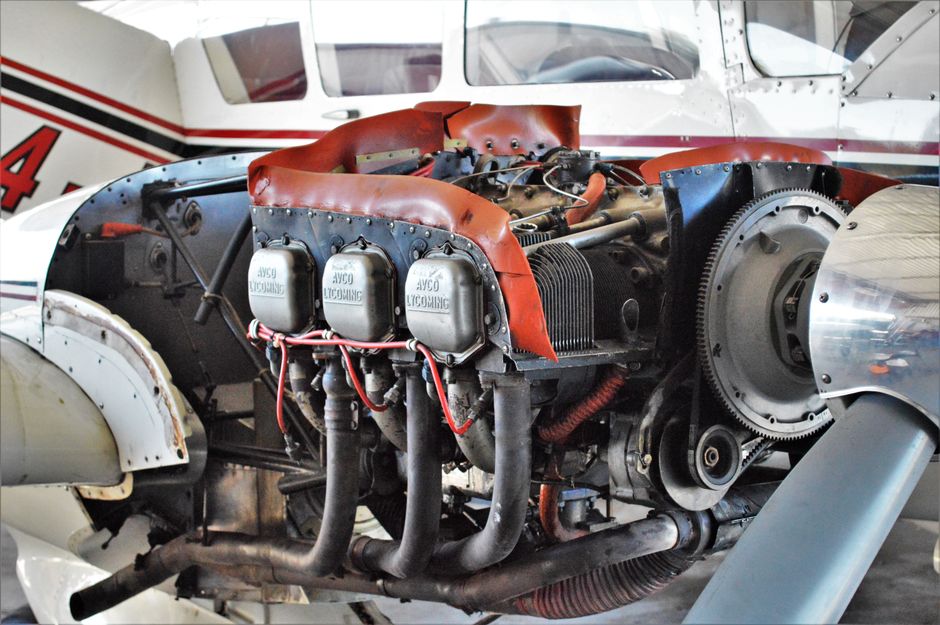
If you've spent any time digging into Continental piston engines, you've probably run across these two names more than once: the IO-520 and the IO-550. They look similar. They share the same basic DNA. But once you start comparing them side by side, the differences are real — and they matter a lot depending on how you fly, what you fly, and what you expect from your powerplant at overhaul time.
The Continental IO-520 vs IO-550 debate comes up constantly in hangars, forums, and pre-buy consultations. Pilots upgrading from an older airframe, operators replacing an engine past TBO, and aircraft buyers weighing conversion options all need to understand what separates these two engines — and which one makes more sense for their situation.
Both are six-cylinder, horizontally opposed, fuel injection-equipped piston engines made by Continental Motors (also known as Teledyne Continental Motors, or TCM). Both have powered some of the most well-known general aviation aircraft in history. And yet, they behave differently in the air and on the maintenance log. Here's what you need to know before making a decision.
Key Takeaways
The Continental IO-550 is a direct evolution of the IO-520 — built with a longer stroke, more displacement, and a more modern horsepower rating standard. The IO-520 is rated at 285 hp continuous with a short burst to 300 hp at takeoff, while the IO-550 delivers a true 300 hp continuously at a lower 2,700 rpm. The IO-550 generally offers better cruise performance, a longer TBO on newer builds, and more flexible lean of peak operation, while the IO-520 remains a proven, cost-effective workhorse that many operators swear by for lower-intensity missions.
| Feature | IO-520 | IO-550 |
| Displacement | 520 cu in | 552 cu in |
| Rated HP (continuous) | 285 hp | 300 hp |
| Max Takeoff HP | 300 hp (5-min limit) | 300 hp (no limit) |
| Max RPM | 2,850 rpm (takeoff) | 2,700 rpm |
| Stroke | 4.00 in | 4.25 in |
| Bore | 5.25 in | 5.25 in |
| TBO (typical) | ~1,700–1,900 hrs | ~1,900–2,000 hrs |
| Certified | 1963 | 1983 |
| Common Aircraft | Bonanza, Baron, Cessna 206/210/310 | Bonanza, Cessna 206/182, Cirrus SR22 |
Flying411 is a resource for pilots and aircraft owners who want honest, practical guidance on engines, airframes, and everything in between.
A Tale of Two Engines: Where the IO-520 and IO-550 Come From
The IO-520: A Long-Running Classic
The IO-520 has been around since the early 1960s. Continental first developed it as a derivative of the older IO-346 series, and it quickly became a go-to powerplant for a wide range of aircraft. Over the decades, it powered aircraft like the Beech Bonanza, Baron, Cessna 210, Cessna 310, Cessna 206, and many others.
The IO-520 uses a 5.25-inch bore and a 4.00-inch piston stroke. That gives it 520 cubic inches of displacement — which is exactly what the name says. It's rated at 285 horsepower continuous at 2,700 rpm, though some models are allowed to produce 300 hp for short takeoff intervals at up to 2,850 rpm.
Fun Fact: The IO-520 has been in continuous production in various forms for several decades, making it one of the longest-running piston engine families in general aviation history.
One thing that tripped up many pilots moving from earlier engines: the 520's 300-hp takeoff rating is limited to just five minutes before you need to reduce power back to 285 hp. Push it too long, and you're stressing parts that weren't designed to handle that load continuously.
The IO-550: A Modern Stroke of Genius
The IO-550 arrived in 1983 as a direct development of the IO-520. Continental engineers increased the stroke from 4.00 inches to 4.25 inches — that's all it took to push displacement up to 552 cubic inches and change the whole character of the engine.
The result? A genuine 300-hp engine — not a 285-hp engine with a 300-hp ceiling. The IO-550 is rated at 300 hp continuous at 2,700 rpm, with no five-minute power limit hanging over every takeoff. That's a meaningful difference in how you manage the engine day to day.
The IO-550 also came out under stricter horsepower certification standards. Continental built it to make at least 300 hp on the dyno, which in practice means most IO-550 engines actually produce somewhere around 305–310 hp. That headroom — especially in higher-output variants — helps explain why some models like the IO-550-N and IO-550-G are rated at 310 hp.
Good to Know: The IO-550 family covers a power range from roughly 280 hp to 360 hp depending on the variant. The turbocharged TSIO-520 and TSIO-550 variants push those numbers even higher with forced induction.
Displacement, Stroke, and What Those Numbers Actually Mean
Why a Quarter-Inch Matters More Than You'd Think
The only physical difference between the IO-520 and IO-550 is the stroke length. The bore stays identical at 5.25 inches. But that extra 0.25 inches of stroke adds roughly 32 cubic inches of displacement across six cylinders — and that extra displacement is what allows the 550 to make 300 hp at lower RPM.
Think of it this way: the IO-550 doesn't have to spin as fast to do the same work. The IO-520 needs to reach 2,850 rpm for takeoff power. The IO-550 makes the same power at 2,700 rpm — a difference of 150 RPM that affects noise, engine wear, and propeller tip speed.
Lower RPM at the same power means more torque at the crankshaft. More torque at a given shaft speed translates to better pulling power, which shows up as improved climb rate and better cruise efficiency at altitude.
Pro Tip: Propeller tip speed goes up fast with RPM. By running at 2,700 rpm instead of 2,850, the IO-550 keeps tip speeds lower — which is better for noise footprint and propeller efficiency, especially with longer blades.
The Horsepower Rating Difference Nobody Talks About Enough
Here's a subtlety that catches a lot of pilots off guard. The IO-520 was rated under older FAA standards, which allowed a tolerance of roughly ±5 percent. That means some IO-520 engines only needed to make around 270–275 honest horsepower to pass certification as a "285 hp" engine.
The IO-550 was rated under the newer, stricter standard — plus 5 percent, minus zero. Every IO-550 must make at least its rated hp on the dyno, with no downward margin allowed. In practice, Continental built them to come in a few hp over the rating to ensure every example passes. So when someone says they're getting "300 hp" from an IO-550, they're likely getting a genuine 305–310 hp from the factory.
That difference may seem small, but it compounds in performance: better cruise numbers, stronger climb rates, and a more consistent power delivery aircraft to aircraft.
8 Key Differences Between the IO-520 and IO-550
This is where the rubber meets the runway. Here are the most important ways these two engines differ — from power delivery to overhaul philosophy.
1. Continuous Horsepower Rating
The IO-520's continuous rating is 285 hp. The IO-550's continuous rating is 300 hp. That 15-hp gap is the heart of this comparison. On the 520, anything above 285 hp is a time-limited event. On the 550, 300 hp is just another Tuesday.
For pilots flying long cross-country missions or operating heavy utility aircraft, running at max continuous power without a clock ticking is a genuinely useful advantage.
2. RPM at Rated Power
The IO-520 needs up to 2,850 rpm for peak takeoff power. The IO-550 achieves its rated output at 2,700 rpm. That 150-rpm difference reduces noise, lowers propeller torque stress, and is gentler on the entire rotating assembly — particularly the crankshaft, prop hub, and cylinder bases.
Some operators of Cessna 206 aircraft report that older case-cracking problems with the IO-520 reduced significantly when they switched to operating the engine at 2,700 rpm instead of 2,850. The lower-RPM IO-550 avoids the temptation entirely.
3. TBO (Time Between Overhaul)
Both engines carry TBO figures in the roughly 1,700–2,000 hour range depending on the specific model and configuration. In general, newer IO-550 variants tend to have slightly higher published TBO figures than comparable IO-520 variants — some pilots cite a 200-hour advantage for the 550.
Keep in Mind: TBO is a recommendation, not a guarantee. How you operate and maintain the engine matters as much as the spec sheet. An IO-520 run properly can comfortably reach TBO. An IO-550 run hard and lean at high power may not.
Overhaul cost for both engines is broadly similar, though the IO-550 may run slightly higher due to more complex cylinder arrangements in some variants.
4. Fuel Flow and Efficiency
At similar power settings, the IO-520 and IO-550 have comparable fuel flow figures when operated rich of peak. The gap opens up in lean-of-peak (LOP) operations.
The IO-550 has well-documented support for lean-of-peak operations in the pilot's operating handbook. When run 50°F lean of peak at a moderate power setting, the IO-550 burns significantly less fuel per horsepower than the same engine operated rich. The IO-520 has less formal LOP guidance in many of its older manuals, which limits how aggressively some operators feel comfortable leaning it.
At 75-percent power, a well-tuned IO-550 operating LOP can produce more actual horsepower while burning slightly less fuel per hour than an IO-520 at the same throttle setting — a double win for fuel-conscious operators.
Why It Matters: Lean of peak operations require evenly-matched fuel injectors across all cylinders. If you're serious about LOP flying on either engine, GAMI injectors are widely recommended to balance fuel injection delivery cylinder to cylinder.
5. Power Management Philosophy
Transitioning from an IO-520 to an IO-550 requires a mental reset on power settings. Pilots used to the IO-520 often set cruise power at "24 squared" (24 inches manifold pressure, 2,400 rpm) — a habit that puts them at roughly 75-percent power on the 520.
The same throttle setting on an IO-550 can push you to 85-percent power or higher, because the 550's continuous rating is 300 hp, not 285. Running at 85-percent power and leaning aggressively violates Continental's recommendations for the IO-550, which restrict leaning above 75-percent power.
The lesson: the IO-550 needs to be flown as an IO-550, not as a slightly bigger IO-520.
6. Aircraft Compatibility and STCs
The IO-520 is the original engine in a long list of popular aircraft: Beech Bonanza, Cessna 206, 210, 310, Baron, and others. It fits naturally because those airframes were engineered around it.
Upgrading to the IO-550 typically requires an STC (Supplemental Type Certificate) when retrofitting an IO-520-equipped airframe. Several STC holders offer IO-550 conversion packages for popular aircraft types. These conversions often come with a matched propeller, new cowl baffling, and updated engine mounts.
For aircraft that came from the factory with an IO-550 — like the Cirrus SR22 and certain later-model Bonanzas — no conversion is needed.
Heads Up: Not all IO-550 variants are direct swaps for all IO-520 installations. Verify the specific STC for your airframe and talk to an experienced A&P before assuming one model just drops in where another used to live.
7. Cruise Speed and Performance Gains
In practice, pilots who switch from an IO-520 to an IO-550 in the same airframe commonly report cruise speed gains of around 5 to 10 knots at comparable power settings. Some Bonanza owners have reported similar improvements, with additional gains in climb rate and shorter takeoff rolls — particularly at higher density altitude.
The cube root of the power ratio (300/285) suggests a theoretical cruise speed gain of around 1.7 percent. That sounds small, but real-world gains often exceed that because the IO-550 also allows the aircraft to reach cruise altitude faster, which adds time at efficient cruise power rather than burning extra fuel in the climb.
8. Engine Family Variants
Both engines come in multiple variants. The IO-520 family includes turbocharged versions (the TSIO-520), geared variants (the GTSIO-520), and numerous sub-models labeled A through R. The TSIO-520 was commonly used in high-performance twins and singles where altitude capability mattered.
The IO-550 family includes the standard normally-aspirated IO-550, the turbocharged TSIO-550, a FADEC-equipped version (IOF-550), and liquid-cooled variants. The IO-550-N, with its balanced induction system, is particularly well-regarded among operators of the Cessna 206 and similar airframes for smooth power delivery and strong LOP behavior.
Flying411 has detailed guides on Continental and Lycoming engine comparisons to help you choose the right powerplant for your next aircraft or upgrade project.
Which Aircraft Use Which Engine?
IO-520 Aircraft
The IO-520 powered a wide range of aircraft over its production life. Here's a quick look at common installation types:
- Beechcraft Bonanza (E35 through V35 series, F33A) — A36 Bonanzas used a 300-hp IO-520 variant
- Beech Baron (various models) — paired IO-520 engines in a light twin
- Cessna 210 (Centurion, early retractable singles)
- Cessna 206 and 207 (utility haulers)
- Cessna 310 (light twin)
- Cessna 182 (some high-performance variants)
- Bellanca Viking 300 and Super Viking
The IO-520 was the workhorse of the 1960s and 1970s GA boom. Tens of thousands of these engines went into service, and many are still flying today.
IO-550 Aircraft
The IO-550 moved into many of the same roles, but with factory installations starting in the 1980s and accelerating through the 1990s and 2000s:
- Cirrus SR22 — one of the most common current applications
- Beechcraft Bonanza (G36 and later A36 variants)
- Cessna 206 (conversions via STC)
- Cessna 182 (conversions via STC)
- Piper PA-46 Malibu (TSIO-550 in turbocharged variants)
- Various factory and STC retrofit applications across the Cessna product line
The Cirrus SR22 has probably done more than any other modern airframe to introduce a new generation of pilots to the IO-550. With the IO-550-N as standard equipment, SR22 owners deal with LOP operations, GAMI injectors, and 2,700-rpm takeoffs as part of everyday flying.
Lean of Peak Operations: How Each Engine Handles It
Lean of peak (LOP) operation means running the mixture far enough lean that you've passed the peak exhaust gas temperature and are operating on the lean side of peak. Done right, it reduces fuel burn, lowers cylinder head temperatures, and can extend engine life.
The IO-550 has formal LOP guidance in its POH and is generally considered more LOP-friendly than the IO-520. Its tighter manufacturing tolerances and better-balanced induction system make cylinder-to-cylinder fuel distribution more consistent — a prerequisite for clean LOP operation.
The IO-520 can be run LOP with the right injectors and careful management, but older documentation doesn't always support it explicitly, which leaves some operators unsure how far to push it.
Quick Tip: Whether you're flying an IO-520 or IO-550, installing GAMI injectors and running engine monitor software with per-cylinder exhaust gas temperature tracking is the best way to fine-tune LOP operations safely.
For a deep dive into how the IO-550 stacks up against its turbocharged sibling, check out this breakdown of the Continental IO-550 vs TSIO-550 — a useful reference if you're weighing whether forced induction makes sense for your mission.
Turbocharging: Where the TSIO-520 Fits In
The TSIO-520 deserves a mention because it comes up often when pilots are comparing these engines at higher altitudes.
The turbocharged TSIO-520 adds a turbocharger to the IO-520 base engine, allowing it to maintain sea-level power at altitude. It's been used in aircraft like the Cessna 210 Turbo Centurion, Piper Navajo, Cessna T310, and various twins.
The TSIO-520 delivers 310 hp in some variants — the same as the naturally aspirated IO-550-N. But it achieves that power with forced induction, which adds maintenance complexity, higher operating temperatures, and a shorter typical TBO compared to normally aspirated variants.
If your flying is primarily below 10,000 feet, a normally aspirated IO-550 will typically outperform a turbocharged IO-520 in simplicity, longevity, and operating cost. If you regularly fly above 12,000–15,000 feet, the turbo's ability to maintain power density at altitude becomes a meaningful advantage.
Fun Fact: The TSIO-520 has been used in some of the most capable piston twins in general aviation history, including pressurized cabin aircraft where maintaining power at altitude was essential to the aircraft's mission.
If you're also looking at Lycoming as an alternative, this comparison of the Lycoming IO-540 vs Continental IO-550 covers the cross-brand rivalry in detail.
Cost Considerations: IO-520 vs IO-550 Ownership
Neither of these engines is cheap to maintain or overhaul. But there are real cost differences worth understanding before committing to one or the other.
Overhaul costs for both engines are broadly comparable when managed through a reputable engine shop. Factory-new or factory-rebuilt IO-520 engines are widely available from Continental and third-party overhaulers. IO-550 overhaul availability has grown significantly as the engine has aged and more examples have entered the overhaul cycle.
Parts availability for the IO-520 is excellent, given its long production history. Cylinder assemblies, crankshafts, and accessories are stocked by multiple suppliers. The IO-550 has strong parts availability as well, particularly for the most common variants like the -B, -N, and -G.
Conversion cost — adding an IO-550 where an IO-520 used to live — varies widely by airframe and STC provider. It typically involves the engine itself, a new or matched propeller, updated cowl baffling, new exhaust components, and labor. Expect to spend significantly more than a straight overhaul for a conversion.
Pro Tip: If your IO-520-equipped aircraft is approaching TBO, get a pre-overhaul condition assessment from a qualified shop before deciding to upgrade to an IO-550. Sometimes a fresh overhaul of the existing engine makes more financial sense than a conversion, especially if the airframe hours are climbing toward its own useful life.
For a broader look at the Lycoming-vs-Continental choice, the guide on Lycoming vs Continental vs Rotax aircraft engines is worth reading before you finalize any decision.
Making the Call: Which Engine Is Right for You?
Here's a simple framework for thinking through the decision.
Choose the IO-520 if:
- Your aircraft came from the factory with an IO-520 and you're at TBO
- You fly primarily at lower altitudes and don't need maximum cruise performance
- Budget is a primary concern and you want to avoid conversion costs
- You're operating in a commercial or utility role where proven, cost-effective powerplants are preferred
- Parts and shop familiarity in your area are stronger for the IO-520
Choose the IO-550 if:
- Your aircraft supports an IO-550 factory installation or a well-supported STC conversion
- You want true 300-hp continuous power without managing a five-minute clock
- You fly frequently at high density altitude or with heavy useful loads
- You're interested in LOP operations and want a more modern engine management platform
- You're buying a Cirrus SR22, newer Bonanza, or other aircraft that came with an IO-550 from the factory
Ready to explore aircraft powered by these engines? Flying411 can help you find the right aircraft for your mission and budget.
Conclusion
When you line up the Continental IO-520 vs IO-550, you're really looking at two generations of the same engine family — one built for an era when 285-hp continuous was the standard, and one built to deliver honest, unrestricted 300-hp performance at lower RPM and with modern certification standards.
The IO-520 is not obsolete. It's a time-proven, well-supported engine that keeps countless aircraft flying every day. But the IO-550 is objectively a more modern design with a more favorable continuous power rating, lower operating RPM, better LOP support, and modest performance gains in cruise and climb.
Your choice ultimately comes down to your aircraft, your mission, and your budget. If the IO-550 fits your airframe and your goals, it's hard to argue against the upgrade. If the IO-520 is already in your cowling and running well, a fresh overhaul may be exactly the right call.
Whichever direction you go, having the right information makes all the difference. Flying411 is here to help you make the smartest decision for your aircraft and your flying.
Frequently Asked Questions
Is the Continental IO-550 a direct replacement for the IO-520?
Not always. While the IO-550 was developed from the IO-520 and shares many design elements, a direct swap typically requires a Supplemental Type Certificate (STC) for most airframes. Always verify the specific STC coverage for your aircraft model before purchasing an IO-550 for a conversion.
What is the main reason the IO-550 runs at lower RPM than the IO-520?
The longer stroke of the IO-550 allows it to produce more torque per revolution, so it achieves the same power output at fewer revolutions per minute. This lower RPM reduces wear on the rotating assembly and lowers propeller tip speed.
Can you run the Continental IO-520 lean of peak?
Yes, but with caveats. The IO-520 can be operated lean of peak with properly balanced fuel injectors and careful monitoring, though older pilot operating handbooks may not explicitly support LOP operation. Installing GAMI injectors and using an engine monitor is strongly recommended.
What aircraft currently come from the factory with the IO-550?
The Cirrus SR22 is one of the most well-known factory IO-550 installations, using the IO-550-N variant. Later-model Beechcraft Bonanzas (G36) also use the IO-550 family. Various Cessna and Piper aircraft use turbocharged TSIO-550 variants.
How does the Continental IO-550 compare to the Lycoming IO-540?
Both engines are six-cylinder, fuel-injected piston engines in a similar power class, but they have different design philosophies. The Lycoming IO-540 is known for being robust and forgiving, while the Continental IO-550 is often preferred for its lower operating RPM and stronger lean-of-peak characteristics. For a full breakdown, see the Lycoming IO-540 vs Continental IO-550 comparison.
Is the IO-550 more expensive to overhaul than the IO-520?
Overhaul costs are broadly similar, though the IO-550 can run slightly higher depending on the variant and shop. Conversion costs (replacing an IO-520 with an IO-550) are significantly higher due to the STC, matched propeller, and additional hardware required.