Here is the number that decides more Conquest deals than cruise speed ever will: engine overhaul intervals vary substantially by the exact engine installed and its approved maintenance program. The Conquest I's PT6A-112 is generally listed at a 3,600-hour TBO today, while Conquest II TPE331 intervals vary by dash number and modification status, with many upgraded engines carrying substantially longer overhaul intervals.
That is why Cessna 425 Conquest I vs 441 Conquest II is not really a question about which airplane is faster. Everybody already knows the 441 is faster. The real question is which one matches the trips you actually fly, and which one you can keep airworthy without the maintenance bill outrunning the utility.
Both airplanes came out of the same Wichita design family, both are pressurized cabin-class twins, and both sit under 12,500 pounds so no type rating is required. From there they part ways in almost every meaningful direction.
Key Takeaways
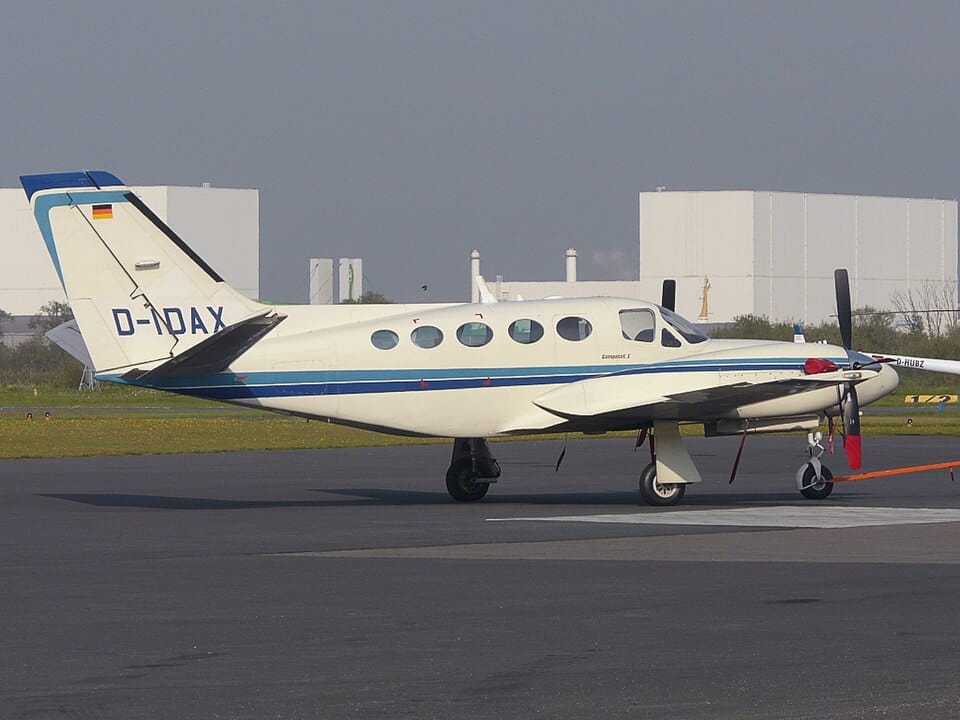
The Cessna 425 Conquest I is the lighter, simpler, cheaper-to-feed airplane — a pressurized 421 airframe with PT6A-112 turboprops, cruising in the 250-to-260-knot range and burning roughly 55 to 65 gallons per hour. The 441 Conquest II is a bigger, faster, longer-legged machine on Garrett TPE331 power, cruising near 290 to 300 knots at FL 350 with a real 1,700-plus nautical mile range, at the cost of more fuel, more airplane and a more demanding inspection history. For trips under about 700 nautical miles with four or five people aboard, the 425 usually wins on total cost. For repeated 1,000-plus mile legs with a full cabin, the 441 is the only one of the two that does the job without a stop. On both, the single biggest price variable is not avionics or paint — it is engine time remaining and whether the Cessna Supplemental Inspection Documents have been complied with.
| If you want... | Pick this | Why |
| Lowest fuel and engine reserve per hour | 425 Conquest I | 450 shp per side, lower fuel flow, smaller airframe |
| Coast-to-coast legs with one stop | 441 Conquest II | Higher cruise, more fuel, FL 350 ceiling |
| Longest time between overhauls | 441 Conquest II | TPE331 TBO roughly 5,000–5,400 hr |
| Easiest step up from a 421 or 414 | 425 Conquest I | Same fuselage family, familiar systems and handling |
| Six to eight seats plus bags | 441 Conquest II | Longer cabin, higher useful load |
| Simplest engine handling for a low-time turbine pilot | 425 Conquest I | Free-turbine PT6, forgiving start and ground handling |
Where Each Airplane Came From
How the Conquest I grew out of the 421
Cessna's piston twins were running out of room by the late 1970s. The geared, turbocharged engines in the 421 were powerful and thirsty and expensive to overhaul, and owners kept asking for turbine reliability in the same-sized cabin. Cessna's answer was to take the 421 fuselage, add a new wing and tail, and hang a pair of 450-horsepower PT6A-112s on it. It first flew in 1978, was certified in 1980, and sold as the Corsair before Cessna renamed it the Conquest I in 1983.
Roughly 235 were built before the line ended in 1986. That small number matters: parts support exists, but you are shopping a limited pool, and a clean one does not sit on the market long.
What makes the Conquest II a different airplane
The 441 came first, actually — certified in 1977, three years ahead of its smaller sibling. It is bigger in every dimension that costs money: a longer cabin, a bonded wet wing of larger span, a maximum takeoff weight of 9,925 pounds against the 425's 8,600, and Garrett AiResearch TPE331 engines rated between roughly 625 and 715 shaft horsepower depending on the variant. Around 360 were built through 1986.
If you have read our look at Cessna's 340A, 414A and 421C piston twins, think of the Conquest I as the turbine version of that family and the Conquest II as a class above it.
Fun Fact: The Conquest II was Cessna's first turboprop of its own design, and for a while in the early 1980s it was the fastest production turboprop twin in its weight class — faster in cruise than several light jets of the same era were at low altitude.
Speed, Payload and Range Compared
Numbers below are typical published and owner-reported figures. Always verify against the specific airplane's flight manual and weight and balance, because avionics upgrades, de-ice boots and interior refurbishments move useful load around by hundreds of pounds.
| Spec | 425 Conquest I | 441 Conquest II |
| Engines | 2 × P&WC PT6A-112, 450 shp | 2 × Garrett/Honeywell TPE331, ~625–715 shp |
| Propellers | 3-blade | 3-blade (4-blade on some conversions) |
| Max takeoff weight | 8,600 lb | 9,925 lb |
| Max cruise | ~255–260 KTAS | ~290–300 KTAS |
| Typical fuel burn, cruise | ~55–65 gph total | ~70–90 gph total, less up high |
| Certified ceiling | 33,400 ft | 35,000 ft |
| Usable fuel (approx.) | 366 gal | Verify by aircraft configuration; approximately 475 gal on typical 441 installations |
| Typical seating | 2 + 4 to 6 | 2 + 6 to 8 |
| Practical range with reserves | ~1,200–1,500 nm | ~1,600–2,000 nm |
| Production | 1980–1986, ~235 built | 1977–1986, ~360 built |
Does the speed difference matter on real trips?
On a 400-nautical-mile leg, the 441's roughly 40-knot cruise advantage saves you about 20 minutes. That is not worth much. On a 1,200-mile leg it saves closer to an hour and a half, and more importantly the 441 does it nonstop with reserves while the 425 is planning a fuel stop. The speed is a rounding error; the extra fuel tankage is the real gain.
Why It Matters: Fuel stops cost more than fuel. Every stop is a descent, a landing cycle, a ramp fee, a restart and 30 to 45 minutes of your passengers' day. Buyers who fly long legs regularly usually conclude the 441 is cheaper per trip even though it is more expensive per hour.
Flying411 keeps Cessna's turboprop twins in one place, so you can compare Conquest I and Conquest II listings side by side instead of guessing from spec sheets.
PT6A vs TPE331: The Engine Decision
This is where the two airplanes are most genuinely different, and where most of the internet arguing happens. Both engine families are mature and well supported. They just behave differently.
| Factor | PT6A-112 (425) | TPE331 (441) |
| Architecture | Free turbine — propeller not mechanically tied to the compressor | Single shaft — propeller geared directly to the engine |
| Published TBO | Typically 3,600 hr for the PT6A-112 | Varies by TPE331 dash number and approved program; verify the exact engines installed |
| Start behavior | Forgiving; prop can be feathered and turns freely | Requires attention to start sequencing and temperature |
| Throttle response | Slight lag typical of free turbines | Immediate, because the prop is geared to the core |
| Hot section | Common mid-life event | Often handled at scheduled intervals per Honeywell guidance |
| Shop network | Very broad worldwide | Broad, but fewer specialist shops in some regions |
Which engine is actually cheaper to run?
Per hour, the PT6A-112 is the smaller, thirstier-per-horsepower engine with the shorter interval; the TPE331 is the bigger, more fuel-efficient-per-horsepower engine with the longer interval. Owners generally report that the 425's total hourly engine reserve lands somewhat below the 441's simply because it is a smaller engine moving a lighter airplane, but the gap is narrower than the horsepower difference suggests — the Garrett's long TBO spreads its overhaul cost over far more hours.
The honest answer is that the engine you should worry about is the one in the airplane in front of you, at the hours it actually has. A Conquest I with two run-out PT6s is a more expensive airplane than a Conquest II with 1,200 hours since overhaul, regardless of what the type comparison says.
Heads Up: Turbine engines are priced by remaining life, not by the airframe's age. A pair of fresh overhauls on either type can represent a six-figure swing in what a specific airplane is worth. Get a written engine status — cycles, hot section history, and any life-limited component times — before you talk price.
Is the Garrett harder to fly?
It is different, not harder. Because the propeller is geared to the core, the TPE331 wants a disciplined start and a deliberate touch on the power lever. Pilots coming from PT6 experience usually need a few hours to stop treating the condition lever and power lever the way they did in a King Air. Transition training from a recognized provider handles this, and insurers will insist on it either way.
What They Cost to Own
Neither of these is an inexpensive airplane to operate, and buyers who compare them to a cabin-class piston twin are usually surprised in both directions: fuel and insurance go up, but unscheduled maintenance often goes down because turbines fail far less often than geared, turbocharged piston engines.
| Cost item | 425 Conquest I | 441 Conquest II |
| Fuel per hour (Jet A) | Lower — smaller burn | Higher, especially below FL 250 |
| Engine reserve per hour | Moderate | Moderate, spread over longer TBO |
| Annual/phase inspection | Lower labor hours | Higher — bigger airframe, more systems |
| Hull insurance | Lower hull value, lower premium | Higher hull value, higher premium |
| Hangar | Fits more T-hangars | Usually needs a larger box hangar |
| Recurrent training | Required by most insurers | Required by most insurers |
What should I budget annually?
Owners flying 150 to 250 hours a year in either type typically report all-in direct operating costs in the four-figures-per-hour range once fuel, engine and propeller reserves, scheduled inspections and insurance are included, with the 441 sitting meaningfully above the 425. Fixed costs — hangar, insurance, database subscriptions, recurrent training — run into the tens of thousands per year before the airplane moves. If you fly fewer than about 100 hours a year, those fixed costs dominate, and the lighter airplane starts looking a lot smarter.
Pro Tip: Ask any seller for three years of maintenance invoices, not just logbook entries. Invoices show you what actually got fixed, what got deferred, and whether the airplane has been flown enough to stay healthy. A turbine twin that sits is a turbine twin that corrodes.
If you are still deciding between classes rather than models, our guide on choosing between piston, turboprop and jet aircraft covers the cost thresholds where each one starts to make sense.
The Pre-Buy That Decides the Deal
What are the Cessna SIDs, and why do buyers keep mentioning them?
Cessna published Supplemental Inspection Documents for its twin-engine fleet, including the 425 and 441, as those airframes aged past their original design assumptions. The SIDs are a structured program of structural inspections aimed at finding fatigue cracking and corrosion in places a normal annual never opens up. In the United States, whether a Conquest SID is mandatory depends on the inspection program under which the aircraft is maintained. For many Part 91 operators, later-added Cessna SID requirements are not automatically mandatory unless incorporated into the selected inspection program or otherwise made mandatory by an AD or approved requirement. Part 135 aircraft may be required to follow them when they are incorporated into the operator's approved maintenance or inspection program.
Shops report that the first pass through the SID program on a previously non-compliant airframe commonly runs into the tens of thousands of dollars, and considerably more if corrosion turns up in the wing or the keel structure. An airplane with SIDs current and documented is worth real money more than an identical one without.
Good to Know: Ask specifically which SID items have been done, at what hours, and whether any were signed off as "not applicable." A stack of paperwork is not the same as a compliant airframe. Have your inspector map the SID list against the logs, item by item.
What else belongs on the inspection list?
- Corrosion in the wing and lower fuselage. Both types have wet wings; sealant ages, and airplanes parked outside in coastal air pay for it.
- Airworthiness directive history. The 441 in particular has a long AD record covering structure and systems. Get a current AD compliance list signed by an A&P who knows the type.
- Pressurization performance. Run the system to altitude on the test flight. Vessel repairs are expensive.
- De-ice and anti-ice. Boots, hot props, windshield heat and the bleed air system. Full functional check, not a visual.
- Landing gear and actuators. Overhaul intervals on the gear components are a real, budgeted event on both airplanes.
- Avionics currency. ADS-B Out is mandatory in most controlled airspace, and an airplane still flying steam gauges and an old flight director may need six figures of panel work to be the airplane you want.
The discipline is the same one we describe in the Cessna 172 pre-buy inspection checklist — just with an order of magnitude more money riding on each finding. Use a shop that specializes in the type, not your local piston-single mechanic.
Keep in Mind: Budget for the pre-buy itself. A proper inspection on a Conquest, including borescoping the engines and opening panels for SID items, is a meaningful expense on its own. It is also the cheapest insurance you will ever buy on a purchase this size.
Flying411 keeps listings, specifications and ownership guides for cabin-class turboprops in one place, so you can compare engine times and equipment before you book an inspection slot.
Upgrades Worth Paying For
Can you make a Conquest I faster?
Yes. Blackhawk Aerospace offers a factory-new engine upgrade for the 425 that replaces the PT6A-112s with higher-rated PT6A-135A engines, and operators report meaningful gains in cruise speed and, more usefully, climb performance and hot-and-high capability. It is a major investment, but it also resets engine time to zero — which is a large part of what you are buying anyway. If you find a 425 with run-out engines at the right price, the upgrade math deserves a serious look.
What about the 441?
Many 441s have been converted to, or were delivered with, the higher-rated TPE331-10 engines with four-blade propellers. Those airplanes climb better and hold speed higher, and they command a premium on the used market. Other common improvements on both types include modern flat-panel avionics with synthetic vision, LED lighting, new interiors and winglets on the 441.
Quick Tip: Avionics upgrades rarely return their full cost at resale, but they do decide how fast an airplane sells. A Conquest with a current panel, working autopilot and fresh databases moves; one with an inoperative flight director sits for a year.
Who Should Buy Which
The Conquest I buyer
You are typically stepping up from a 340A, 414A or 421 and you want turbine reliability without changing your mission. Your trips are 300 to 700 nautical miles, you fly four to six people, and you want the airplane to fit the hangar you already rent. You value simple, forgiving engine handling, and you want the lowest possible hourly cost that still comes with two turbines. Think of the 425 as the practical family sedan of Cessna turboprops — it does the everyday job well and does not punish you for it.
The Conquest II buyer
You fly long legs with a full cabin, or you run a small charter or corporate operation where block time matters. You need to leave with six adults and their bags and land 1,200 miles later without a stop. You have a maintenance budget and a shop relationship to match, and you are comfortable with Garrett engines. The 441 competes directly with King Air 200-class airplanes, and it is faster than most of them.
Fun Fact: Both airplanes fall below 12,500 pounds maximum takeoff weight, so neither requires a type rating in the United States. That does not mean insurers will let a low-time pilot climb in. Expect requirements for multi-engine and turbine time plus recognized initial and annual recurrent training.
If you want to see how both stack up against the King Airs, Mitsubishis and Piper Cheyennes in the same bracket, our roundup of the best twin turboprop aircraft is the wider view, and small turboprop planes and their real-world costs covers the singles that some buyers end up choosing instead.
Flying411 keeps turboprop twin listings, engine status details and ownership guides in one place, so you can compare a Conquest against a King Air without opening six tabs.
Conclusion
The honest resolution to Cessna 425 Conquest I vs 441 Conquest II is that the airplanes are not really competitors. The 425 is a pressurized cabin-class twin that happens to have turbines; the 441 is a genuine 300-knot, 1,800-mile traveling machine that happens to cost less than the jets it keeps up with. Pick by mission length and cabin load, not by speed brochure.
Then pick by condition. On airframes this age, engine time remaining and SID compliance decide what you will actually spend over the next five years — far more than which dash number is painted on the cowl. A well-documented Conquest with current inspections and mid-time engines is worth paying up for, and a cheap one almost never stays cheap. Our guide to the benefits of buying a used aircraft makes the same point across every category: the right used airplane is the one with the best records, not the lowest price.
When you are ready to compare listings, visitFlying411and see what is on the market today.
Frequently Asked Questions
Do I need a type rating to fly a Conquest I or II?
No. Both have maximum takeoff weights under 12,500 pounds, so in the United States a multi-engine land rating plus appropriate training is enough legally. Insurance is the real gate: most underwriters want turbine time, a minimum total time, and formal initial and annual recurrent training in type.
Which one holds its value better?
Both have found a stable floor because nothing new in their class is being built at anywhere near their price. Value tracks condition more than model — engines near TBO, deferred SIDs or an outdated panel will drag any Conquest down, while a fresh-engine, SID-current airplane with modern avionics sells quickly in either type.
Is the Garrett TPE331 really more reliable than the PT6?
Both are proven engines with excellent service records. The TPE331's advantage is the longer published overhaul interval and strong fuel efficiency per horsepower; the PT6's advantage is an enormous worldwide support network and simpler ground handling. Reliability differences between well-maintained examples are small. Maintenance history matters more than the badge.
How many people can each one really carry?
The 425 is comfortable with four to five adults plus bags and full fuel on typical trips; the 441 handles six to eight with bags, though like any airplane you will trade payload against fuel on the longest legs. Run an actual weight and balance for your typical mission before deciding.
Can either be operated single pilot?
Yes, both are certified for single-pilot operation. Many owners fly them that way. A functioning autopilot, a modern panel and disciplined recurrent training are what make it reasonable, especially in the 441, where the higher speed compresses your decision time in the terminal environment.
What runway length do they need?
Both operate comfortably from paved runways in the 3,500 to 4,500-foot range at typical weights and elevations, with the lighter 425 needing less. Always work the performance charts for your weight, altitude and temperature, particularly for the engine-out scenario, which is the number that really sets your usable runways.