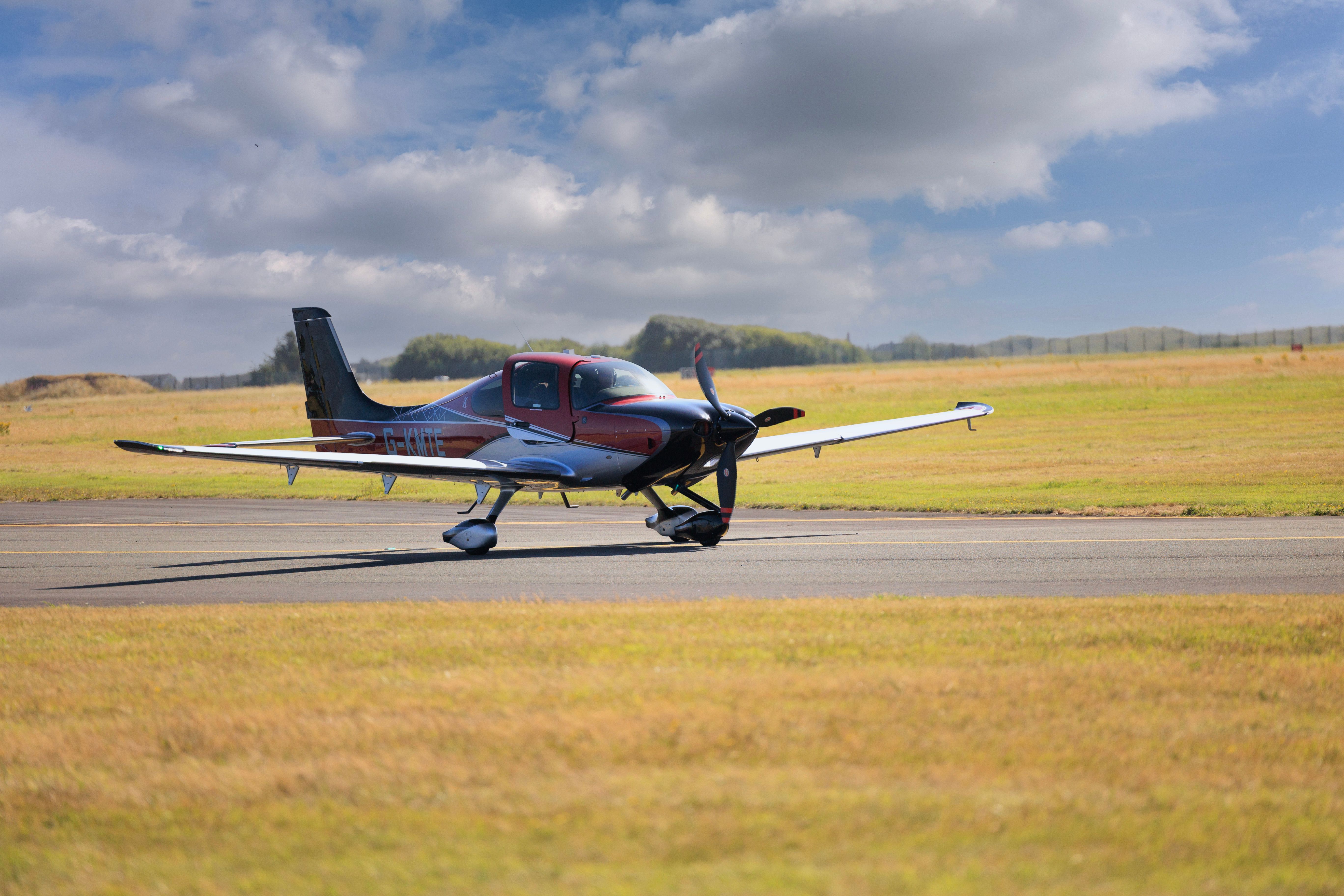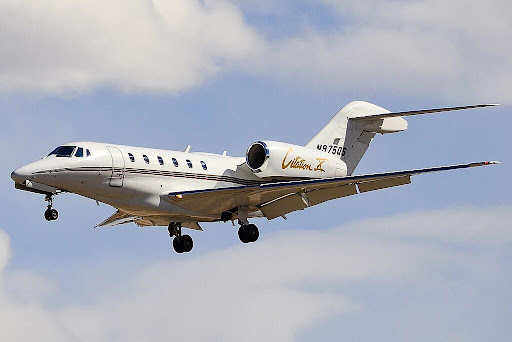
When you start looking at different aircraft types, you quickly see how each one brings its own set of strengths. Some do well on short trips, some shine on long trips, and others hit that sweet spot in the middle. The goal is simple: match the airplane to the flying you plan to do. Buyers who take their time here often feel more confident because they understand how each choice fits real missions. That’s why the next section breaks down the basics to help you build a clear picture before diving into deeper comparisons.
WHAT MAKES THESE AIRCRAFT TYPES DIFFERENT?
Choosing between piston aircraft, turboprop aircraft, and jet aircraft starts with understanding how each one works. Even though all three fall under general aviation aircraft, the engines, speeds, costs, and ideal uses vary quite a bit. When you see the differences side by side, doing an aircraft comparison becomes much easier. This helps you shape your mission profile in a way that feels practical and realistic.
Here is a clean, organized table you can refer to as you learn how each category fits common flying needs:
What Makes These Aircraft Types Different?
| Feature | Piston Aircraft | Turboprop Aircraft | Jet Aircraft |
| Engine Type | reciprocating engine | turbine engine driving a prop | Pure jet thrust |
| Fuel Type | avgas | jet-a fuel | jet-a fuel |
| Typical Use | Training, small aircraft, short trips | Short-haul missions, regional travel | Long-haul missions, business aviation |
| Cabin | non-pressurized cabin (most) | Pressurized on many models | pressurized cabin |
| Cost Factors | Lowest purchase price and operating cost | Mid-range cost differences | Highest annual operating budget |
| Performance | Lower aircraft speed, climb rate, and service ceiling | Strong climb and balanced aircraft performance | Fastest aircraft speed and best range vs payload |
| Runways | Great STOL capability options | Moderate runway needs | Longer runway length needs |
| Best For | Local flying, training, budget-focused buyers | Buyers needing a mix of speed and efficiency | Buyers prioritizing speed, comfort, and long-range missions |
Now let’s walk through the major factors in more detail so you fully understand how these categories compare in real-world ownership.
Engine Design and Power
Piston models use a reciprocating engine, which feels familiar to many pilots. These engines help keep the fuel burn rate low and make aircraft maintenance intervals predictable. Many buyers start with single-engine planes, although multi-engine planes offer better redundancy for larger loads and more demanding flights.
Turboprops use a turbine engine to spin a propeller. That gives them better power response, stronger propeller efficiency, and smoother climbs. They hit a nice middle ground with reliable engine reliability, solid range, and balanced costs.
Jets rely on pure thrust, which produces excellent thrust-to-weight ratio, higher service ceiling, and impressive aircraft speed. That’s why they dominate longer travel and business aviation missions.
Fuel Types and Efficiency
Pistons burn avgas, which can vary in price by region. Turboprops and jets burn jet-a fuel, and even though jets use more, they deliver the best flight efficiency at higher altitudes.
Cabin and Comfort Factors
If you want simple weekend flying, a non-pressurized cabin works fine. For higher altitudes and weather flexibility, many turboprops and all jets include a pressurized cabin that boosts passenger comfort.
Ownership and Maintenance
Piston aircraft carry the lowest operating cost, including cheaper parts, easier inspections, and more affordable engine overhaul work. Many owners also track their TBO closely to plan expenses.
Turboprops climb in price, but they also offer smoother rides and better overall performance. Jets sit at the top thanks to more complex systems, higher airframe condition standards, and advanced avionics suite packages.
Performance and Limitations
Each category has its own operational limitations. Pistons work well for short trips and moderate loads. Turboprops manage bigger payload capacity with strong climb rate and flexible altitudes. Jets excel when your travel distance is larger, your schedule is tight, and you want the fastest rides with the best comfort.
HOW PISTON, TURBOPROP, AND JET AIRCRAFT PERFORM IN REAL USE
Once you understand the basics, it becomes easier to picture how each category handles everyday flying. This is where aircraft performance really stands out. Pilots and owners think about travel distance, load, weather, and the type of runway they’ll use. All of those details shape real-world choices.
Piston Aircraft in Daily Flying
Pistons shine on local and regional flights. Their slower aircraft speed and simple systems make them great for training, personal trips, and hands-on weekend flying. They also fit tight budgets thanks to a lower cost per flight hour, smaller annual operating budget, and easier maintenance.
Pistons work best on:
- Local sightseeing and personal flights
- Entry-level mission planning
- Lower-altitude routes
- Short-haul missions
- Simple airport setups with shorter runways
The main trade-offs come from performance trade-offs like lower service ceiling, slower climbs, and lighter payload capacity. They also tend to have higher cabin noise levels, which can affect longer flights.
Turboprop Aircraft in Regular Missions
Turboprops are the “middle strength” option, giving you more range, more speed, and better reliability. A good turboprop offers a great blend of range vs payload, solid engine reliability, and workable runway length needs. They handle mixed missions really well, especially when efficiency matters.
You usually see turboprops used for:
- Family travel
- Regional business flights
- Trips into smaller airports
- Light cargo needs
- Mixed expected utilization throughout the year
Turboprops also climb faster, cruise higher, and handle more weather flexibility than pistons. Their fuel use is balanced too—more than a piston but far less than a jet.
Jet Aircraft in Real Missions
Jets are made for speed, distance, and comfort. They rise fast thanks to strong thrust-to-weight ratio, cruise at high altitudes, and offer the best aircraft range. They also feature quiet cabins, smooth rides, and advanced tech that supports professional flying.
Jets work best for:
- Long business routes
- Long-haul missions
- Time-sensitive travel
- High-altitude performance
- Premium comfort
- Demanding mission planning
They carry the highest purchase price, highest fuel use, and highest long-term ownership cost—but they also deliver strong aircraft resale value, especially in standout models with modern upgrades.
Speed vs Cost and Other Practical Considerations
One of the biggest questions buyers ask involves speed vs cost. Jets win the speed category by a clear margin. Turboprops sit in the middle with strong efficiency. Pistons save the most money but move the slowest.
Buyers also track operational limitations, airframe condition, and even aircraft maintenance intervals to understand expenses over time. Some also compare cost differences between piston models and turboprops before committing.
UNDERSTANDING REAL-WORLD MISSION FIT FOR EACH AIRCRAFT TYPE
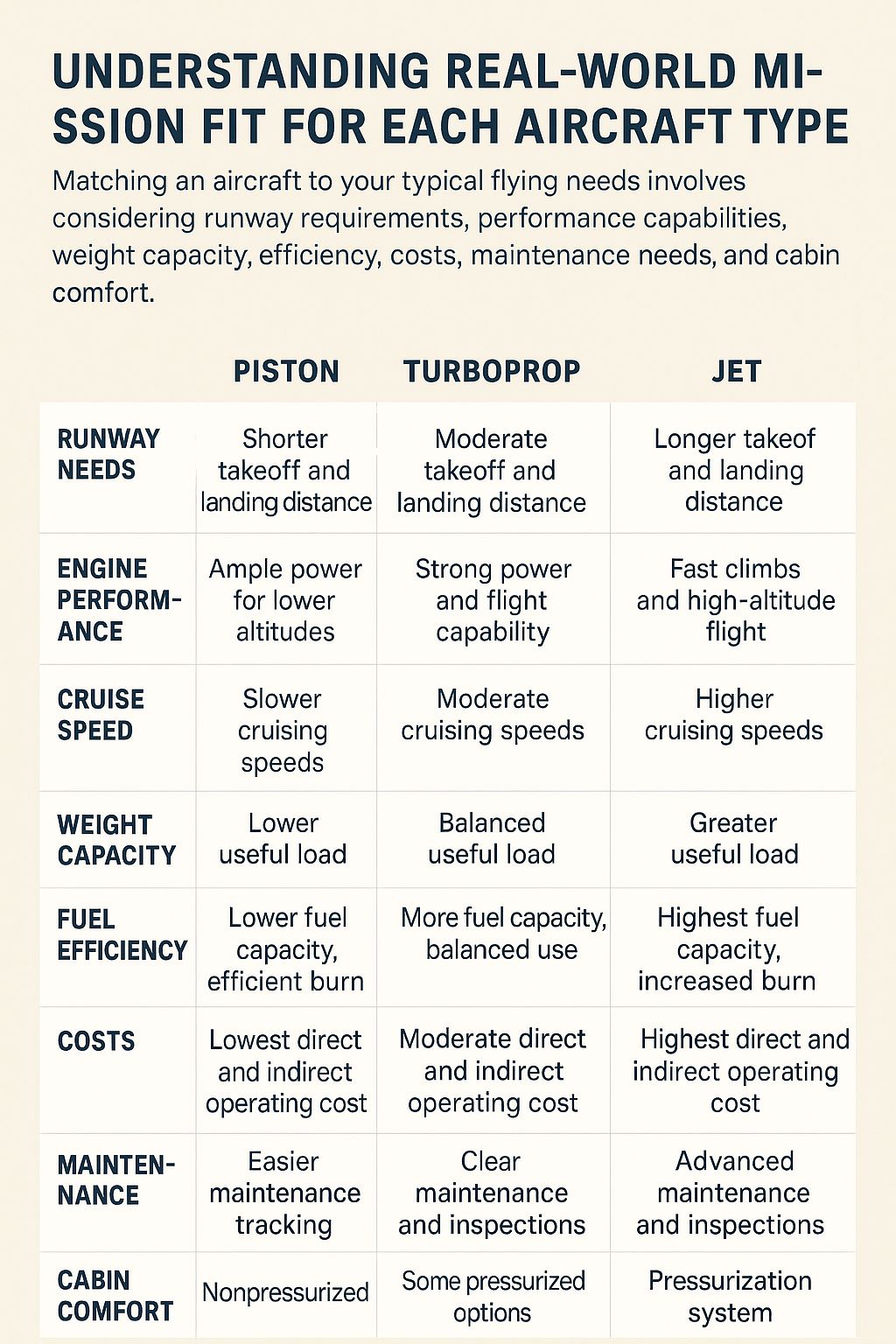
When buyers compare airplanes, they often look at the numbers first. That helps, but the real value shows up when you match an aircraft to the flying you want to do. This idea is often called aircraft mission fit, and it keeps you focused on what actually matters for your trips. You look at the runways you use, the distance you fly, the passengers you bring, and the comfort you want. Each airplane handles these details differently, so it helps to break things into clear pieces.
Runway Needs and Real Trip Planning
Pistons, turboprops, and jets all need safe room to get in and out of an airport. Many buyers start by looking at takeoff distance and landing distance because these measurements decide which airports you can use.
Pistons usually work well on shorter runways because they are lighter and slower. For example, a light piston can safely operate from small community strips where space is tight. Turboprops need a bit more room but still manage short runways fairly well, especially models designed for flexible field operations. Jets often need the most space due to higher approach speeds. That is important if you fly to small towns or private airparks.
If you plan trips to places with shorter runways, a piston or turboprop may fit your missions better. If you mostly use large regional or national airports, a jet still works perfectly.
Engine Power and Flight Capability
It helps to look at the strength of the engines each category uses. Engine reliability plays a big part in performance and confidence, so many pilots focus on engine performance early in the buying process.
- Pistons provide enough power for low to mid-altitude flying and comfortable weekend trips.
- Turboprops offer stronger power, smoother response, and better performance in different weather patterns.
- Jets handle the highest altitudes and the fastest climbs, which helps with longer routes and busy schedules.
Each group covers the basics well, but picking the right type depends on how often you fly, how far you go, and how much weight you carry.
Cruise Speeds and How They Shape Trips
Cruise numbers matter. A higher cruise speed shortens travel time and helps you stay productive on long days. Jets lead by a wide margin. Turboprops sit comfortably in the middle with enough speed for regional routes. Pistons cruise slower, which works fine for shorter legs or relaxed schedules.
When you blend speed with cost, you start to see the trade-offs more clearly. Faster airplanes usually cost more to operate per hour. This balance helps you decide which group fits your needs without stretching your budget.
Weight, Balance, and Cabin Planning
Another big part of choosing an airplane is understanding how much weight it can carry. Buyers often compare useful load, empty weight, and maximum takeoff weight. These numbers show how flexible the aircraft is with passengers, luggage, and fuel.
- Empty weight tells you what the airplane weighs before you add people and bags.
- Useful load shows how much payload you can safely carry.
- Maximum takeoff weight is the total limit that cannot be exceeded.
If you usually fly with only one or two people, most aircraft types work well. If you fly full seats or lots of bags, a turboprop or jet may offer better flexibility. They handle bigger loads without stretching performance limits.
Fuel Planning and Real Efficiency
Fuel planning helps shape any mission. You look at the fuel capacity first, because that affects how long you can fly before you stop to refuel. Pilots also watch fuel efficiency, especially during long weeks with several flights.
Pistons burn the least fuel and make simple trips very affordable. Turboprops burn more but deliver excellent range and reliability. Jets burn the most fuel but shorten travel time and handle high-altitude flight where efficiency improves.
Balancing capacity, burn, and cost gives you a clear picture of how each aircraft supports your yearly flying needs.
Direct and Indirect Costs Over Time
Every airplane carries two types of expenses. The first is direct operating cost, which includes fuel, routine inspections, and hourly wear on the engine. The second is indirect operating cost, which covers hangars, insurance, training, and other behind-the-scenes items.
Keeping these two categories separate helps you plan your yearly budget. Pistons cost less in nearly every category. Turboprops rise into the mid-range. Jets sit at the higher end but offer the strongest performance benefits.
Your total cost depends on how often you fly. Some owners fly weekly. Others fly only a few times a month. Matching cost to usage helps you stay comfortable with long-term ownership.
Maintenance, Tracking, and Long-Term Care
Maintenance plays a major role in keeping value high. Owners need clean maintenance tracking, accurate logbook records, and clear schedules. These items support resale value and help mechanics understand the aircraft’s full history.
Modern systems also include engine monitoring, which helps track temperatures, pressures, and trends. This type of data helps catch early signs of wear. It also helps mechanics make better decisions during inspections.
Every aircraft also needs airframe inspections at certain intervals. Pistons often have shorter cycles. Turboprops and jets use more detailed programs, especially when systems become more complex.
Staying ahead on inspections keeps your aircraft safe and smooth to fly. It also reduces surprises during annual reviews.
Pressurization and Cabin Comfort
Some buyers care a lot about cabin experience. If you fly at higher altitudes often, having a strong pressurization system helps maintain steady comfort levels. Pressurization allows you to climb above rough weather and fly longer legs without added fatigue.
Pistons rarely include pressurized options. Turboprops provide several. Jets include it on every model and usually offer the most comfortable cabins.
When you blend pressurization with speed, range, and runway needs, you start to see how each aircraft type fits different mission profiles. A pilot who flies long distances at higher altitudes will appreciate the comfort benefits. Someone who flies shorter legs may not need the added system at all.
Bringing It All Together
When you compare all these pieces, you shape a clear view of how each aircraft behaves over time. You look at runway length, climb strength, weight limits, fuel use, comfort, and cost. You add in your flying habits to see what feels practical.
- Pistons fit personal flying and relaxed schedules.
- Turboprops fit regional missions with several passengers.
- Jets fit long-distance travel with the highest comfort and speed.
By checking these details against your own trips, you gain a clear and simple understanding of how each category supports your routine flying. It helps you choose with confidence and enjoy your aircraft more each time you fly.
CONCLUSION
Choosing between piston, turboprop, and jet aircraft becomes clearer when you look at your flying habits and match them with the strengths of each category. Pistons handle simple trips with low cost. Turboprops balance efficiency and power. Jets offer the fastest, smoothest travel across long distances. When you understand the differences, it becomes easier to plan your missions with confidence and set a path that fits your flying style.
If you want expert support, trusted listings, and real guidance for CHOOSING BETWEEN PISTON, TURBOPROP, AND JET AIRCRAFT: A SIMPLE BUYER’S GUIDE, visit https://flying411.com/ to explore the best options available today.
FAQs
1. HOW DO I PICK THE RIGHT AIRCRAFT IF I FLY MULTIPLE TRIP LENGTHS?
Choose the model that supports your longest regular route and still fits your budget. This keeps performance strong without driving up ownership cost.
2. DO TURBOPROPS HANDLE BAD WEATHER BETTER THAN PISTONS?
Most turboprops manage weather more smoothly because they climb higher and have stronger engines, giving pilots more flexibility during changing conditions.
3. ARE JETS WORTH IT FOR SHORT ROUTES?
Jets can fly short routes, but they cost more per hour. Many owners choose turboprops for short missions and save jets for longer, faster travel.
4. HOW MUCH TRAINING DO I NEED TO MOVE UP TO A JET?
You’ll complete type rating training, systems study, and simulator sessions. It’s structured and clear, so many pilots transition smoothly with good preparation.
5. DOES CABIN SIZE AFFECT PASSENGER FATIGUE?
Yes. Larger cabins usually mean more comfort, easier movement, and better noise control, which helps passengers feel more relaxed on longer flights.