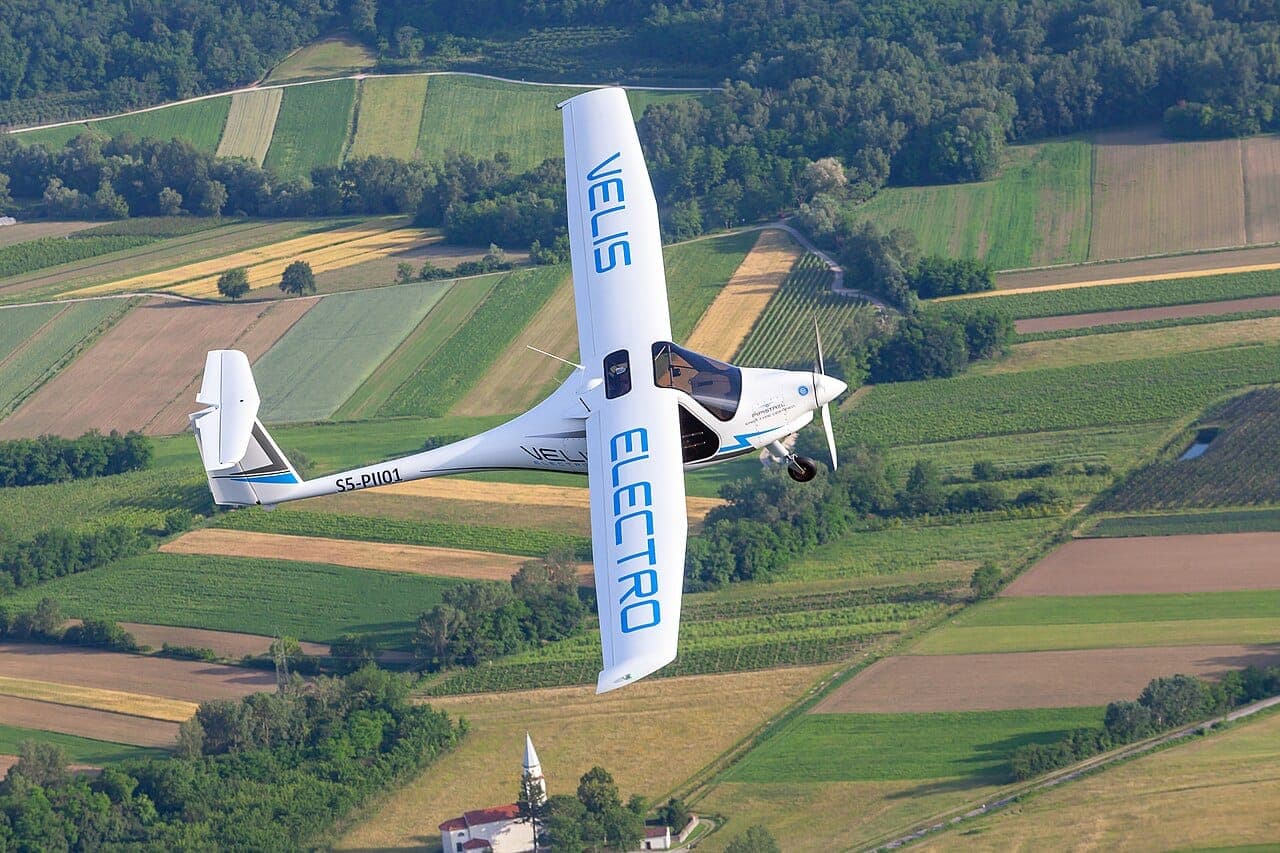
Can you buy an electric airplane today, right now, with a check and a delivery date? Yes. One of the most established options is the Pipistrel Velis Electro, the world's first fully type-certified electric airplane and a production aircraft already used by flight schools. The harder question is whether you can register it where you live, charge it at your hangar, and fly the mission you had in mind on roughly fifty minutes of battery power.
This walkthrough gives you the seven decisions in the order you actually make them, with the numbers that matter at each one. Done properly, the whole process — from first inquiry to first flight — runs somewhere between four and nine months, and most of that is electrical work and paperwork, not the airplane.
Step 1: Decide which kind of "buy" you mean
There are three very different purchases hiding inside the same question.
The first is a type-certified electric airplane. The most established production example is the Velis Electro, which received EASA type certification on June 10, 2020, under certificate EASA.A.573 as the Virus SW 128. Its E-811 electric motor also received its own EASA type certificate. China's four-seat RX4E subsequently received Chinese type certification in December 2024, although its certification and market availability differ from those of the Velis Electro.
The second is an experimental or kit electric airplane, which you can build or import but which carries operating limitations that rule out most commercial use.
The third is waiting. Several promising designs are in testing, and a few are genuinely close, but a flight school cannot schedule a prototype. We covered where the regulators stand in Electric Aircraft Certification Progress, and the broader field in 9 Best Small Electric Planes Taking Flight.
Good to Know: Pipistrel has been owned by Textron since 2022 and became part of the Textron Aviation business segment at the beginning of the 2026 fiscal year. That integration gives Pipistrel access to Textron Aviation's established manufacturing, development and sales expertise.
Step 2: Check whether it can be registered where you fly
This is the step that stops most American buyers, and it is worth understanding before you fall in love.
In Europe, the Velis Electro is a normal certified aircraft. You buy it, register it, and fly it — including paid flight instruction — the same way you would a Rotax-powered trainer.
In the United States, the airplane does not hold an FAA type certificate. For years it also could not be a light-sport aircraft, because the old LSA definition required a single reciprocating engine, which quietly excluded every electric motor ever built. The FAA's MOSAIC final rule, announced in July 2025, removed that restriction. The expanded pilot privileges took effect on October 22, 2025, followed by the aircraft certification provisions on July 24, 2026.
Here is the part people skip: MOSAIC opens the door, but an EASA type certificate does not automatically transfer to the United States. However, in March 2024, Pipistrel announced that the FAA had granted the Velis Electro a light-sport airworthiness exemption allowing eligible US flight schools to use the airplane for flight training. That pathway carries specific conditions and reporting requirements. MOSAIC's expanded light-sport aircraft certification provisions took effect on July 24, 2026, providing a broader framework for electric aircraft certification. Before buying, ask the importer exactly which airworthiness certificate and operating privileges will apply to your aircraft.
Heads Up: Experimental certification is not the only US pathway for the Velis Electro. The FAA granted a light-sport airworthiness exemption in 2024 supporting qualifying flight training operations. Confirm whether the specific aircraft can be certificated and operated under that exemption or the applicable MOSAIC framework before arranging commercial training or rental operations.
Step 3: Price the airplane, then price everything around it
Pipistrel launched the Velis Electro at roughly €190,000 before tax in 2020. Through the mid-2020s, quotes have generally landed in the €200,000–€250,000 range depending on avionics, spares and whether a ground charger is bundled. Call it the price of a well-equipped new piston trainer, for an airplane that carries two people for under an hour.
Then add the things that are not the airplane: an approved Pipistrel ground charger, electrical infrastructure upgrades, shipping and import duties, and sales or use tax. Flight schools should also budget for charging downtime when planning daily aircraft utilization.That last one catches people — if you are buying across a state line, read Sales Tax on an Out-of-State Airplane Purchase before you pick a delivery location.
Flying411 keeps new and used aircraft listings in one place, so you can compare what an electric trainer costs against the piston two-seaters it would actually replace.
Step 4: Build the charging infrastructure
An electric airplane is a hangar project before it is a flying project. The factory charger draws on the order of 20 kW — think of it less like a wall outlet and more like adding a second air conditioning plant to the building. Most older GA hangars do not have the service for it.
What you need: a licensed electrician to survey the existing panel and service drop, the airport or FBO's written permission to modify the building, and often a utility conversation about capacity. What commonly goes wrong: the quote comes back fine, and then the utility says the feeder to that row of hangars is maxed out and an upgrade is a six-month queue. Start this conversation the same week you start shopping, not after delivery.
Pipistrel publishes a typical charging time of approximately one hour and twenty minutes for a normal charging cycle from 35 percent to 95 percent state of charge. Actual charging time varies with battery condition and temperature. Unlike its Alpha Electro predecessor, the Velis Electro uses installed liquid-cooled battery packs that are not designed for routine quick swaps between flights. Pipistrel recommends operating multiple aircraft when flight schools need faster student turnaround times.
Step 5: Run the real per-hour numbers
The sales pitch is that electricity is nearly free. It is. The battery is not.
The Velis Electro carries about 24.8 kWh of nominal battery capacity across two liquid-cooled packs, one in the nose and one behind the cabin. Including charging losses, a flight hour pulls roughly 25 kWh from the wall. At US commercial rates of about $0.15 per kWh, that is around $4 an hour in energy — less than the coffee you bought on the way to the airport.
Now the honest part. The battery packs have maintenance and replacement limits. Pipistrel originally published a battery life limitation of 500 operating hours, rather than 500 charging cycles. Battery technology and maintenance requirements have evolved since the aircraft entered service, so confirm the applicable replacement interval, state-of-health requirements and current replacement price with Pipistrel. Using an illustrative replacement cost of €18,000 and a 500-hour service interval produces a battery reserve of €36 per flight hour. Lower utilization or earlier battery replacement could increase that figure considerably.
| Cost line | Velis Electro (estimate) | Rotax-powered piston trainer |
| Energy or fuel per hour | ~$4 (25 kWh at $0.15) | ~$26–$33 (4–5 gph avgas) |
| Powerplant/battery reserve | €36/hr for batteries alone (illustrative €18,000 replacement cost over 500 hours); additional component reserves may apply | ~$10–$14 (engine fund) |
| Scheduled inspections | Annual/100-hour, fewer consumables | Annual/100-hour, oil, plugs, filters |
| Noise footprint | About 60 dBA on takeoff | Typical light piston levels |
The takeaway is uncomfortable for the marketing copy: as of 2025–2026, the Velis Electro is not dramatically cheaper per hour than a good piston trainer. It is quieter, simpler, and has far fewer things to go wrong between inspections. If raw cost per hour is your yardstick, compare it honestly against the numbers in Cessna 172 vs Cherokee 180: Cost Per Hour.
Why It Matters: Battery cost per kWh has fallen steadily, and cycle life has risen. The per-hour math above is a snapshot, not a law of physics. Re-run it with current pack pricing before you decide.
Step 6: Match the mission to the limits
The Velis Electro's E-811 motor delivers about 57.6 kW (roughly 77 hp) for takeoff and about 49.2 kW continuously. Maximum takeoff weight is 600 kg (1,323 lb), with a typical useful load of 380 lb. Pipistrel publishes a cruise speed of 88 knots true at 35 kW, a maximum horizontal speed of 93 knots calibrated at sea level, and a maximum climb rate of 647 feet per minute. Typical endurance is approximately 50 minutes, with the latest manufacturer specifications listing up to 56 minutes plus a VFR reserve.
It is certified for day VFR only. No night, no icing, no hard IFR. In plain terms: this airplane is a circuit-and-airwork trainer, and a very good one. It is not a cross-country machine, and nobody at Pipistrel claims otherwise. If your mission involves going somewhere, the answer is still a piston single — see How Far Can a Cirrus SR22 Fly for what that side of the ledger looks like.
Fun Fact: At roughly 60 dBA on takeoff, the Velis Electro is quiet enough that several noise-restricted European airfields have allowed training hours that no piston aircraft gets. For a school fighting neighbors, that access can be worth more than the fuel savings.
Flying411 keeps trainer listings and ownership cost guides in one place, so you can compare an electric two-seater against the Rotax and Lycoming aircraft competing for the same ramp space.
Step 7: Plan for batteries and resale before you sign
Set up a battery fund on day one, the way a piston owner sets up an engine fund. Put the per-hour figure from Step 5 into a separate account every month and the replacement stops being a crisis.
Resale is the genuine unknown. The used market for type-certified electric aircraft is tiny, and a buyer's first question will be the remaining cycle life on the packs — so keep the charge-cycle records as carefully as you would keep engine logs. Financing is also harder than for a conventional airplane; lenders price what they can repossess and resell, and the same caution that affects older airframes, covered in Can You Finance a 1970s Airplane?, applies here for the opposite reason: no comparables.
Pro Tip: Get an insurance quote in writing before you sign a purchase agreement. Few underwriters have electric-aircraft loss history, and quotes vary far more than they would for a Cessna 152.
What each step needs and how long it takes
| Step | What you need | Typical time |
| 1. Pick certified, experimental or wait | Honest mission statement | A week of thinking |
| 2. Confirm registration path | Written answer from importer; your CAA or FAA FSDO | 2–6 weeks |
| 3. Price airplane plus extras | Quote including charger, spares, duties, sales tax | 2–4 weeks |
| 4. Build charging infrastructure | Electrician survey, hangar/airport approval, utility capacity | 1–6 months |
| 5. Run per-hour numbers | Current pack price and cycle limit, local kWh rate | An afternoon |
| 6. Match mission to limits | Day VFR, ~50 min endurance, ~380 lb cabin load | One planning session |
| 7. Battery fund, insurance, records | Written insurance quote, cycle-tracking log | 2–4 weeks |
Key Takeaways
You can buy a type-certified electric airplane today, and the Velis Electro is among the most established options. EASA certified it in June 2020, European flight schools operate it, and Textron has owned Pipistrel since 2022. In the United States, an FAA exemption granted in 2024 established a pathway for qualifying Velis Electro flight training operations. MOSAIC's expanded aircraft certification rules took effect in July 2026, although buyers must still confirm the certification and commercial operating privileges of their specific aircraft. The operating economics are better than the marketing suggests in energy terms and worse than it suggests overall, because life-limited battery packs behave like a very expensive engine fund. The airplane that makes sense is a high-utilization circuit trainer at a noise-sensitive field, where quiet access and short, repeatable flights play to every strength it has. Everything else — cross-country, night, IFR, four seats — is still a piston conversation.
Conclusion
Treat the Pipistrel Velis Electro as what it is: a real, certified, narrowly focused training aircraft that happens to be first. Confirm the registration path in your country, get the hangar's electrical service surveyed early, build the battery fund into your hourly rate from the beginning, and the airplane will do exactly what it promises for forty-five minutes at a time. Buy it expecting a cheap, do-everything airplane and it will disappoint you — not because it is bad, but because that was never the design brief. For a wider look at where the technology goes next, our guides to hybrid-electric aircraft and electric helicopters cover the rest of the field.
Flying411 keeps aircraft listings, ownership costs and certification guides in one place, so you can compare the new technology against the proven airplanes before you commit.
When you are ready to compare listings, visitFlying411and see what is on the market today.
Frequently Asked Questions
How long can a Velis Electro actually stay in the air?
Pipistrel quotes about 50 minutes of endurance plus a VFR reserve from its roughly 24.8 kWh of battery. In practice, schools plan 30 to 45 minutes of useful flying per charge, which covers a circuit lesson or a short airwork session comfortably and nothing beyond that.
Can a US flight school rent one out by the hour?
Potentially, subject to the aircraft's certification and operating limitations. The FAA granted the Velis Electro a light-sport airworthiness exemption in 2024 that permits qualifying US flight training operations. MOSAIC's expanded aircraft certification provisions took effect in July 2026. Confirm the specific aircraft's certification status, exemption conditions and rental privileges with the manufacturer and FAA before purchasing it for commercial use.
How often do the batteries need replacing, and what does that cost?
Pipistrel originally published a 500-hour battery life limitation. Applicable replacement requirements may vary with battery generation, condition and current maintenance guidance. Obtain the latest replacement interval and pricing directly from Pipistrel before calculating your hourly battery reserve.
Is an electric trainer cheaper to operate than a piston one?
On energy alone, an electric trainer can cost substantially less than a piston airplane. However, battery replacement reserves, electric motor and component maintenance, charging infrastructure and aircraft utilization all influence the total hourly cost. The genuine advantages include low noise, fewer routine powerplant consumables and simpler operating procedures for students.