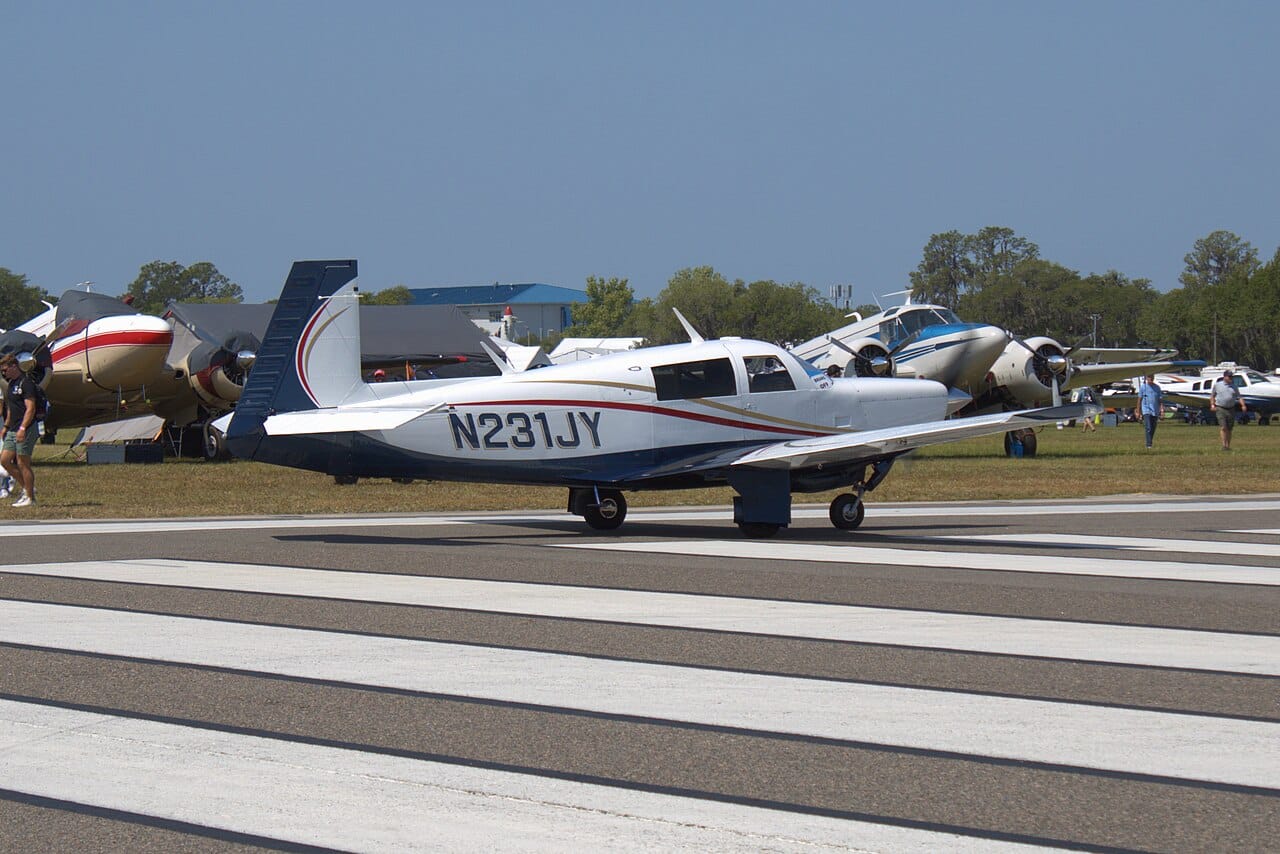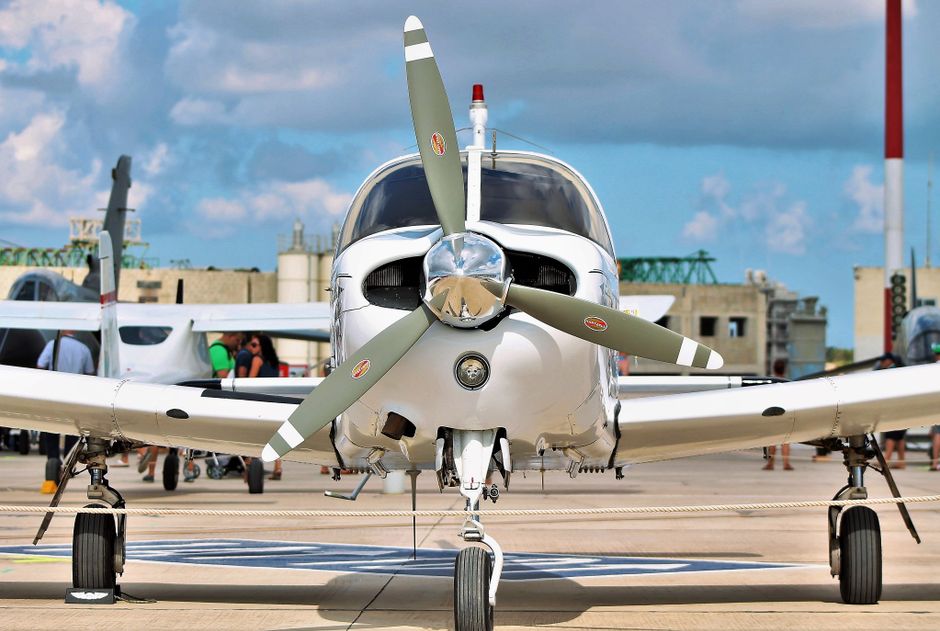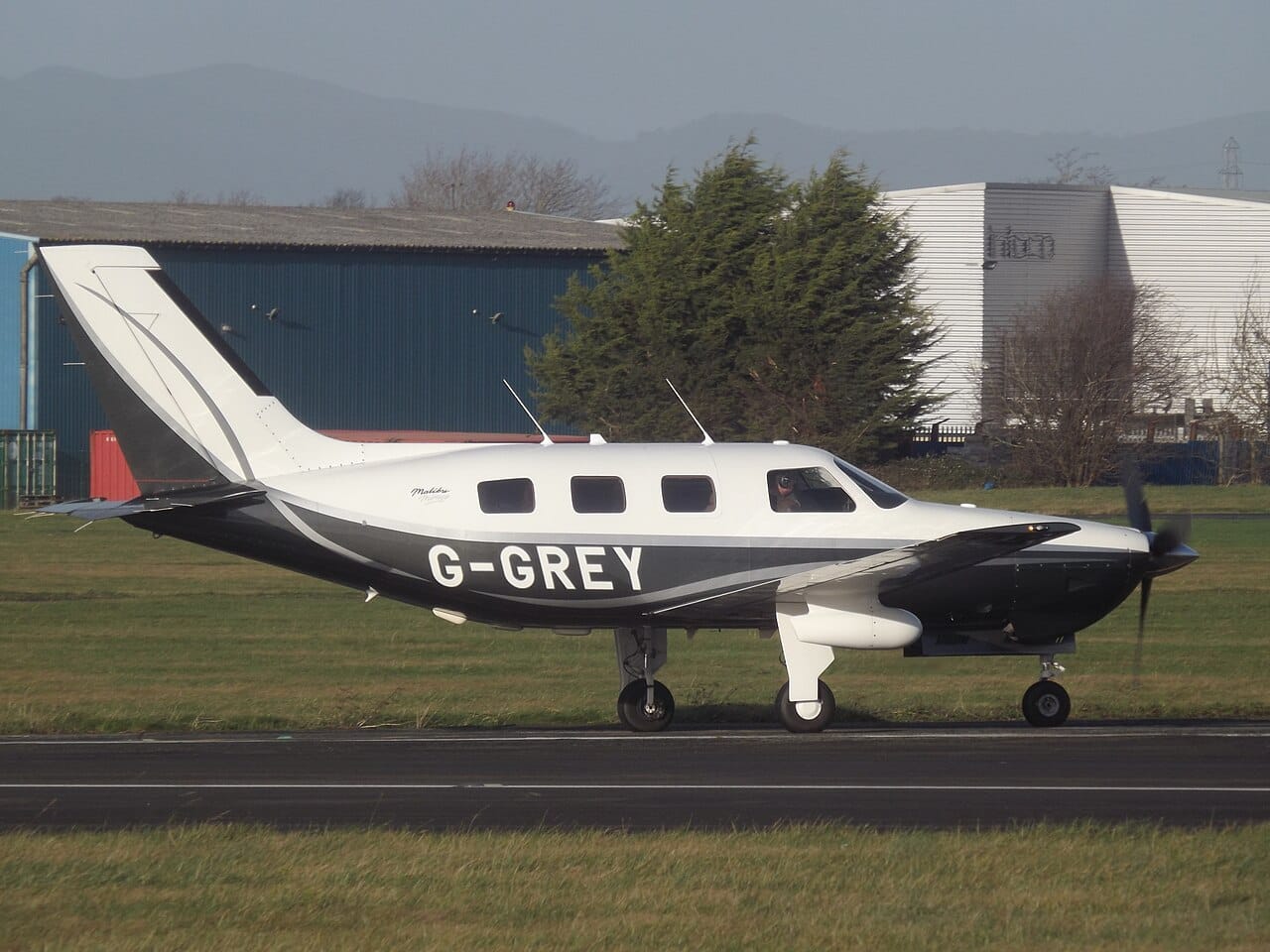
Walk down a row of hangars at almost any well-kept general aviation field and you will eventually find three airplanes that look like triplets. Same long, sleek fuselage. Same airstair door on the left. Same six seats behind a pressurized cabin. But one has a big three-blade prop turning in front of a piston engine that smells faintly of 100LL, one has a slightly pointier nose and a turbine whistle, and one sits noticeably taller on its gear with a longer snout still. That is the Piper PA-46 family, and the three airplanes are a Malibu Mirage, a JetProp DLX conversion and a Meridian.
The question buyers actually type into a search box is not "which is best." It is more specific and more anxious than that: Piper Mirage vs JetProp DLX vs Meridian — is stepping up to a PA-46 turbine worth the money, or should you stay piston? It is a fair question, because the three airplanes carry roughly the same number of people in roughly the same cabin, and yet the cost of keeping them flying can differ by a factor of two or more.
The honest answer is that they are not really three versions of one airplane. They are three different missions wearing the same suit. Below is what actually separates them: speed, altitude, payload, fuel, engine reserves, insurance and the kind of flying you will do on a Tuesday in February when the freezing level is at 3,000 feet.
Key Takeaways
The Malibu Mirage is the value play: a pressurized, known-ice, 213-knot piston single that burns around 20 gallons an hour of avgas and overhauls for a fraction of what a turbine costs. The JetProp DLX is a Malibu or Mirage airframe converted to a Pratt & Whitney PT6A under a supplemental type certificate, buying you turbine reliability and roughly 260 knots for a much lower acquisition price than a factory turboprop — at the cost of a smaller fuel-and-payload envelope and a resale market that prices conversions differently than factory airplanes. The Meridian is the factory answer: a stretched, strengthened, heavier PA-46 with a PT6A-42A flat rated to 500 shp, certified to FL300, with the best systems integration and the best support story of the three. Fuel burn and engine reserves are where the real money hides, not in the purchase price. If you fly fewer than about 100 hours a year in benign terrain, the piston case is strong; if you fly hard IFR over rocks and weather, the turbine case gets very strong very fast.
| Spec | Malibu Mirage (PA-46-350P) | JetProp DLX (converted PA-46) | Meridian (PA-46-500TP) |
| Engine | Lycoming TIO-540-AE2A, 350 hp | P&WC PT6A-34 (DLX III uses -35) | P&WC PT6A-42A, flat rated 500 shp |
| Fuel | 100LL avgas | Jet-A | Jet-A |
| Max cruise (book) | About 213 KTAS | About 260 KTAS | About 260 KTAS |
| Certified ceiling | 25,000 ft | 27,000 ft | 30,000 ft |
| Max takeoff weight | 4,340 lb | About 4,340 lb (per STC) | 5,092 lb (5,134 lb, later serials) |
| Usable fuel | About 120 US gal | About 150 US gal | About 170 US gal |
| Typical cruise burn | 19–22 gph avgas | 33–38 gph jet-A | 37–42 gph jet-A |
| TBO | Verify current Lycoming SI 1009 for the installed TIO-540-AE2A | 3,600 hr basic TBO; verify current P&WC program | 3,600 hr basic TBO; verify current P&WC program |
| Pressurization | 5.5 psi differential | 5.5 psi differential | 5.5 psi differential |
Good to Know: All three sit on the same FAA type certificate data sheet, A25SO, which also covers the original 310-hp Malibu, the unpressurized Matrix and the later M600. That shared paperwork is why the family feels so similar from the left seat — and why a good PA-46 mechanic can usually work on all of them.
The PA-46 Family in Plain English
How did one airframe end up with three personalities?
Piper introduced the PA-46-310P Malibu in 1984 with a Continental TSIO-520-BE. It was a genuinely new idea: a pressurized, cabin-class single that one pilot could fly in the flight levels. Reliability trouble with that first engine led Piper to the PA-46-350P Malibu Mirage in 1989, powered by the 350-hp Lycoming TIO-540-AE2A. The Mirage ran, with running changes, all the way to 2014, after which the same airplane became the M350.
Meanwhile, owners kept asking the obvious question: what if you hung a turbine on it? JetPROP LLC of Spokane, Washington answered with a supplemental type certificate that removes the piston engine and installs a Pratt & Whitney Canada PT6A. The DL used a PT6A-21; the DLX and DLX III use the larger PT6A-34 and -35. The airframe's torque limit, not the engine, sets the ceiling on usable power, which is why a converted airplane climbs like it means it on a hot day.
Piper's own turbine answer arrived in 2000 as the PA-46-500TP Meridian. It retained the basic PA-46 cabin and fuselage concept but incorporated substantial structural, wing, fuel-system and systems changes for turbine power. Gross weight increased to 5,092 pounds and the airplane was certified to 30,000 feet. In 2015 the Meridian became the M500 with an upgraded Garmin G1000 panel and electronic stability protection; G1000 NXi followed in 2018.
Why It Matters: A JetProp is a modified piston airframe. A Meridian is a purpose-built turboprop airframe. They cruise at similar speeds, but they do not carry, climb or age the same way, and lenders, insurers and appraisers all know it.
Speed, Altitude and What You Actually Feel
Is 47 knots worth six figures?
On paper the Mirage books about 213 knots true at high cruise in the low flight levels, and both turbines book about 260. That is roughly a 20 percent speed gain. On a 300-nautical-mile leg it saves you maybe 20 minutes. On a 900-mile leg it saves you closer to an hour and a half, and it turns a two-fuel-stop day into a one-stop day.
But speed is the least interesting part of the turbine upgrade. The bigger differences are climb and ceiling. A Mirage climbing through 18,000 feet on a warm day is working, and the last 5,000 feet to its 25,000-foot certified ceiling take patience. A JetProp will be at FL270 in well under 20 minutes from most departures, and a Meridian gets to FL300 — where the air is thin enough that the airplane finally gets the true airspeed its engine promises.
Altitude also buys weather. Thirty thousand feet puts you above a great deal of the convective junk and most of the icing layers that make a February trip in a piston single a judgment call. Both turbines and the Mirage are certified for flight into known icing with pneumatic boots, heated windshield and prop protection, but the airplane that can climb quickly through the ice band is in a different risk category than the airplane that grinds through it.
Keep in Mind: Cabin pressurization on all three is 5.5 psi differential. At FL250 the Mirage gives you roughly an 8,000-foot cabin. At FL300 the Meridian is around 10,000 feet. Higher is faster, but the cabin gets less comfortable and supplemental oxygen discipline matters more.
Flying411 keeps PA-46 listings, specs and owner-focused guides in one place, so you can compare a Mirage, a JetProp conversion and a Meridian side by side instead of hunting through three different corners of the internet.
Payload: The Number That Decides Most Purchases
How many people can you actually take, with fuel?
This is where the family argument gets settled. All three have six seats. None of them fills all six with full tanks.
| Aircraft | Typical useful load | Full-fuel weight | Rough full-fuel payload |
| Malibu Mirage | About 1,200–1,300 lb | About 720 lb (120 gal avgas) | Roughly 480–580 lb |
| JetProp DLX | About 1,250–1,350 lb | About 1,000 lb (150 gal jet-A) | Roughly 250–350 lb |
| Meridian | About 1,600–1,700 lb | About 1,140 lb (170 gal jet-A) | Roughly 460–560 lb |
Those are approximate, and every individual airframe differs by equipment. Weigh the actual airplane you are buying; do not trust a brochure or a 20-year-old weight and balance sheet.
The practical reading: a JetProp with full tanks is a two-person airplane with luggage. Owners report that this is less painful than it sounds, because full tanks give you five hours plus reserves and you rarely need that. Tanker 100 gallons instead of 150 and you have four adults and bags with three and a half hours of endurance — which is more bladder than most passengers have anyway. Think of it like a pickup truck with a big fuel tank: you can fill the tank or load the bed, and most days you do not need both.
Pro Tip: Before you fall in love with any PA-46, build three real trip profiles — your typical weekend, your longest annual trip and your worst-case IFR alternate scenario — and run weight and balance for each on the specific serial number. That exercise eliminates more airplanes than any spec sheet.
The Money: Acquisition, Fuel and Engine Reserves
What does each one cost to buy?
Prices move, so treat these as bands rather than quotes. Older Mirages from the early 1990s trade at the bottom of the PA-46 market, mid-2000s Mirages sit well above that, and late-model Mirages and M350s climb into seven figures. JetProp conversions generally sell for less than a factory Meridian of similar vintage and equipment, because the buyer pool is smaller and lenders look at STC'd conversions more carefully. Meridians span a wide range depending on year, avionics and whether the engine is fresh, mid-life or approaching overhaul. Early Meridians are the cheapest way into a factory single-engine turboprop; M500s are considerably more.
If you already own a Malibu or Mirage, the JetPROP conversion is available as an upgrade rather than a purchase. The engine is the single largest line item and prices have moved a great deal in recent years, so get a current written quote directly from the STC holder before you build a spreadsheet around an old number you read somewhere.
Which one costs more per hour?
Fuel is the obvious line. At 20 gph the Mirage burns avgas; at 35–40 gph the turbines burn jet-A, which is usually cheaper per gallon but not cheap enough to close a two-to-one burn gap. Per nautical mile the gap narrows, because the turbines are faster — but it does not disappear.
Engine reserve is the line people underestimate.The Lycoming TIO-540-AE2A is covered by Lycoming Service Instruction 1009, and its current recommended TBO depends on the engine’s build and overhaul status under the latest revision. A field overhaul or factory exchange on that engine is a large but survivable bill. The PT6A-34 and PT6A-42A carry a 3,600-hour recommended TBO with a hot section inspection near the midpoint, and a full PT6A overhaul is a genuinely six-figure event — the kind of number that makes people reconsider a turbine they thought they could afford.
Do the math per hour, not per event. A piston engine with a five-figure overhaul spread over 2,000 hours produces a reserve number in the tens of dollars per hour. A turbine with a large six-figure overhaul spread over 3,600 hours plus a hot section produces a reserve number that is bigger, but not the catastrophe the headline suggests. Where turbine owners get hurt is buying an airplane with 3,000 hours on the engine and no reserve fund.
Heads Up: On any PA-46 turbine, ask for the engine logs, the trend monitoring data and confirmation of hot section status before you spend money on a pre-buy. An engine near TBO can swing the true cost of the airplane by more than the price of a nice new car.
Beyond the engine, the piston airplane has more things that wear: turbochargers, wastegates, magnetos, cylinders, plugs. Turbine owners trade all of that for fewer, larger bills and much better dispatch reliability. It is the same trade helicopter buyers make, and if you want the concept explained from the rotorcraft side, our comparison of piston versus turbine helicopters lays out the same economics in a different airframe.
Flying411 keeps operating-cost guides, engine explainers and current listings in one place, so you can sanity-check an asking price against what the airplane will actually cost you per hour.
Training, Insurance and Getting Approved
Do you need a type rating?
No. All three are under 12,500 pounds maximum takeoff weight and single-engine, so no type rating is required. What is required in practice is insurance, and insurers set the bar.
For a Mirage, underwriters typically want an instrument rating, meaningful complex and high-performance time, and a formal initial course — most owners go to a simulator-based program. Expect a mentor-pilot requirement if you are stepping up from a Bonanza or a Cirrus.
For a JetProp or Meridian, add turbine time to the list. A first-time turbine owner with no PT6 experience should plan on an initial course plus 25 hours or more of mentored flying before solo coverage, and should budget recurrent training every 12 months for the life of ownership. Some underwriters are noticeably more comfortable with a factory Meridian than with a converted airframe, which is a real and often-overlooked cost difference between the two.
Quick Tip: Call an aviation insurance broker before you make an offer, not after. Give them your total time, instrument currency, retractable and pressurized time, and the specific model. A five-minute conversation can tell you whether an airplane is realistically insurable for you this year or two years from now.
Maintenance, Support and the Long View
Which is easier to keep flying?
The Mirage is the easiest to find a shop for. Any capable piston shop that knows turbocharged Lycomings and pressurization can look after it, though PA-46-specific experience matters more than people expect — the gear, the pressurization controller and the environmental system all have their quirks. Our guide on how to choose an MRO for a piston single is worth reading before you commit to a maintenance home.
The Meridian has factory support, a large fleet and a well-documented service network. Parts availability is good and there is a deep bench of shops that see the airplane every week.
The JetProp sits in between. The airframe is a Piper, so airframe parts are Piper parts. The engine is a PT6A, so engine support is Pratt & Whitney's worldwide network. But the installation — the mount, cowling, fuel system, instrumentation and wing tanks — is STC-specific, and you want a shop that has actually worked on the conversion. Owners report that the STC holder remains responsive, which matters enormously for a modified airplane.
All three deserve the same discipline about records. A PA-46 with complete logs, documented AD compliance and clean damage history is worth meaningfully more than a comparable airplane with gaps — and the gaps almost always show up during the pre-buy, at the worst possible moment. If you are new to reading maintenance history, see our overview of what aircraft logbooks should contain.
Fun Fact: The PT6A first ran in the early 1960s and has since accumulated hundreds of millions of flight hours across the fleet. When you start a JetProp or a Meridian, you are lighting off a design older than the airplane it is bolted to — and that longevity is precisely the point.
So Which One Should You Buy?
Stay piston if…
You fly 75 to 125 hours a year, mostly in fair-weather regions, mostly legs under 500 nautical miles, and you want a pressurized cabin without a turbine budget. You are comfortable with cylinder work, turbocharger maintenance and the occasional weather day where you simply do not go. You also want the option of running the engine on 100LL at fields that do not stock jet-A. The Mirage is one of the few airplanes that gives a private owner a pressurized, known-ice, six-seat cabin at a piston operating cost, and that is not nothing.
One caution: piston engines dislike sitting. If your flying is seasonal or sporadic, corrosion becomes the dominant cost driver. Our article on how often you should run an aircraft engine explains why a low-time engine on a rarely-flown airplane can be worse than a high-time engine on a busy one.
Go JetProp if…
You already own a Malibu or Mirage you like, the airframe is clean and you want turbine reliability without paying factory-turboprop money. Or you are buying used and you value speed, climb and jet-A dispatch reliability over maximum payload. You accept that with full fuel it is a two-person airplane, that resale is a narrower market, and that insurance may take an extra phone call.
Go Meridian if…
You need the extra 750 pounds of gross weight, you want FL300, you value factory support and integrated avionics, and you plan to keep the airplane long enough that resale liquidity matters. The Meridian is the most airplane of the three and it costs the most to own. It is also the one that most readily handles four adults, bags and a real IFR reserve.
Flying411 keeps PA-46 comparisons, turbine transition guides and live inventory in one place, so you can move from "which model" to "which serial number" without starting over.
Conclusion
The Piper Mirage vs JetProp DLX vs Meridian decision is really a decision about how often you fly, how far, and over what. The Mirage is the most airplane per dollar in the family and remains a superb regional traveler for an owner who flies it regularly and maintains it honestly. The JetProp is the enthusiast's answer: turbine confidence at a discount, bought with payload. The Meridian is the grown-up answer: heavier, higher, better supported, and priced accordingly.
Run the numbers on your actual missions, get an insurance quote before you get emotionally attached, and budget engine reserve from day one rather than hoping. If you want a broader sense of how piston-to-turbine step-ups play out across categories, our look at the Robinson R44 versus R66 covers the same fork in the road with rotors instead of a wing, and our pre-purchase inspection checklist will keep you honest once you have picked a candidate.
When you are ready to compare listings, visitFlying411and see what is on the market today.
Frequently Asked Questions
Is a JetProp DLX as good as a factory Meridian?
It is as fast and, in some conditions, climbs better because the PT6A-34 has more power available than the Meridian's flat-rated 500 shp. What it does not have is the Meridian's higher gross weight, larger fuel capacity, 30,000-foot ceiling or factory-backed support chain. For two people traveling fast, the JetProp is hard to beat on value. For four people and bags, the Meridian wins.
How much does a PT6A overhaul cost on a PA-46 turbine?
It is a six-figure event, and the spread is wide depending on engine model, parts condition, life-limited component status and shop. Get a current quote from an authorized overhaul facility rather than relying on figures quoted online, and confirm hot section and life-limited part status during the pre-buy. Budget reserve every hour you fly.
Can a Malibu Mirage really fly into known icing?
Yes, the Mirage is certified for flight into known icing with pneumatic boots, a heated windshield panel, prop protection and heated static ports. Certification is not a license to linger, though. The Mirage climbs more slowly than the turbines, so time spent in the ice band is longer, and that difference is a genuine safety argument for the turbine versions.
Do I need a type rating to fly a Meridian?
No. The Meridian's maximum takeoff weight is under 12,500 pounds and it is a single-engine airplane, so no type rating applies. You will need a high-performance and complex endorsement, an instrument rating in practice, and whatever initial and recurrent training your insurance underwriter demands — typically a formal simulator course plus mentored hours for a first-time turbine owner.
Which PA-46 holds its value best?
Factory airplanes with clean logs, documented damage history and current avionics hold value most predictably, and the Meridian and M500 have the broadest buyer pool among the turbines. Converted JetProps can be excellent value to buy but sell into a narrower market. In every case, condition, records and engine time matter more to resale than model year.
Is the Mirage's Lycoming engine reliable?
The TIO-540-AE2A resolved most of the early Malibu's powerplant reputation, and owners who fly regularly, manage temperatures carefully and keep up with turbocharger and cylinder maintenance generally get to its 2,000-hour recommended TBO.