Budget roughly $200,000 to $275,000 or more to complete a new Lockwood AirCam in 2026, depending heavily on avionics, finish, enclosure, floats and other options, and plan on roughly $15,000 to $30,000 a year to keep it flying at 100 hours annually, before major unexpected repairs. Those are wide ranges on purpose, because an AirCam is not a sticker price — it is a stack of decisions you make one at a time, and two airplanes built from the same kit can differ by $60,000.
This guide walks the whole thing in order: what you need before you can legally fly it, how the money actually breaks down, how long the build really takes, what the FAA requires to certificate it, and what the yearly bills look like once it is flying. Start to finish, most builders are looking at 12 to 30 months from kit delivery to the end of flight testing.
Step 1: Confirm You Can Legally Fly It — and That Someone Will Insure You
The AirCam has two engines hung on the wing, well off the centerline. That makes it an airplane multiengine land, and acting as pilot in command requires a multi-engine class rating on your certificate. There is no light-sport shortcut here, and no centerline-thrust loophole like the one that applies to a Cessna 337. If you hold a private certificate in single-engine airplanes only, add the cost of a multi-engine add-on — commonly $4,000 to $8,000 depending on the school and the trainer — to your project budget before you order anything.
Do the insurance call before the kit order, not after. Underwriters who write experimental twins are a short list, and the quote you get depends almost entirely on your total time, your multi-engine time, and whether you have any time at all in type. A 300-hour private pilot with a fresh multi ticket and no AirCam time may be offered liability-only coverage with no hull at all until a specified number of dual and solo hours are logged.
Heads Up: Experimental amateur-built aircraft operate under 14 CFR 91.319, which prohibits carrying persons or property for compensation or hire. If you were picturing aerial survey work or paid photo flights to help pay for the airplane, that plan does not survive contact with the regulation.
Step 2: Price the Airplane as a Stack, Not a Sticker
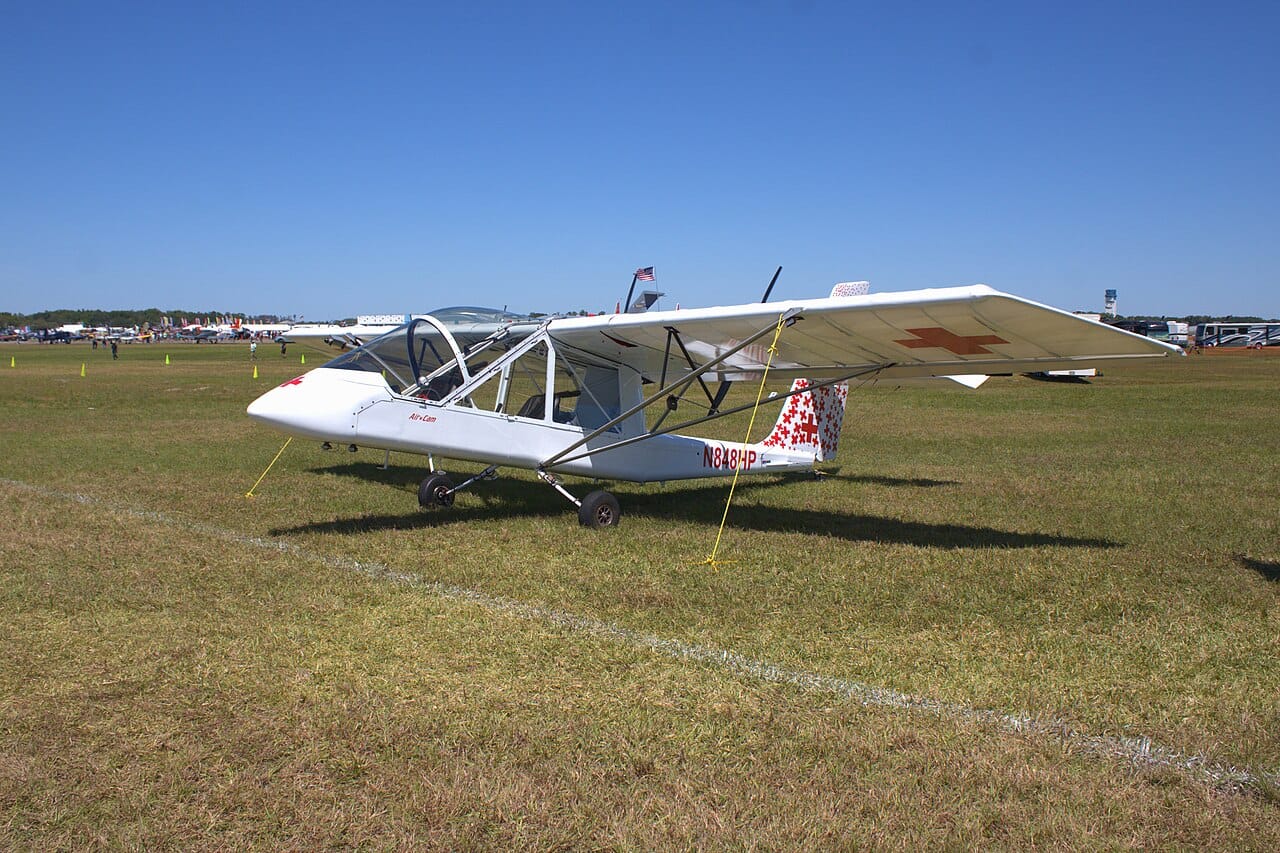
Lockwood Aircraft in Sebring, Florida sells the AirCam airframe kit. The airframe and engine packages are now the two biggest base costs in the project. Lockwood currently lists the Generation 3 airframe kit starting at $84,165 and the twin Rotax 912 ULS engine package at $78,803, before avionics, paint, upholstery and other options.
A typical build stack looks like this. The airframe kit is the base. Lockwood currently lists its complete twin Rotax 912 ULS engine package at $78,803. The package includes both engines plus the AirCam-specific exhaust, fuel, oil, cooling, electrical and engine-mount hardware, so current buyers should budget roughly $79,000 for the pair rather than using older individual-engine prices. Then two ground-adjustable composite propellers, a couple of thousand dollars apiece. Then instruments, which range from a basic steam-gauge panel for a few thousand to dual electronic flight displays with ADS-B and an autopilot for $20,000 and up. Then paint, upholstery, a BRS parachute if you want one, extended-range fuel, and the hundred small purchases nobody budgets for.
Floats are the single biggest optional swing. Straight or amphibious floats for an AirCam typically add somewhere in the $30,000 to $60,000 range, and amphibs also add weight, drag and maintenance for the rest of the airplane's life. They are wonderful. They are not cheap.
Pro Tip: Price the engines first and the kit second. Rotax pricing has moved up noticeably since 2022, so a cost estimate you read on a forum from five years ago is not a budget — it is a historical document. Confirm current numbers with Lockwood and your Rotax distributor before you commit.
If you are weighing the 912 ULS against other options, our comparisons of the Rotax 916, 915, 914 and 912 families and Rotax 912 vs ULPower 350i lay out what each one buys you. For broader context on what powerplants cost across the board, see how much an aircraft engine costs.
Step 3: Budget the Build Time, the Space and the Help
The AirCam has a reputation as one of the friendlier kits out there — it is mostly bolt-together aluminum with pulled rivets, no composite layup and no welding. That reputation is earned, but friendly is not the same as fast. Builders commonly report somewhere between 700 and 1,200 hours of shop time, and the spread has far more to do with how much the builder fusses over finish than with the kit itself.
At ten hours a week, a thousand-hour build is about two years. At twenty-five hours a week, it is nine months. Be honest with yourself about which one you are, because an unfinished kit sitting in a garage is the most expensive airplane in general aviation.
You need a two-car garage minimum for subassemblies and a hangar or large shop for final assembly — the wingspan is about 36 feet. Factory builder-assist programs, where you work alongside experienced staff for a week or two, cost money up front and routinely save months on the back end. Our step-by-step guide to building your own airplane kit covers the general workflow, and the experimental kit buyer's guide is worth reading before you choose any kit at all.
Flying411 keeps experimental kits, project aircraft and finished homebuilts in one place, so you can compare what an unfinished AirCam project is actually worth against the cost of starting fresh.
| Step | What you need | How long it usually takes |
| 1. Ratings and insurance pre-check | Multi-engine rating, logbook summary, broker who writes experimental twins | 2–8 weeks for the rating; a few days for quotes |
| 2. Price the stack | Current kit quote, two Rotax quotes, prop and panel quotes, float decision | 2–4 weeks of calls and spreadsheets |
| 3. Build | Shop space, basic tools, 700–1,200 hours, photo-documented build log | 9 months to 2+ years |
| 4. Certificate and Phase I | FAA registration, DAR inspection, operating limitations, test area | 4–10 weeks of paperwork; traditional 40-hour or authorized task-based flight test |
| 5. Bind insurance | Hull value, dual received, time in type | 1–2 weeks |
| 6. Ongoing ownership | Hangar, fuel, annual condition inspection, engine reserves | Every year, forever |
Step 4: Get It Certificated and Through Phase I
The AirCam is on the FAA's list of eligible amateur-built kits, meaning the major portion rule — the so-called 51% rule — is satisfied if you build it as supplied. Keep a dated photo log of every stage anyway. The inspector will want to see it, and a buyer five years from now will want to see it more.
The paperwork sequence is register the aircraft with the FAA Aircraft Registry, apply for an airworthiness certificate, then have a Designated Airworthiness Representative inspect the airplane and issue the special airworthiness certificate with its operating limitations. DAR fees commonly run several hundred to about a thousand dollars plus travel.
Those operating limitations set your Phase I flight test period. With a non-type-certificated engine or engine/propeller combination such as the Rotax 912 ULS installation, the traditional Phase I period is 40 hours. Current FAA operating limitations may instead permit a task-based flight-test plan under AC 90-89C, which can end Phase I after the required test objectives are completed rather than after a fixed 40 hours. Phase I is normally flown without passengers, although qualifying builders may use the FAA’s Additional Pilot Program when the aircraft and pilots meet its requirements. At roughly 10 gallons per hour for the pair, that is around 400 gallons of fuel — call it $2,000 to $2,800 — plus the hangar time.
Good to Know: If you are the primary builder of the aircraft and meet the FAA eligibility requirements, you may apply for a Repairman Certificate (Experimental Aircraft Builder) under 14 CFR Section 65.104. Only one individual receives that certificate for a particular aircraft, and its principal privilege is performing the annual condition inspection on that aircraft. It lets you perform the annual condition inspection on that one specific airplane. Over twenty years of ownership, that single piece of paper is worth more than most avionics upgrades.
Step 5: Buy the Insurance
Experimental twin insurance has gotten easier to find than it was a decade ago, but it is still underwritten person by person rather than by rate card. Owners and brokers generally report hull rates on experimental aircraft in the range of about 2% to 4% of the insured value per year. On a $200,000 AirCam that works out to roughly $4,000 to $8,000 annually for hull, plus liability.
Three things move that number more than anything else: your total and multi-engine time, dual received in the AirCam itself, and whether the airplane is on wheels or floats. Amphibious operations raise rates meaningfully, and some underwriters want a seaplane rating and a minimum number of water landings before they will write it.
Liability-only coverage, if you are willing to self-insure the airframe, drops the annual cost into the hundreds rather than thousands. Plenty of AirCam owners who paid cash for the build make exactly that trade. Just be honest about whether you could absorb writing the airplane off.
Quick Tip: Ask your broker specifically about transition training credit. Several carriers discount the first-year premium if you complete factory or instructor-led training in type, and the discount often exceeds the cost of the training.
Step 6: Run the Yearly Numbers
Here is where the AirCam quietly redeems its purchase price. Two Rotax 912 ULS engines burn roughly 9 to 11 gallons per hour combined at normal cruise, and they are approved for 91-octane premium unleaded automotive fuel as well as 100LL. If you have access to ethanol-free mogas, your fuel bill is closer to a Cessna 172's than to any certified light twin's. Think of it as a twin-engine airplane with the appetite of a single.
Rotax publishes a TBO of 2,000 hours or 15 years for the 912 series, whichever comes first — and that calendar limit is the one that catches low-time owners. Rotax maintenance schedules also call for replacement of rubber components, including hoses and carburetor flanges, every five years regardless of hours. Budget for both.
| Cost item | Typical range (2025) | Notes |
| Fuel | $50–$70 per hour | 9–11 gph combined; mogas eligible |
| Engine reserve | $18–$24 per hour | Two overhauls or exchanges at 2,000 hr TBO |
| Oil, filters, consumables | $5–$10 per hour | 100-hour intervals, shorter on leaded fuel |
| Hull and liability insurance | $4,000–$8,000 per year | Liability-only is far less |
| Hangar | $2,400–$7,200 per year | 36-foot span; outside tiedown is cheaper but harder on the airplane |
| Annual condition inspection | $600–$3,000 | Low end if you hold the repairman certificate |
| Five-year rubber replacement | $1,500–$3,000 per engine | Per Rotax maintenance schedule |
Using the ranges above, 100 hours a year works out to roughly $15,000 to $30,000 annually before major unexpected repairs, or about $150 to $300 per flight hour. Drop the hull coverage and park it on a tiedown and that falls dramatically. Fly it 25 hours a year instead of 100 and the per-hour number roughly doubles, because the fixed costs do not care how often you fly.
Flying411 keeps twin-engine aircraft of every kind — certified, experimental, land and amphibious — in one place, so you can compare what a second engine really costs across the category.
Should You Buy One Already Flying Instead?
Finished AirCams come up for sale only occasionally, and because relatively few exist compared with, say, an RV-series homebuilt, they tend to hold value well. Buying one already flying means you generally cannot obtain the Experimental Aircraft Builder repairman certificate for that airframe. Its annual condition inspection can be signed by an appropriately rated A&P, and under post-MOSAIC rules a properly rated light-sport repairman may also be eligible where the aircraft’s operating limitations permit it.
On a used AirCam, inspect the way you would on any experimental: read the entire build log, check the Rotax calendar limits as carefully as the tach time, look hard at any float installation, and have someone who knows the type do the pre-buy. A 15-year-old pair of engines with 400 hours on them is not a bargain — it is two overhauls waiting on the calendar.
Fun Fact: The AirCam exists because of a National Geographic assignment. Designer Phil Lockwood built it in the mid-1990s to carry heavy camera gear low and slow over the Congo rainforest, where an engine failure meant no survivable landing site. Everything about the airplane — the open cockpit, the generous climb, the second engine — follows from that one requirement.
Flying411 keeps experimental and amateur-built listings in one place, so you can compare a finished AirCam against the cost of building your own before you order a kit.
Key Takeaways
A new Lockwood AirCam is a $180,000-to-$250,000 project in 2025, with two Rotax 912 ULS engines typically costing more than the airframe kit itself, and floats able to add another $30,000 to $60,000 on top. You need a multi-engine rating to fly it, 700 to 1,200 hours to build it, and completion of the Phase I flight-test program required by the aircraft’s operating limitations before normal passenger operations begin. Yearly ownership at 100 hours generally runs $14,000 to $24,000 including hull insurance and engine reserves, with the mogas-capable Rotax pair keeping the fuel bill far below anything comparable in the certified twin world. The two expenses that surprise owners most are the Rotax 15-year calendar TBO and the five-year rubber replacement, both of which arrive whether or not you fly. Build it yourself and the repairman certificate pays you back every single year for as long as you own the airplane.
Where the AirCam Earns Its Keep
Nobody buys a Lockwood AirCam to go fast or to go far — it is the open-top Jeep of the airplane world, built for low altitude, short fields, water, and the view. What the second engine buys you is the confidence to fly over terrain that would make a single-engine pilot nervous, and what the Rotax pair buys you is the ability to do it on fuel you can buy at a marina. Price the whole stack before you order the kit, get an insurance indication before you get a hangar, and the numbers hold up better than almost any other twin you can own. If you want the shorter path, our guides to small twin-engine prop planes and twin-engine amphibious aircraft cover the certified alternatives.
When you are ready to compare listings, visitFlying411and see what is on the market today.