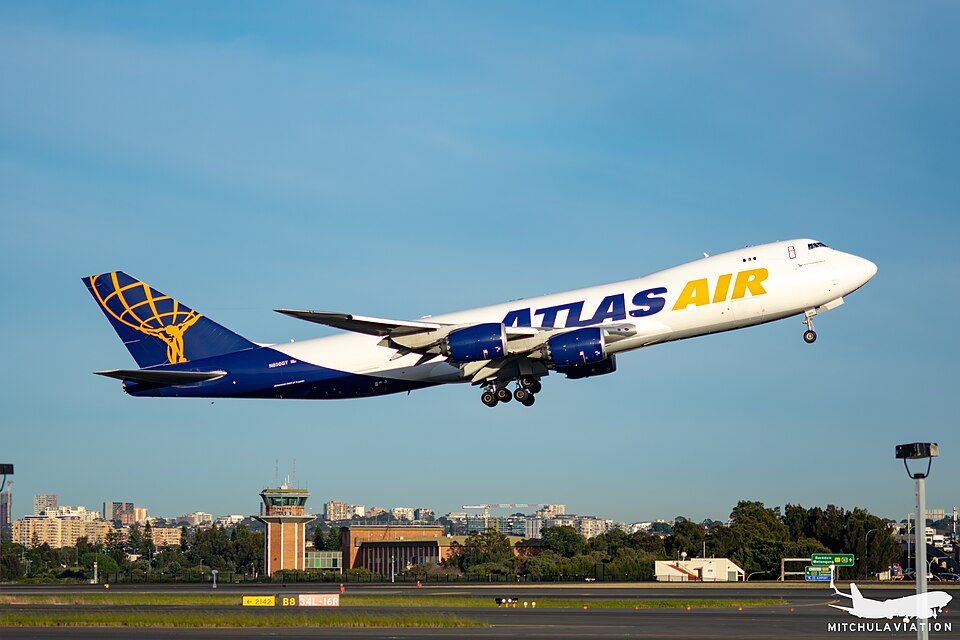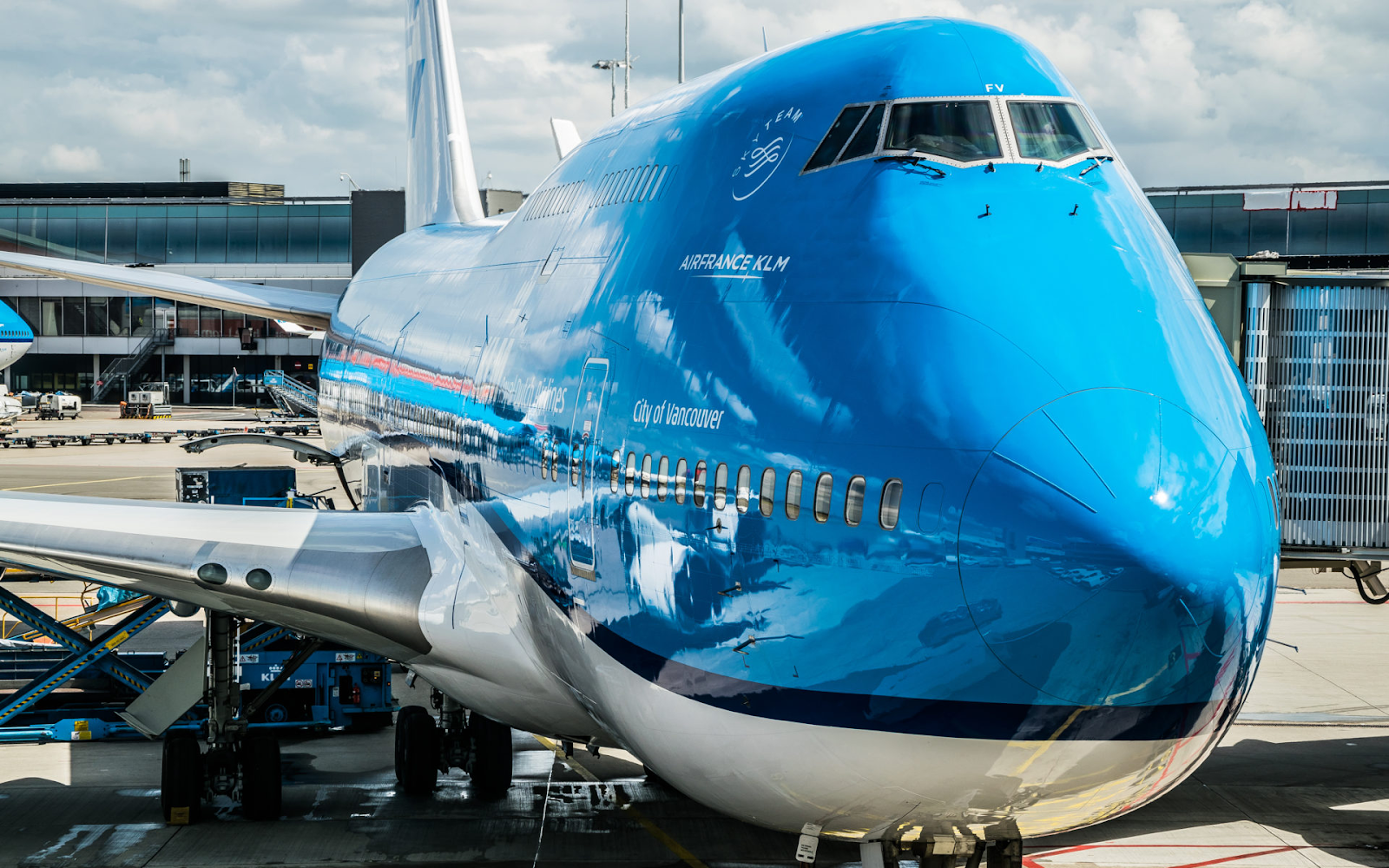
The Boeing 747 is one of the most recognized planes in the sky — and one of the thirstiest. This giant jet doesn't just sip fuel. It gulps it down by the tens of thousands of gallons on every long flight. In fact, a fully loaded 747 is said to burn through roughly one gallon of fuel every second at cruising altitude. That's not a typo.
From where the fuel is stored to who decides how much goes on board before each flight, there's a lot going on behind the scenes of every 747 departure.
Understanding the fuel system on a plane this large tells you a lot about how commercial aviation actually works — the engineering, the safety rules, and the careful math that keeps hundreds of people in the air for up to 14 hours at a stretch.
So, how much fuel does a 747 hold?
Key Takeaways
The Boeing 747 holds between approximately 48,000 and 63,000 gallons of fuel depending on the model, stored across multiple tanks built into the wings and center body of the aircraft. The 747-400 carries around 57,285 gallons, while the newer 747-8 can hold up to roughly 63,034 gallons. Fuel burn typically runs between 3,500 and 5,000 gallons per hour during cruise, with the highest consumption happening during takeoff and climb. Every fuel load is carefully calculated before departure by airline dispatchers and confirmed by the captain — a process that balances safety requirements against the cost of carrying unnecessary weight.
| Key Detail | Quick Answer |
| 747-400 fuel capacity | ~57,285 gallons (~216,840 liters) |
| 747-8 fuel capacity | ~63,034 gallons (~238,610 liters) |
| 747-200 fuel capacity | ~48,445 gallons (~183,380 liters) |
| Average fuel burn per hour | ~3,500–5,000 gallons |
| Number of fuel tanks | Up to 5 tanks |
| Main fuel storage location | Wings and center body |
| Longest range possible | ~8,000–9,200+ miles |
| Fuel type used | Jet-A (kerosene-based) |
| Fuel decision authority | Airline dispatchers and pilots |
Flying411 has easy-to-read breakdowns on a wide range of aircraft — from regional jets to wide-body giants like the 747. Check out the blog today for more plain-language aviation content you can actually use.
What Kind of Plane Is the 747?
To understand why a Boeing 747 uses so much fuel, it helps to know what kind of plane it actually is. The 747 is a wide-body, long-haul aircraft that entered commercial service in 1970. It was the first twin-aisle jet built for commercial travel, and for decades it held the title of the largest passenger plane in the world. When you're flying hundreds of people across oceans, size and power come with a price — and that price is fuel.
The 747 is a four-engine jet, which already sets it apart from most modern aircraft. The majority of today's commercial airliners use just two engines. The 747 uses four, and each one needs a steady supply of fuel to maintain thrust for 10 to 14 hours at a time.
What Makes the 747 Stand Out as an Aircraft Type
Here's what makes the 747 unique among commercial jets:
- Four high-thrust turbofan engines — Each one is built for long distances and heavy loads
- Double-deck cabin design — The iconic upper deck adds extra passenger or cargo space, contributing to the plane's overall weight
- Massive wingspan — At around 211 feet wide on the 747-400, the wings alone contribute significantly to the plane's structural weight
- Built for long-range routes — The 747 was designed to fly non-stop from continent to continent without a fuel stop
Fun Fact: The Boeing 747 is sometimes called the "Queen of the Skies" — a nickname it earned through decades of carrying more passengers, more cargo, and more long-range flights than almost any other airliner in history.
The 747-8 is the latest and most advanced version of this iconic plane. It's longer, more fuel-efficient, and can carry more passengers or cargo than earlier models. But even with improved engines and better aerodynamics, it still needs an enormous amount of fuel to complete a full international flight. That's just the nature of flying a plane this large.
For a sense of how drastically aircraft can differ in scale, it's worth exploring the history of the Spruce Goose — another legendary aircraft that pushed the limits of what engineers thought was possible.
How Much Fuel Does a 747 Hold by Model?
The answer depends on which 747 variant you're asking about. The 747 family has evolved significantly over the decades, and each version has a different fuel capacity. Here's a clear look at the numbers across the main models:
- Boeing 747-200 — approximately 48,445 gallons (roughly 183,380 liters)
- Boeing 747-400 — approximately 57,285 gallons (roughly 216,840 liters)
- Boeing 747-8 — approximately 63,034 gallons (roughly 238,610 liters)
The 747-8F is the freighter variant of the 747-8. It has a high payload capacity and is operated by major cargo carriers around the world. Its fuel capacity matches the passenger version of the 747-8, but the way that fuel gets used varies depending on the weight and distribution of cargo being hauled.
How the 747's Fuel Capacity Compares to Other Aircraft
To put the numbers in perspective, here's a quick comparison:
| Aircraft | Approximate Fuel Capacity |
| Average school bus | ~40 gallons |
| Cessna 172 (small single-engine) | ~53 gallons |
| Boeing 737 (short-haul jet) | ~6,875 gallons |
| Boeing 747-400 (wide-body) | ~57,285 gallons |
| Boeing 747-8 (latest model) | ~63,034 gallons |
| Airbus A380 (super-jumbo) | ~82,000+ gallons |
The 747-400 holds more than eight times what a 737 carries. And the 747-8 can hold enough fuel to fill roughly 1,575 standard school buses. That's a scale that's hard to fully imagine until you see the numbers side by side.
Good to Know: A 747 carrying a full fuel load and a full passenger manifest is one of the heaviest flying objects humans have ever built. The 747-400 has a maximum takeoff weight of around 910,000 pounds — nearly half a million kilograms.
Where Does a 747 Store All That Fuel?
You might wonder how a plane stores 57,000 or more gallons of fuel without it sloshing around and throwing the flight off balance. The answer is a carefully designed fuel system that spreads the fuel across several tanks and actively manages weight distribution throughout the flight.
The 747 typically has up to five main fuel tanks:
- Two main wing tanks — These are the largest tanks, built directly into the wings. Most of the fuel is stored here.
- Two reserve tanks — Also located in the wings, these hold extra fuel for use later in the flight or in case of unexpected delays.
- One center wing tank — This sits in the body of the plane, between the two wings, and adds significant additional capacity.
Why Fuel Goes in the Wings
There's a smart engineering reason why fuel is stored in the wings specifically. The weight of the fuel actually helps reduce stress on the wing structure during flight. Wings naturally want to flex upward when a plane is in the air — a force called "bending moment." Fuel in the wings acts as a counterweight, keeping the structure more stable and reducing fatigue on the airframe over time. It's practical and clever at the same time.
The plane's onboard computers actively manage which tank the engines draw from and in what sequence. This is important because as fuel burns off, the weight distribution of the aircraft changes. If too much fuel drains from one side before the other, the plane can become unbalanced. The fuel management system prevents that from happening automatically.
Pro Tip: On the ground, refueling a 747 is a serious logistical operation. It can take 30 minutes or more to complete a full fuel load, and it requires specialized trucks, high-pressure hoses, and trained ground crew. Airports that regularly handle international wide-body jets are specifically equipped for this kind of work.
Why Does a 747 Use So Much More Fuel Than Other Planes?
A Boeing 737 — one of the most common short-haul jets in the world — holds around 6,875 gallons of fuel. Compare that to the 747's 57,000-plus gallons and the difference is staggering. So why does the 747 need so much more?
The short answer is distance and weight. The 747 was built for intercontinental routes — the kind of flights that cross entire oceans without stopping. To fly non-stop from Los Angeles to Sydney or New York to Dubai, you need enough fuel to last more than 14 hours in the air. No pit stops. No mid-flight refueling. Just one long, continuous burn from takeoff all the way to landing.
Key Reasons the 747 Carries So Much Fuel
- Long routes — The 747 regularly flies some of the longest routes in commercial aviation, which require enormous fuel reserves before departure
- Heavy aircraft — At maximum takeoff weight, a 747 can weigh around 900,000 pounds or more. Moving that much mass through the air requires sustained engine power.
- Four engines — Each engine burns fuel independently, so total consumption adds up quickly compared to two-engine jets
- Reserve fuel requirements — Aviation regulations require crews to carry extra fuel beyond what's needed for the planned route, in case of weather, rerouting, or a delayed approach
- Altitude and speed — The 747 cruises at around 35,000 feet and roughly 570 mph, conditions that require consistent engine output throughout the flight
Why It Matters: Airlines don't just care about how much fuel a plane burns — they care about fuel efficiency per seat. Because the 747 carries so many passengers, the fuel cost gets spread across hundreds of travelers. On a full flight, the per-person fuel consumption can be comparable to some smaller jets on the same route.
When you look at fuel efficiency on a per-seat basis, the 747 actually performs reasonably well. It carries up to around 660 passengers in a high-density layout, which means the total fuel burn gets divided across a large number of travelers. More seats means more efficient use of every gallon.
For a broader look at how the two biggest names in commercial aviation compare overall, this Boeing vs. Airbus breakdown gives useful context on how these aircraft families stack up against each other.
How Much Fuel Does a 747 Burn Per Hour?
Once the 747 is in the air, the fuel burn rate is constant and significant. On average, a 747 burns between approximately 3,500 and 5,000 gallons per hour while cruising. During peak demand — takeoff and the initial climb — that number can spike even higher.
Here's how the fuel burn generally breaks down across a typical long flight:
- Climb phase — Fuel burn is at its highest. The engines are working hardest to push the heavy aircraft to cruising altitude. Consumption during this phase can exceed 5,000 gallons per hour.
- Cruise phase — Once the plane levels off, burn rate drops. The engines settle into a steadier rhythm at around 3,500–4,000 gallons per hour.
- Descent and landing — Consumption drops significantly as pilots reduce engine power and begin the gradual descent toward the runway.
Fuel Burn Across a Typical 10-Hour Flight
| Flight Phase | Duration | Approximate Burn Rate |
| Takeoff & climb | First 1–2 hours | Up to 5,000+ gal/hr |
| Mid-cruise | Hours 3–8 | ~3,500–4,000 gal/hr |
| Late cruise | Hours 8–9 | Slightly lower as plane lightens |
| Descent & landing | Final hour | Lowest burn, reduced power |
In terms of miles per gallon, a 747 gets roughly 0.2 miles per gallon as a whole aircraft. That sounds poor in isolation, but per seat on a full flight, it works out to somewhere in the range of 80–100 passenger miles per gallon — comparable to a car carrying just a single driver.
Fun Fact: According to many aviation sources, a fully loaded Boeing 747 carries enough fuel to drive an average car around the Earth more than 400 times. That's the scale of what goes into keeping a plane this size airborne for 14 hours.
In liters, the 747 burns roughly 13,000 to 19,000 liters of fuel per hour during cruise. That's an enormous volume, and it's why fuel planning is treated as one of the most important parts of flight preparation.
Who Decides How Much Fuel a 747 Carries?
Fuel planning isn't something that happens casually. Before every flight, a team of professionals works through a detailed process to determine exactly how much fuel needs to be on board. Here's who's involved and what they consider:
The People Behind the Fuel Decision
Airline dispatchers are trained professionals who work on the ground and help plan every aspect of the flight. They calculate the fuel needed based on the planned route, current weather forecasts, expected wind patterns, and the combined weight of passengers and cargo.
Pilots — specifically the captain — have final authority over the fuel load. If a pilot feels the amount calculated by dispatch is insufficient for any reason, they can request more. Safety always comes first, and no dispatcher can override a captain's fuel decision.
Fuel load planners at large airlines are specialists who review fuel requirements for specific aircraft-route combinations on a regular basis, helping dispatchers apply lessons from past flights to future ones.
The Fuel Planning Formula
The basic formula for calculating a departure fuel load includes:
- Trip fuel — The estimated amount needed to fly the planned route from takeoff to landing
- Reserve fuel — Extra fuel required by aviation regulations, usually enough for 30 to 45 minutes of additional flying
- Alternate fuel — Fuel to reach a designated backup airport if the destination is unavailable due to weather or another issue
- Contingency fuel — A small buffer added on top of everything else, typically around 5% of the trip fuel
- Taxi fuel — A small amount burned while the plane is on the ground, taxiing to and from the runway
Heads Up: Airlines don't always want to carry more fuel than necessary. Extra fuel means extra weight, and extra weight means burning even more fuel just to carry it. There's a careful balance between safety requirements and efficiency that dispatchers and pilots navigate on every single departure.
On a long international flight, all of these components added together can easily reach the maximum fuel capacity of the aircraft.
When Does a 747 Use the Most Fuel?
The phase of flight that burns the most fuel is takeoff and the initial climb. During takeoff, all four engines are running at or near full thrust. The plane is at its heaviest — loaded with passengers, cargo, and a nearly full tank of fuel. Getting an aircraft that weighs up to 900,000 pounds off the ground and climbing to 35,000 feet takes a tremendous burst of sustained energy.
As fuel burns off during the climb, the plane gets progressively lighter, which makes the engines slightly more efficient over time. By the time a long-haul 747 reaches the later hours of cruise, it may have burned through tens of thousands of gallons — meaning the aircraft weighs dramatically less than it did at takeoff.
The 747-8 vs. Earlier Models: Efficiency Improvements
The 747-8 is meaningfully more efficient than earlier models like the 747-400, thanks to improved engine technology and a redesigned wing with curved wingtip extensions called "raked wingtips." These design changes reduce drag and improve fuel economy on long routes. The final 747 came off the production line in late 2022, but thousands of 747s in various configurations continue flying today as passenger jets and freighter aircraft.
Good to Know: The 747-8 uses the same GEnx engines found on the Boeing 787 Dreamliner — a modern, high-bypass turbofan engine designed specifically for long-range fuel efficiency.
How the 747 Compares to Other Wide-Body Jets
The 747 doesn't operate in a vacuum. It shares the skies — and the long-haul market — with other wide-body aircraft, each with its own fuel profile. Here's a quick comparison of how the 747 stacks up:
| Aircraft | Approx. Fuel Capacity | Passenger Capacity | Range |
| Boeing 747-8 | ~63,034 gallons | Up to ~660 | ~9,200 miles |
| Boeing 777-300ER | ~47,890 gallons | Up to ~550 | ~7,900 miles |
| Boeing 787-9 | ~33,340 gallons | Up to ~296 | ~7,500 miles |
| Airbus A380 | ~82,000+ gallons | Up to ~853 | ~9,500 miles |
| Airbus A350-900 | ~37,600 gallons | Up to ~369 | ~9,700 miles |
The 777 burns less total fuel than the 747 but also carries fewer passengers. The A380 carries more passengers but burns even more fuel overall. The 747 sits comfortably in the middle of this group, and its combination of range, capacity, and reliability has kept it relevant for over 50 years.
Keep in Mind: Fuel capacity numbers vary by airline configuration and operator. Different carriers set up their aircraft differently — some prioritize passenger count, others prioritize range. Always treat these figures as general benchmarks rather than fixed specifications.
The final production 747 marked the end of a remarkable era in commercial aviation. But the planes already in service continue flying, and they're likely to remain in operation — especially in the cargo world — for years to come. Whether used as a passenger aircraft, military transport, cargo freighter, or VIP transport, the underlying fuel math stays the same: distance, weight, and time in the air determine how much fuel goes in the tank. And on the 747, that number is always impressive.
For anyone curious about how aviation safety rules shape the decisions pilots and dispatchers make, the FAA MOSAIC rule explained is a great place to get started on understanding the regulatory side of general aviation in the United States.
Conclusion
So, how much fuel does a 747 hold? The short answer is a lot — between roughly 48,000 and 63,000 gallons depending on the model, stored across multiple tanks built right into the wings and body of the plane. Every drop of that fuel is carefully calculated before the flight even begins, managed in real time while the aircraft is in the air, and burned with purpose on some of the longest and most demanding routes in commercial aviation.
The 747 is a true engineering marvel, and its fuel system is a big part of what makes it capable of flying non-stop across entire oceans for over half a century.
If you want to keep learning about planes in a way that's easy to understand and genuinely interesting, head over to Flying411 for more breakdowns on all kinds of aircraft.
FAQ
How much fuel does a Boeing 747 hold in total?
The answer depends on the model. The 747-200 holds approximately 48,445 gallons, the 747-400 holds around 57,285 gallons, and the 747-8 can hold up to roughly 63,034 gallons. All of that fuel is spread across up to five tanks located in the wings and the center body of the aircraft.
How long can a Boeing 747 fly on a full tank?
A Boeing 747-400 can fly approximately 8,000 miles on a full tank, while the newer 747-8 can reach around 9,200 miles under favorable conditions. These ranges are enough to cover routes like New York to Hong Kong or Los Angeles to Sydney without stopping to refuel. Actual range depends on passenger load, cargo weight, and wind conditions along the route.
How much fuel does a 747 burn per hour?
During cruise, a 747 typically burns between approximately 3,500 and 5,000 gallons of fuel per hour. Fuel consumption is highest during takeoff and the initial climb, when all four engines are operating at or near full thrust. By the time the plane reaches a steady cruise altitude, the burn rate settles into a more consistent range.
What type of fuel does a Boeing 747 use?
The Boeing 747 runs on Jet-A fuel, which is the standard aviation kerosene used by most commercial jets worldwide. Jet-A works reliably at high altitudes and extremely cold temperatures. It has a higher energy density than regular gasoline, which means it delivers more power per gallon — a critical factor when you're burning thousands of gallons per hour.
Can a 747 land with a full tank of fuel?
Not safely under normal conditions. The 747 has a maximum landing weight that is significantly lower than its maximum takeoff weight. If a plane needs to return to the airport shortly after departure, pilots may need to burn off or dump fuel first to bring the aircraft down to a safe landing weight. Fuel dumping systems are installed on the 747 specifically for this purpose, and their use is carefully coordinated with air traffic control.
How does wind affect how much fuel a 747 uses?
Wind plays a significant role in fuel planning. A strong headwind forces the engines to work harder, increasing fuel burn. A tailwind does the opposite — it effectively gives the plane a push and reduces the fuel needed to cover the same distance. Dispatchers review detailed wind forecasts before every flight and adjust the fuel load accordingly.
How does the 747's fuel capacity compare to a private jet?
The difference is enormous. A large private jet like the Gulfstream G700 holds roughly 6,000 gallons of fuel — approximately one-tenth of what a Boeing 747-400 carries. Private jets are built for speed, comfort, and flexibility over shorter or medium distances, while the 747 is designed to carry hundreds of passengers across entire oceans. The missions are completely different, and so are the fuel requirements.
Why is fuel stored in the wings of a 747?
Storing fuel in the wings serves a dual purpose. First, it makes practical use of the large structural volume inside the wing. Second, and more importantly, the weight of the fuel acts as a counterbalance to the aerodynamic lift forces that cause wings to flex upward during flight. This reduces structural stress on the airframe and helps extend the life of the aircraft over time.
How much does it cost to fuel a Boeing 747?
Jet-A fuel prices fluctuate with the global energy market, but at typical commercial rates, filling a 747-400 to capacity could cost hundreds of thousands of dollars for a single full fuel load. Airlines manage this expense carefully through fuel hedging contracts, route optimization, and strict fuel planning — every extra gallon of unnecessary fuel carried on a flight adds to operating costs.
Is the Boeing 747 still in production?
The final Boeing 747 was delivered in early 2023, marking the end of over 50 years of production. However, thousands of 747s remain in service around the world — particularly as cargo freighters operated by major shipping companies. The aircraft's long range and high payload capacity continue to make it valuable in the freight market even as passenger airlines retire their fleets.