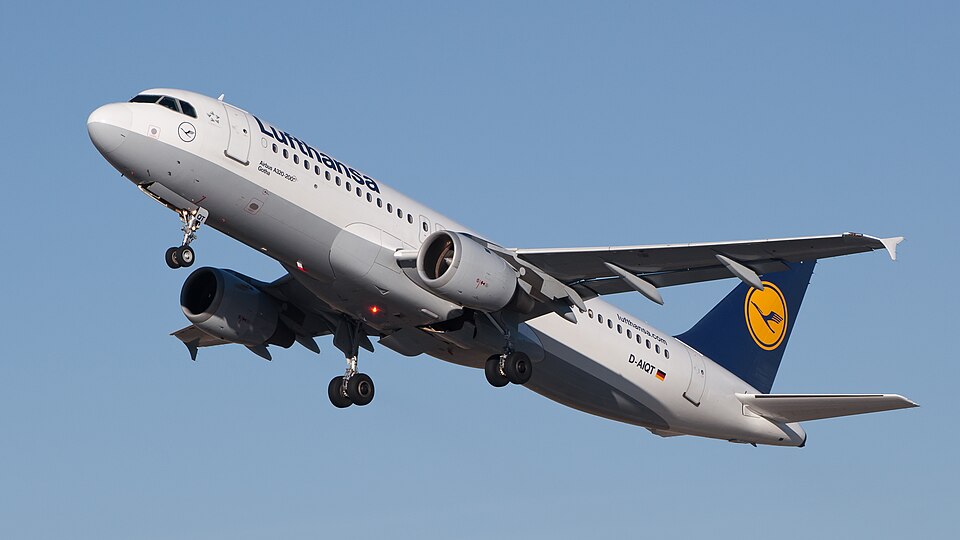
Look up at almost any busy airport and you will probably see them lined up at the gates. Sleek single-aisle jets, loading passengers for the next short hop. Most of them come from one of two families. On one side sits the Airbus A320. On the other stands the Boeing 737. The Airbus A320 vs Boeing 737 matchup has been running for decades, and it quietly shapes almost everything about modern air travel, from ticket prices to how your pilot learned to fly.
These two jets are the workhorses of the sky. They carry the bulk of the world's passengers on short and medium routes. When you fly from one city to a nearby one, the odds are very high that you are sitting inside one of them.
Yet most travelers never think about which plane they are on. From a window seat, an A320 and a 737 look almost like twins. Both have two engines under the wings, a single aisle down the middle, and room for roughly 150 to 200 people.
The odd part is that these near-twins were built on two completely different ideas about how a plane should fly.
Key Takeaways
The Airbus A320 and Boeing 737 are both narrow-body airliners built for short and medium trips, and to a passenger they feel very similar. The main differences sit under the skin. The A320 is a newer design with modern electronic flight controls and a slightly wider cabin, while the 737 is an older, lighter design that Boeing has updated over and over across many decades. Neither one is simply "better." Airlines choose based on routes, cost, existing fleets, and how soon they can get delivery.
| Feature | Airbus A320 | Boeing 737 |
| First airline service | Late 1980s | Late 1960s |
| Cabin feel | Slightly wider | Slightly narrower |
| Flight controls | Electronic sidestick | Control yoke, more traditional |
| Current family | A320neo family | 737 MAX |
| Engine choices | Two options offered | One option |
| Known for | Comfort and family commonality | Proven, low-cost workhorse |
Curious what aircraft like these are worth, or how they get bought and sold? Flying411 brings aircraft listings, engines, parts, and aviation services together in one place.
Meet the Two Jets That Rule the Skies
Before comparing the fine details, it helps to know where each plane came from. Their birthdays are far apart, and that gap explains a lot about why they feel the way they do.
Where the Boeing 737 Came From
The Boeing 737 is the older of the two by a wide margin. It first flew in the 1960s and entered airline service in the late 1960s. Back then, many small airports had no jet bridges and no fancy ground equipment. Planes had to be low to the ground so crews could load bags by hand and passengers could climb up simple stairs.
So Boeing built the 737 to sit low. That single choice shaped the plane for the next fifty years. It is part of why the 737 looks the way it does today, and why fitting bigger, modern engines onto it later became such a puzzle.
Over the years Boeing kept improving the 737 instead of starting over. Each new version added better engines, more range, and updated cabins. The plane became one of Boeing's most important products and remains central to the company's lineup of strongest commercial aircraft.
Fun Fact: The 737 is widely known as one of the best-selling jet airliners in history. It has been in continuous production for well over half a century, which is a rare thing for any machine that flies.
How the Airbus A320 Changed the Game
The Airbus A320 arrived much later, entering service in the late 1980s. Because it was designed decades after the 737, Airbus got to start with a cleaner sheet of paper. Engineers were not tied to older ideas, and they used newer technology from the very beginning.
The A320 introduced modern fly-by-wire flight controls to everyday passenger jets. Instead of steel cables and pulleys connecting the pilot's hands to the wings, the A320 used electronic signals sent through computers. This was a big deal at the time, and it set the tone for how Airbus would build planes going forward.
The A320 also came with a slightly wider body. That extra width gives a little more shoulder room and a bit more space for cargo below the floor.
Good to Know: When people say "the A320" in casual talk, they often mean the whole family of similar jets, not just the one middle-sized model. The same goes for "the 737." Both names cover a range of sizes built on the same core design.
What "Narrow-Body" Actually Means
Both jets fall into a group called narrow-body aircraft, sometimes called single-aisle jets. The name is simple once you picture it. There is only one aisle running down the middle of the cabin, with seats on each side.
That single aisle is what separates these planes from the big wide-body jets used on long ocean crossings. Wide-bodies have two aisles and can hold far more people. Narrow-bodies are lighter, cheaper to run, and perfect for busy short routes flown many times a day.
Here is why this category matters so much:
- Volume. Airlines fly these routes constantly, so they need lots of these planes.
- Cost. Smaller jets burn less fuel per trip, which keeps ticket prices lower.
- Flexibility. They can fill up on a popular route or fly thinner routes without wasting seats.
The A320 and 737 dominate this space almost entirely. A handful of other narrow-body jets exist, but these two families are the giants everyone else measures against. If you want a sense of how different aircraft sizes stack up, it is a bit like comparing a tiny trainer against a jumbo jet, except here the two planes are nearly the same size and the fight is very close.
Airbus A320 vs Boeing 737: 8 Differences That Set Them Apart
Now for the heart of the matter. On the surface these jets seem alike, but a closer look reveals eight clear differences. Some you can spot from your seat. Others only pilots and mechanics ever notice.
1. The Flight Controls
This is the biggest split between the two. The A320 uses a small sidestick, like a joystick, mounted beside each pilot. It sends electronic signals to computers that move the control surfaces.
The 737 keeps a traditional control yoke in front of each pilot, more like a steering wheel. Boeing's newer 737 versions added some electronic help, but the plane holds on to more of its old-school feel than the Airbus does.
Why It Matters: The control style changes how a pilot learns and how the plane responds. Airbus computers add built-in limits that make it hard to push the jet past safe angles. Boeing has long favored giving pilots more direct control. Neither approach is wrong. They are just different philosophies.
2. Cabin Width
The A320 has a slightly wider cabin than the 737. The gap is small, only a few inches, but on a full flight those inches can mean a touch more elbow room. It also gives the A320 a small edge for fitting standard cargo containers below deck on some versions.
3. Height Off the Ground
The 737 sits lower to the ground than the A320. This goes back to that 1960s design choice for easy loading at small airports. The A320 stands taller on its landing gear, which leaves more space under the wing for engines.
4. Engine Shape and Fit
Because the 737 sits low, Boeing had to get creative when fitting large modern engines. On the newest 737s, the engine housing looks slightly flattened at the bottom to keep it off the ground. The A320, standing taller, has round engine housings with more clearance to spare.
Quick Tip: Want to tell them apart from the terminal window? Look at the nose and the engines. The A320 has a rounder, more bluntly shaped nose, while the 737 has a pointier nose. And the 737's newest engines look a little flatter on the bottom.
5. Engine Options
Airlines buying the A320 get a choice of two engine makers. Airlines buying the newest 737 get a single engine type. Having two options can help airlines negotiate better deals and match engines to their needs.
6. The Cockpit Feel
Airbus designed its cockpits to feel the same across its whole jet family. A pilot trained on one Airbus can move to another with little extra work. Boeing built strong family feel too, but the two brands lay out their cockpits in very different ways. Switching from one brand to the other takes real retraining.
7. Range and Newer Missions
Both families keep pushing into longer routes. Airbus, in particular, stretched its design far with the Airbus A321XLR, a long-range version that entered service in 2025 and can fly routes once reserved for bigger jets, reaching up to around 4,700 nautical miles. This opened thin long-haul routes that were hard to fill with larger planes.
8. Age of the Core Design
At the root, the 737 is the older design and the A320 is the younger one. Boeing keeps modernizing a proven base. Airbus started later with newer bones. This single fact sits behind many of the smaller differences above.
Keep in Mind: Older does not mean worse, and newer does not mean better. The 737's long history means huge numbers of trained crews, spare parts, and mechanics all over the world. That deep support network is a real strength, not a weakness.
The Families: A320neo vs 737 MAX
Neither the A320 nor the 737 is a single plane. Each is a family of sizes built on the same core. Today's newest versions carry updated names, and this is where a lot of the current buying decisions happen.
The Airbus A320neo Lineup
The current Airbus lineup is called the A320neo family. "Neo" stands for "new engine option." These jets use updated engines and small wingtip changes to improve fuel efficiency by a large margin over older models.
The family includes several sizes:
- A319neo: the smallest, for thinner routes
- A320neo: the middle size, the classic all-rounder
- A321neo: the stretched, higher-capacity version
- A321XLR: the long-range member that flies farther than any of its siblings
The larger A321 sizes have been especially popular. Many airlines want the extra seats and range, and Airbus has taken a strong share of orders in that segment.
The Boeing 737 MAX Lineup
Boeing's current family is the Boeing 737 MAX. Like the neo, it uses newer engines and design tweaks to cut fuel use compared with older 737s.
The MAX family also comes in several sizes:
- MAX 7: the smallest
- MAX 8: the most common, flying with many airlines today
- MAX 9: a larger stretch
- MAX 10: the biggest, aimed at the high-capacity market
Here is an important, up-to-date detail. As of 2026, the middle MAX sizes are flying, but the smallest and largest, the MAX 7 and MAX 10, were still working through final approval. Boeing expects to certify both during 2026, with first deliveries planned for 2027.
Heads Up: Certification timelines can shift. Boeing has moved the MAX 7 and MAX 10 dates before. If you are following the market closely, treat any single date as a target rather than a promise, and check current news for the latest status.
| Family point | A320neo family | 737 MAX family |
| Smallest member | A319neo | MAX 7 |
| Most common member | A320neo / A321neo | MAX 8 |
| Largest member | A321neo / A321XLR | MAX 10 |
| Longest-range member | A321XLR (in service) | Standard MAX range |
| Certification note | Full family flying | MAX 7 and MAX 10 pending in 2026 |
The gap in the largest sizes has mattered a lot lately. While Boeing worked to finish the MAX 10, Airbus kept delivering large A321 jets, and that helped Airbus win a big pile of orders in that part of the market.
Tracking new jets or shopping for a used airframe? Flying411 lists airplanes, engines, and certified parts from major makers, all searchable in one marketplace.
Which One Is Safer?
This is one of the most common questions people ask, and it deserves a calm, honest answer. Both the A320 and the 737 have carried billions of passengers over many years. In everyday terms, both are among the most heavily used and closely watched jets ever built.
The 737 story does include a hard chapter. Two MAX crashes in 2018 and 2019 led to a long worldwide grounding of the type. A cabin panel also came loose on a MAX during a flight in early 2024. These events drew heavy scrutiny and led to major design and oversight changes.
Since then, the MAX has returned to service under close regulator watch, with updated systems and new reviews. Regulators track both aircraft families with ongoing safety notices. For the 737 MAX, you can see the pattern in the record of safety directives issued for the MAX.
It is worth noting that safety notices are normal for all modern jets, not a sign that one brand is unsafe. Even newer Boeing wide-bodies get them, as seen in a recent directive on the 787. These notices are the system working as intended, catching issues early and requiring fixes.
Good to Know: Both aircraft families meet strict safety rules before they can carry passengers. When choosing a flight, the specific plane model is rarely the deciding safety factor. Airline training, maintenance, and culture matter far more than the badge on the tail.
The honest takeaway is that both jets are considered safe to fly today. The 737 MAX faced serious problems and a hard road back. The A320 family has a long, steady record. Reasonable people can weigh that history differently, and airlines around the world continue to buy and fly both in large numbers.
Cost, Value, and Resale
Money drives most fleet decisions, so let's look at the dollars in plain terms, without pretending to know exact price tags.
Both jets carry list prices in the tens of millions, but airlines almost never pay the sticker number. Big buyers order dozens or hundreds at a time and negotiate large discounts. Real prices stay private and swing with each deal.
A few cost factors matter more than the headline price:
- Fuel burn. The neo and MAX both cut fuel use sharply versus older models, which saves airlines huge sums over a jet's life.
- Maintenance. A plane with a huge worldwide fleet has cheaper, easier parts and service. Both families score well here.
- Fleet fit. An airline that already flies one brand saves money by staying with it, thanks to shared parts and training.
- Delivery timing. A jet you can get sooner may be worth more to an airline than a slightly better one that arrives years later.
On the resale side, both families hold value reasonably well because demand stays high and buyers are always looking. A used A320 or 737 in good shape, with clean records and life left in its engines, tends to find a buyer. Records, engine hours, and maintenance history swing the final number more than the brand does.
Pro Tip: If you ever look at buying a used airliner or a smaller aircraft, the paperwork matters as much as the metal. Complete logs, clear engine history, and a solid pre-purchase inspection protect your money far more than brand loyalty.
What It's Like to Fly (Pilot Perspective)
Pilots feel the difference between these jets more than passengers ever will. The split comes back to those flight controls.
On the A320, a pilot flies with a sidestick and leans on computer support built into the design. The system smooths inputs and blocks certain unsafe moves. Many pilots describe it as calm and steady.
On the 737, a pilot uses the yoke and gets a more hands-on, traditional feel. Fans of the 737 like that directness. It flies more like the older jets many pilots grew up admiring.
One practical point ties the two together: the pilot type rating. Within each family, a pilot usually needs just one main rating to fly several sizes. That commonality saves airlines money and makes crew scheduling easier. Moving between the two brands, though, means real retraining, because the cockpits differ so much.
Training for these jets is a serious process no matter the brand. If you are curious about the path, this look at how pilots train on Boeing jets shows the kind of study and practice involved.
Fun Fact: Because Airbus built strong family commonality into its jets, a pilot rated on the A320 can often step over to other members of the family with only short extra training. It is one of the quiet features that airlines love.
Which Jet Comes Out Ahead?
After all this, you might still want a simple winner. The truth is there is no single champion, and the best jet depends on who is asking.
Here is a fair way to sum it up:
- For a bit more cabin room and modern controls, the A320 family often gets the nod.
- For a proven, low-cost workhorse with deep support, the 737 has a strong case.
- For the largest single-aisle jet with long range, Airbus currently holds an edge with the A321XLR.
- For an airline already flying one brand, staying put usually wins on cost.
Both makers keep pushing hard, and the race stays close. Airlines split their orders between the two, and that steady competition is good for travelers because it keeps both companies improving.
For most passengers, the honest answer is this: you will have a fine flight on either one. The seat, the airline, and the route shape your trip far more than the badge on the jet.
Ready to see what real aircraft, engines, and parts are on the market right now? Browse the listings on Flying411 and get a feel for what these jets and their smaller cousins actually trade for.
Conclusion
The Airbus A320 vs Boeing 737 story is really a tale of two design eras meeting in the same skies. The 737 is the seasoned veteran, refined again and again since the 1960s. The A320 is the younger challenger, built with modern electronic controls from day one. Both became global workhorses, and both earned their place at the gate.
From your window seat, the differences almost vanish. Under the skin, though, they run deep, from the flight controls to the engines to the way each family grew over time. That mix of similar looks and different souls is exactly what makes this rivalry so interesting to follow.
Want to keep up with aircraft comparisons, market trends, and real listings in one spot? Head over to Flying411 and see where the world of aviation buying, selling, and learning comes together.
Frequently Asked Questions
Is the Airbus A320 bigger than the Boeing 737?
They are very close in size, and it depends on the exact versions being compared. The A320 has a slightly wider cabin, while both families offer smaller and larger stretched versions that overlap heavily in seat count.
Do airlines prefer the A320 or the 737?
It varies by airline. Many carriers pick based on their existing fleet, cost deals, and delivery timing rather than a clear favorite, and plenty of large airlines fly both brands.
Can a pilot fly both the A320 and the 737 with one license?
Not with a single type rating. Each family needs its own rating, and switching between the two brands requires real retraining because the cockpits and flight controls differ a lot.
Which jet is more fuel efficient, the A320neo or the 737 MAX?
Both are close, since each uses modern engines that cut fuel use sharply over older models. Small differences depend on the exact version, route, and engine choice rather than one clear winner.
Are the Boeing 737 MAX 7 and MAX 10 available yet?
As of 2026, the middle MAX sizes are flying, but the MAX 7 and MAX 10 were still finishing certification. Boeing expects both to be certified during 2026, with first deliveries planned for 2027.