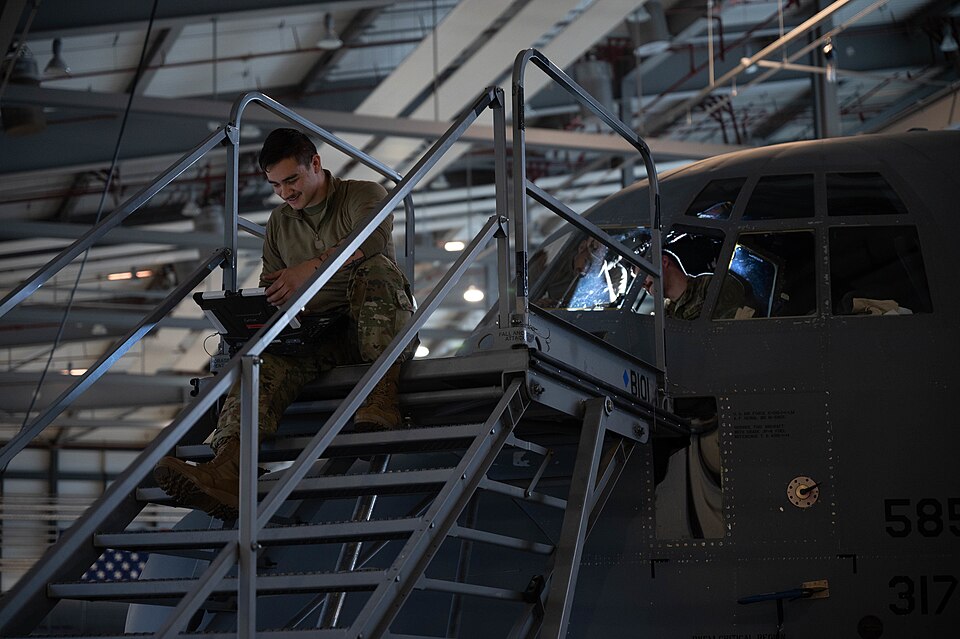
You see them every time you look up at a passing plane. A short string of letters and numbers painted on the tail or fuselage. Most people glance right past them, but those characters tell a story. They reveal where the aircraft is from, who oversees its safety, and even hint at how it has been used over the years.
Knowing how to read aircraft registration numbers turns a random plane in the sky into something you can actually identify. It is a skill plane spotters love, but it also helps pilots, buyers, mechanics, and curious travelers connect the dots between a tail number and the aircraft's full background.
The trick is that no two aircraft in the world share the same registration, and once you understand the pattern, the code stops looking random.
Key Takeaways
Aircraft registration numbers are unique codes assigned to every civil aircraft, made up of a country prefix and a suffix that identifies the specific plane. The prefix tells you the country where the aircraft is registered, and the suffix is a one-to-five character mix of letters and numbers that points to that exact aircraft. In the United States, registrations start with the letter N and are commonly called N-numbers.
| What You See | What It Means |
| The first letter or two | Country of registration (the prefix) |
| The characters after the dash or N | The unique aircraft ID (the suffix) |
| The dash between them | Standard format separator (used in most countries, skipped in the U.S.) |
| The full code | Globally unique identifier, like a license plate for the plane |
| Where to find it | Tail, fuselage, wings, or fireproof plate inside the aircraft |
| Who assigns it | Each country's civil aviation authority (the FAA for U.S. aircraft) |
At Flying411, we work with aircraft buyers, sellers, and aviation pros every day, and reading a registration number correctly is one of the small skills that pays off in big ways across the industry.
What an Aircraft Registration Number Actually Is
An aircraft registration number is a unique alphanumeric code assigned to every civil aircraft by the country where it is registered. Think of it as the plane's permanent ID. It works a lot like a license plate on a car or a registration on a boat, but it follows international rules so the system works across borders.
The Convention on International Civil Aviation, signed in Chicago in 1944, set the foundation. Article 20 of that agreement requires that all civil aircraft used in international air navigation carry their proper nationality and registration marks. Annex 7 of the same convention lays out exactly how those marks should look and where they should go.
Good to Know: Each country runs its own civil aviation authority that handles registrations within its borders. The International Civil Aviation Organization (ICAO) sets the global rules, but the day-to-day work of issuing numbers and tracking aircraft happens at the national level.
That national-level approach is why a Cessna registered in the United States and a similar Cessna registered in Germany will have very different-looking codes, even if they came off the same assembly line.
Why Aircraft Need Registration in the First Place
Every civil aircraft in the world needs to be registered for the same basic reasons. The system creates accountability, supports safety oversight, and makes it possible to track who owns what.
Here is what registration actually does:
- Establishes nationality. The country of registration is legally responsible for the aircraft's airworthiness and the licensing of its crew.
- Creates a clear ownership record. Authorities can trace who owns the plane and who is responsible if something goes wrong.
- Supports air traffic control. Controllers use the registration as a callsign for many flights, especially in private aviation.
- Allows accident investigation. When something happens, investigators can pull the entire history of the aircraft from its registration record.
- Enables maintenance tracking. Logs, inspections, and parts history all tie back to the registration.
Without it, the global aviation system would not function. A plane crossing borders without a recognized registration would be treated about the same way an unregistered car would be at a checkpoint.
The Two Main Parts of Every Registration
Once you know what to look for, every aircraft registration breaks down into two simple pieces.
The first part is the prefix. It is one or two characters long, and it tells you the country where the aircraft is registered. The second part is the suffix. It is a unique combination of letters, numbers, or both that identifies that specific aircraft within the country.
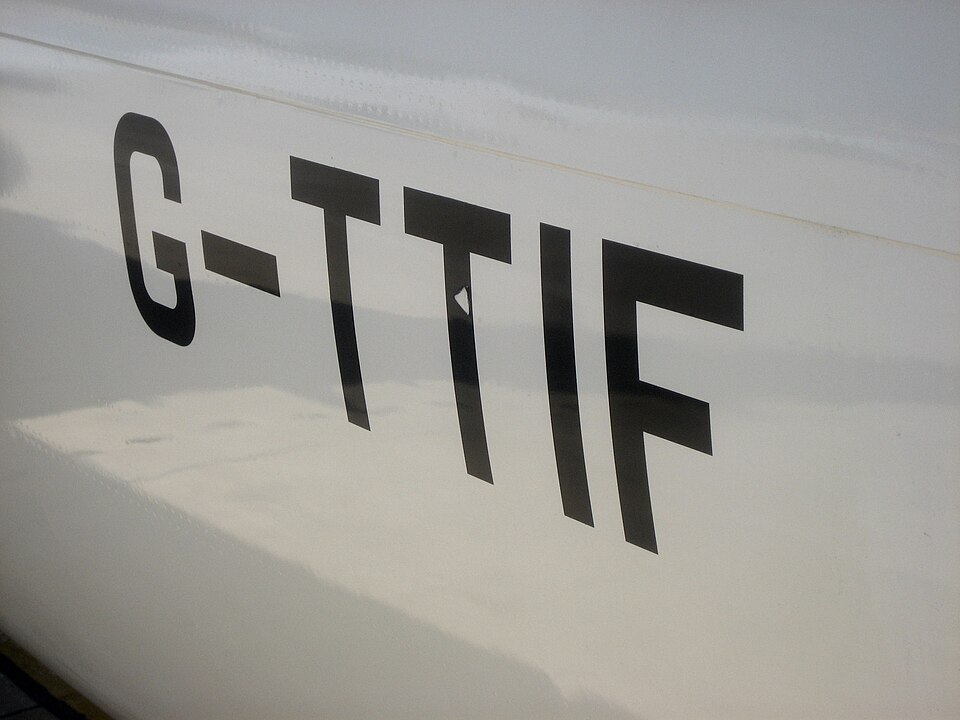
In most countries, a dash sits between the prefix and the suffix. So a German registration looks like D-ABCD, a French one like F-GSPY, and a British one like G-ABCD. The dash is dropped when the registration is entered into a flight plan, but you will see it on the actual aircraft.
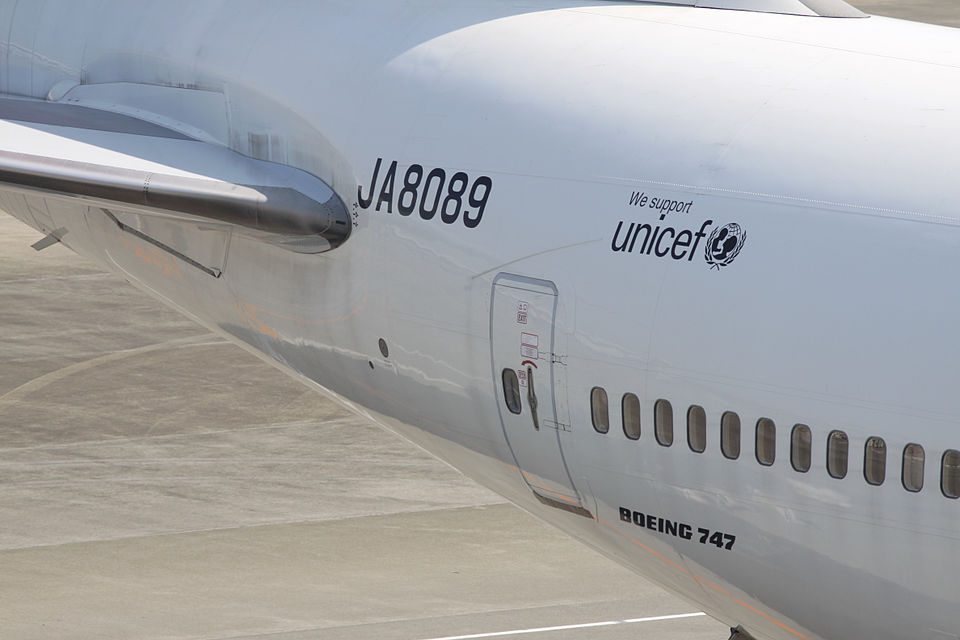
The United States, Japan, and South Korea handle things differently. They run the prefix and suffix together with no dash. So you get N12345 for the U.S., JA8089 for Japan, and HL7747 for South Korea.
Heads Up: Some countries (China, Bermuda, and the Cayman Islands among them) use the prefix B- with a four-character suffix, even though the format looks similar at a glance. To tell them apart, you usually have to look at the suffix range or the operator.
Prefix: The Country Code
The prefix is the easiest part to learn because once you memorize a handful of them, you can identify aircraft from across the globe at a glance. These codes come from radio call sign allocations originally assigned by the International Telecommunication Union (ITU), and ICAO has managed them since 1947.
Here is a quick reference to common prefixes you are likely to see:
| Prefix | Country |
| N | United States |
| C | Canada |
| G | United Kingdom |
| D | Germany |
| F | France |
| I | Italy |
| EC | Spain |
| PH | Netherlands |
| OE | Austria |
| HB | Switzerland |
| LN | Norway |
| OO | Belgium |
| SE | Sweden |
| OY | Denmark |
| EI | Ireland |
| LX | Luxembourg |
| 9H | Malta |
| VP-B / VQ-B | Bermuda |
| VP-C | Cayman Islands |
| B | China, Hong Kong, Macau, Taiwan |
| JA | Japan |
| HL | South Korea |
| VH | Australia |
| ZK | New Zealand |
| RA | Russia |
| PT / PR / PP | Brazil |
| LV | Argentina |
| XA / XB / XC | Mexico |
| ZS / ZT / ZU | South Africa |
| A6 | United Arab Emirates |
| A7 | Qatar |
| HZ | Saudi Arabia |
| 4X | Israel |
| TC | Türkiye |
| VT | India |
This list is a starting point. There are well over a hundred prefixes in active use around the world, and some countries (like France or Brazil) have multiple prefixes for different categories of aircraft.
Fun Fact: The U.S. ended up with the letter N for an interesting reason. After the 1919 Paris Convention, prefixes were handed out based on existing radio call sign blocks. The U.S. had a big chunk of N-series call signs already allocated for radio use, so N became the natural choice for aircraft.
Suffix: The Unique Aircraft ID
The suffix is the part that gets specific. It is what makes one Boeing 737 different from another, even when they wear the same airline livery and the same paint scheme.
Suffix length and format vary by country:
- One to five characters is the global maximum.
- Letters only, numbers only, or a mix are all options, depending on the country.
- Some letters are off-limits in many systems. The letters I and O are usually banned because they look too much like the numbers 1 and 0.
- The first character has rules. In the U.S., the suffix cannot start with zero.
A British G-ABCD has four letters in the suffix. A German D-ABCD also uses four letters. A Brazilian PT-ABC uses three letters. Each country picks a format that fits how many aircraft it expects to register.
Reading a U.S. N-Number Step by Step
The U.S. system is worth a closer look because the country has more registered aircraft than anywhere else in the world, with hundreds of thousands of N-numbers on file at the FAA. If you spend any time around general aviation, you will see far more N-numbers than anything else.
Here is how the format works.
Every U.S. registration starts with the letter N. After that, you can have one to five additional characters. Those characters can be all numbers, or they can end with one or two letters. The first character after the N has to be a number from 1 to 9, never zero.
A few example formats:
| Example | Format Breakdown |
| N1 | N + 1 digit (reserved for FAA use) |
| N12345 | N + 5 digits |
| N123A | N + 3 digits + 1 letter |
| N123AB | N + 3 digits + 2 letters |
| N12AB | N + 2 digits + 2 letters |
| N1A | N + 1 digit + 1 letter |
A few specific rules from the FAA shape what is and is not allowed in an N-number:
- The total length after the N cannot exceed five characters.
- The letters I and O are not used to avoid confusion with the digits 1 and 0.
- An N-number cannot start with zero.
- Numbers N1 through N99 are reserved for FAA internal use.
- The FAA stopped issuing numbers starting with NC, NX, NR, or NL years ago, but you may still see those on antique aircraft displaying older registrations.
Pro Tip: When you see an old aircraft with a registration like NC12345 or NX211, that extra letter after the N is a category mark from the pre-1949 system. NC was for standard aircraft, NX for experimental, NR for restricted, and NL for limited. The Spirit of St. Louis, for example, was registered as N-X-211 because it was an experimental aircraft. These category marks are still painted on antiques for historical accuracy, but they are not part of the actual registration.
Vanity N-Numbers
The FAA allows owners to request a specific N-number, similar to a vanity plate on a car. As long as the number you want follows the format rules and is not already taken, you can reserve it.
People use vanity numbers for all kinds of reasons. Some pick numbers tied to their initials, their birthday, or their company name. Others pick something that just sounds clean, like N1AB or N7777.
Airlines use this flexibility too. They often build full registration ranges around their company identity. Southwest Airlines has used ranges like N700GS through N799SW and later N400WN through N499WN, with many of those suffix letters tying back to founders, executives, or significant people in company history.
Why It Matters: A vanity N-number is more than a flex. For owners and businesses, it can simplify branding, make the aircraft easier to remember on the radio, and even hold sentimental value. The FAA charges a small fee to reserve a number, but the cost is modest for the recognition you get.
How to Read Registrations from Other Countries
Once you have the U.S. system down, the rest of the world starts to make sense fast. Each country picks a prefix, then sets its own rules for the suffix.
Canada
Canadian registrations use the prefix C followed by a hyphen and four letters. So you might see C-FABC or C-GXYZ. The first letter after the dash often tells you something about the type or category, but the system has evolved, and the rules have softened over time.
United Kingdom
UK registrations use G- followed by four letters. G-ABCD is a typical example. Older British registrations were assigned in alphabetical order, but the UK Civil Aviation Authority now lets owners pick custom letter combinations as long as they are not already in use. That has led to some creative tail numbers, including G-FORD and G-OLFR.
Germany
German registrations use D- followed by four letters for most aircraft, like D-ABCD. Gliders use D- followed by four numbers instead, so you might see D-1234 on a sailplane. The second letter after the dash also signals the aircraft's weight category in some cases, with A used for the largest commercial jets and lighter letters for smaller aircraft.
France
French registrations start with F-. Most French aircraft use F-G or F-H followed by three letters, like F-GSPY. F-O is used for aircraft based in French overseas territories. Aircraft under construction at Airbus in Toulouse often wear temporary F-W registrations during testing, like F-WWBQ.
China, Hong Kong, Macau, and Taiwan
All four use the prefix B-, which can get confusing. They are usually told apart by the suffix range:
- Mainland China: B- followed by four digits, sometimes more recent ones with letters.
- Hong Kong: B-H, B-K, or B-L series followed by two letters.
- Macau: B-M series followed by two letters.
- Taiwan: B- followed by five digits, usually starting with a higher number.
Keep in Mind: When Hong Kong returned to China in 1997 and Macau in 1999, both kept short four-character registrations under the B- prefix instead of expanding to match mainland China's format. That is why you see Hong Kong and Macau aircraft with shorter codes than mainland Chinese ones.
Australia and New Zealand
Australia uses VH- followed by three letters, so VH-OQA, VH-ZAB, and similar. New Zealand uses ZK- followed by three letters. Both countries have been using these prefixes since the early days of international aviation registration.
Other Notable Prefixes
A few prefixes show up often in private aviation and have stories worth knowing:
- 9H (Malta) has become a popular choice for business jets thanks to favorable tax and operational structures.
- VP-B and VQ-B (Bermuda) are common on private and corporate aircraft, often owned by people based in major financial centers but registered offshore.
- VP-C (Cayman Islands) also shows up frequently on high-end private jets for similar reasons.
- M- (Isle of Man) has built a reputation as a high-quality offshore registry for business aviation.
Where to Find the Registration Number on an Aircraft
The registration is required to be displayed prominently, but the exact location depends on the type of aircraft and the country's rules.
For most fixed-wing aircraft, you will find the registration on:
- The vertical tail surface (the most common spot, which is why people call it a tail number).
- The fuselage near the rear, on both sides.
- The underside of the wings on some general aviation aircraft.
Helicopters usually display the registration on the tail boom or fuselage. Balloons and airships have their own placement rules under each country's regulations.
Quick Tip: If you cannot read the tail number from the ground, look for a small fireproof identification plate, usually mounted near a doorway or on the fuselage. That plate carries the same registration and is required so investigators can identify the aircraft even after a fire or crash.
Size and Visibility Rules
The FAA requires N-numbers on most aircraft to be a minimum height (commonly 12 inches for fixed-wing aircraft built after a certain date) and to be readable from a set distance. The numbers must use Roman capital letters with no decorative styling and must contrast clearly with the background.
Other countries have similar rules under ICAO Annex 7. The whole point is that anyone on the ground or in another aircraft can quickly identify the plane.
From a Cessna 172 in your local pattern to a corporate jet at an FBO, browsing aircraft listings on Flying411 gives you a real-world view of how registrations connect to aircraft type, ownership, and history across the marketplace.
How to Look Up an Aircraft Using Its Registration
Reading the registration is only step one. The fun part is plugging that code into a database and pulling up everything about the aircraft.
The FAA Registry
For any U.S. aircraft, the FAA Aircraft Registry is the official source. You enter the N-number, with or without the leading N, and the registry returns the registered owner, aircraft make and model, serial number, year of manufacture, airworthiness category, and current status.
Some details to know about the FAA registry:
- The data is publicly searchable.
- Some owners use trust structures, which can mean the registered name is a trustee or LLC rather than the actual person flying the aircraft.
- The registry updates regularly, but recent transfers may take time to appear.
International Registries
Most other countries run their own public aircraft registries. The UK Civil Aviation Authority, Transport Canada, the European Union Aviation Safety Agency member states, the Australian CASA, and many others publish searchable databases. Some are easier to navigate than others, but they all serve the same basic function.
Third-Party Aviation Databases
Several independent platforms aggregate registration data from around the world and pair it with flight tracking, photos, and history. These tools can show you not just who owns the aircraft today but where it has flown, what airlines or operators have used it before, and even what registrations it has held in the past.
If you have ever looked up a flight on Flightradar24 or FlightAware and clicked through to the aircraft details, that is essentially a registration lookup in action.
Pro Tip: When buying or evaluating an aircraft, never rely on a single source. Cross-check the FAA or national registry, the maintenance logs, the bill of sale, and any third-party history reports. Registrations get re-used over time, and a clean record on one site can hide issues that show up on another. For more on this side of the process, see our breakdown of the documents needed to sell an airplane.
Why Registrations Change Over a Plane's Life
A single aircraft can wear several different registrations over its lifetime. Each change reflects something happening in the plane's story.
Sale to a new country. When an aircraft is exported, the new country issues a new registration, and the old one is canceled. A used Boeing 737 sold from a U.S. operator to a European airline will trade its N-number for a new one starting with the buyer's country prefix.
Sale within the same country. A new owner does not always change the registration, but they sometimes do, especially if the previous number had personal meaning to the seller or if the new owner wants a vanity number.
Change of operator. Even within an airline group, an aircraft moving between subsidiaries may get a new tail number to reflect the new operator.
Fleet rebranding. Airlines sometimes renumber whole sections of their fleet for branding consistency, especially after a merger.
Manufacturer test phase. Aircraft fresh off the assembly line often wear temporary registrations from the manufacturer's home country before being delivered. Boeing aircraft typically wear N-numbers with letters tied to the test program. Airbus aircraft wear F-W registrations from France during testing.
Fun Fact: Some N-numbers have been re-used across different aircraft over the years. The FAA can re-issue a number once the original aircraft is destroyed, exported, or has its registration canceled. This is why looking up a registration's full history can sometimes reveal more than one aircraft tied to the same code at different points in time.
How Registrations Connect to Aviation Careers and the Marketplace
If you work in aviation (or want to), reading and understanding registrations is more than trivia. It connects directly to several career paths and to the way the aircraft market actually functions.
Aircraft brokers and salespeople use registration data every single day. Pulling up a tail number tells you the aircraft's age, ownership history, operator history, and sometimes its accident or incident record. That information drives valuation, negotiation, and due diligence. If you are curious about the path into this kind of work, our guide on becoming an aircraft broker walks through it in detail, and there is a related read on building a career in selling airplanes.
Pre-purchase inspectors and mechanics rely on the registration to pull maintenance logs, airworthiness directives, and service bulletins specific to the aircraft. The registration is the key that unlocks the file.
Pilots memorize their aircraft registrations because they are also the radio callsigns for most general aviation operations. Saying "Cessna five-three-two-romeo-delta" on the radio is reading the registration.
Insurance underwriters use registrations to verify ownership, check claims history, and confirm operational details before issuing a policy.
Buyers and sellers working in the private jet space need to understand registration jurisdiction because the country a jet is registered in affects taxes, crew licensing, maintenance requirements, and resale value. If selling aviation is on your radar, the requirements for becoming an aircraft salesperson and the steps to becoming a private plane salesman cover what you need to get started. For the jet side specifically, private jet broker training and private jet broker certification lay out the path.
Looking to buy, sell, or research an aircraft? Flying411 connects you with verified listings, certified parts, and aviation services so you can move from a tail number to a closed deal with confidence. Reach out today to find your next aircraft or list yours for sale.
Common Mistakes People Make When Reading Registrations
Even experienced pilots slip up sometimes. Here are the most common mix-ups to watch for:
- Confusing letters and numbers. A scuffed paint job can make a 1 look like an I or a 0 look like an O. Remember that I and O are not used in most registration systems, so when in doubt, default to 1 or 0.
- Reading from the wrong angle. Tail numbers can look distorted when viewed from below or to the side. Use a photo or a fresh angle if possible.
- Mixing up similar prefixes. B- alone is not enough. You need to look at the suffix to know if it is mainland China, Hong Kong, Macau, or Taiwan.
- Forgetting the dash convention. The dash is part of how the registration is displayed in most countries, but it gets dropped in flight plans and databases. Searching with or without the dash can both work, but try both if your first lookup fails.
- Assuming the registration matches the operator's country. A Cayman Islands or Bermuda registration on a private jet does not mean the owner lives there. Offshore registries are common in business aviation for tax and operational reasons.
Heads Up: Older aircraft can carry historic registration formats that no longer match current rules. If you are looking at a vintage warbird or antique aircraft and the registration looks unusual, find out if the rules have changed since it was issued. Antiques are often allowed to keep their original markings.
A Quick Walk Through Real Examples
Sometimes the easiest way to lock this in is with examples. Here is how a few common registrations break down.
N737AB: The N tells you it is registered in the United States. The 737 is the suffix start, often chosen to match the aircraft model. The AB at the end is the letter suffix, usually picked by the operator. Whoever owns this plane probably picked it for a Boeing 737.
G-EZAB: The G means UK. The EZAB is the four-letter suffix, and the EZ at the start is a fleet pattern used by easyJet across many of its aircraft. So this is almost certainly an easyJet plane.
D-AIRA: The D means Germany. The four-letter suffix starts with A, which often signals a larger commercial aircraft in the Lufthansa fleet system. AIR pattern hints at airline use.
JA8089: The JA means Japan. No dash. The four-digit suffix is part of Japan's numeric system, with the 80 prefix range traditionally tied to certain operators.
VH-OQA: The VH means Australia. The OQA is a three-letter suffix that Qantas has used for many of its long-haul aircraft. OQ is a Qantas pattern.
Once you start spotting these patterns, you will catch them everywhere, from airline fleets to small flight school Cessnas.
Wrapping It Up
Once you understand how to read aircraft registration numbers, every plane in the sky becomes a little less anonymous. The prefix tells you the country. The suffix points to the specific aircraft. Together they unlock public records, history, ownership, and a story that goes back as far as the aircraft itself.
For pilots, brokers, mechanics, buyers, and aviation fans, that knowledge is more than trivia. It is the entry point to deeper research, smarter buying decisions, and a richer understanding of how the global aviation system actually works.
Ready to put that knowledge to work? Browse aircraft, parts, and aviation services on Flying411 and turn what you have learned about tail numbers into your next move in the air.
Frequently Asked Questions
Are aircraft registration numbers and tail numbers the same thing?
For most practical purposes, yes. The registration number is the official code assigned by the country's aviation authority, and the tail number is the version painted on the aircraft. They refer to the same thing, just in different settings.
Can the same registration number be re-used by different aircraft?
Yes, in many countries it can. Once an aircraft is exported, destroyed, or has its registration canceled, the country's aviation authority can re-issue that number to a new aircraft after a waiting period. This is why a full history check matters when buying a used plane.
How do I get a custom or vanity N-number for my aircraft?
You apply through the FAA's N-number reservation system, choose a number that follows the format rules, and pay the reservation fee. As long as the number is not already in use or reserved, you can request it for your aircraft.
What is the longest possible aircraft registration number?
Under ICAO standards, registrations can be up to six total characters, including the prefix. In the U.S., that means N plus five characters maximum. Some countries allow shorter formats, like Hong Kong's four-character B- registrations.
Why do some private jets have offshore registrations like 9H or VP-B?
Offshore registrations in places like Malta, Bermuda, the Cayman Islands, and the Isle of Man are popular in business aviation because of tax structures, operational flexibility, and high-quality regulatory oversight. The owner does not have to live in those jurisdictions to register an aircraft there, as long as they meet the registry's requirements.