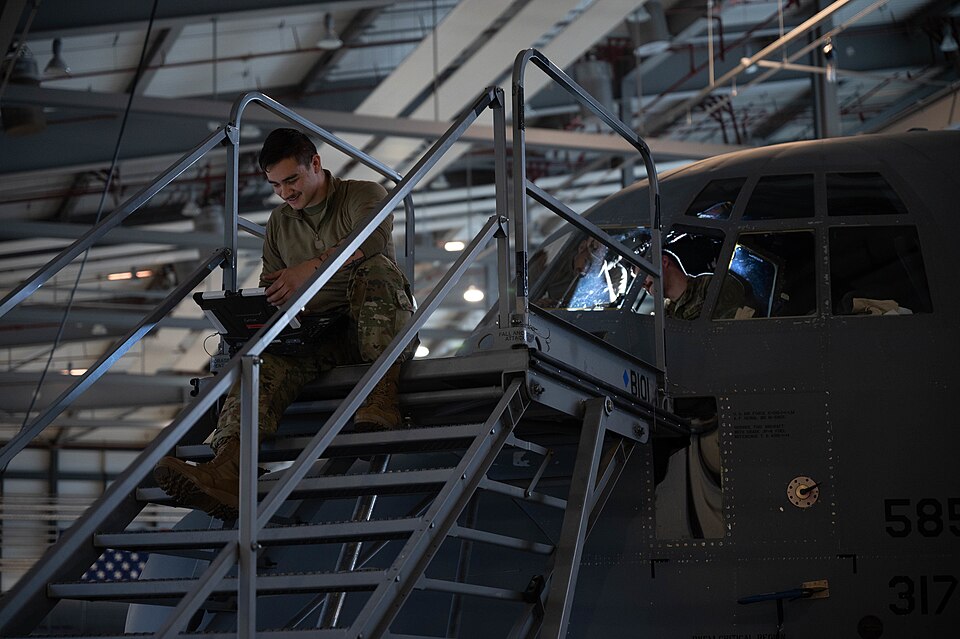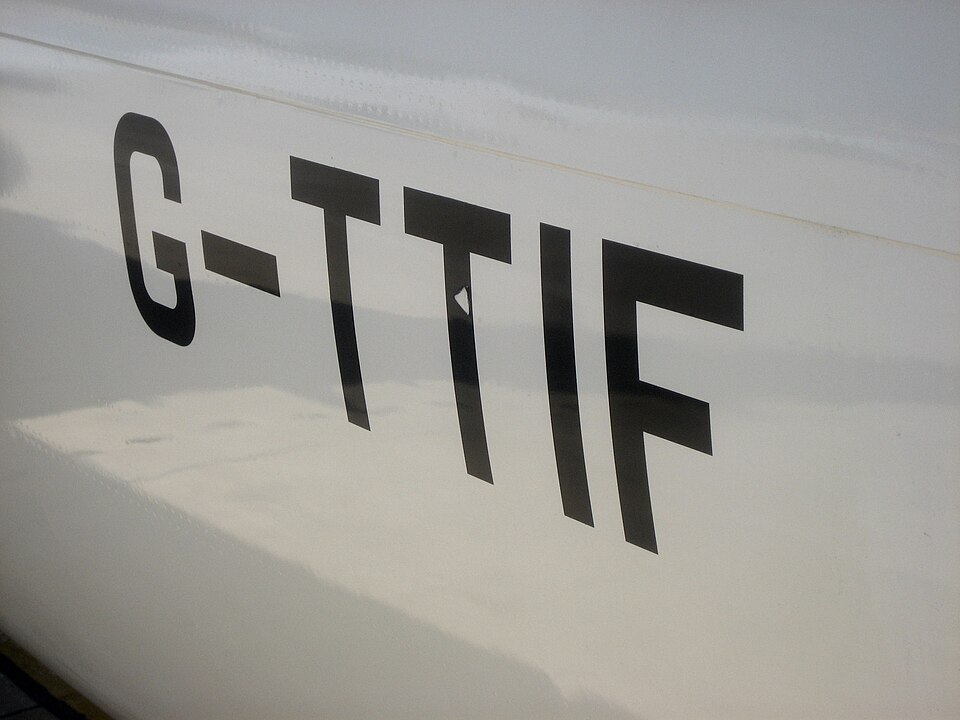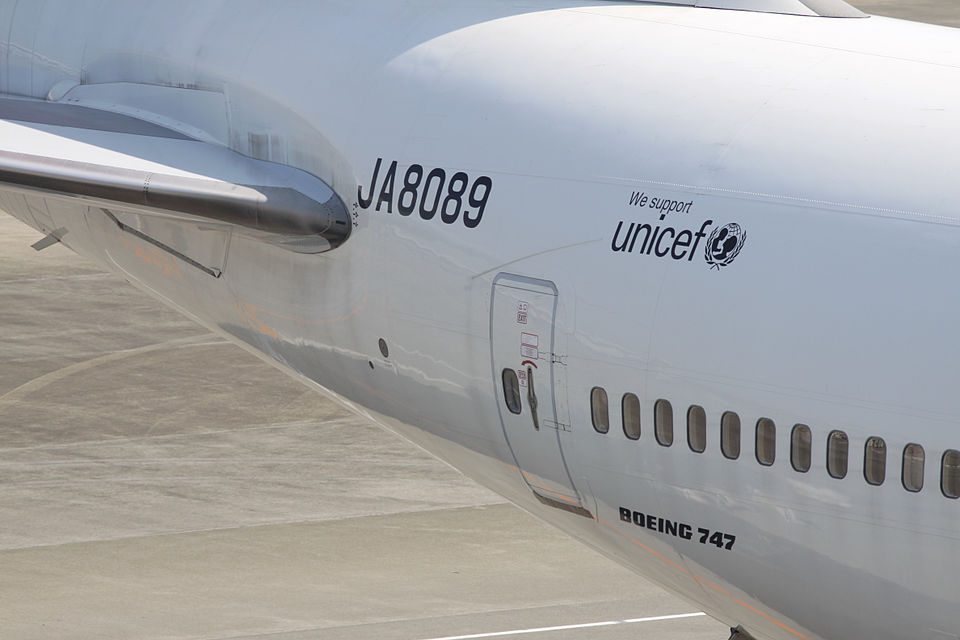
Look at any aircraft and you will see a string of letters and numbers somewhere on the fuselage or tail. Most people glance past them. Pilots, air traffic controllers, and aircraft owners read those characters like a license plate, a passport, and a model number rolled into one.
So how do aircraft codes work, and why does aviation lean on so many overlapping systems to keep track of every plane in the sky?
The answer is part history, part safety, and part international diplomacy. Every aircraft, airport, airline, and aircraft model has its own code, and each one was built for a specific job.
A pilot filing a flight plan does not need the same information a passenger needs while booking a ticket. The systems were designed to serve different audiences without stepping on each other.
Once you know what each code does, the alphabet soup on the side of an airplane starts to read like a short biography of the aircraft itself.
Key Takeaways
Aircraft codes are short letter and number combinations used to identify aircraft, airports, airlines, and aircraft models in a clear, standardized way. The two main organizations behind these systems are the International Civil Aviation Organization (ICAO) and the International Air Transport Association (IATA). Pilots and air traffic controllers rely on ICAO codes, while passengers and airlines use IATA codes for tickets, schedules, and bookings.
| Code Type | What It Identifies | Example | Used By |
| Aircraft Registration (Tail Number) | A specific aircraft | N12345 | Pilots, regulators, owners |
| ICAO Airport Code | Airports worldwide (4 letters) | KJFK | Pilots, air traffic control |
| IATA Airport Code | Airports for travel (3 letters) | JFK | Passengers, airlines |
| ICAO Airline Code | Airlines (3 letters) | AAL | Air traffic control |
| IATA Airline Code | Airlines (2 letters) | AA | Tickets, reservations |
| Aircraft Type Designator | Aircraft make and model | B738, A320 | Flight planning, ATC |
At Flying411, we know how easy it is to feel lost in the language of aviation, which is exactly why our blog and marketplace work hard to make it feel less like a code and more like common sense.
What Aircraft Codes Are and Why They Exist
Aircraft codes are short identifiers used across aviation to refer to specific aircraft, airports, airlines, and aircraft models. They exist because aviation is global, fast-moving, and cannot afford confusion. A single misunderstanding between a pilot and a controller in a busy airspace can ripple into delays, missed approaches, or worse.
Codes solve a few real problems at once:
- They cut through language barriers. Pilots, controllers, and ground staff come from every part of the world. Short codes work the same in any language.
- They save time on the radio. Saying "John F. Kennedy International Airport" five times in a busy frequency wastes precious seconds. Saying "KJFK" does not.
- They prevent mix-ups. Plenty of airports share names. Plenty of cities have more than one airport. Codes make sure everyone is talking about the exact same place.
- They keep records straight. Every aircraft has a paper trail for ownership, maintenance, inspections, and accident history. A unique code is the thread that ties it all together.
The big picture is simple. Aircraft codes are how aviation keeps millions of moving pieces straight without a single dropped baton.
Why It Matters: Aircraft codes are not just trivia. They tie directly into safety, flight planning, regulation, and ownership records. Knowing how to read them gives you a clearer view of how an entire industry stays organized.
A Quick History of How Aircraft Codes Came About
Aircraft codes did not appear all at once. They grew up alongside aviation itself, often in response to a specific problem.
The 1919 Convention and the First Tail Numbers
After World War I, aviation was expanding fast and crossing borders in a way no one had quite planned for. The 1919 International Air Navigation Convention introduced the idea that every civil aircraft should carry a unique national identifier. Each country was assigned a starting letter, and the rest of the code identified the individual aircraft. The United States ended up with the letter N as its national prefix.
The Chicago Convention and the Birth of ICAO
The Chicago Convention of 1944 created the International Civil Aviation Organization, the United Nations agency that still sets aviation standards today. ICAO took the original idea and expanded it into a worldwide system. By 1947, ICAO rolled out a four-letter code system for airports, which is still in use.
IATA and the Passenger Side of the Industry
Around the same time, the International Air Transport Association developed its own three-letter system. IATA represents airlines and focuses on the commercial side of aviation. IATA codes ended up on tickets, baggage tags, and departure boards because they were short, friendly, and easy to remember.
The FAA Steps In for the United States
In the United States, the Federal Aviation Administration manages aircraft registration and uses its own three-character location identifiers, often called LIDs. Many small airfields in the U.S. have only an FAA LID and no ICAO or IATA code at all.
Fun Fact: The U.S. received its "N" prefix at the 1919 convention, but the rationale has never been fully documented. Some accounts tie it to early radio call letter assignments, while others suggest different origins. Whatever the real reason, the letter has stuck for over a century.
Aircraft Registration Numbers: The Tail Number System
The most familiar aircraft code is the tail number, also called the registration number or N-number in the United States. Think of it as the airplane's license plate. It is unique to a single aircraft, painted on the outside, and tied to that specific airframe in official records.
How Tail Numbers Are Structured
Every tail number has two parts:
- A country prefix of one or two characters that shows where the aircraft is registered.
- A unique suffix of one to five characters that identifies the specific aircraft.
When painted on the fuselage, the prefix and suffix are often separated by a dash, like G-ABCD for a British-registered aircraft. In countries that use number suffixes, such as the United States, Japan, and South Korea, there is usually no dash. So a U.S. registration looks like N123AB rather than N-123AB.
Country Prefixes Around the World
Each country has a prefix assigned by ICAO. A few common ones include:
| Country | Prefix | Example |
| United States | N | N12345 |
| Canada | C | C-FABC |
| United Kingdom | G | G-ABCD |
| Germany | D | D-ABCD |
| Australia | VH | VH-AKD |
| Japan | JA | JA8089 |
| France | F | F-WWBQ |
| Brazil | PP, PR, PT, PU | PP-XYZ |
So when you see a tail number, the first one or two characters already tell you the country of registration.
How U.S. N-Numbers Are Built
The U.S. system has its own internal logic. An N-number begins with one or more digits and may end with one or two letters. A few key rules:
- It must start with a digit other than zero.
- It can be one to five characters long after the N.
- The letters I and O are never used because they look too much like the numbers 1 and 0.
- Numbers like N1 through N9 are reserved for FAA internal use.
That setup gives the U.S. system a very large pool of possible combinations, though some are reserved for government or special purposes.
Vanity Tail Numbers and Reuse
Owners can request custom or "vanity" registrations, similar to vanity license plates on a car. Tail numbers can also be reused once an aircraft is destroyed, exported, or removed from the registry. That means the same N-number may have lived several lives across different airframes over the decades.
Good to Know: A tail number stays with the aircraft, not the airline. When an airline sells an old jet to another carrier in another country, the new owner usually re-registers the aircraft, which means a brand new tail number painted on a familiar airframe.
ICAO vs. IATA Airport Codes
This is where most people first run into aircraft codes without realizing it. The three-letter code on a luggage tag is one system. The four-letter code on a flight plan is another. They both refer to the same airport, but they were built for different jobs.
IATA Airport Codes (Three Letters)
IATA airport codes are the friendly ones. They are three letters long and used for tickets, boarding passes, baggage tags, schedules, and reservation systems. Most travelers know at least a few:
- JFK for John F. Kennedy International Airport in New York
- LHR for London Heathrow
- LAX for Los Angeles International
- NRT for Narita International Airport near Tokyo
IATA codes are usually pulled from the airport name, the city name, or some combination of both. They do not follow a strict geographic logic, which is why the codes for Canadian airports (like YYC for Calgary or YVR for Vancouver) often look unrelated to their city names.
ICAO Airport Codes (Four Letters)
ICAO airport codes do follow a strict geographic system. They are four letters long, and the first one or two letters point to a country or large region. The remaining letters identify the specific airport.
A few examples:
- KJFK for New York's JFK Airport (K for the contiguous United States)
- EGLL for London Heathrow (EG for the United Kingdom)
- CYYZ for Toronto Pearson (C for Canada)
- RJTT for Tokyo Haneda (RJ for Japan)
In the contiguous U.S. and most of Canada, the ICAO code is often just the IATA code with a country letter tacked on. Alaska, Hawaii, and U.S. territories follow different patterns. Kahului Airport on Maui, for example, has an IATA code of OGG and an ICAO code of PHOG, where the PH points to the Hawaii region.
Why Two Systems Exist
It comes down to who the audience is. Passengers do not need geographic precision. They need short codes that are easy to recognize and remember. Pilots and controllers, on the other hand, need codes that are unambiguous, geographically logical, and consistent across hundreds of thousands of airfields, including small strips, military bases, and remote helipads.
ICAO codes cover far more airports than IATA codes do, simply because the four-letter format allows for many more combinations. Plenty of small airfields and military bases have an ICAO code but no IATA code at all.
Quick Tip: When you see a four-letter code on a flight plan, it is almost always ICAO. When you see a three-letter code on a boarding pass, it is almost always IATA.
How Airline Codes Work
Airlines have their own codes too, and again, there are two main systems.
IATA Two-Letter Codes
These are the codes you see on tickets, departure boards, and flight numbers. American Airlines is AA, British Airways is BA, Delta is DL, Lufthansa is LH. They are short, easy to read, and built for passenger-facing use.
Because there are only so many two-letter combinations available, IATA sometimes assigns the same code to two airlines that operate in non-overlapping markets. Those are called controlled duplicates.
ICAO Three-Letter Codes
ICAO airline codes are three letters long and used in flight plans, air traffic control communications, and operational documents. American Airlines is AAL, British Airways is BAW, Delta is DAL, Air Canada is ACA.
Airline Call Signs
Every airline also has a spoken call sign that pilots use over the radio. Some are predictable, like "American" for American Airlines. Others are quirky throwbacks. British Airways uses "Speedbird," which traces back to a logo from the early days of long-haul flying. United Airlines uses "United." Hawaiian Airlines uses "Hawaiian," though the carrier has used variations over the years.
Heads Up: Call signs and airline codes are not always intuitive. They can survive mergers and rebrands long after the original airline disappears. The spoken call sign you hear over the radio may belong to a company that does not even exist on paper anymore.
Aircraft Type Designators: Codes for the Airplanes Themselves
So far we have covered codes for individual aircraft, airports, and airlines. There is one more layer: codes for the aircraft model itself. These are called aircraft type designators, and they are how flight planners and controllers refer to specific makes and models of airplanes.
ICAO Type Designators
ICAO publishes the official list in a document known as Document 8643. These designators are two to four characters long and identify a specific aircraft model or major variant. A few familiar examples:
- B738 for the Boeing 737-800
- B739 for the Boeing 737-900
- A320 for the Airbus A320
- A320N for the Airbus A320neo (new engine option)
- B744 for the Boeing 747-400
- B748 for the Boeing 747-8
- C172 for the Cessna 172
- CRJ2 for the Bombardier CRJ-200
The first character usually points to the manufacturer. A is Airbus, B is Boeing, C is often Cessna or Canadair, and so on. The remaining characters specify the model and variant.
IATA Type Codes
IATA also has its own aircraft type codes, which are used in airline reservation systems and timetables. These tend to be three characters long, and they sometimes overlap with ICAO codes but not always. The Boeing 737-800, for example, is B738 in ICAO and 738 in IATA. The two systems were built for different purposes, and they sit side by side in industry data.
Why the Difference Matters
ICAO designators care about performance characteristics that affect air traffic control. They distinguish between aircraft variants that fly differently, even if they look similar. IATA codes care about the commercial side. They distinguish between variants that matter to airlines, like passenger versus freighter configurations.
So if a freight version of an aircraft has the same flight performance as the passenger version, ICAO might give them the same code while IATA gives them different codes.
The Three-Character ICAO Type Description
Beyond the type designator, ICAO also publishes a short three-character "type description" that summarizes the aircraft. It looks like L2J or H1T. The first character is the aircraft category (L for landplane, H for helicopter, S for seaplane, A for amphibian). The second character is the number of engines. The third character is the engine type (J for jet, T for turboprop, P for piston).
So L2J means "landplane, two engines, jet." That short code packs a surprising amount of information into three characters.
Pro Tip: If you ever see a code like B738/L2J on a flight plan, you can read it as "Boeing 737-800, a two-engine jet landplane." The rest of the data on the strip flows from there.
How Aircraft Codes Work Together in Real Life
The big payoff of all these systems is that they work together. Each code answers a different question, and stacked up, they paint a complete picture of any flight.
Imagine a single trip from New York to London on a Boeing 777-300ER operated by British Airways. Here is what the codes look like:
- The aircraft itself: A specific airframe with a unique tail number, like G-STBA. The G tells you it is registered in the United Kingdom.
- The aircraft type: B77W in ICAO, the standard designator for the Boeing 777-300ER.
- The departure airport: KJFK in ICAO, JFK in IATA.
- The arrival airport: EGLL in ICAO, LHR in IATA.
- The airline: BAW in ICAO, BA in IATA, with the call sign "Speedbird" over the radio.
- The flight number: Built from the IATA airline code plus a number, like BA178.
Every code in that list serves a different audience. Air traffic control sees one set. The passenger checking in sees another. The flight planner sees a third. Together, they describe the same flight from six different angles, and none of them step on each other.
Here is a side-by-side look at how the same flight elements appear in different systems:
| Element | ICAO Format | IATA Format |
| Aircraft (Boeing 737-800) | B738 | 738 |
| Airport (London Heathrow) | EGLL | LHR |
| Airline (British Airways) | BAW | BA |
| Aircraft (Airbus A320) | A320 | 320 |
| Airport (JFK New York) | KJFK | JFK |
| Airline (American Airlines) | AAL | AA |
Where the Codes Show Up
You probably interact with several of these codes during a normal trip without realizing it:
- The IATA airport code is on your boarding pass and luggage tag.
- The IATA airline code is in your flight number.
- The aircraft tail number is painted near the rear of the plane you board.
- The aircraft type code shows up in your booking details (often as something like "Equipment: 738").
Pilots, dispatchers, mechanics, and brokers see the rest of the picture. They work in the world of ICAO codes, FAA registrations, and type designators every day.
If you have ever shopped a marketplace listing, you have already seen aircraft type designators in action. Flying411 lists make, model, and registration details right up front so buyers can match codes to airframes without guessing.
Special Cases and Common Sources of Confusion
A few corners of the aircraft code world catch even seasoned aviation people off guard. These are worth knowing.
City Codes vs. Airport Codes
Some major metro areas have more than one busy airport, so IATA assigns a city code that covers all of them. London uses LON, which can return flights from LHR, LGW, STN, LCY, and others. New York uses NYC. Stockholm uses STO. The city code is helpful for searches but is not used for actual ticketing or flight planning.
When IATA and ICAO Codes Look Almost Identical
In the contiguous U.S. and Canada, the ICAO airport code is often just the IATA code with a country letter on the front. KIAD and IAD both refer to Washington Dulles. CYEG and YEG both refer to Edmonton International. That overlap can make it look like one code is "missing a letter," when really it is just a different system.
Tail Numbers That Get Reused
Because tail numbers can be reassigned after an aircraft is destroyed, exported, or retired, the same registration may have lived on more than one airframe over time. That can create confusion when researching the history of a specific tail number, especially for older aircraft.
Codes That Do Not Begin With Common Letters
ICAO airport codes never begin with the letters I, J, X, or Q. Codes starting with I are usually reserved for navigational aids like radio beacons. Codes starting with Q are used for international radio communication and special-use cases. So if you see a four-letter code starting with Q, it is almost certainly not an airport.
Military Aircraft and Government Aircraft
Most military aircraft do not use civilian registration codes. They use military serial numbers and tail codes assigned by their air force or service branch. Government-owned non-military aircraft, on the other hand, do get civilian registrations. So a U.S. Department of Homeland Security aircraft may carry an N-number even though the public never sees it advertised.
Keep in Mind: Aviation has a long memory. Some codes survive for decades after the airline that created them disappears, the airport that used them is renamed, or the country that assigned them changes its borders. That history is part of what makes the system work.
Why Aircraft Codes Matter for Buyers, Sellers, and Owners
If you are looking at the aviation world from a buyer's, seller's, or owner's seat, codes go from interesting trivia to practical tools. Every aircraft listing, maintenance log, registration record, and inspection report is built on top of these codes.
A few real-world examples:
- A pre-purchase inspection report references the aircraft's tail number and type designator on every page.
- An ownership history search uses the registration number to pull records from the FAA or another national authority.
- A marketplace listing identifies the airframe by manufacturer, model, and registration.
- An insurance quote ties to the specific N-number and the aircraft's type code.
- A logbook entry for an annual inspection references the tail number, engine serial numbers, and aircraft type.
For anyone considering a career in aircraft sales, understanding codes is part of the job. If you want to dig deeper, becoming an aircraft broker involves learning how to read registration data, type designators, and ownership records the same way a real estate agent reads a deed. The path into a career selling airplanes leans hard on this same fluency.
People asking about aircraft salesman requirements often find out quickly that pulling registration data is a daily task. If you are looking into the steps to become a private plane salesman, you will see that buyers expect clear, accurate information about every airframe on the market.
Brokers in the higher-end market work with codes constantly. Private jet broker training covers how to read type designators, country prefixes, and airworthiness data without flinching. The process to earn a private jet broker certification puts that knowledge front and center.
And on the seller's side, knowing the documents needed to sell an airplane makes it clear how central the registration code is to every transaction. The N-number is the thread that ties the title, the airworthiness certificate, and the maintenance records together.
Looking to list an aircraft, find a buyer, or browse used airplanes by tail number, type, and condition? Flying411 makes it simple to search the market with the same clarity the codes were built to provide.
Quick Reference: Reading an Aircraft at a Glance
Once the systems click, you can decode a lot from a single glance at an aircraft. Here is a rough mental checklist:
- Look at the tail number's first letter or two. That tells you the country of registration.
- Look at the rest of the tail number. That uniquely identifies the airframe.
- Identify the manufacturer and model. That gives you the type designator (B738, A320, C172, and so on).
- Note the airline livery, if any. That points to the operating carrier and its IATA and ICAO codes.
- Check the airport. Its IATA and ICAO codes round out the picture of where the aircraft is right now.
That five-step mental walkthrough turns a random plane on a ramp into a story you can actually read.
Ready to put what you have learned to work? Browse listings, compare aircraft types, and connect with sellers on Flying411 to start matching codes to real airframes.
Conclusion
Once you understand how aircraft codes work, the strings of letters and numbers across aviation stop looking random. Tail numbers identify the airframe. ICAO and IATA codes identify airports and airlines. Type designators identify the aircraft model. Each system was built for a specific audience, and together they keep aviation safe, organized, and globally consistent.
For pilots, the codes are tools. For passengers, they are landmarks. For buyers, sellers, and owners, they are the foundation of every record that proves an aircraft is what the paperwork says it is.
Whether you are a curious traveler, a future broker, or an owner ready to list, Flying411 makes it easy to read the codes, find the aircraft, and step confidently into the next chapter of your aviation journey.
Frequently Asked Questions
Are aircraft tail numbers public information?
Yes. In the United States and most other countries, civil aircraft registration records are publicly searchable through the relevant aviation authority, such as the FAA. Owners can request to block flight tracking on third-party services, but the registration itself remains public.
Can two aircraft have the same tail number?
No two aircraft can carry the same active registration at the same time. However, tail numbers can be reused once an aircraft is destroyed, exported, or removed from the registry, so the same number may appear on different airframes across different points in time.
What is the difference between a tail number and a serial number?
A tail number is the registration assigned by a national aviation authority and is tied to the aircraft's country of registration. A serial number is assigned by the manufacturer at the factory and stays with the airframe for life, even if the registration changes.
Do helicopters and small aircraft also have ICAO type designators?
Yes. ICAO assigns type designators to most aircraft heavier than micro and ultralight categories, including helicopters, turboprops, and piston-engine planes. Some small homebuilt or kit aircraft also receive designators if they exist in significant numbers.
Why do some U.S. airport codes start with K and others do not?
Airports in the contiguous 48 states use ICAO codes starting with K, but airports in Alaska use codes starting with PA, those in Hawaii use codes starting with PH, and U.S. territories use other prefixes. The K prefix only covers the lower 48, which is why a flight to Honolulu might show PHNL instead of a K-prefixed code.