The U.S. Air Force operates one of the most secretive and powerful fleets in aviation history. Only 21 B-2 Spirit stealth bombers were ever built, and that number has only gotten smaller over time. These aircraft are so advanced, so expensive, and so carefully maintained that every single one counts.
If you have ever wondered how many B-2 bombers are still flying, where they are stationed, and what they are designed to do, you are about to get the full picture — including what the future holds for this one-of-a-kind fleet.
The story behind the B-2 is not just a story about a plane. It is a story about what happens when engineers, military planners, and billions of dollars come together to build something that the world has never seen before. From its flying-wing shape to its ability to carry nuclear weapons halfway around the world, the B-2 Spirit is in a class entirely its own.
Key Takeaways
The United States originally built 21 B-2 Spirit stealth bombers, but one was destroyed in a crash at Andersen Air Force Base in Guam in 2008, leaving 20 airframes in existence. Of those, 19 are considered fully operational today, all based at Whiteman Air Force Base in Missouri under the 509th Bomb Wing. Each B-2 costs roughly $2.1 billion per aircraft, making it the most expensive military plane ever built on a per-unit basis. These aircraft are nuclear-capable, long-range stealth bombers that can strike nearly anywhere on Earth without needing a local overseas base, giving the United States a strategic advantage no other nation can match.
| Key Detail | Information |
| Total B-2s Built | 21 |
| Lost in Accidents | 1 (2008 crash in Guam) |
| Remaining Airframes | 20 |
| Operational B-2s | 19 |
| Home Base | Whiteman Air Force Base, Missouri |
| Managing Unit | 509th Bomb Wing |
| Manufacturer | Northrop Grumman |
| Cost Per Aircraft | ~$2.1 billion |
| Crew | 2 pilots |
| Mission Type | Strategic stealth bombing, nuclear and conventional |
| Max Payload | Up to 40,000 pounds of weapons |
| Unrefueled Range | Approximately 6,000 nautical miles |
Flying411 has everything you need to explore the aircraft that are shaping the modern world — from stealth bombers to the fastest experimental planes ever flown. Start exploring today.
What Is the B-2 Bomber and Why Does the U.S. Military Use It?
The B-2 Spirit is not your average military plane. It is a long-range, heavy stealth bomber built to slip past enemy radar systems and deliver powerful weapons to nearly any target on Earth. The U.S. Air Force uses it because no other aircraft can do what it does — fly deep into defended airspace without being detected and drop both conventional and nuclear weapons with precision.
Here is what makes the B-2 stand out from other military planes:
- Stealth design: Its flying-wing shape and special radar-absorbing coating make it extremely difficult to detect on radar.
- Long range: It can fly over 6,000 nautical miles without stopping, which means it can reach targets in Europe, Asia, or the Middle East from its home base in the United States.
- Nuclear capability: The B-2 is one of only a small number of aircraft certified to carry and deliver nuclear weapons.
- Precision strike ability: It can carry up to 40,000 pounds of weapons, including GPS-guided bombs and nuclear payloads.
- Minimal crew: It only needs a crew of two pilots to operate, which keeps things simple while still allowing for complex, multi-hour missions.
The U.S. military relies on the B-2 because modern threats require a bomber that can go where other planes cannot. Many countries have built strong air defenses — radar systems, surface-to-air missiles, and fighter jets — specifically to stop traditional bombers. The B-2 was designed to get through all of that.
It can fly at high altitude, avoid radar detection, and strike a target before the enemy even knows it is there. That kind of capability is extraordinarily rare, and it is why the B-2 has remained at the center of American strategic planning for decades.
Why It Matters: The B-2 is not just a bomber — it is a deterrent. Its existence tells potential adversaries that no target on Earth is truly safe from a U.S. strike. That kind of message has real value in keeping conflicts from starting in the first place.
The B-2 also plays an important role in what military planners call global strike — the ability to hit any target, anywhere on Earth, within hours. That kind of reach is a powerful tool for deterrence. For a broader look at where the B-2 fits in the world of advanced aircraft, you can read more about the top 10 fastest experimental aircraft to see how far aviation technology has come.
How the B-2 Compares to Other Strategic Bombers
Not all bombers are created equal. Here is a quick look at how the B-2 stacks up against the other heavy bombers in the U.S. fleet:
| Feature | B-2 Spirit | B-52 Stratofortress | B-1B Lancer |
| Stealth Capability | High (low-observable) | None | Partial |
| Crew | 2 | 5 | 4 |
| Payload Capacity | ~40,000 lbs | ~70,000 lbs | ~75,000 lbs |
| Range (unrefueled) | ~6,000 nm | ~8,800 nm | ~5,100 nm |
| Nuclear Capable | Yes | Yes | No (modified) |
| Cost Per Aircraft | ~$2.1 billion | ~$84 million (original) | ~$283 million |
| First Flight | 1989 | 1952 | 1974 |
| Still in Production | No | No | No |
As the table shows, the B-2 trades some raw payload capacity for its unmatched stealth. That trade-off is intentional — getting into heavily defended airspace alive is worth more than carrying a few extra tons of bombs.
Good to Know: The B-52 Stratofortress has been flying for over 70 years and is expected to continue serving well into the 2040s. Meanwhile, the B-2 is one of the youngest bombers in the fleet — yet it already has no production line and no replacement coming for many years.
Where Did the B-2 Bomber Come From and Who Built It?
The story of the B-2 starts in the late 1970s and early 1980s, when the U.S. government began looking for a new kind of bomber — one that could survive in a world filled with advanced Soviet radar and missile systems. The existing fleet of B-52 bombers was aging, and military planners needed something newer, faster, and much harder to detect.
Northrop Grumman won the contract to design and build the new bomber. The company had already been working on stealth concepts for years and was well positioned to take on such a complex project. Development was highly classified, and most of the work happened in secret facilities away from public view.
Here is a brief timeline of how the B-2 came to life:
- 1981: The Advanced Technology Bomber program is officially launched by the U.S. government.
- 1988: The B-2's existence is publicly revealed for the first time, though most details remain classified.
- 1989: The aircraft makes its first flight at Air Force Plant 42 in Palmdale, California.
- 1993: The first B-2 Spirit is delivered to the Air Force.
- 1997: The B-2 officially reaches initial operational capability, meaning it is ready for combat missions.
- 1999: The B-2 flies its first combat mission during Operation Allied Force over Serbia.
- 2000: The final B-2 is delivered, completing the 21-aircraft production run.
The B-2 Spirit stealth bomber was built at Northrop Grumman's facility in Palmdale, California. Final assembly took place there, and each aircraft was carefully constructed with an extraordinary level of precision — which is part of why it took so long and cost so much. These aircraft were not made on a traditional production line like commercial planes.
Fun Fact: The B-2's flying-wing shape is said to have been inspired in part by earlier experimental aircraft from the 1940s, including the Northrop YB-49 — a propeller-driven flying wing that was decades ahead of its time but ultimately never entered production.
After delivery, each aircraft was sent to Whiteman Air Force Base in Missouri, which became the permanent home of the entire fleet. Maintenance and upgrades are handled there, as well as at the Oklahoma City Air Logistics Center at Tinker Air Force Base in Oklahoma. The B-2 Spirit stealth program is widely considered one of the most ambitious aircraft development projects in U.S. history.
The Flying-Wing Design: A Radical Choice That Paid Off
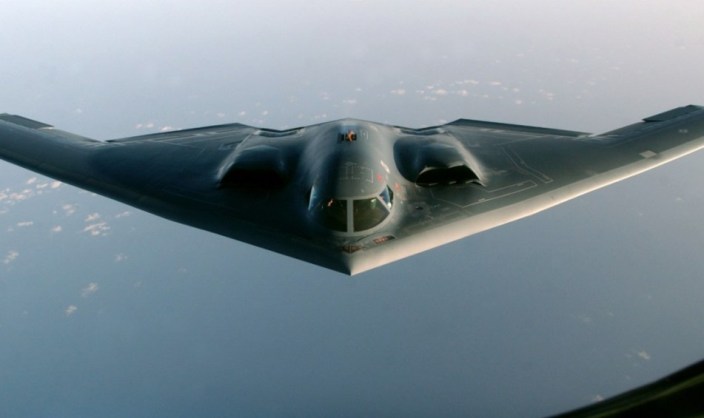
One of the most visually striking things about the B-2 is its shape. It has no tail, no vertical stabilizers, and no fuselage in the traditional sense. The entire aircraft is essentially one giant wing.
This design was chosen for a specific reason: a flying-wing shape has a much smaller radar cross-section than a conventional aircraft. There are fewer edges, fewer surfaces, and fewer angles to bounce radar signals back to a receiver. Combined with radar-absorbing materials applied to the surface, the result is an aircraft that is extraordinarily difficult to detect on radar.
The trade-off is stability. Without a tail, the aircraft is inherently aerodynamically unstable. It relies on advanced flight computers running continuously to make tiny adjustments and keep the plane flying straight. This was a bold engineering choice, and it worked.
Pro Tip: If you are ever near an air show where a B-2 is flying, watch it bank and turn. Because of its flying-wing shape, it does not bank steeply like a fighter jet — it makes wide, sweeping turns that look almost graceful for something so large.
Why Are B-2 Bombers So Expensive and Hard to Build?
Here is a number that stops most people in their tracks: each B-2 bomber costs approximately $2.1 billion. That makes it one of the most expensive military aircraft ever built on a per-unit basis. But why does it cost so much? The answer comes down to a combination of advanced technology, low production numbers, and the sheer complexity of building a plane that can do what the B-2 does.
The main reasons for the high cost:
- Low production volume: Only 21 aircraft were ever built. When you spread the enormous research, development, and tooling costs across just 21 planes, the price per unit skyrockets. If several hundred had been built, the cost per aircraft would have been dramatically lower.
- Stealth materials: The B-2's surface is covered in a special radar-absorbing material that must be carefully applied and regularly maintained. This coating is expensive to produce and requires climate-controlled hangars to stay in good condition.
- Flying-wing design: The B-2's unusual shape — no tail, no vertical stabilizers — makes it aerodynamically unstable. It relies on advanced computers to fly straight. Designing and building that system added significant cost.
- Classified components: Many of the B-2's internal systems are classified, which means they are built by specialized contractors under strict security conditions. That adds time and expense.
- Maintenance demands: The aircraft requires constant, specialized care. Its stealth coating can be damaged by rain, humidity, and even bird strikes. Repairs must be done carefully to preserve its radar-evading properties.
Heads Up: The B-2 must be stored in climate-controlled hangars at all times. It cannot simply be parked on an outdoor flight line like most military aircraft. This requirement limits where it can operate from and adds to the overall cost of running the fleet.
The high cost is also why only 21 were ever built. The original plan called for as many as 132 aircraft. But as the Cold War ended and budgets tightened, Congress cut the program dramatically. Each remaining aircraft became even more valuable — and even more expensive to maintain.
Building a new B-2 today would cost even more, since many of the original suppliers and manufacturing tools no longer exist. Some parts are no longer in production, and recreating them would require starting almost from scratch. This is one of the key reasons the Air Force is investing in the new B-21 Raider as the next-generation stealth bomber — it is designed to be built in larger numbers at a lower cost per unit.
The True Cost of Owning and Operating a B-2
The purchase price of $2.1 billion per aircraft is just the beginning. The true cost of the B-2 includes ongoing operations and maintenance, which are extraordinarily high. Some estimates suggest it costs well over $100,000 per flight hour to operate a B-2 — making it one of the most expensive aircraft to fly, hour for hour, in any air force in the world.
Here is a rough breakdown of where those costs go:
| Cost Category | Details |
| Stealth coating maintenance | Regular inspection and repair after each flight |
| Climate-controlled hangar storage | Required 24/7 to protect the coating |
| Depot-level maintenance | Deep overhauls at Tinker Air Force Base |
| Avionics and systems upgrades | Ongoing modernization to stay current |
| Crew training | Extensive simulator and flight training for each pilot |
| Nuclear certification maintenance | Specialized protocols for nuclear weapons handling |
The cost is high, but the capability is also unlike anything else in the world. No other aircraft combines stealth, range, payload, and nuclear certification in the same package.
Keep in Mind: Wondering how fuel costs factor into operating large aircraft? The same economics of scale that drive up B-2 costs apply across aviation. If you're curious about how fuel consumption works in large aircraft, the guide on how much fuel a 747 holds gives a great comparison from the commercial aviation world.
How Many B-2 Bombers Are There in the U.S. Air Force Right Now?
This is the big question, and the answer is more specific than most people expect. The U.S. Air Force built a total of 21 B-2 Spirit stealth bombers between the late 1980s and the year 2000. Of those 21, one was lost in an accident, leaving 20 airframes in existence. Today, 19 B-2 aircraft are considered operational.
Here is how those numbers break down:
- 21 total B-2s produced
- 1 lost in the 2008 crash at Andersen Air Force Base in Guam (the Spirit of Kansas)
- 20 remaining airframes
- 19 fully operational B-2s
- 1 used primarily for testing and development at Edwards Air Force Base in California
All operational B-2s are assigned to the 509th Bomb Wing at Whiteman Air Force Base in Missouri. This is their permanent home and the only basing location for the entire fleet. The base has specially built, climate-controlled hangars designed to protect the aircraft's sensitive stealth coating.
The Names Behind the Numbers
Each B-2 in the fleet has its own name — a tradition that gives a sense of identity to what might otherwise be just a tail number on a spreadsheet. Here are some of the names in the fleet:
- Spirit of Missouri — the first operational B-2 delivered to the Air Force
- Spirit of America — one of the most well-known aircraft in the fleet
- Spirit of Indiana, Spirit of Ohio, Spirit of Georgia — named after U.S. states, as is the naming tradition for the fleet
- Spirit of Kansas — the aircraft lost in the 2008 crash at Andersen Air Force Base
The naming tradition connects each aircraft to the American people. It is a small but meaningful detail that reminds everyone — from generals to maintenance crews — that these are not just machines.
Fun Fact: The aircraft that was lost in the 2008 crash, the Spirit of Kansas, is said to have been the first operational combat loss of a B-2. The two pilots ejected safely before the crash, and no one was seriously injured. The loss was attributed to moisture in the aircraft's sensors causing incorrect airspeed data during takeoff.
Where Do B-2s Deploy Around the World?
While all B-2 Spirit bombers are based at Whiteman, they regularly deploy to forward operating locations around the world as part of what the Air Force calls bomber task force missions. A small number of B-2s will fly to a location like Guam, Diego Garcia, or a base in Europe, conduct training or real-world missions, and then return home.
Some of the most common deployment locations include:
- Andersen Air Force Base, Guam — a key forward operating location in the Pacific, from which B-2s can reach targets across Asia much more quickly than flying from Missouri
- Diego Garcia — a British Indian Ocean Territory base that serves as a staging point for operations in the Middle East and Asia
- RAF Fairford, United Kingdom — used for deployments to Europe and as a training and cooperation location with NATO allies
These deployments keep crews sharp and signal to potential adversaries that the U.S. can project power quickly from multiple directions.
Where Has the B-2 Bomber Seen Combat?
The B-2 bomber has seen real combat, not just training. It is one of the few aircraft in history that has flown missions lasting more than 30 hours — from its home base in Missouri, across an ocean, over a target, and back again without landing anywhere else. Here are the key operations it has participated in:
Operation Allied Force (1999): The first B-2 combat mission. B-2s flew some of the longest combat sorties in history — flying from Missouri, striking targets in Serbia, and returning home. A single sortie lasted over 30 hours. It was a remarkable demonstration of what global strike really means in practice.
Operation Enduring Freedom (2001): The B-2 was used in Afghanistan shortly after the September 11 attacks. This operation marked the first time the B-2 dropped Joint Direct Attack Munitions (JDAMs) in combat — GPS-guided bombs that can hit a target within a few feet of accuracy, even in bad weather.
Operation Iraqi Freedom (2003): The B-2 struck high-value targets in Iraq with precision-guided weapons, demonstrating its ability to open up a conflict by destroying critical infrastructure before other aircraft moved in.
Libya (2011): Three B-2s flew a mission from Missouri to Libya and back, reportedly dropping dozens of bombs in a single mission. The operation demonstrated that even with a small fleet, the B-2 can have an outsized impact on a conflict.
Good to Know: A B-2 mission from Missouri to a target in Europe and back can take well over 30 hours. During that time, the two-person crew manages the aircraft, monitors systems, coordinates with tankers for mid-air refueling, and executes the strike — all while at high altitude, often in complete radio silence to preserve stealth. It is one of the most demanding missions in modern aviation.
Each of these missions showed what the B-2 Spirit bomber can do. It is capable of delivering both conventional and nuclear weapons, making it one of the most flexible strike platforms in the world.
The Joint Direct Attack Munition: The B-2's Signature Weapon
The joint direct attack munition — better known as the JDAM — is one of the B-2's most important weapons. A JDAM is not a missile. It is a kit that attaches to a standard unguided bomb and adds GPS guidance, turning a "dumb bomb" into a precision weapon.
A B-2 can carry dozens of JDAMs on a single mission. With GPS guidance, each one can hit within a few feet of its target, regardless of weather or visibility. This combination of precision and volume is part of what makes the B-2 so effective — it can destroy many separate targets in a single pass over a city or military complex.
How Does the B-2 Actually Fly? The Technology Behind the Stealth
A B-2 flight starts with two pilots — a bomber pilot and a mission commander — completing an extensive pre-flight checklist. The aircraft uses what the military calls low-observable stealth technology to avoid radar detection. Here is how it works in plain terms.
Radar works by sending out a radio wave and waiting for it to bounce back. If a surface bounces the wave back toward the radar antenna, the radar detects it. The B-2 is designed to scatter radar waves in every direction except back toward the source.
It does this through a combination of:
- Shape: The flying-wing design has very few right angles or flat surfaces that would reflect radar waves directly back.
- Radar-absorbing materials: The surface of the B-2 is coated with a material that absorbs radar energy rather than reflecting it.
- Engine inlet design: The engines are buried deep inside the wing, and the air intakes are shaped to hide the spinning fan blades from radar.
- Exhaust management: The engine exhaust is channeled to reduce heat signatures that might be detected by infrared systems.
The B-2 can also conduct aerial refueling in mid-air, which gives it essentially unlimited range. This is critical to its global mission because there is no network of overseas bases that the B-2 can routinely land at. It must be able to stay in the air for very long periods.
Pro Tip: The B-2 is technically capable of flying solo — one pilot can manage the aircraft for short periods while the other rests. On very long missions, the crew rotates duties in a small crew rest area built into the cockpit area. It is not spacious, but it makes 30-hour missions survivable.
After landing back at Whiteman, maintenance crews immediately begin inspecting and restoring the stealth coating and other systems. The air logistics center at Tinker Air Force Base in Oklahoma also plays a major role in depot-level maintenance — the deep, detailed repairs and overhauls that keep the fleet flying.
The B-2's Role in America's Nuclear Strategy
The B-2 is one of the key legs of the U.S. nuclear triad — the three-part system that gives the United States the ability to respond to a nuclear attack from land, sea, and air. The three legs are:
- Land-based intercontinental ballistic missiles (ICBMs) — missiles launched from underground silos in the American heartland
- Submarine-launched ballistic missiles (SLBMs) — missiles launched from nuclear-armed submarines that are nearly impossible to find and destroy
- Strategic bombers — aircraft like the B-2 that can carry and deliver nuclear weapons from the air
The B-2 is certified to carry the B61-12 nuclear gravity bomb, which is one of the most modern nuclear weapons in the U.S. arsenal. Unlike a missile, a gravity bomb is dropped from the aircraft and guided to its target by a combination of GPS and a tail kit that steers it. The B61-12 has variable yield settings, meaning it can be configured to produce a smaller or larger explosion depending on the target.
Why It Matters: The airborne leg of the nuclear triad is considered the most flexible. Unlike missiles in silos, bombers can be launched and then recalled if a diplomatic resolution is reached. They also give the President the option to signal resolve by putting aircraft in the air without actually committing to a strike. That flexibility is enormously valuable in a crisis.
The B-2 is also considered one of the few aircraft capable of carrying the Massive Ordnance Penetrator (MOP) — a roughly 30,000-pound bunker-busting bomb designed to destroy deeply buried underground facilities. Targets like hardened nuclear sites or underground command bunkers are built specifically to survive conventional strikes. The MOP, delivered by a B-2, is considered one of the few credible options for reaching those targets if needed.
Air Force Global Strike Command, based at Barksdale Air Force Base in Louisiana, oversees all B-2 operations along with the rest of the U.S. strategic bomber fleet. Air Force officials within this command are responsible for ensuring the B-2 fleet stays mission-ready at all times.
What Will Happen to the B-2 Bomber Fleet in the Future?
The B-2 fleet is not going to grow. No new B-2 aircraft will be built, and the Air Force has confirmed that the production line is permanently closed. Instead, the focus is on keeping the existing operational B-2 aircraft flying as long as possible while transitioning to the next generation of stealth bombers.
Enter the B-21 Raider: The Next Chapter in Stealth Bombing
The B-21 Raider, also built by Northrop Grumman, is designed to eventually replace the B-2. It is smaller, expected to be cheaper to operate, and is planned to be produced in larger numbers than the B-2 ever was. The B-21 uses many of the same stealth principles as the B-2 but incorporates decades of lessons learned since the Spirit first flew.
Here is a comparison of the two aircraft based on what is publicly known:
| Feature | B-2 Spirit | B-21 Raider |
| Manufacturer | Northrop Grumman | Northrop Grumman |
| First Flight | 1989 | 2023 |
| Crew | 2 | Reportedly 2 (unconfirmed) |
| Stealth Generation | 1980s technology | 2020s technology |
| Production Numbers | 21 | Planned: 100+ |
| Cost Per Unit | ~$2.1 billion | Lower per unit (expected) |
| Nuclear Capable | Yes | Yes (planned) |
| Operational Status | In service | In development/testing |
The B-21 is designed to operate in even more contested environments than the B-2 was originally built for — environments where adversaries have had decades to develop better radar, more capable missiles, and more sophisticated air defenses.
Good to Know: The B-21 Raider gets its name from the Doolittle Raiders — the crews who flew a daring, low-altitude bombing mission against Japan in April 1942, just months after the attack on Pearl Harbor. The name is a tribute to courage under extraordinary circumstances, which feels entirely appropriate for the aircraft meant to carry the next generation of American airpower.
What Happens to the B-2 in the Meantime?
Here is what the Air Force is doing with the B-2 fleet while the B-21 comes online:
- Continuing to upgrade the existing fleet with better avionics, weapons systems, and communications gear.
- Maintaining both conventional and nuclear weapons missions until the B-21 fully takes over.
- Using one B-2 primarily for testing at Edwards Air Force Base, helping engineers develop new upgrades and weapons integration.
- Continuing air combat training at Whiteman, keeping crews proficient and ready.
- Some older B-2s may eventually be retired and placed in museums or storage as the B-21 comes online.
The new bomber era is coming, but for now, the B-2 remains the most capable stealth bomber in operational service anywhere in the world. No other country has built anything that matches its combination of range, payload, and stealth. That is a remarkable fact for an aircraft that first flew more than 35 years ago.
Fun Fact: The B-2 is said to have a radar cross-section roughly equivalent to a large bird — meaning, from a radar perspective, it looks about the same size as an eagle flying through the sky. For an aircraft carrying 40,000 pounds of weapons and spanning 172 feet from wingtip to wingtip, that is an extraordinary engineering achievement.
Conclusion
The B-2 bomber is one of the most remarkable machines ever built. Starting from 21 aircraft, the fleet now stands at 20 airframes with 19 fully operational — a small but extraordinarily powerful force that gives the United States a strategic advantage no other nation can currently match. From its stealth design to its nuclear capability to its ability to strike anywhere on Earth from a single base in Missouri, the B-2 represents decades of American engineering at its very best.
It has flown real combat missions over Serbia, Afghanistan, Iraq, and Libya. It deters potential adversaries every day simply by existing. And as the B-21 Raider prepares to take the torch, the B-2 will keep flying — and keep mattering — for years to come.
Whether you are a longtime aviation enthusiast or just getting curious about what flies above the clouds, there is always more to discover.
Head over to Flying411 for in-depth guides, fascinating facts, and stories about the most impressive aircraft in the sky.
Frequently Asked Questions
How many B-2 bombers does the U.S. have right now?
The United States currently has 20 B-2 Spirit airframes in existence, of which 19 are considered fully operational. All 19 operational aircraft are based at Whiteman Air Force Base in Missouri and managed by the 509th Bomb Wing. One additional airframe is used primarily for flight testing at Edwards Air Force Base in California. No new B-2s will be built, as the production line has been permanently closed.
Why were only 21 B-2 stealth bombers ever built?
The original plan called for as many as 132 B-2 bombers. However, as the Cold War ended and the Soviet threat diminished, Congress dramatically reduced the program due to cost concerns. Each aircraft cost roughly $2.1 billion, making it one of the most expensive planes ever produced. With the Cold War over, the Pentagon and lawmakers decided that a smaller number of extremely capable aircraft was preferable to a larger fleet that would strain the defense budget.
How far can the B-2 fly on a full tank?
The B-2 carries a very large fuel load and can fly approximately 6,000 nautical miles on a full tank without refueling. With aerial refueling support from tanker aircraft, its range becomes virtually unlimited, allowing it to reach any target on Earth from its base in Missouri and return without landing elsewhere. This is what makes those famous 30-plus-hour combat missions possible.
Can the B-2 fly in bad weather, and does weather affect its stealth coating?
Yes, the B-2 can fly in a wide range of weather conditions and has all-weather strike capability thanks to its GPS-guided weapons. However, its radar-absorbing stealth coating is sensitive to moisture and heat. Rain and humidity can degrade the coating over time, which is why B-2s must be stored in climate-controlled hangars and regularly inspected and repaired after each flight. This maintenance requirement is one of the main reasons operating costs are so high.
How long does it take to maintain a B-2 between missions?
Maintenance on a B-2 is intensive. After each mission, crews spend many hours inspecting the stealth coating, avionics, engines, and structural components. Some estimates suggest it takes many dozens of hours of maintenance for every single flight hour. This is one of the reasons the fleet's operational tempo is carefully managed — keeping all 19 aircraft mission-ready at the same time is a significant logistical challenge.
Has any foreign government ever gotten close to capturing or examining a B-2?
No B-2 has ever been captured or examined by a foreign government. Unlike the F-117 stealth fighter, which was shot down over Serbia in 1999 and partially examined by foreign intelligence services, the B-2 has never been lost over hostile territory. The Air Force takes extraordinary precautions to protect the aircraft's classified systems, including strict protocols for any overseas deployment.
Are B-2 pilots specially selected compared to other Air Force pilots?
Yes. B-2 pilots go through a highly selective process. They are typically experienced aviators who have already proven themselves in other aircraft. After selection, they complete an extensive B-2-specific training program that covers the aircraft's unique systems, stealth procedures, nuclear weapons protocols, and long-duration flight management. Flying a mission lasting 30 or more hours with just one other crew member requires exceptional skill, focus, and endurance.
What is the B-21 Raider, and will it replace the B-2?
The B-21 Raider is the next-generation stealth bomber being developed by Northrop Grumman to eventually replace both the B-2 Spirit and the B-1B Lancer. It made its first flight in late 2023 and is expected to be produced in significantly larger numbers than the B-2. The B-21 incorporates decades of stealth technology advances and is designed to operate in the most heavily defended airspace that modern air defenses can create. It will carry both conventional and nuclear weapons, continuing the strategic mission currently performed by the B-2.
What happens to retired B-2 bombers?
As the B-21 Raider comes into service and B-2s reach the end of their service lives, some aircraft are likely to be retired and potentially placed in museums or long-term storage, similar to how other retired military aircraft are handled. Several aircraft museums in the United States already have examples of retired military aircraft on display, and it is widely expected that at least some B-2s will eventually be preserved for public display. The exact process will depend on future Air Force decisions and budget considerations.