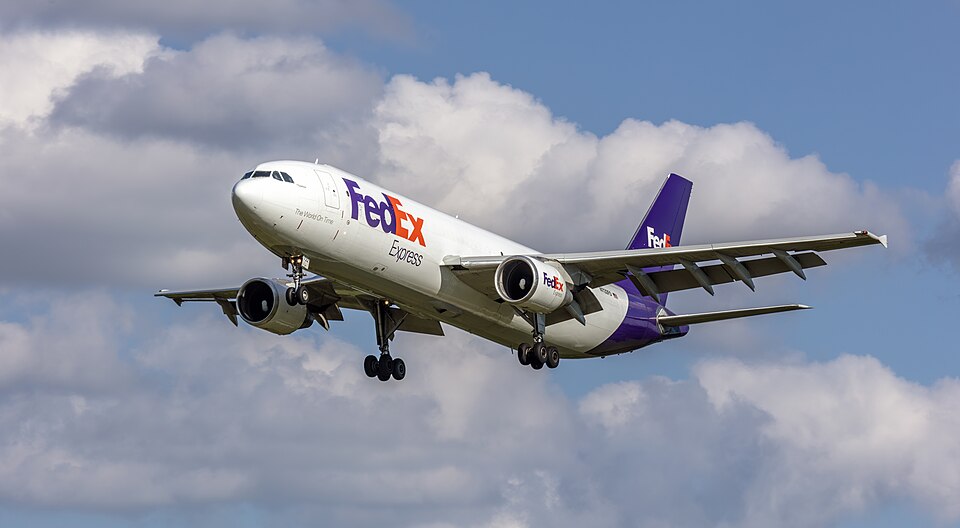
MEMPHIS, May 17, 2026. FedEx Express has become the first operator to fly the McDonnell Douglas MD-11 in commercial service since the type was grounded six months ago, after a short test flight from Memphis cleared the way for the trijet's gradual reentry into the global cargo network. The FedEx MD-11 return to service follows the Federal Aviation Administration's approval of a Boeing-developed fix for the engine pylon defect linked to last November's fatal UPS accident.
The roughly hour-and-15-minute test flight on May 9 was the first MD-11 movement worldwide since the November 4, 2025 crash of UPS Flight 2976 at Louisville Muhammad Ali International Airport, which killed all three crew members and twelve people on the ground. A fifteenth victim, seriously injured in the crash, died 51 days later. The accident triggered an emergency airworthiness directive that pulled every MD-11, MD-10, and DC-10 variant out of the sky pending a structural fix.
Key Detail: First test flight: FedEx MD-11F N621FE, departed Memphis International Airport (MEM) on May 9, 2026, operating as FX9045 for approximately 1 hour 15 minutes.
From Test Flight to Revenue Service in 24 Hours
FedEx moved quickly from validation to commercial operation. On Sunday, May 10, the carrier dispatched two MD-11Fs on revenue cargo runs from its Memphis superhub, marking the type's first commercial flights since early November. One aircraft, registered N621FE, operated FedEx Flight 985 from Memphis to Miami. A second, N521FE, flew from Memphis to Los Angeles International Airport.
The two aircraft were the only MD-11Fs in the carrier's 29-strong fleet to have completed the required pylon bearing replacement and post-modification test flight by that point. FedEx said in a statement that the remaining airframes will return gradually as each cycles through the heavy maintenance work and pilots complete refresher training.
"After extensive review, the FAA approved Boeing's protocol for safely returning MD-11 airplanes to service," the agency said in a statement to FreightWaves. Airlines must replace the affected structural component before any individual aircraft can fly again.
What Boeing's Fix Actually Requires
The corrective action that unlocked the return centers on a single component: the spherical bearing inside the aft mount of each wing pylon, the assembly that secures the engine to the wing. According to materials FedEx shared with employees and outlined in reporting by local Louisville station WAVE, Boeing's FAA-approved "means of compliance" requires:
- Installation of a new bearing in the aft mount of each side pylon on every MD-11
- Follow-up inspections at defined intervals after the bearings are replaced
- A post-modification test flight for each individual aircraft before revenue service
FedEx is performing the repairs at the locations where its grounded aircraft are currently parked. The 29 MD-11Fs are scattered across 16 sites worldwide, including Singapore, Tokyo, Honolulu, and Anchorage. Pylons are being removed in the field and shipped to FedEx heavy maintenance facilities in Memphis and Indianapolis for the bearing work before being reinstalled.
By the Numbers 29: FedEx MD-11Fs grounded since November 2025 16: locations worldwide where the aircraft are currently parked 2: aircraft returned to revenue service so far (N621FE and N521FE) $175 million: estimated cost of the grounding to FedEx, per company disclosures
The carrier's machine shop in Memphis tested the bearing installation procedure 30 times before approving the method, and its Indianapolis facility built a custom removal tool, according to a town hall presentation reported by FreightWaves. MD-11 pilots are required to complete a three-day refresher course covering flight management system drills, simulator sessions, and scenario training before they can operate the aircraft again.
Why UPS Walked Away
The two largest US cargo integrators reached opposite conclusions about the same airframe. UPS announced in January that it would retire its remaining 26 MD-11s rather than complete the bearing replacement work, accelerating a fleet modernization program the company had begun before the accident.
"UPS accelerated and completed the retirement of our MD-11 fleet as part of our broader fleet modernization efforts, and the aircraft is no longer part of our operation," a UPS spokesperson told WAVE.
FedEx took the opposite path. Management has spoken about the aircraft's return in optimistic terms since late November, and last year the carrier extended the type's phased retirement from 2028 to 2032, citing the need for widebody capacity to meet rising freight demand. Western Global Airlines, the third notable MD-11F operator with around 15 aircraft, has not publicly disclosed its post-grounding plans.
What It Means: The MD-11F is uniquely difficult to replace one-for-one. The aircraft can carry roughly 200,000 pounds of payload across 26 main-deck pallet positions. A Boeing 767-300F, the most common cargo substitute, does not move the same volume on a single airframe, which forced FedEx to stitch together third-party lift, pilot overtime, and aircraft repositioning during the grounding.
What Went Wrong at Louisville
The grounding traces back to UPS Flight 2976, an MD-11F registered N259UP that was operating a domestic cargo run from Louisville to Honolulu on the evening of November 4, 2025. At about 5:14 p.m. Eastern time, the aircraft suffered a separation of its left engine and pylon during the takeoff roll from runway 17R, rolled to the left, and crashed into an industrial area south of the airport.
A National Transportation Safety Board preliminary report released on November 20, 2025, identified fatigue cracking on both fracture surfaces of the aft mount's aft lug and along the bore of the aft mount forward lug. A January 2026 update narrowed the focus to the Boeing pylon bearing, specifically the left pylon aft mount spherical bearing.
Background: The MD-11 has a troubled accident history, particularly during landings. The type was involved in a fatal FedEx crash at Tokyo Narita in 2009. After retirement from passenger service in the 2000s, most surviving MD-11s migrated to cargo work, where high-cycle operations accelerated structural fatigue exposure.
A 2011 Warning, A 2025 Crash
Reporting by WDRB in Louisville documented a Boeing service letter dated February 7, 2011, in which the manufacturer informed MD-11 operators that it was aware of four previous bearing race failures on three different aircraft. Boeing concluded at the time that the failures "would not result in a safety of flight condition," and while the manufacturer described a redesigned bearing assembly, installation of the original part was not prohibited. The service letter recommended inspecting the bearing assembly at 60-month intervals.
That advisory framework is part of what the NTSB will examine at a two-day investigative hearing scheduled for May 19 and 20 in Washington, starting just two days after FedEx's first revenue MD-11 flights. Investigators are expected to focus on how the 2011 service letter was incorporated into operator maintenance programs, what correspondence flowed between Boeing and the FAA in the years that followed, and how the failure went uncaught until the Louisville accident.
Heads Up: The NTSB investigative hearing on UPS Flight 2976 runs May 19 (8 a.m. to 6 p.m. ET) and May 20 (8 a.m. to 1 p.m. ET) at the NTSB Boardroom in Washington. The hearing docket will open at the start of proceedings under investigation number DCA26MA024.
The Legal Aftermath Is Still Unfolding
On May 7, fifteen lawsuits were filed in Jefferson County Circuit Court in Louisville on behalf of more than 100 plaintiffs, including families of those killed, survivors, and businesses destroyed in the crash. The suits target UPS, Boeing, General Electric, maintenance provider VT San Antonio Aerospace, multiple insurance companies, and the estate of one of the deceased pilots, according to court filings summarized by WDRB. The plaintiffs allege corporate negligence and seek punitive damages, and the filings indicate that settlement discussions broke down before the suits were filed.
A Kentucky congressman has also called for the FAA to permanently ground the MD-11, a position the agency declined to adopt.
A Calibrated Return, Not a Permanent Reprieve
The MD-11's return is best understood as a defined operating window rather than a long-term reprieve. FedEx still intends to retire the type by 2032, and the recurring inspection cycles built into Boeing's compliance package will keep the airframe in and out of heavy maintenance more frequently than before. Industry observers writing in aviation trade publications have framed the FAA decision as approval of a specific fix for a specific failure mode, not a broader vote of confidence in the airframe's long-term viability.
For now, the operational priority is capacity. Before the grounding, the MD-11F handled roughly 70% of its missions on FedEx's US domestic network, according to research by analytics firm Rotate cited by Air Cargo News. The type accounted for just 0.4% of total international capacity, but its main-deck volume made it difficult to replace on the long, high-density domestic sectors where FedEx relies on widebody lift.
What to Watch Next
Three timelines now run in parallel. FedEx is working its way through the remaining 27 MD-11Fs that have yet to fly, with each aircraft requiring pylon removal, bearing replacement, reinstallation, and a post-modification test flight before revenue service. The NTSB's two-day hearing this week will produce the fullest public accounting yet of how the Louisville crash unfolded and what regulatory or maintenance gaps allowed it to happen. And the civil litigation in Jefferson County will move forward against UPS, Boeing, and GE on a longer arc that could extend for years.
The FedEx MD-11 return to service answers the immediate operational question. A longer one still hangs over the type: will the trijet fly through to its 2032 retirement target, or will the NTSB's findings or further structural concerns shorten that window? For the moment, the MD-11 is back. It is older, rarer, more closely monitored, and on a clock that everyone in the industry can now see.