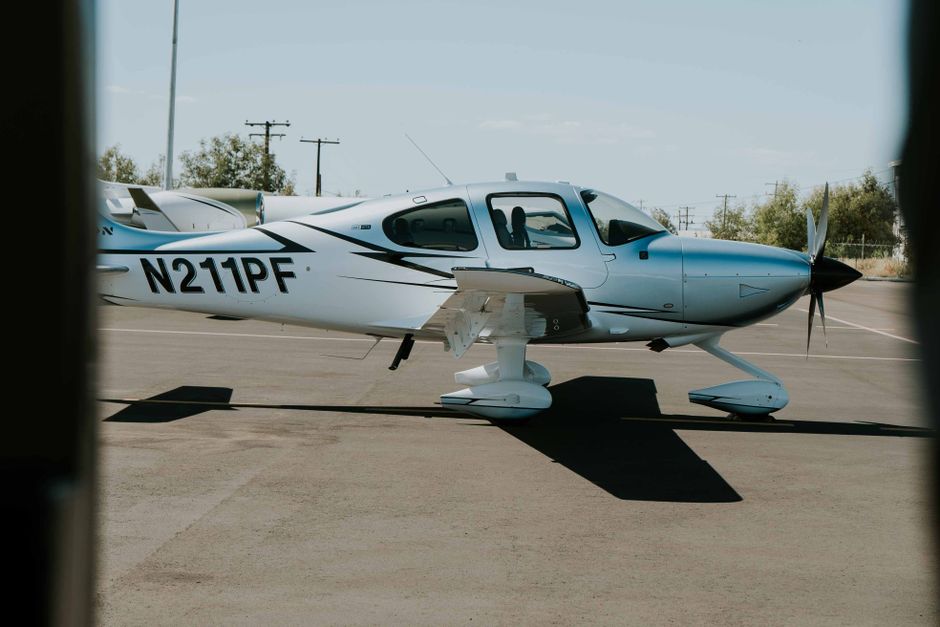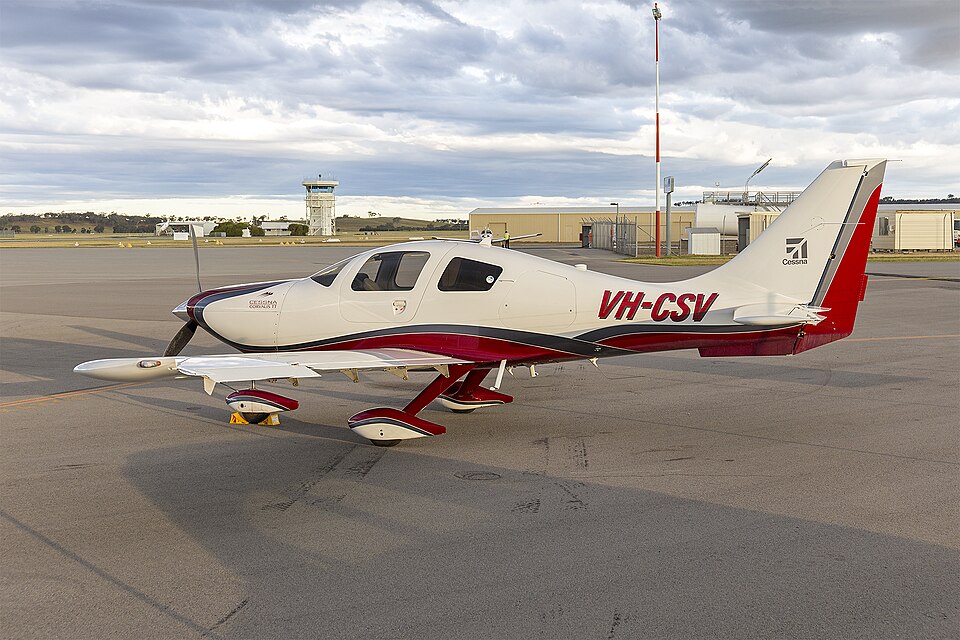
For pilots shopping for a fast, fixed-gear, composite single, two names keep coming up again and again. The Cessna 400 (later sold as the Corvalis TT and TTx) and the Cirrus SR22 sit at the very top of the high-performance piston market. They both look sleek, both fly fast, and both attract serious buyers willing to spend serious money.
But once you start digging into the details of the Cessna 400 vs Cirrus SR22 matchup, the differences get interesting fast.
One has a parachute strapped to the airframe. The other has a stronger wing and a slightly faster cruise. One outsells nearly every piston single on the market. The other quietly went out of production after being outsold ten to one by its rival.
Two airplanes. Same mission. Wildly different stories.
Key Takeaways
The Cessna 400 is generally faster, has a stronger airframe, and offers a sportier feel, while the Cirrus SR22 has a whole-airframe parachute, a larger cabin, a higher useful load on most models, and far stronger market support. Most buyers choose the SR22 for safety and resale, and the Cessna 400 for performance and structural strength.
| Feature | Cessna 400 / TTx | Cirrus SR22 / SR22T |
| Engine | Continental TSIO-550-C, 310 HP | Continental IO-550-N (310 HP) or TSIO-550-K (315 HP) |
| Max Cruise | Around 235 KTAS at altitude | Around 183 KTAS (NA), 213 KTAS (Turbo) |
| Useful Load | Roughly 1,000 to 1,100 lbs | Roughly 1,250 to 1,328 lbs |
| Seats | 4 | 4 to 5 (G5 and later) |
| Whole-Plane Parachute | No | Yes (CAPS, standard) |
| Production Status | Discontinued in 2018 | Still in production |
| Avionics | Garmin G2000 (TTx) | Cirrus Perspective+ by Garmin |
| Construction | Composite, utility category | Composite, normal category |
Flying411 keeps a close eye on both of these airplanes in the used market, with current listings, specs, and ownership tools for buyers who want a clear-eyed comparison before signing anything.
A Quick Background on Both Airplanes
Before lining up specs side by side, it helps to know where each of these planes came from. Their origin stories shaped almost everything about how they fly today.
The Cessna 400 Story
The Cessna 400 did not start out as a Cessna at all. Its design traces back to the Lancair ES kit aircraft from the late 1990s. A company called Columbia Aircraft turned that design into a certified airplane and began selling it as the Columbia 400 in 2004.
Columbia ran into financial trouble, and in 2007 Cessna acquired the program. The airplane was rebranded as the Cessna 400, then the Corvalis TT, and finally the TTx in 2013. Through all those name changes, the basic airframe stayed the same: a low-wing, fixed-gear composite single with a turbocharged engine.
Fun Fact: The Cessna 400 is one of the few production singles certified in the utility category, with a positive limit load factor of 4.4 Gs. Most piston singles in this class only hit 3.8 Gs.
Production ended in 2018. Sales had simply collapsed against the Cirrus, with only a couple dozen units sold in the final years. Even so, the airplane kept a loyal following because of how well it flew.
The Cirrus SR22 Story
The Cirrus SR22 came out of a very different kind of company. Cirrus Aircraft was founded by brothers Dale and Alan Klapmeier, who were determined to build a safer airplane after Alan survived a midair collision during training. That experience led directly to the Cirrus Airframe Parachute System, known as CAPS.
The SR22 received its type certificate in November 2000. It was based on the smaller SR20 but added a bigger wing, more fuel, and a stronger engine. From the start it was packaged with the parachute, an all-composite airframe, and side-yoke controls.
The SR22 has been the world's best-selling general aviation airplane every year since 2003. By the end of 2024, more than 8,000 SR22s had been delivered, making it one of the most-produced piston singles ever built.
Engine and Performance: How They Actually Fly
Most buyers start with the engine, and for good reason. Both airplanes use a six-cylinder Continental, but the way each one delivers power is a little different.
The Cessna 400 uses the Continental TSIO-550-C, a twin-turbocharged engine producing 310 horsepower. The Cirrus SR22T uses the slightly newer Continental TSIO-550-K, rated at 315 horsepower. The normally aspirated SR22 uses the Continental IO-550-N at 310 horsepower with no turbo at all.
For practical flying, here is how the numbers shake out:
- Max cruise speed: The Cessna TTx hits roughly 235 KTAS at 25,000 feet. The SR22T cruises around 213 KTAS at the same altitude.
- Speed advantage: The TTx is generally about 10 to 20 knots faster than the SR22T, depending on configuration and equipment.
- Climb rate: Both planes climb strongly, around 1,200 to 1,400 feet per minute initially. The SR22 gets off the ground a touch sooner thanks to its larger wing.
- Fuel burn: Roughly similar at cruise, with the TTx burning about 17 to 19 gallons per hour and the SR22T close behind.
- Service ceiling: Both certified to 25,000 feet with a built-in oxygen system.
Pro Tip: Speed numbers always look impressive on paper, but real-world cross-country times rarely show a 20-knot gap. Climb time, descent planning, and ATC routing usually shrink the gap to a few minutes on most trips.
The SR22 normally aspirated version is the slowest of the bunch. It cruises around 183 KTAS and tops out lower because it has no turbo. If speed is the main goal, the comparison really should be cessna ttx vs cirrus sr22t, since those are the closest matches.
Useful Load and Cabin Space
Speed is fun, but useful load is what lets you actually go places with people and bags. Here the SR22 has a clear edge on most modern models.
A typical SR22 G5 or later carries a useful load somewhere around 1,250 to 1,328 pounds. The cessna ttx useful load sits closer to 1,000 to 1,100 pounds, depending on equipment. The difference grows once you add full fuel, since both airplanes hold about 92 to 102 gallons.
| Aircraft | Approx. Useful Load | Seats | Cabin Width |
| Cessna TTx | ~1,070 lbs | 4 | ~48 in |
| Cirrus SR22 G5 | ~1,328 lbs | 4 to 5 | ~49 in |
| Cirrus SR22T G5 | ~1,250 lbs | 4 to 5 | ~49 in |
The cabin shapes feel different, too. The TTx feels sportier and a little more snug, often described as sports-car-like up front. The SR22 cabin is a touch wider, a touch taller, and from the G5 onward it can be ordered with a 60/40 split rear seat to fit two adults and a kid. That extra seat alone is a deal-maker for some buyers.
Good to Know: Older Cirrus SR22 models (pre-G5) had a 3,400-pound max takeoff weight. The G5 update bumped that to 3,600 pounds, which is a meaningful jump in real-world useful load.
If a roomy interior, a fifth seat, or hauling four adults plus bags is the goal, the SR22 usually wins this round. The TTx is built more around the pilot than around the family.
Safety Systems and Structure
This is the comparison most people argue about online. The honest answer is that both planes are safe airplanes when flown well, but they take very different paths to get there.
CAPS: The Cirrus Parachute
The Cirrus SR22 carries the Cirrus Airframe Parachute System as standard equipment. It is a whole-airplane ballistic parachute that lowers the entire aircraft to the ground in an emergency. CAPS has been deployed well over 100 times, with more than 200 documented survivors.
A few key points about CAPS:
- The system uses a solid-fuel rocket to pull the parachute out within seconds.
- It is most effective above about 1,000 feet AGL and below the airplane's never-exceed speed.
- The system requires a mandatory repack every 10 years, typically costing several thousand dollars.
Why It Matters: Insurance companies treat the parachute as a real risk-reducer. Many CAPS-equipped Cirrus owners report lower hull insurance rates than pilots flying comparable singles without one.
The Cessna 400's Structural Approach
The Cessna 400 has no parachute, but it has something else: a notably strong airframe. It is certified in the utility category, which means it must handle higher G loads than most planes in its class. Pilots who fly both airplanes often describe the TTx as feeling more solid in turbulence.
The TTx also has a 30-knot higher Vne than the SR22T, a longer glide ratio of about 13 to 1 versus around 9.6 to 1 for the SR22, and standard speed brakes that make slowing down a non-event. None of those match a parachute, but they all matter when things go sideways.
Avionics and Cockpit Feel
Both airplanes have modern glass cockpits, but they wear them differently.
The Cessna TTx came standard with Garmin G2000 Intrinzic touch avionics, which used split touchscreen controllers between the pilot and copilot. The setup was clean and modern when it launched, and it still feels current today.
The Cirrus SR22 uses Cirrus Perspective+ by Garmin, which is essentially a heavily customized G1000 NXi system. Newer G7 models add even larger displays, an upgraded autopilot, and tighter integration with synthetic vision and ADS-B traffic.
A few cockpit details worth knowing:
- Side stick vs side yoke: Both planes use side-mounted controls. The TTx uses a true side stick connected by push-pull rods, which gives a direct, sporty feel. The SR22 uses a side yoke that some pilots describe as a little softer or more spring-loaded.
- Power levers: The SR22 has a single-lever power control, which simplifies operation. The TTx has separate throttle and prop levers, giving the pilot more direct control.
- Speed brakes: Standard on the TTx. Not available on the SR22.
Quick Tip: If you mostly fly long IFR cross-countries with frequent ATC speed changes, the TTx speed brakes and longer glide ratio are real workload reducers. If you mostly fly shorter trips and want simpler systems, the SR22 single-lever setup is hard to beat.
For pilots stepping up into either of these airplanes, finding the right CFI or transition trainer matters as much as picking the airframe. Flying411 connects buyers with certified instructors and avionics specialists familiar with both Cessna and Cirrus platforms.
Cessna 400 vs Cirrus SR22: 8 Real Differences That Matter
Here is the core of the cirrus sr22 vs cessna 400 comparison. These are the eight things that actually shape the buying decision, in plain language.
1. Top Speed
The Cessna 400 is faster, period. At max cruise, the TTx pulls roughly 235 KTAS while the SR22T sits around 213 KTAS. For long cross-country trips, that gap can save real time on each leg, though most owners cruise below max for fuel economy.
2. Useful Load
The Cirrus SR22 G5 and later wins this category for most buyers. The extra 200 to 300 pounds of useful load is the difference between three adults and four, or between full fuel and a packed baggage area.
3. Safety Systems
The CAPS parachute is the single biggest difference between these airplanes. It is standard on every Cirrus SR22 and has saved hundreds of lives. The Cessna 400 has no equivalent, though it does have a stronger airframe and better glide performance to fall back on.
4. Cabin and Seating
The SR22 cabin is slightly larger overall and offers a fifth seat option from the G5 onward. The TTx is strictly a four-seat airplane with a sportier, tighter feel up front.
5. Avionics
Both use Garmin glass cockpits. The TTx G2000 system uses split touchscreen controllers, while the SR22 Perspective+ uses a more traditional control layout with newer G7 models offering bigger displays and the latest autopilot.
6. Production and Support
The SR22 is still in production and has a massive global service network through Cirrus. The Cessna 400 went out of production in 2018, but Textron still supports the airplane through its existing service centers. Parts availability is generally fine, though the support footprint is smaller.
7. Resale Value
The Cirrus SR22 holds its value remarkably well thanks to high demand and brand recognition. The Cessna TTx also holds value well in the used market, partly because the production run was short and clean examples are limited.
8. Pilot Feel
Most pilots who have flown both say the TTx feels more like a sports car. It has a direct stick, separate prop control, and a stiffer airframe. The SR22 feels more like a luxury sedan, with simpler controls, softer handling, and the comfort of CAPS overhead.
Heads Up: Reviews from pilots who own one of these airplanes are almost always biased toward what they fly. The smartest move is to demo both before deciding, ideally on the same day in similar conditions.
Pricing and Ownership Costs
Both airplanes live in the high-performance price bracket. Used examples have held their value well, and new SR22 prices keep climbing as Cirrus updates the line.
Used Cessna 400 / TTx:
- Earlier Columbia 400 models tend to sit in the lower end of the range.
- Cessna 400 Corvalis TT models from 2008 to 2012 typically sell for higher prices.
- Late-model TTx aircraft from 2013 to 2018 often command the strongest premium.
Used Cirrus SR22:
- Earlier G1 and G2 models can be found at the lower end of the range.
- G3 and G5 models sit in the middle to upper end depending on equipment.
- New G7 SR22 and SR22T models list well above used pricing.
Keep in Mind: The 10-year CAPS repack on the Cirrus is a recurring cost that does not exist on the Cessna. It is worth budgeting for early so it does not catch you by surprise during a pre-buy inspection.
Operating costs are roughly similar. Fuel burn, oil, annual inspections, and engine reserves all run in the same ballpark for both airplanes. Insurance often favors the Cirrus due to CAPS, especially for lower-time pilots.
Which One Is Right for You?
There is no universal winner in the cirrus vs cessna debate. The right answer depends on your mission, your risk tolerance, and how you value support and resale.
Choose the Cessna 400 / TTx if you:
- Want the fastest fixed-gear single you can buy
- Prefer a stiffer, more sports-car-like flying feel
- Like having a separate prop lever and standard speed brakes
- Are comfortable flying without a parachute
- Want a stronger utility-category airframe
Choose the Cirrus SR22 if you:
- Want the safety net of a whole-airframe parachute
- Need higher useful load and an optional fifth seat
- Plan to keep the airplane for many years and care about resale
- Prefer simpler single-lever power control
- Want the largest factory support network in general aviation
For some buyers, looking at adjacent comparisons can also help clarify the choice. A look at how the SR22 stacks up against the Cessna 182 shows where the Cirrus sits in the broader piston market.
The SR22 against the trainer-focused 172 is another useful frame of reference, and the SR20 vs SR22 breakdown helps clarify the difference within the Cirrus lineup itself. Buyers cross-shopping brands often also check out broader Cirrus and Cessna comparisons before committing.
And for those eyeing turbines down the line, even light jet matchups like the Vision Jet versus HondaJet help frame how the SR22 fits into the Cirrus path of ownership.
Ready to compare real listings for the Cessna 400, TTx, and Cirrus SR22 side by side? Browse current aircraft for sale on Flying411 to see what is on the market today.
Final Thoughts
The cessna 400 vs cirrus sr22 matchup is really a story about two very different design philosophies that ended up landing in the same hangar. The Cessna 400 is the faster, stronger, sportier airplane built around the pilot. The Cirrus SR22 is the safer-feeling, roomier, more polished airplane built around the family. Both are excellent. Both have devoted owners. Only one is still rolling off the production line, but the other still has plenty of life left in the used market for buyers willing to look closely.
If the next move is finding the right airplane, broker, mechanic, or instructor to make any of this real, Flying411 is built for exactly that, and the cleanest path from comparing specs to actually flying one starts there.
FAQs
Is the Cessna 400 faster than the Cirrus SR22?
Yes. The Cessna 400 / TTx generally cruises about 10 to 20 knots faster than the SR22T at altitude, and noticeably faster than the normally aspirated SR22. The exact gap depends on equipment and operating conditions.
Why did Cessna stop making the 400?
Cessna ended production of the TTx in 2018 due to weak sales, with the airplane consistently outsold by the Cirrus SR22 by a wide margin year after year. The combination of strong Cirrus marketing, the CAPS parachute, and a larger service network made it hard for the 400 to compete commercially.
Does the Cessna 400 have a parachute like the Cirrus?
No. The Cessna 400 does not have a whole-airframe parachute system. It relies on a stronger utility-category airframe, a longer glide ratio, and standard speed brakes for safety, but it has no equivalent to the Cirrus CAPS system.
Which airplane has better resale value?
Both hold their value well, but the Cirrus SR22 has the deeper market and higher demand thanks to ongoing production and a large owner community. The Cessna TTx also holds value well, partly because it is now a limited-production airplane with a small but loyal following.
Can a private pilot fly the Cessna 400 or Cirrus SR22?
Yes, a private pilot certificate is enough to fly either airplane, though both are considered high-performance and complex enough that insurance companies usually require a transition training course. Cirrus offers its own factory training program, and the TTx has a similar structured transition path through type-experienced instructors.