The most expensive mistake in jet warbird buying is treating the sticker price as the price. Someone finds a tired L-39 advertised at $160,000, writes the check, and then learns the engine is 80 hours from overhaul, the ejection seat cartridges expired in 2019, and the logbooks are half in Czech and half in Russian. That bill lands somewhere between $200,000 and $350,000 — more than the airplane cost. The real cost to buy and fly an Aero L-39 Albatros is a package deal, and this guide breaks the package into pieces you can actually budget.
Here is the honest range up front. A flying L-39 in the United States generally trades somewhere between roughly $150,000 and $650,000 as of 2025–2026. The bottom end buys a high-time airframe with an engine near the end of its run and Soviet-era instruments. The top end buys a low-time airframe, a freshly overhauled engine with paperwork a Western shop will stand behind, Western radios and a transponder that plays nicely with ADS-B. Then plan on roughly $75,000 to $145,000 a year to keep it flying 50 hours.
Why the L-39 Exists, and Who Ends Up Owning One
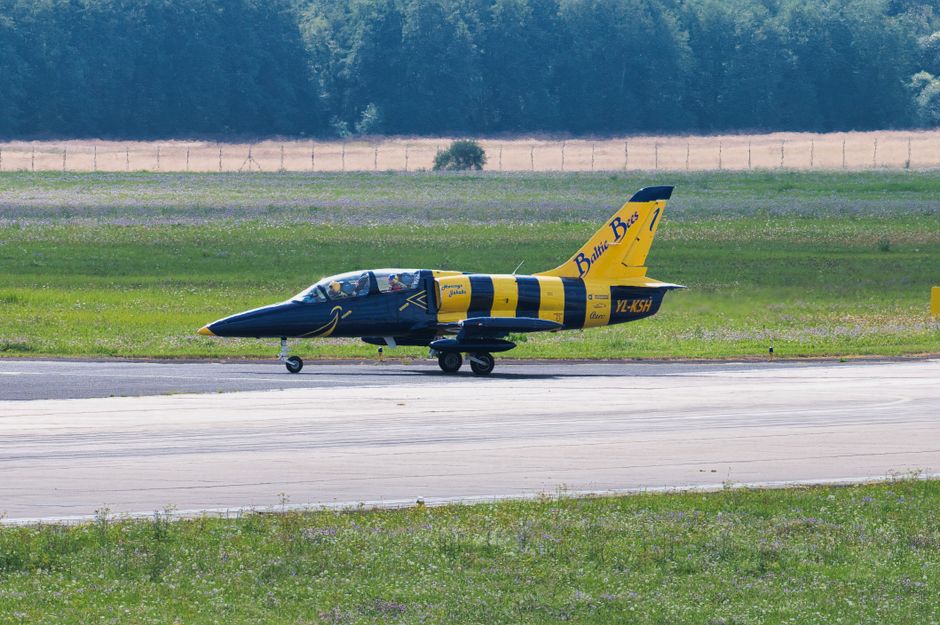
Aero Vodochody built the L-39 Albatros as the Warsaw Pact's standard jet trainer, replacing the L-29 Delfin. The prototype flew in 1968 and production continued into the 1990s, with almost 3,000 L-39s produced across the family, making it one of the most successful and widely used jet trainers ever built. That matters to you as a buyer for one simple reason: a huge production run means a deep parts pool and a lot of people who know the airplane.
It was designed to be flown by student pilots and maintained by conscripts with basic tools. If a MiG-17 is a temperamental race car, the L-39 is the work pickup of jet warbirds: docile, honest in the stall, easy to get into and out of, and built to be fixed outdoors in bad weather. That is exactly why it became the default first jet for civilian owners. The Ivchenko AI-25TL turbofan produces about 3,790 pounds of thrust, which is modest — the airplane tops out around 400 knots and cruises comfortably in the 300s. You are not buying speed. You are buying a real ejection-seat, pressurized-cockpit military jet that forgives a pilot who is still learning the regime.
Fun Fact: The Breitling Jet Team flew seven civilian L-39Cs as the largest civilian jet aerobatic team in the world, and the Patriots Jet Team in California still campaigns a fleet of them. When a display team picks an airplane it has to fly hard, repeatedly, in front of crowds, it picks one that is cheap and reliable to turn around.
The variants, and why the badge changes the price
Most civilian examples are L-39C basic trainers: no hardpoints worth mentioning, lightest structure, cleanest paperwork. The L-39ZO added a strengthened wing and four underwing hardpoints for weapons training, which means a heavier airframe and, usually, more hours on it. The L-39ZA is the attack version with the reinforced wing, hardpoints and a gun pod station under the fuselage; it is the most capable and usually the most expensive to buy, though the hardware is demilitarized before it reaches a US registry. The L-39V was a target tug, and the later L-39MS (which grew into the L-59) swapped in the far more powerful DV-2 engine — avoid it unless you have a confirmed support path, because DV-2 overhaul capacity in the West is thin.
For a first-time owner, the C model is almost always the right answer. It is lighter, it climbs better, and the pool of mechanics and overhaul paperwork is largest.
Flying411 keeps warbirds, jets and piston singles in one place, so you can compare an L-39C against a ZA — and against the light jets people cross-shop them with — without bouncing between a dozen sites.
Purchase Price: $150,000 to $650,000, and What Moves It
Asking prices for L-39s vary more than almost anything else in general aviation, because two airplanes that look identical on the ramp can be a quarter-million dollars apart in condition. As of 2025–2026, here is roughly how the market sorts itself:
- $150,000–$250,000. Flying but needy. Engine within a few hundred hours of overhaul or with paperwork a Western shop cannot verify. Original Soviet instrumentation. Expired or deactivated seat cartridges. Often an airplane someone else gave up on.
- $250,000–$425,000. The meat of the market. Mid-time engine, reasonable airframe hours, a mix of original and Western avionics, current condition inspection, maintained by a shop you have heard of.
- $425,000–$650,000+. Fresh or low-time engine with documented overhaul, low airframe hours, life-extension service bulletins accomplished, modern radios, ADS-B Out, fresh paint, live seats. ZA models and show-quality aircraft sit here.
Two aircraft with the same hours can differ by $100,000 on paperwork alone. Western-standard engine overhaul documentation, translated logbooks and a clean import and deregistration trail are worth real money, because the next buyer will demand them too.
Heads Up: Parts and overhaul capacity for the AI-25TL were historically concentrated in Ukraine, Russia and the Czech Republic. Since 2022, sanctions and the war have reshuffled that supply chain. Before you buy, confirm in writing which shop will overhaul your specific engine and what their current quote and lead time look like. An engine with no viable overhaul path is a very heavy lawn ornament.
Fuel: The Number That Surprises Every First-Time Jet Owner
This is the single biggest variable cost, and it is not close. The AI-25TL burns roughly 100 to 160 US gallons per hour depending on altitude and how you fly it. Down low doing formation work or aerobatics, plan on the high end. Up at 25,000 feet or above in a straight line, the burn drops substantially — the airplane is far more efficient high, which is also where its range comes from.
With Jet-A running roughly $5.00 to $8.00 a gallon at US FBOs depending on region and whether you can buy at a self-serve or contract rate, your fuel line is about $500 to $1,200 per flight hour. Most owners who do a mix of local sorties and cross-countries land near $700–$900.
Two details matter. First, the L-39 has no fuel heater in the original configuration, so operators use an anti-icing additive such as Prist in the Jet-A. Budget a few dollars per hour for it and make sure the FBO can inject it or that you carry your own. Second, total capacity is roughly 330 gallons with tip tanks, which gives you a bit over two hours of sensible flying with reserves — plan fuel stops like you mean it, because a jet running low on options burns its remaining fuel fast.
Pro Tip: Fuel burn is the one cost you can genuinely manage. Climbing straight to the high twenties on a cross-country instead of cruising at 8,000 feet can cut your gallons per hour by a third or more. Owners who fly the airplane like a jet instead of like a fast warbird spend noticeably less.
Engine Reserve: The Cost You Must Fund Whether You Like It or Not
The AI-25TL carries a time between overhauls generally in the 1,000 to 1,500 hour range, depending on the engine's modification standard and which overhaul authority's limits apply, plus calendar limits that can bite before the hours do. Overhaul quotes have ranged widely in recent years; owners and shops report figures roughly between $150,000 and $300,000 including removal, shipping, overhaul and reinstallation, with the spread driven by what the hot section looks like when it comes apart and which shop does the work.
Spread across a 1,000 to 1,500 hour run, that is $100 to $300 per flight hour you should be setting aside. Most first-time owners do not, and that is exactly why so many L-39s change hands with a run-out engine. The seller stopped funding the reserve, the overhaul loomed, and selling became cheaper than fixing.
If you want to see how this logic plays out across other powerplants, our overview of what aircraft engines actually cost puts turbine overhaul numbers next to piston ones. The lesson is the same in both worlds: the reserve is not optional, it is just deferred.
Why It Matters: Buying an L-39 with 150 hours left on the engine for $200,000 is not a bargain compared with a $420,000 airplane on a fresh engine. Run the math with the overhaul included before you decide which one is the cheap one.
Insurance, Hangar and the Fixed Costs That Run With the Calendar
These bills arrive whether you fly or not, and for an L-39 they are heavier than the airplane's size suggests.
Insurance. Warbird jet coverage is a specialty market served by a handful of brokers. Liability-only policies for a qualified, current pilot commonly land somewhere around $4,000 to $10,000 a year. Hull coverage is the expensive part: rates on jet warbirds typically run several percent of the insured value, so a $350,000 hull can add roughly $14,000 to $30,000 annually. Low-time-in-type pilots pay more, or are declined for hull coverage until they build hours. Your total is realistically $10,000 to $35,000 a year. Insurers will want documented initial training, a formation qualification if you intend to fly formation, and annual recurrent training.
Hangar. At roughly 40 feet long with a 31-foot span and a tail standing over 15 feet, the L-39 does not fit a typical T-hangar. You need a box hangar with a tall door, which runs about $500 to $1,500 a month depending on the field — more at a busy metro airport, less at a rural strip. Outside storage is possible but punishing on canopy seals, paint and the pneumatic system, and your insurer may not love it.
Training and currency. Because an L-39 on the US registry is typically certificated Experimental Exhibition, you do not receive a conventional type rating for it. Instead, pilots operating experimental turbojet aircraft may be required by the aircraft’s operating limitations to hold an FAA Experimental Aircraft Authorization for that make and model, obtained after appropriate training and a practical test. Initial training commonly runs $10,000 to $25,000, and recurrent training — which your insurer will almost certainly require — adds $3,000 to $6,000 a year. If you plan to fly in airshows you will also want a FAST formation card and, for solo displays, an ICAS statement of aerobatic competency.
Keep in Mind: Experimental exhibition operating limitations are issued to a specific aircraft and owner. When ownership changes, the aircraft’s airworthiness certificate normally transfers with the airplane. For an Experimental Exhibition aircraft, the new owner/operator must submit a new program letter to the responsible Flight Standards Office within 30 days, and an annual event/program letter is also required under the aircraft’s operating limitations. You cannot carry passengers for hire. Build that paperwork into your closing timeline — it is not instant.
Inspections, Parts and the Calendar Items Nobody Mentions
The prototype flew in 1968 and production continued into the 1990s, with almost 3,000 L-39s produced across the family, making it one of the most successful and widely used jet trainers ever built. At a shop that knows the type, budget $8,000 to $25,000, with the spread driven almost entirely by what gets found. Shops unfamiliar with the airplane will charge you to learn it, which is why most owners fly to a specialist even if it means a ferry flight.
Then there is the list specific to a former military jet:
- Ejection seats. The VS-1-BRI seats use pyrotechnic cartridges with calendar lives. Keeping the seats live means replacing cartridges on schedule — owners report several thousand dollars per seat per cycle. Some owners deactivate the seats to save money, which is legal in the experimental world but removes your best option on a bad day and can hurt resale.
- Pneumatics. The L-39 uses compressed air for wheel braking and emergency systems. Bottles, seals and the charging setup need attention, and a slow leak will strand you away from home.
- Oxygen, batteries and tires. All consumable, all on calendar or cycle limits, all more expensive than the light-aircraft equivalents.
- Airframe life. The L-39 carries hours- and calendar-based airframe limits, with Aero Vodochody life-extension service bulletins available for many serial numbers. Confirm which extensions have been accomplished on the specific airframe — it directly affects how much useful life you are buying.
Averaged over a year, the parts-and-calendar line typically runs $3,000 to $15,000 on top of the condition inspection.
Flying411 keeps specifications, variants and current listings for jet warbirds in one place, so you can compare engine times and airframe hours side by side before you ever call a broker.
What to inspect before you buy
Hire a pre-buy inspector who has actually worked L-39s, not a generalist. The non-negotiables: a borescope of the hot section and a review of the engine's overhaul paperwork and remaining time; translated airframe and engine logbooks with a clear hours history; verification of life-extension service bulletins; a corrosion survey of the fuel tank area and the lower fuselage; a leak-down check of the pneumatic system; seat cartridge dates and canopy pyrotechnic status; and the complete import, deregistration and FAA certification file. Ask the seller for a current, written overhaul quote from a shop that will take the engine. If they cannot produce one, you have learned something important.
Key Takeaways
Buying is the smaller half of the story. An L-39 that costs $150,000 to $650,000 to acquire will cost roughly $35,000 to $70,000 a year in fixed costs before the wheels leave the ground — insurance, hangar, condition inspection, recurrent training and calendar items — plus about $800 to $1,500 an hour in fuel, reserves and maintenance once you fly it. At 50 hours a year, which is a realistic number for an owner who flies a few airshows and some proficiency sorties, total annual spending lands around $75,000 to $145,000, or roughly $1,500 to $2,900 per hour all-in. Fly 100 hours and the per-hour figure drops, because the fixed costs spread further; fly 15 hours and it balloons past $4,000 an hour. The owners who stay happy are the ones who funded the engine reserve from day one and bought the better airplane rather than the cheaper one.
| Cost item | Low | High | Fixed or per hour |
| Purchase price (flying L-39C/ZA) | $150,000 | $650,000 | One-time |
| Initial training and LOA | $10,000 | $25,000 | One-time |
| Pre-buy inspection | $3,000 | $10,000 | One-time |
| Insurance (liability, plus hull if written) | $10,000 | $35,000 | Fixed, annual |
| Hangar (box hangar, tall door) | $6,000 | $18,000 | Fixed, annual |
| Annual condition inspection | $8,000 | $25,000 | Fixed, annual |
| Recurrent training | $3,000 | $6,000 | Fixed, annual |
| Calendar items (seat cartridges, oxygen, tires, batteries) | $3,000 | $15,000 | Fixed, annual average |
| Fuel (100–160 gph Jet-A plus additive) | $500 | $1,200 | Per flight hour |
| Engine overhaul reserve | $100 | $300 | Per flight hour |
| Unscheduled maintenance and parts | $100 | $300 | Per flight hour |
| Typical total at 50 hours per year | $75,000 | $145,000 | Annual |
Ways to Spend Less
Every one of these works. Every one of them costs you something else.
Share the airplane. Two or three partners split hangar, insurance and the condition inspection, which is most of the fixed cost. A co-ownership can cut your annual fixed burden by half or more. What you trade: scheduling friction, and the need for a written agreement covering who pays for the engine when it comes due. Insurers will want every partner named and trained, so the premium does not fall as far as you might hope.
Buy the airplane with the fresh engine. It feels backwards to spend more to spend less, but an L-39 with 900 hours of engine life remaining and documented overhaul paperwork removes your largest single risk. What you trade: a bigger check at closing, and more capital tied up if you later decide jet ownership is not for you.
Fly high and fly deliberately. Cruising in the mid-twenties instead of down low can cut fuel burn meaningfully on cross-countries. What you trade: fewer low-level sorties, which are the fun part for many owners. Buying fuel on a contract rate or at a self-serve pump rather than a full-service FBO saves another dollar or two a gallon.
Base somewhere cheaper. A box hangar at a rural field can cost a third of what the same space costs at a metro reliever. What you trade: a drive to your airplane, and possibly fewer maintenance resources on the field.
Deactivate the ejection seats. It removes recurring cartridge costs. What you trade: your escape option and some resale value. A lot of experienced warbird pilots consider this a bad trade and keep the seats live.
Fly more, not less. Counterintuitive but true. Fixed costs do not care how often you fly, so the owner flying 80 hours pays far less per hour than the one flying 20. What you trade: more fuel and reserve spending in absolute dollars. If your honest annual number is under 25 hours, a shared arrangement or a rented seat in someone else's L-39 will serve you better than ownership. The same arithmetic drives the numbers in our breakdown of what private jets cost to buy and fly.
Quick Tip: Before you shop, call two warbird insurance brokers and describe yourself honestly — total time, turbine time, tailwheel, formation experience. Their quote will tell you more about your realistic entry cost than any listing will, and it may tell you to build 200 hours somewhere else first.
Is an L-39 the Right Jet for You?
If you want a real military jet that you can learn in, maintain through established channels, and fly to airshows for a decade, the Albatros is still the most sensible entry in the category — which is why it has dominated the civilian jet warbird fleet for thirty years, with well over 200 examples on the US registry. If you want a $200,000 toy with a $200,000 annual budget, it is not that, and no amount of careful shopping will make it that. The cost to buy and fly an Aero L-39 Albatros is best understood as a $300,000-ish airplane with a $100,000-a-year habit attached, and the owners who budget it that way tend to keep theirs. If you are weighing it against other high-performance options, our look at aircraft built to fly inverted and our guide to midsize business jets from the 1990s cover two very different ways to spend similar money.
Flying411 keeps listings, specifications and ownership-cost guides in one place, so you can compare an L-39 against a turboprop or a light jet before you commit six figures.
When you are ready to compare listings, visitFlying411and see what is on the market today.
Frequently Asked Questions
Do you need a type rating to fly an L-39?
Not a conventional type rating. For an L-39 whose operating limitations require it, the pilot instead needs an FAA Experimental Aircraft Authorization for that make and model on the pilot certificate. You still need documented training from a qualified instructor in type, and your insurer will set its own, often stricter, requirements for total time and turbine experience.
How much fuel does an L-39 burn per hour?
Roughly 100 to 160 US gallons per hour of Jet-A, depending on altitude and power setting. Low-level formation and aerobatic work sits at the top of that band; high-altitude cruise sits well below it. At typical 2025–2026 FBO prices, that works out to about $500 to $1,200 an hour in fuel alone.
Can you give rides in an L-39 for money?
No, not as a normal operation. Experimental exhibition operating limitations prohibit carrying persons or property for compensation or hire. A small number of operators conduct passenger flights under specific FAA authorizations, and obtaining one is a lengthy process — do not buy an L-39 assuming it will pay for itself through rides.
What does an AI-25TL overhaul cost?
Owners and shops have reported figures in the range of $150,000 to $300,000 all-in, including removal, transport, overhaul and reinstallation. The range is wide because hot section condition varies and because overhaul capacity shifted after 2022. Always get a current written quote from a specific shop before you base a purchase decision on an overhaul number.
Which L-39 variant should a first-time buyer get?
The L-39C. It is the lightest of the family, the most common on the civil registry, and the easiest to support. The ZO and ZA have reinforced wings and hardpoints that add weight and usually more service hours, and the later L-39MS with the DV-2 engine has a much thinner Western support network.