Discover insights, tips, and stories from the skies — from aircraft buying guides to pilot training.




Published: October 4, 2025
Flying fast has always excited people. In the world of small airplanes, the fastest single engine turboprop stands out for its mix of speed, power, and smart engineering.
For a quick benchmark, the Epic E1000 GX can cruise at about 333 knots true, and the TBM 960 reaches about 330 knots at 28,000 feet.
These aircraft are built for travelers who want to go far, go quick, and do it in style. From the high-tech Epic E1000 GX to the trusted TBM 900, today’s designs show just how advanced modern general aviation aircraft have become.
Each model on the list has its own personality. Some are built for range, others for comfort, and a few chase pure speed.
Before looking at the fastest planes flying today, it helps to understand what a single-engine turboprop really is, why speed makes such a difference, and how experts measure it.
A single-engine turboprop aircraft uses one turboprop engine to power a propeller that pulls or pushes the plane through the air. It mixes the strength of a turbine engine with the simplicity of a propeller-driven aircraft. The engine works by compressing air, adding fuel, and creating a fast jet of exhaust that spins the propeller.
This setup gives the plane strong horsepower and dependable performance. A popular engine is the Pratt & Whitney PT6A-52, found in many high-end planes like the TBM 900 and Pilatus PC-21. These models show how builders take proven parts and design them into sleek, aerodynamic bodies that balance power and control.
Because they use only one single engine, maintenance and operation are often simpler and less costly than twin-engine planes. A turboprop plane like the Piper M700 Fury or Pilatus PC-21 can still cover long distances and land on shorter airports, giving pilots flexibility and freedom.
In general aviation, these planes fill an important role between small piston planes and larger jets. They are fast, practical, and can carry useful payload while burning less fuel. When you hear names like Epic E1000, M600 SLS, or Lancair, you’re looking at designs that show how capable a single-engine turboprop can be.
Speed isn’t just for thrill seekers—it shapes how useful an aircraft really is. A faster turboprop can reach more cities in less time, climb over bad weather, and use fuel more efficiently. That’s why builders compete for the title of world's fastest in this category.
Let’s look at an example. The Epic E1000 GX can reach a maximum cruise speed of over 330 knots, making it one of the record-setting leaders among turboprop aircraft. Compare that to a Piper M600 or M600 SLS, which cruise around 274 knots. Both are quick, but the Epic is designed for pure performance.
Speed also supports general aviation business flights. A fast single-engine aircraft can take off from a small field, reach a big city, and return in a single day. It gives pilots flexibility similar to a jet aircraft, but at lower operating costs.
Some propeller-driven aircraft have even set a speed record for their class. Builders like Piper, Pilatus, and Epic focus on aerodynamic shapes and strong engines to reach that goal. The TBM 900 uses the reliable PT6A-52 to reach about 330 knots, proving that smart design can rival much larger planes.
The race for the fastest model continues every year. Whether you’re flying for work, fun, or both, a quick turboprop plane offers a mix of adventure and practicality that keeps it popular among pilots.
When we say a plane is the fastest single engine turboprop, we’re talking about its cruise speed, or how fast it flies steadily at high altitude. It’s not the same as top speed or the highest speed ever recorded in a dive.
A plane’s cruise is the sweet spot between fuel use, comfort, and performance. Experts measure it in knots—one knot equals about 1.15 miles per hour. So a plane cruising at 330 knots travels around 380 mph.
Speed numbers also depend on horsepower, engine type, and design. The Pratt & Whitney engines in the Epic E1000 GX and TBM 900 produce over 1,200 horsepower, driving sleek airframes with low drag. Add advanced avionics, and pilots can maintain high performance while staying efficient.
Even high-performance turboprop aircraft like the Pilatus PC-21 or Lancair are tuned to balance payload, range, and stability. Builders want to make sure the plane feels solid and safe while still chasing every knot possible.
Speed testing is serious work. Each result helps pilots understand what to expect from their general aviation airplane. When a builder claims a record-setting or fastest single engine title, it’s based on tested numbers, not guesses.
Speed and power make flying exciting, and the Fastest Single-Engine Turboprop aircraft show how much performance can fit into one engine and one propeller. These airplanes bring together strong engines, sleek bodies, and smart systems to travel far and fast.
Pilots love them because they combine the reliability of Propeller Aircraft with the punch of Jet Engines.
| Rank | Aircraft | Max Cruise (KTAS) | Engine | Type | Notes |
| 1 | Epic E1000 GX | 333 | PT6A-67A | Certified | Current speed leader in production SETPs |
| 2 | Daher TBM 960 | ≈330 | PT6E-66XT | Certified | Digital engine control; advanced avionics |
| 3 | Daher TBM 940 | ≈330 | PT6A-66D | Certified | Known for autoland and automation |
| 4 | Daher TBM 930 | ≈330 | PT6A-66D | Certified | High-end Garmin glass panel |
| 5 | Daher TBM 910 | ≈330 | PT6A-66D | Certified | Simplified cockpit, strong performance |
| 6 | Daher TBM 900 | ≈330–335 | PT6A-66D | Certified | Early 900-series speed benchmark |
| 7 | TBM 850 | ≈317–320 | PT6A-66D | Certified | Step below 900-series in speed |
| 8 | TBM 700C2 | ≈300 | PT6A-64 | Certified | Classic TBM with solid cruise |
| 9 | Lancair Evolution (Turbine) | ≈300–330 | PT6A (varies) | Experimental | Kit-built; performance varies by build |
| 10 | Pilatus PC-12 NGX | ≈290 | PT6E-67XP | Certified | Large cabin, short/rough-field capable |
| 11 | Pilatus PC-12 NG | ≈285 | PT6A-67P | Certified | Earlier gen; great utility and range |
| 12 | Beechcraft Denali | ≈285 (projected) | GE Catalyst | In/near certification | Published target numbers (check current status) |
| 13 | Piper M600/SLS | ≈274 | PT6A-42A | Certified | Strong value; HALO Autoland |
Notes:
Here are the 13 planes that earn their place among the quickest Turboprops ever built.
The Epic E1000 GX has earned a big reputation for being fast, strong, and modern. Its Maximum Cruise Speed reaches a speed of 330 knots, making it one of the fastest single-engine planes you can fly today. That’s faster than many small jets!
Built with lightweight carbon fiber and powered by the Pratt PT6A engine, this aircraft delivers excellent performance and smooth handling. It’s easy to control, fuel-efficient, and ready for long-range flights. Many pilots say it feels like a sports car in the sky, though far more practical. The E1000 GX also features advanced safety systems and glass-panel cutting-edge technology in the cockpit, helping pilots stay aware and confident during every flight.
The TBM 960 continues the success of Daher’s well-known line. It’s sleek, efficient, and very fast. Powered by a digitally controlled PT6E engine, it balances power and control perfectly. The TBM series is famous for its ability to outperform other small planes while keeping fuel use low.
Inside, the cabin feels quiet and comfortable, and the flight instruments are easy to read. Its Maximum Cruise Speed is close to 330 knots, making it a close competitor for the title of fastest among single-engine turboprops. The TBM family has proven reliable for both personal and business use, earning strong respect across the general aviation world.
Before the GX model, the original Epic E1000 was already turning heads. Its strong carbon-fiber build and powerful engine gave it incredible range and performance. It could climb quickly and handle long distances at high altitudes.
It’s powered by the Pratt PT6A-67A engine, producing around 1,200 horsepower. With a large, pressurized cabin and top safety systems, it offered speed and comfort in one package. This earlier version proved that the E1000 design could set a new record for power-to-weight performance among propeller-powered airplanes.
The TBM 940 brought smart automation and updated features to the TBM line. Its digital systems help manage performance and efficiency. The aircraft’s systems even monitor itself for smoother operation.
This model keeps up with a speed of 330 knots and is often praised for comfort during long cruise flights. It can carry several passengers while using fuel wisely. The TBM 940 also improved on climate control and cabin design, making it more enjoyable for family or business travel.
This model builds on the earlier TBM designs but offers a simpler cockpit layout. It’s great for pilots who prefer manual control with the help of modern displays. The TBM 910 flies fast and steady, keeping close to the high end of turboprop speeds.
Its reliable PT6A engine gives it long-range performance and quick climbs. While newer versions are faster, this model remains a favorite among pilots who want strong performance without complex automation.
The TBM 900 pushed Daher into the spotlight for record-setting performance. When it launched, it claimed the title of fastest single-engine turboprop in its class. Its first flight proved it could maintain remarkable speed, efficiency, and handling.
The TBM 900 includes cutting-edge technology and a refined airframe for better airflow. Many pilots still admire its balance of 700 shaft horsepower, fuel range, and reliable systems. It represents a perfect blend of engineering and smart design, built to outperform earlier versions.
The Pilatus PC-12 NGX is known for being versatile, luxurious, and steady. It’s larger than many others on this list, offering more space for passengers and cargo. Despite its size, it’s quick and dependable, reaching a maximum cruise speed near 290 knots.
Pilots love the PC-12 NGX for its ability to use short runways while offering long-range comfort. It’s widely used for both private and business flights. Pilatus designed it to be a true workhorse that feels high-end inside and out.
Part of the M-Class Family, the M600 SLS from Piper brings strong performance with safety and style. It has advanced flight control systems that include automatic landing technology. The SLS is powered by a PT6A engine and offers a smooth flight with efficient fuel burn.
Its cabin is quiet, comfortable, and designed for easy travel. The M-Class Family also includes the M350 and M700, giving pilots several speed and range choices. While the M600 is slightly slower than the fastest single engine, its safety features and value make it stand out.
The Piper M700 Fury is the next step up in speed for Piper’s line. It brings higher horsepower and modern upgrades. It can climb faster and handle longer trips with ease. Many pilots see it as a strong competitor for the fastest single engine crown among certified aircraft.
The M700 adds smart avionics, a stronger structure, and the same comfort Piper is known for. It gives pilots the mix of power and simplicity that defines modern general aviation planes.
The Pilatus PC-21 is a special kind of turboprop. It’s mainly used for advanced flight training by military programs around the world. It’s designed to feel and fly like a small jet, even though it’s propeller-driven.
The PC-21 reaches impressive speeds for its size, helping future jet pilots learn high-speed control. Its first flight and testing showed its remarkable ability to outperform many older trainers. With a speed of 330 knots, it’s one of the fastest training aircraft ever built.
The Allison T38 Turboprop engine helped inspire some of the fastest planes of its time. It powered experimental and training aircraft during the early stages of turboprop development. This engine showed how powerful a single-engine turbine setup could be long before modern models arrived.
It set the stage for future planes to push limits, helping pilots and engineers understand how propeller speed could approach jet-level performance without losing control or stability.
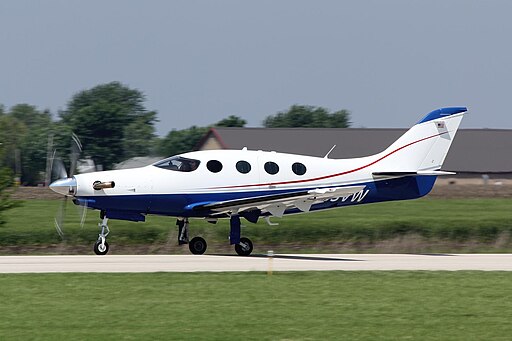
The Lancair Evolution is a kit-built performance machine known for its sharp design and high speed. Many private builders have used it to reach incredible performance numbers. It uses a Pratt engine and can reach high altitudes quickly.
The Evolution’s small body and lightweight materials allow it to climb fast and maintain long-range cruise speeds that outperform many certified turboprops. Builders appreciate its freedom of customization, but it requires experience to handle safely. It’s a true record-setting performer among propeller-powered homebuilt aircraft.
Some turboprops have earned recognition in the Guinness World Records for their incredible achievements. Test flights and competition attempts have shown that certain planes can nearly reach the speed of sound under special conditions. These records show how close propeller aircraft can come to matching jet-like performance.
One famous case involved an experimental single-engine model that used design methods based on cutting-edge technology and aerodynamic research. Although it didn’t officially break the barrier, it helped engineers learn how to design stronger blades and lighter materials.
These 13 fastest single engine turboprop airplanes represent decades of innovation and testing. Each one has its place in aviation history—some as record holders, others as trusted workhorses.
From the Piper M700 Fury to the powerful Epic E1000 GX, every design proves how creative and capable modern builders are. The blend of strong turbine power, smooth aerodynamic design, and smart avionics has made the fastest single-engine planes both exciting and reliable. These machines show what general aviation can achieve when performance meets precision.
They prove how much can be achieved with one single engine and a smart airframe. Each model highlights the balance between power, precision, and reliability. The Fastest Single Engine Turboprop class continues to grow, setting new records and inspiring the next generation of aircraft builders and pilots.
To find out more about private flying, top aircraft, and aviation tips, visit Flying411 and stay ready for takeoff!
A turboprop uses a turbine engine that creates more horsepower, giving it stronger climb and higher cruise speed.
Many reach over 300 knots, with top models like the Epic E1000 GX cruising around 330 knots.
It combines jet aircraft power with lower cost and better short-runway performance.
The TBM 900 is faster, reaching around 330 knots, while the Piper M700 Fury cruises near 300 knots.
Maximum cruise speed is the fastest safe speed for normal flight. Top speed is the highest speed reached in special tests.
