Discover insights, tips, and stories from the skies — from aircraft buying guides to pilot training.





Published: September 27, 2025
When you look at the skies, two names often stand out in modern aviation—Bombardier and Embraer. These two companies have built some of the most popular aircraft in the world. From sleek private business jets to reliable regional aircraft, both have earned loyal customers and strong reputations.
In 2025, Embraer even reported a record order backlog of about $31.3 billion, showing how strong demand is for its jets.
Each manufacturer took a different path to success. Bombardier grew out of Canada, while Embraer came from Brazil. Yet both found smart ways to serve travelers—whether in the air for business or on regional airline routes. Understanding how they grew and where they compete helps explain why pilots, passengers, and even airlines compare them so closely.
This post goes over who they are, how they changed, and why the Bombardier vs Embraer debate is such a big topic in the aviation world.
Bombardier began in Quebec, Canada, as a snowmobile maker before moving into aerospace. Over time, it became known for Bombardier Aircraft—especially the CRJ, Challenger 605, and Dash 8 series. These planes carried thousands of passengers for regional airlines across North America. Bombardier’s business jets—like the Global and Challenger families—are used by corporations, celebrities, and government agencies.
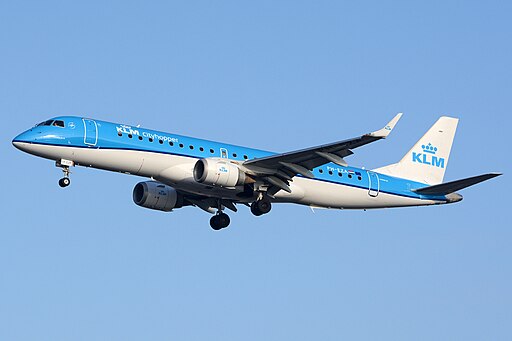
Embraer, on the other hand, started in Brazil in 1969. It built its first ERJ (Embraer Regional Jet) models in the 1990s, quickly becoming a favorite among regional carriers. The Embraer E175 and larger E2 series later took that success further, giving airlines efficient options for short and medium routes.
Both companies make jets, but they focus on different areas:
Bombardier’s Challenger 605 is built for comfort, with a wide cabin and advanced flight deck technology. It’s a great example of a business jet designed for executives who fly often.
Embraer’s E-Jets, such as the E175, are all about efficiency and capacity—offering just the right number of seats for short routes that might be too small for a Boeing 737.
Both brands share one important quality: trust. Their airframes are designed to handle daily flights, changing weather, and long service lives. Each engine is chosen for reliability and smooth performance. Whether flying across the country or across continents, both companies have built reputations on safety, design, and value.
Over the years, Bombardier and Embraer took different turns in their stories. Bombardier once made both private and commercial aviation aircraft. The CSeries was its big bet to compete with larger manufacturers like Airbus and Boeing. But it was a costly project, and Bombardier later sold it to Airbus, where it became the A220.
After that, Bombardier chose to focus on what it did best—business aviation. It sold its CRJ and Dash 8 programs and put all energy into business jets like the Challenger and Global series. These jets offer long range, quiet cabins, and luxury travel for companies and private owners.
Embraer took a different route. The company kept building regional aircraft, expanding its E-Jets line with newer E2 models. The Embraer E175 remains a favorite for U.S. regional carriers, while the E190-E2 and E195-E2 add capacity and fuel efficiency for growing routes.
Here’s how their focus shifted:
The CRJ700 and CRJ900 once ruled regional skies for Bombardier, flying passengers safely and comfortably for decades. Now, those same routes often belong to Embraer’s E175.
Both companies adapted to survive a fast-changing industry. Bombardier streamlined its line-up to target high-end buyers. Embraer stayed with airlines, refining what made it great—building dependable, cost-effective aircraft that help carriers grow.
Their paths may have split, but both remain strong forces in aviation, with proud histories and big futures ahead.
People often compare Bombardier and Embraer because their planes used to fly side by side. The CRJ vs E175 debate started years ago when regional carriers had to choose between Bombardier’s CRJ series and Embraer’s newer E-Jets. Both were reliable, but each had strengths that fit different airline goals.
For airlines, the decision came down to comfort versus cost. Bombardier’s CRJ series had a slightly smaller cabin and narrower configuration, but it was tough, durable, and perfect for tight schedules. Embraer’s E-Jets had wider seats and a smoother ride, which passengers appreciated on longer regional trips.
In business aviation, the story is different. Bombardier’s Challenger 605 sits in a class of its own for corporate travelers who value space, performance, and a refined flight deck. Embraer competes here too with jets like the Praetor and Phenom series, focusing on smart design and practical use rather than luxury alone.
The comparison also highlights their roles in the business jet market and commercial aviation:
Their competition pushed both to innovate. Bombardier improved speed, comfort, and style. Embraer improved aerospace engineering and efficiency. Together, they’ve raised the bar for what travelers expect—smooth rides, reliable service, and value for every mile.
When people talk about airplanes that shape modern travel, Bombardier and Embraer often come up together. Each company has a clear purpose and a loyal group of customers.
Both build strong, efficient, and comfortable planes—but they serve different types of flyers. Understanding those differences helps explain why both are leaders in their own way.
| Topic | Bombardier | Embraer |
| Home country | Canada | Brazil |
| Main focus | Private business jets (Challenger, Global) | Regional and commercial jets (E-Jets/E2), plus small business jets (Phenom, Praetor) |
| Typical mission | Long trips with small groups | Short to medium trips with many passengers |
| Cabin feel | Wide, quiet, premium finish | Roomy for regional size; no middle seats on many models |
| Range (general) | Long-range; many Globals cross oceans nonstop | Shorter range; ideal for regional routes between cities |
| Airline use | Limited today (legacy CRJ/Q400 no longer produced by Bombardier) | Strong in airlines; E170/E175/E190/E195 common in the U.S. and abroad |
| Private use | Very strong (Challenger 350/3500, Global 5500/6500/7500/8000) | Growing (Phenom 100/300, Praetor 500/600) |
| Cabin layout | Multiple zones, flat floor, large baggage | 2-2 seating on many E-Jets; efficient space |
| Cockpit/tech | Advanced avionics, smooth ride features | Common pilot type ratings across E-Jets; easy fleet ops |
| Fuel & efficiency | Efficient for size; optimized for speed and comfort | High fuel efficiency for regional service; newer E2 saves more fuel |
| Maintenance | Premium OEM support for business aviation | Broad airline support networks worldwide |
| Best for | Executives, charter, government, long nonstop legs | Airlines feeding hubs, right-sized routes, cost control |
| Example models | Challenger 350/3500, Global 5500/6500/7500/8000 | E170/E175/E190/E195 (E-Jets/E2), Phenom 300, Praetor 600 |
| Seating (typical) | 8–19 seats (business jets) | ~70–146 seats (regional/commercial jets) |
| Buying decision cue | Choose for comfort, speed, and range | Choose for efficiency, capacity, and frequent service |
Here’s a more detailed look at how these two aircraft compare across key areas like size, comfort, performance, and purpose.
Bombardier and Embraer both design planes that fit into unique parts of the aviation world.
In simple terms:
Both companies care deeply about quality, performance, and reliability. Still, their goals are not the same, and that’s what makes comparing them so interesting.
Comfort is one of the biggest things travelers notice—and it’s something both brands approach differently.
Bombardier’s cabins are famous for their quiet interiors and flexible layouts. The Global and Challenger lines, such as the Challenger 350, include wide seats, flat floors, and plenty of legroom. These cabins feel more like modern offices or lounges than airplanes. Bombardier also puts effort into keeping the cabin pressure low, which makes long trips easier on passengers.
Embraer’s cabins, especially in its E-Jet family like the E170 and 175, are designed for short and medium routes. The company focuses on giving regional travelers more space than older planes. For example, most E-Jets have two seats on each side instead of three. That means no middle seats—something many passengers appreciate!
Both also use smart lighting, clean interior finishes, and quiet air systems. The difference is purpose: Bombardier wants travelers to feel private and rested, while Embraer wants everyone on a commercial flight to feel comfortable for the time they’re aboard.
Here’s where things start to show how distinct each company’s goals are.
Bombardier’s aircraft—like the Global 5500, 6500, and 7500—can fly thousands of miles without stopping. The Global 550 (short for 5500) can cross oceans with ease. Bombardier also designed the Challenger 700-series (such as the Global 7500) to deliver impressive speed and endurance. These aircraft are made to connect cities like New York to Tokyo or Los Angeles to London nonstop.
Embraer’s aircraft focus on shorter trips. The E170 and E175 serve routes of around 2,000 miles. These jets fit perfectly into regional airline networks that connect smaller cities to major hubs.
When it comes to fuel use, Embraer has a strong advantage in efficiency. The newer E2 jets use about 15–20% less fuel than older models. They use advanced engines and lighter materials to save energy. Bombardier’s jets are also efficient for their size but burn more fuel overall because they are larger and built for longer distances.
So, in simple terms:
Each company focuses on performance that best fits its mission.
Modern planes are full of advanced systems that make flying safer and smoother. Both companies lead in this area, though they emphasize different tools.
Bombardier equips its jets with cutting-edge avionics (that’s the tech inside the cockpit). The flight deck in planes like the Challenger 3500 and Global 7500 uses large touchscreen displays, head-up guidance systems, and digital flight controls. These tools make it easier for pilots to plan routes, manage weather, and monitor safety systems.
Embraer uses similar technology but focuses on making it simple for airline pilots to switch between models. The E170 and 175 have common flight systems, which means pilots can train once and fly several aircraft types. That flexibility helps airlines cut costs and schedule flights more efficiently.
Both manufacturers are known for reliability. Their planes are designed for quick turnaround times, minimal maintenance downtime, and high availability. Pilots and mechanics often praise both brands for easy-to-use systems and durable designs.
Let’s match a few aircraft head-to-head to understand their strengths.
Bombardier CRJ700 vs Embraer E175
These two jets once battled in the regional airline space. The Bombardier CRJ700 vs Embraer E175 comparison became famous in the 2000s.
Airlines liked the CRJ for its toughness and simple systems. Passengers, though, preferred the roomier E175. Over time, the E175 became the more popular choice in the U.S. regional market.
Bombardier Challenger 350 vs Embraer Legacy 600
Both fit in the super-midsize segment of the business jet world.
Bombardier wins on luxury and technology, while Embraer wins on cost efficiency and versatility.
Global 7500 vs Gulfstream G700
In the ultra-long-range market, Bombardier faces its biggest rival—Gulfstream.
Both are stunning examples of modern aerospace design, representing the best technology and comfort in private travel.
The core difference between these companies is who they serve.
Embraer’s strong ties with regional airlines give it a global presence. Bombardier’s focus on exclusive travel gives it prestige among top-tier clients.
Both companies face new challenges and opportunities.
Embraer continues to grow its E2 series and works on sustainable aviation programs to reduce emissions. Its aircraft are already among the most fuel-efficient in their class. The company’s goal is to make flying greener and more affordable for regional travel.
Bombardier, now entirely focused on business jets, keeps pushing for more performance and cabin luxury. Its newer models aim for better fuel burn, faster speeds, and smarter interiors with seamless connectivity.
In the years ahead, both are investing heavily in cleaner fuel technology and new materials. These efforts show that the competition between them—though friendly—is far from over.
The truth is, there’s no single “best” between Bombardier and Embraer. Each one excels in its own field.
Both companies have earned their place as leaders in aviation. Their success shows how different approaches can meet the same goal—safe, reliable, and enjoyable flight for everyone.
When you next step onto a plane, it might be one built by either Bombardier or Embraer. And no matter which one it is, you’ll be flying on the result of decades of smart design, steady improvement, and true passion for the skies.
Both Bombardier and Embraer have earned their wings in very different ways. Bombardier built its name on luxury, long-distance jets, and quiet comfort in the sky. Embraer became a global favorite for reliable, efficient regional aircraft that connect cities around the world.
Their stories show how focus and innovation shape success in aviation. Whether you’re a pilot, a traveler, or just someone who loves airplanes, there’s something impressive about both.
If you’d like more helpful guides like this one, check out Flying411 for easy-to-read insights and updates on everything that keeps the aviation world moving forward.
Bombardier makes larger private jets, while Embraer’s aircraft are smaller and used more by regional airlines.
Bombardier sold its airliner programs, like the CRJ and CSeries, to other companies to focus on business jets.
Yes, Embraer jets meet all major safety standards and are widely trusted by airlines worldwide.
The CRJ has a tighter cabin and simpler design, while the E175 offers more comfort and modern systems.
Bombardier’s business jets are designed for long-range luxury; Embraer’s focus on smart comfort and efficiency.
