Discover insights, tips, and stories from the skies — from aircraft buying guides to pilot training.




Published: September 7, 2025
Twin turboprops have a special place in the sky. They mix power and performance with the kind of flexibility that pilots love. These airplanes can take off from short runways, handle rough weather, and carry passengers or cargo with ease.
In fact, one popular twin-turboprop model burns up to 45% less fuel than a comparable regional jet on the same route.
For many pilots, they strike the perfect balance between a small private plane and a fast jet.
Over the years, twin turboprops have become the workhorses of aviation. You’ll see them in business travel, regional airlines, and rescue flights. They’re built for real-world flying—reliable, strong, and made to get the job done. From trusted names like Beechcraft, Cessna, and Piaggio, these planes show what smart design can do.
This post looks at what makes these aircraft so special before we meet some of the best twin turboprop aircraft and top models in the world.
Twin turboprops use two powerful turbine engines that drive propellers instead of fans like a jet. That setup gives them a great mix of speed and fuel efficiency. Each engine pulls in air, compresses it, burns fuel, and pushes it out through a spinning shaft. The propeller turns fast, giving strong forward thrust.
Unlike a single engine or single-engine airplane, having two engines adds an extra layer of safety. If one fails, the other can still keep the aircraft flying until landing. This is one reason many commercial and business operators prefer them.
Twin turboprops are built to handle many conditions. They can take off on short or uneven runway surfaces. Their landing gear is designed for strength and durability, which helps in rural areas or developing regions where runways can be rough.
You’ll also notice their comfortable cockpit layouts. Modern systems use digital avionics—color displays, flight computers, and automatic flight controls. These make flying smoother and easier, even on longer routes.
They’re also surprisingly quick. While not as fast as most jets, many can cruise between 250 and 360 knots, which is plenty for medium-range flights. A King Air or Pilatus can cover hundreds of miles while using less fuel than a comparable jet.
And because turboprops are efficient, they’re a smart choice for companies that want range, speed, and value. That’s why models like the Pilatus PC-12, Beechcraft King Air, and Piaggio Avanti have such strong reputations.
Twin turboprop aircraft are everywhere once you start looking. They fly in business fleets, regional airlines, and even military operations. Their flexibility makes them useful in dozens of jobs.
Here are a few examples:
In aviation, these planes fill the gap between small piston planes and larger jets. They’re fast enough for business travel but rugged enough for field work. A single turboprop or piston engine airplane can’t always handle long distances, heavy payloads, or bad weather the same way.
Twin turboprops also play a big part in connecting small towns and islands. Many U.S. commuter routes depend on them. For example, the Beechcraft and Cessna fleets serve short hops where using a full-sized jet wouldn’t make sense.
It’s no surprise they’ve become symbols of reliability. They don’t need long runways or fancy hangars. They’re built to take off, land, refuel, and go again.
If you’re comparing planes, start with your mission. Ask how far you’ll fly, how many people you’ll carry, and what kind of airfields you’ll use. From there, you can match features to your needs.
Here are some key points to consider:
You can also compare operating costs. Turboprops usually burn less fuel than jets and require fewer complex parts. That makes them easier to keep flying over time.
If you want smooth handling, a quiet cabin, and solid reliability, a twin turboprop delivers. Business flyers often go for the King Air or Pilatus PC-12, while commercial operators prefer Cessna and Aero-built models for daily runs. Each offers something different, but they all share the same core strengths—safety, range, and trusted performance.
Twin turboprop airplanes have long been favorites among pilots and travelers who want power, range, and efficiency. These planes use two strong engines that drive propellers instead of fans, giving them great performance at lower cost. Today’s models are faster, quieter, and packed with advanced technology.
Below, we’ll look at 11 of the best twin turboprop aircrafts—from classic business flyers to modern utility workhorses.
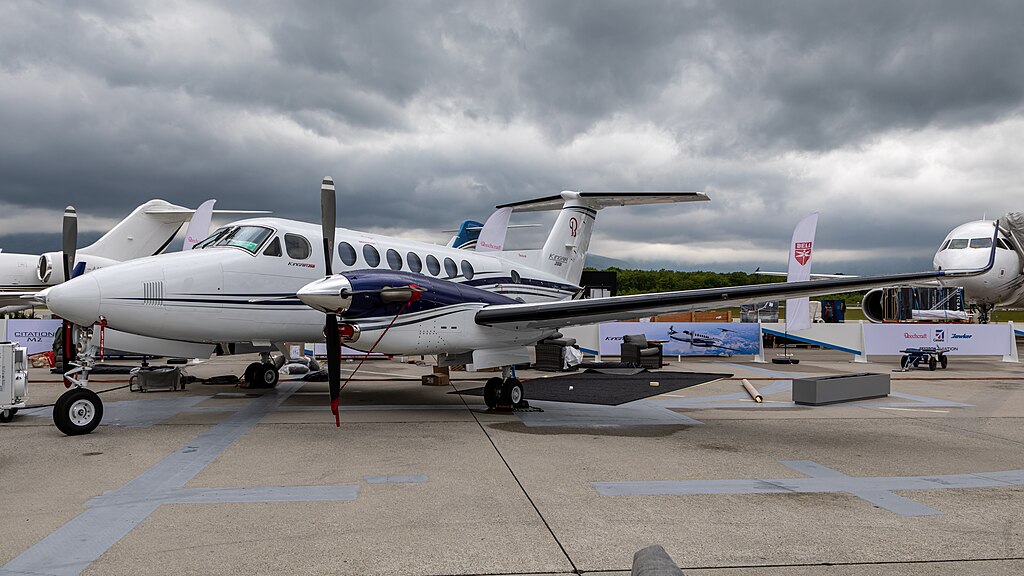
The King Air 350i sits at the top of the Beechcraft King Air line. It’s one of the most respected business turboprops in the world. This twin-turboprop has room for up to 11 people and a range that makes it perfect for both regional and cross-country trips.
It can travel long distance for less fuel, giving passengers the same comfort level as a small light jet, but with much better operating economics.
The King Air 200 series is one of the most iconic names in aviation. The original model set a standard for twin-engine performance and safety. The Beechcraft King Air B200 improved it further, with upgraded engines and electronics.
Many pilots say the King Air 200s handle beautifully, and Flying Magazine has often called them among the best turboprop performers for reliability and range. These planes are known for solid airframe construction and easy maintenance.
The King Air 90 is a smaller sibling in the King Air family, but it shares the same trusted design and build quality. It’s a popular choice for private owners and charter operators.
It burns fewer pounds of fuel per hour than most small jets, yet gives travelers similar speed over medium ranges.
This twin engine turboprop from Cessna combines sleek design and efficiency. It’s known for its speed and range, offering a flight experience close to a small jet but at lower cost.
Operators appreciate its ability to fly cruise altitudes over 30,000 feet, making it comfortable for long routes.
The Cheyenne series from Piper was built to compete with the King Air line. It has a reputation for solid performance and durable engineering.
Many older Cheyennes have received avionics upgrades, making them dependable choices among turboprops for sale today.
Built by Piaggio Aero in Italy, the Avanti EVO is one of the fastest turboprops ever made. It has a unique forward-wing design that helps it use less fuel than a jet of similar size.
It can carry passengers in style, making it a top choice for business travelers who want comfort with low operating economics.
Although the Pilatus PC-12 is technically a single-engine turboprop aircraft, it deserves mention for its outstanding performance and safety record. It rivals many twin models thanks to its turbine power and advanced systems.
It’s a perfect blend of power, comfort, and efficiency for pilots who prefer simple operation.
The Super King Air version of the 200 took the design to new heights. It added more power and improved pressurization for higher altitudes.
A type rating is required for commercial operators, but private owners can get training for shared operations with two pilots.
The TBM 940 is another standout from the twin-turboprop class’s extended family of fast, efficient planes. It’s technically a single-engine design, but it delivers jet-like speed with turboprop reliability.
The TBM line bridges the gap between piston twin aircraft and light jets, giving pilots serious range and modern technology.
The King Air 200s remain a favorite among business operators and air charter companies. They’ve proven reliable for decades and are often used as training platforms for new pilots.
You’ll often find these models with upgraded interiors and digital avionics, keeping them competitive with newer planes.
To wrap up the list, we circle back to the Beech King Air 200 family. These models continue to impress with balance, reliability, and flexibility.
Each version of the 200—from early 200s to the Beechcraft King Air B200—builds on a winning formula. They’re still among the most respected planes in the world for their mix of comfort, performance, and value.
From the classic Cheyenne to the cutting-edge Piaggio Aero, these aircraft show that twin turboprops remain powerful, efficient, and ready for any mission. They keep flying strong year after year—proof that great engineering never goes out of style.
Twin turboprops prove that you don’t need a jet to enjoy real performance. They offer a perfect mix of strength, comfort, and reliability for all kinds of flyers. Whether it’s a sleek King Air, a hard-working Cessna, or a fast Piaggio, each design shows how capable these planes can be.
If you’re ready to learn more, explore detailed aircraft guides and updates with Flying411—your trusted source for friendly, expert aviation advice.
A twin turboprop is an airplane with two turbine engines that spin propellers for power. It combines speed, efficiency, and reliability.
Most twin turboprops cruise between 250 and 360 knots, depending on model and load.
Yes. Two engines mean backup power if one fails, which adds safety in long-distance or remote flights.
Top names include Beechcraft, Cessna, Pilatus, and Piaggio. These companies make strong, efficient models for business and travel.
Yes. Their strong landing gear and propeller design make them great for small or rough runways.
