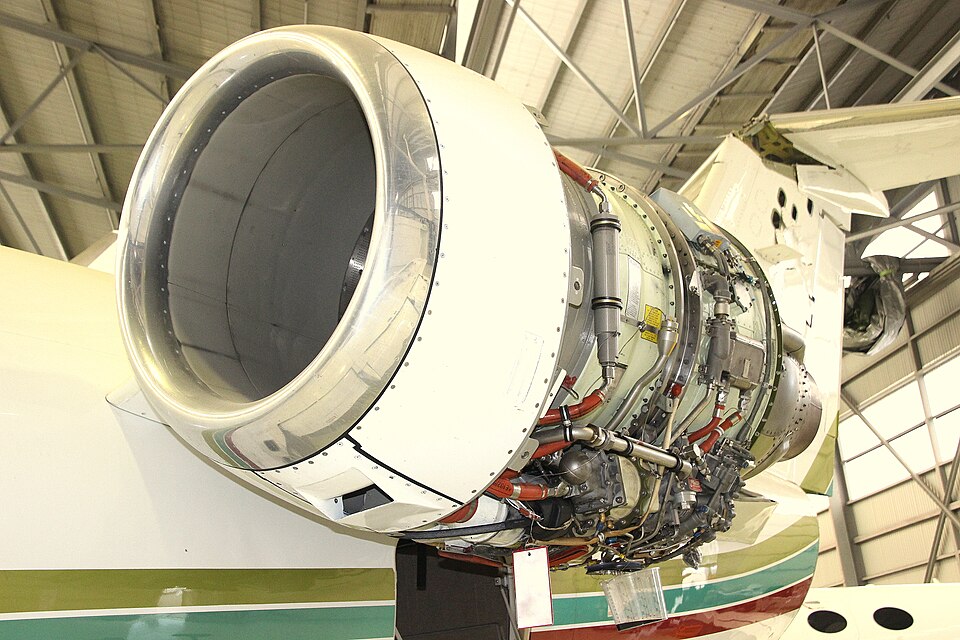
Key Takeaways
- A "prop strike" is broader than most owners think. Lycoming Service Bulletin 533C counts any event that requires more than minor blade dressing — even with the engine shut down — plus any sudden RPM drop in water, tall grass or mud where the blades may look untouched.
- SB 533C is a Service Bulletin, not an Airworthiness Directive. For most Part 91 owners it is not automatically mandatory by regulation. It becomes mandatory when it is referenced by an AD, written into an FAA-approved inspection or maintenance program (Part 135/121, progressive, or manufacturer's program), or required by an insurer, lender, lessor or warranty.
- In practice, it is close to unavoidable. The mechanic who returns the aircraft to service has to determine the engine is airworthy using acceptable data — and the manufacturer's own bulletin is the data everyone defaults to. Very few IAs will sign off a strike with a runout check alone.
- Budget in layers, not one number. Engine removal and reinstallation, teardown and NDT inspection, mandatory replacement parts, propeller repair or overhaul, accessory inspections, engine mount and airframe checks, and shipping all stack up. Four-cylinder singles commonly land in the low-to-mid five figures; six-cylinder, turbocharged and geared engines run considerably higher.
- Most teardowns turn into overhauls. Once the engine is apart and the mandatory-replacement parts are on the bill, the incremental cost to go to a full overhaul is often small — and insurers usually pay to restore pre-loss condition, with the owner paying the "betterment" difference.
- The logbook entry is permanent. A properly documented, fully complied-with teardown is far less damaging to resale value than an undocumented or "we just dressed the blades" history.
You taxi a little fast over a soft ramp, catch a chunk of gravel, nick a runway edge light, or a gust drops a wingtip and the prop kisses the pavement. The airplane looks fine. The engine runs fine. And then someone says the words every piston owner dreads: teardown.
The two questions owners type into a search box at that moment are almost always the same: how much is this going to cost me, and do I legally have to do it? This guide answers both, in that order, and then covers the parts nobody warns you about — insurance betterment, downtime, and what the entry does to your aircraft's value when you eventually sell.
First, does your event even count as a prop strike?
Lycoming's Service Bulletin 533 series ("Recommended Action for Engines That Have Been Involved in Sudden Stoppage, Propeller/Rotor Strike, or Loss of Propeller/Rotor Blade or Tip") defines the trigger — and the definition is deliberately wide. Paraphrasing the bulletin, a propeller strike includes:
- Any incident — whether or not the engine is operating — that requires repair to the propeller other than minor dressing of the blades. A hangar door or tug that bends a blade with the engine cold still counts.
- Any incident during engine operation in which the propeller impacts a solid object that causes a drop in RPM and also requires structural repair to the propeller. Damage needing only paint touch-up is excluded.
- A sudden RPM drop while impacting water, tall grass, or a similar yielding medium — the case where the blades typically show no damage at all, yet the crankshaft still absorbed a torsional shock.
That third case is the one that surprises people. A gear-up landing on turf, a soft-field nose-over, or a float plane that digs in can all be prop strikes even with a visually perfect propeller. Continental Aerospace Technologies publishes its own equivalent guidance for its engines (the long-standing sudden-stoppage bulletin in the SB96-11 series), and Rotax, Hartzell, MT and McCauley all have prop-strike language in their manuals. Always pull the current revision from the manufacturer's publications page before you decide anything — revision letters change.
Why the manufacturer cares so much
The concern is not the shiny part you can see. It is what a sudden torsional load does to items you cannot inspect installed:
- The crankshaft — bending of the propeller flange, and fatigue cracks that only show up under magnetic particle or dye penetrant inspection.
- The crankshaft gear, its dowel and retaining bolt — the classic post-strike failure mode. A shock-loaded dowel can work loose weeks or months later, shear the gear, and take the engine with it.
- Counterweights, connecting rods, bearings, camshaft and accessory drive gears — all of which see the impulse travel through them.
That delayed-failure pattern is exactly why insurers and engine shops treat "it ran fine on the ground run" as meaningless.
Is Lycoming SB 533C actually mandatory?
Here is the honest regulatory answer for U.S.-registered aircraft.
When it is NOT strictly mandatory
Manufacturer service bulletins are not, by themselves, regulatory. Only Airworthiness Directives carry the force of law under 14 CFR Part 39. A privately operated Part 91 aircraft with a standard airworthiness certificate is generally not required by rule to comply with every SB the factory issues.
When it becomes mandatory
| Trigger | Why compliance is required |
|---|---|
| An AD references the bulletin | Airworthiness Directives are mandatory under 14 CFR Part 39; any SB they incorporate becomes mandatory with them. |
| Part 135, Part 121, or Part 91 Subpart K operations | Compliance follows the FAA-approved maintenance or inspection program, which commonly adopts manufacturer service documents. |
| Progressive or manufacturer's recommended inspection program under 14 CFR 91.409(e)/(f) | Once you elect the manufacturer's program, you have committed to its instructions. |
| Airworthiness Limitations / ICA items | 14 CFR 91.403(c) requires compliance with mandatory replacement times, inspection intervals and related procedures in an Airworthiness Limitations Section. |
| Insurance policy, lease, or lien covenant | Contractual, not regulatory — but a denied hull claim costs more than the teardown. |
| Engine warranty or factory core acceptance | Manufacturers routinely exclude warranty coverage on shock-loaded engines that were not inspected per the bulletin, and cores can be devalued. |
The practical answer: 43.13 and the person who signs
Even in a pure Part 91 world, the airplane has been damaged. Under 14 CFR 91.7 you may not operate an unairworthy aircraft, 14 CFR 91.407 requires the maintenance record entry and approval for return to service, and 14 CFR 43.13 requires the mechanic to use methods, techniques and practices acceptable to the Administrator — in practice, the manufacturer's maintenance data.
So the question stops being "is the SB mandatory?" and becomes "which A&P/IA is willing to put their certificate behind the statement that a shock-loaded crankshaft is airworthy, without doing what the engine manufacturer says to do?" Almost none will. That is why the industry treats SB 533C as de facto mandatory, and why any future buyer's pre-purchase inspector will treat a non-complied strike as an engine of unknown condition.
What a teardown inspection actually includes
"Teardown" is not a look-see. A compliant inspection generally involves:
- Removing the propeller and shipping it to an approved prop shop for inspection, repair or overhaul.
- Removing the engine from the airframe and crating/shipping it to an engine shop (or performing the work in the field if the shop is local).
- Complete disassembly, cleaning and degreasing of every component.
- Non-destructive testing of the crankshaft (magnetic particle), connecting rods, gears and case; dimensional inspection against the manufacturer's table of limits.
- Propeller flange runout measurement and crankshaft gear, dowel and bolt inspection, with hardware replaced per the current overhaul manual and the manufacturer's mandatory-parts-replacement bulletin.
- Inspection of accessories driven by the engine — magnetos, propeller governor, vacuum pump, alternator drive, fuel pump — per each accessory manufacturer's instructions.
- Reassembly, test run, and a detailed logbook entry citing the bulletin and revision.
On the airframe side, expect dye-penetrant or dimensional inspection of the engine mount, an inspection of the nose gear and firewall structure for nose-over or nosewheel strikes, cowling and baffle repairs, and a check of the exhaust system and engine controls.
Prop strike teardown cost: the line items
There is no single price, because the cost is driven by what the inspection finds. The ranges below are typical industry ballpark figures for a normally aspirated four-cylinder Lycoming in a single-engine piston, and they exist to help you build a budget and read a quote — not to replace one. Get at least two written estimates, and expect six-cylinder, turbocharged, geared and helicopter engines to run materially higher.
| Line item | Typical range (4-cyl. single) | Notes |
|---|---|---|
| Engine removal & reinstallation labor | $2,000 – $5,000 | Includes rigging, hoses, baffles, ground runs. Twins and tight cowlings cost more. |
| Crating and freight (round trip) | $600 – $2,000 | Skip if the shop is local; add more for remote fields. |
| Teardown, cleaning, NDT and inspection labor | $4,000 – $10,000 | The "inspection only" portion, before parts. |
| Mandatory replacement parts & hardware | $2,000 – $8,000 | Gears, dowel, bolts, bearings, seals, gaskets — items the manufacturer forbids reusing. |
| Crankshaft replacement (if rejected) | Often the single largest item — commonly five figures | Availability, not price, is frequently the real problem; new cranks can carry long lead times. |
| Cylinder, camshaft or case work discovered during inspection | Highly variable | Once it's apart, deferred wear becomes visible — and hard to ignore. |
| Propeller inspection / repair / overhaul | $2,500 – $7,000+ | Constant-speed hubs and composite or bent blades push this up fast; severely damaged blades are scrap. |
| Accessory inspections / overhauls | $1,500 – $5,000 | Two magnetos, governor, pumps. Many shops exchange rather than inspect. |
| Engine mount, cowling, firewall, nose gear | $500 – $6,000+ | Nose-over and nosewheel events dominate this column. |
| Full overhaul upgrade instead of inspect-and-reassemble | Incremental, often modest | The reason so many strike teardowns finish as zero-SMOH engines. |
Realistic all-in expectation: a clean, low-time engine that passes inspection with only mandatory hardware replaced sits at the bottom of the stack. A high-time engine with a rejected crankshaft, a scrapped propeller and a cracked mount can approach or exceed the cost of a factory rebuilt engine plus a new prop. Both outcomes are common, which is why you should not commit to a repair plan before the teardown findings are in writing.
Downtime is a cost too
Plan on roughly 4 to 16 weeks, and longer if a crankshaft, cylinder or propeller blade is back-ordered. If your aircraft is financed or on leaseback, keep making payments while it sits — factor that into the total.
Insurance: who pays for what
A prop strike is usually a covered hull loss under an all-risk policy, subject to your deductible and policy terms. Three things trip owners up:
- Pre-loss condition, not better-than-new. Insurers pay to return the aircraft to the condition it was in immediately before the accident. If your engine had 1,400 hours and you use the opportunity to buy a zero-time overhaul, you are typically responsible for the betterment — the added value you gained.
- Adjusters and shop selection. Talk to the adjuster before the engine comes off the airframe. Unauthorized work can be disputed, and many carriers want their own inspection or a specific approved shop.
- Document everything. Photograph the aircraft, the propeller, the ground scars and the tach/RPM indication if possible. Note the RPM at impact — it materially affects both the engineering assessment and the claim.
One more warning: intentionally skipping the teardown to save money can jeopardize coverage on a later engine failure and will hand any future buyer a reason to walk. It is the worst possible economy.
What it does to resale value — and what buyers look for
A prop strike lives in the logbooks forever. But the market does not treat all strikes the same:
| History in the logbooks | Typical market reaction |
|---|---|
| Strike documented, engine torn down per the bulletin, overhauled to new limits, prop overhauled or replaced, all invoices retained | Minimal discount; the fresh engine and prop often offset the stigma. Buyers price the remaining TBO, not the event. |
| Strike documented, inspection-only reassembly with partial records | Moderate discount and heavy scrutiny at pre-buy; expect escrow holdbacks or renegotiation. |
| Blade dressing entry with no engine inspection, or a suspicious gap in the records | Serious red flag. Many buyers, and some insurers, will not proceed without a teardown. |
| Damage history disclosed on the accident/incident record but absent from the logs | Deal-killer for most informed buyers. |
If you are on the buying side, look for prop repair or replacement entries, prop shop 8130-3 tags, crankshaft flange runout figures, references to the specific bulletin and revision letter, and matching invoices for the engine shop. Cross-check the airframe and engine logs against the aircraft's accident and incident history, and have your pre-buy inspector specifically ask about sudden stoppage.
A five-step decision path after a strike
- Stop. Do not run the engine. Secure the aircraft and photograph everything before anything is touched or moved.
- Notify your insurer and confirm the reporting requirements in your policy. Ask who selects the shop.
- Have an A&P/IA classify the event against the current revision of the applicable manufacturer bulletin — Lycoming's 533 series or the Continental equivalent — and document that determination.
- Get a written teardown-and-inspect quote and an overhaul quote from the same shop, so you can compare the marginal cost of going to zero time before the engine is apart.
- Insist on a detailed return-to-service entry citing the bulletin, revision, inspections performed, parts replaced and runout measurements. That paperwork is what protects your resale value years from now.
Conclusion
A prop strike is rarely the catastrophe owners fear, but it is almost never as cheap as a blade dressing either. The honest way to budget is to treat the teardown inspection as the floor and a full overhaul plus a new propeller as the ceiling, then let the shop's findings tell you where you land. And while Lycoming SB 533C is technically a recommendation for most Part 91 operators, the combination of 14 CFR 43.13, your insurer, your lender and your future buyer makes it functionally mandatory. Comply, document it well, and the event becomes a footnote rather than a discount.
If the numbers point toward walking away instead of writing the check, or if you are shopping and want to compare a fresh post-teardown engine against a mid-time one, browse current listings and engine-time data on Flying411 to see how the market is actually pricing engine status, damage history and time since overhaul before you commit.
Frequently Asked Questions
Is Lycoming SB 533C mandatory for a Part 91 private owner?
Not by regulation on its own — only Airworthiness Directives are mandatory under 14 CFR Part 39. It becomes mandatory if an AD references it, if your aircraft is maintained under an FAA-approved inspection or maintenance program that adopts manufacturer service documents, or if your insurance, lease or warranty requires it. In practice, the mechanic returning the aircraft to service must use acceptable data under 14 CFR 43.13, and the manufacturer's bulletin is that data.
My blades were only slightly nicked and the engine never stopped. Do I still need a teardown?
It depends on whether the damage can be corrected by minor blade dressing. If the propeller needs structural repair — not just dressing or paint — the bulletin's definition is met. Have an A&P/IA and a propeller shop make and document that determination; do not make it yourself.
What if the prop hit water, mud or tall grass and looks undamaged?
That is specifically called out. A sudden RPM drop from impacting a yielding medium counts as a prop strike even when the blades show no damage, because the crankshaft still absorbed the torsional shock.
Does a bird strike count?
Only if it meets the definition — that is, if it caused an RPM drop and requires more than minor blade dressing. Most bird strikes do not, but the propeller still needs inspection per the propeller manufacturer's manual.
Will insurance pay for a full overhaul?
Typically it pays to restore the engine to its pre-loss condition, plus the inspection required by the accident. If you upgrade to a zero-time overhaul or a factory rebuilt engine, expect to pay the betterment difference and your deductible. Discuss this with the adjuster before work starts.
Does the propeller have to be overhauled too?
The propeller must be inspected and repaired per its manufacturer's instructions, and in most strike cases that means a shop visit, hub disassembly and inspection, or replacement of blades. Composite blades and constant-speed hubs raise the cost substantially.
How long will my airplane be down?
Commonly one to four months. The variables are shop backlog and parts availability — a rejected crankshaft or a scrapped propeller blade can add weeks or months on its own.
Does a teardown reset my engine time?
Only if the work performed is a documented overhaul or the engine is replaced with a rebuilt or new unit. An inspect-and-reassemble teardown returns the engine with its existing time since overhaul intact, though the logbook will permanently record the event and the inspection.
Can I sell the airplane "as is" instead of paying for the teardown?
You can, but you must disclose the strike, and the market will price the unknown engine condition aggressively — often at more than the teardown would have cost. Failing to disclose it invites both a collapsed deal and legal exposure.