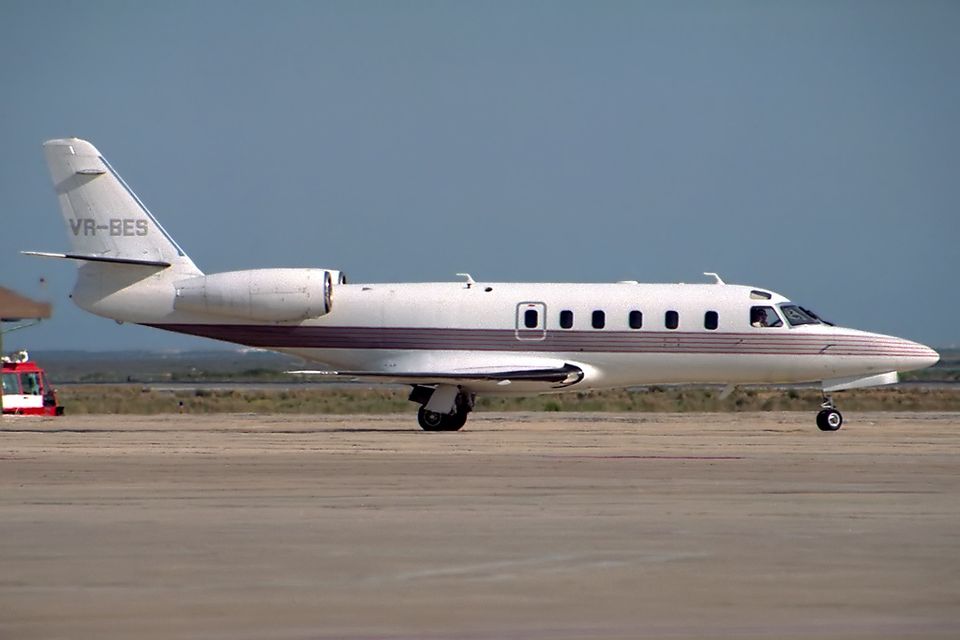
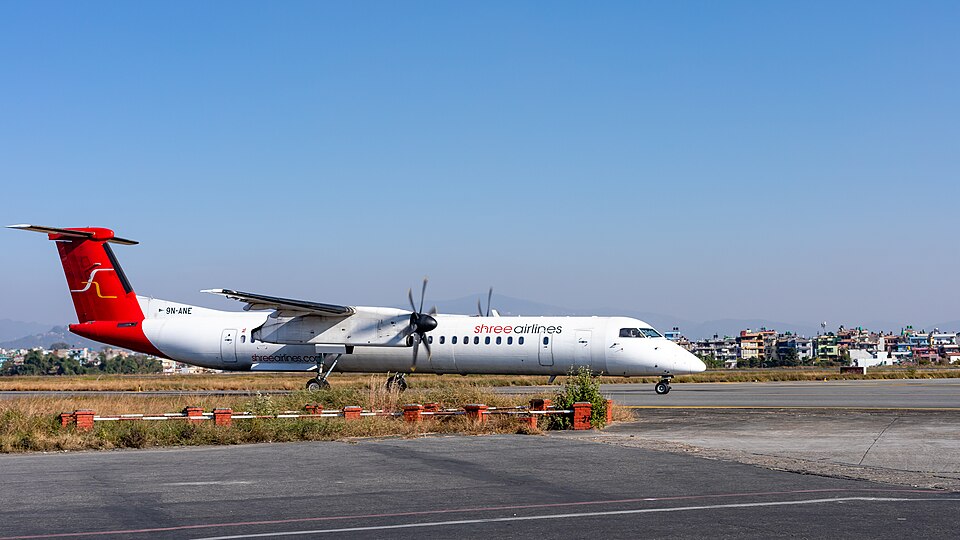
The question owners actually type into a search box is some version of this: "I'm flying a Baron / Aztec / 340 / 421 — will a King Air or a Meridian really cost that much more to run?" The honest answer is that it isn't one number going up. Some line items roughly double, one or two go down, and a couple of new ones appear that didn't exist in your piston budget at all. Below is the line-by-line version, plus a worksheet you can fill in with real quotes for the specific airframe you're chasing.
Key Takeaways
- Fuel gallons go up; fuel dollars go up less than you'd expect. Jet A is normally cheaper per gallon than 100LL at the same FBO, and the turboprop is doing the trip faster and higher.
- Engine reserves are the big swing. Turbine overhauls cost multiples of a big-bore piston overhaul, but they're spread over roughly twice the hours — Lycoming and Continental publish TBOs of about 1,400–2,000 hours for most twin engines, while a PT6A commonly runs 3,600 hours with a mid-life hot section.
- New fixed costs appear: insurance-mandated initial and recurrent training at a formal school, an engine maintenance program (P&WC ESP, Honeywell MSP or similar), bigger hangar, and possibly a type rating if the aircraft is over 12,500 lb.
- What disappears: cylinders, valves, magnetos, spark plugs, turbochargers, exhaust cracks, lead fouling — and the long-term regulatory risk attached to leaded avgas.
- Utilization decides the outcome. A turboprop's cost per hour falls fast with hours flown. Below roughly 150–200 hours a year, the fixed costs dominate and a pressurized piston twin usually wins on paper.
Start by separating fixed from variable costs
Most step-up comparisons fail because people compare "cost per hour" figures built on different assumptions. Rebuild both sides the same way:
- Fixed costs (paid whether you fly or not): hangar, insurance, annual/phase inspection labour, recurrent training, database and chart subscriptions, maintenance tracking, registration, property tax where applicable.
- Variable costs (per flight hour): fuel, oil, engine overhaul reserve, hot section reserve, propeller and governor reserve, unscheduled maintenance reserve, landing/handling fees.
Then divide fixed costs by the hours you honestly fly. That single step explains most of the disagreement between owners who say a King Air is cheap and owners who say it bankrupted them.
Line by line: what actually changes
| Cost line | Direction moving to a turboprop | Why |
|---|---|---|
| Fuel gallons per hour | Up significantly | Turbine engines are thirstier per horsepower, especially low and slow. The penalty shrinks at altitude. |
| Fuel price per gallon | Down | Jet A is typically posted below 100LL at the same field, and volume/contract pricing is easier to get. |
| Engine overhaul reserve | Up, but less than the sticker suggests | Far higher overhaul cost, spread across roughly double the TBO hours, with a hot section inspection in the middle. |
| Top-end / cylinder work | Eliminated | No cylinders, valves, rings, plugs, mags or turbochargers to chase between overhauls. |
| Oil consumption and changes | Down in labour, up in product cost | Synthetic turbine oil is expensive but consumption and change intervals are generally kinder than a hard-worked geared piston. |
| Scheduled airframe inspections | Up | Bigger, heavier, more systems; phase/progressive programmes replace a single annual. |
| Insurance | Up | Higher hull value dominates the premium, and underwriters impose training and experience conditions. |
| Training | Up, and now recurring annually | Formal initial plus annual recurrent is effectively mandatory via the insurance policy, not just good practice. |
| Hangar and handling | Up | Larger footprint; some airports assess fees by maximum takeoff weight. |
| Dispatch reliability / trip disruption | Better | Fewer no-go squawks and fewer AOG events away from base — a real cost even if it never appears on a spreadsheet. |
The engine reserve maths, done properly
This is where the decision is usually won or lost, so do the arithmetic rather than trusting a forum number.
Piston side. Lycoming publishes recommended time-between-overhaul figures in Service Instruction No. 1009, and Continental publishes its own in Service Information Letter SIL 98-9C. For the engines you find in cabin-class twins — 540-series Lycomings, TSIO/GTSIO-520 and IO-550 Continentals — the published recommendations generally land between about 1,400 and 2,000 hours, with the geared and turbocharged variants at the lower end. Both manufacturers also apply calendar limits, which matter enormously to owners who fly 80 hours a year.
Turbine side. Pratt & Whitney Canada's PT6A family — the engine in the vast majority of the turboprops a piston-twin owner shops for — is typically managed on a 3,600-hour basic overhaul interval with a hot section inspection at mid-life, with variations by model, operating environment and approved maintenance programme. Honeywell's TPE331 family (Turbo Commander, MU-2, some Conquests' competitors) publishes its own model-specific intervals, several of which exceed 5,000 hours. Both manufacturers offer hourly-cost programmes — P&WC's Eagle Service Plan and Honeywell's Maintenance Service Plan — that convert overhaul and hot section exposure into a fixed dollar figure per hour.
That last point is the most underrated part of the step-up. On the piston side you self-insure engine risk and hope the cylinders behave. On the turbine side you can buy a known number. Enrolment status also travels with the aircraft and materially affects resale value, so it belongs in your purchase analysis, not just your operating budget.
Reserve worksheet
Get written quotes and fill this in. Do not use someone else's numbers — engine shop pricing, program rates and "green time" remaining vary hugely by serial number.
| Input | Aircraft A (piston twin) | Aircraft B (turboprop) |
|---|---|---|
| Overhaul or exchange cost per engine (quoted) | $____ | $____ |
| Mid-life event cost per engine (hot section / top overhaul) | $____ | $____ |
| Accessories, mounts, hoses, install labour | $____ | $____ |
| Published TBO hours (manufacturer document) | ____ hr | ____ hr |
| Engine reserve per hour = (all costs × 2 engines) ÷ TBO | $____/hr | $____/hr |
| Propeller + governor overhaul cost ÷ interval (hours or calendar, whichever comes first) | $____/hr | $____/hr |
Note the calendar trap on props. Hartzell publishes recommended overhaul periods by model in its service letter series, and those periods are expressed in both hours and years. A low-time owner flying 100 hours a year hits the calendar limit long before the hour limit — on both piston and turbine aircraft — so the effective per-hour prop cost for a low-utilization owner can be several times the "book" figure.
The new fixed costs nobody budgets for
1. Training, and the paperwork behind it
Whether you need a type rating is a weight question, not a turbine question. Under 14 CFR 61.31(a), a type rating is required for aircraft with a maximum certificated takeoff weight over 12,500 lb (and for turbojets). That's why a King Air C90 or 260 can be flown on a multi-engine land rating with appropriate training, while a King Air 350 requires a type rating — and with the type rating comes the recurring pilot-in-command proficiency check requirement of 14 CFR 61.58. Pressurized aircraft with a service ceiling or maximum operating altitude above 25,000 ft also require the high-altitude training endorsement under 61.31(g).
Even where no rating is legally required, your insurer will almost certainly require formal initial training at a recognized school plus annual recurrent, and often a mentor-pilot period of specified hours. Budget the course fee, travel, hotel and lost work time as a hard annual fixed cost. This is the single most common budgeting miss in the step-up.
2. Insurance conditions, not just premium
Hull value is the dominant driver of premium, so moving from a $300,000 twin to a $1.5m turboprop changes the number regardless of engine type. What surprises buyers is the conditions: minimum total and multi-engine time, minimum turbine time, named-pilot restrictions, and the training requirements above. Get an indication from a broker on the specific make, model and your logbook before you sign a purchase agreement.
3. Altitude and equipment costs
Part of the reason to buy a turboprop is the flight levels. Operating between FL290 and FL410 requires RVSM authorization under 14 CFR 91.180 and Part 91 Appendix G; the FAA has streamlined the path for aircraft with compliant ADS-B Out, but the airframe still needs the required altimetry equipment and periodic RVSM maintenance checks. Add the usual 24-calendar-month pitot-static and transponder checks under 14 CFR 91.411 and 91.413, plus deice/anti-ice system upkeep on a known-ice airframe. None of these are catastrophic individually; together they're a meaningful annual line.
4. Maintenance programme structure
Many turboprops are maintained on a phase or progressive inspection programme under 14 CFR 91.409 rather than a single annual. Cash flow smooths out, but total scheduled labour rises, and you'll want a shop that genuinely knows the type — including engine trend monitoring, which is how turbine owners catch deterioration early instead of discovering it at the hot section. The vetting logic is the same one we lay out in our 21 questions to ask an MRO before you hand over the keys; you're just applying it to a shop with turbine capability, factory training and a documented trend-monitoring process.
Where the turboprop quietly saves you money
- No top-end lottery. Cracked cylinders, stuck valves, burnt exhaust and failing turbochargers are the classic unbudgeted expenses on a hard-working big-bore piston twin. They simply don't exist on a turbine.
- Fewer ignition and induction squawks. No magnetos, harnesses, plugs or carb/fuel-injection tuning drama.
- Fuel availability and fuel-type risk. The FAA-industry EAGLE initiative is working toward a lead-free future for piston aviation. Whatever the eventual outcome, Jet A carries no equivalent regulatory overhang, and it's stocked at essentially every airport with a turbine customer.
- Trip completion. Higher, faster, above more weather, with two turbines that start reliably in the cold. If your flying is business-driven, cancelled and diverted trips have a real dollar value.
- Parts and support. Many of the best piston twins have been out of production for decades. PT6-powered airframes are still built and still factory-supported.
Two special cases worth knowing about
The geared, pressurized piston twin
If your baseline is a Cessna 340/414/421 or a Piper Navajo/Chieftain rather than a normally aspirated Baron, the gap to a turboprop is narrower than you think. Geared and heavily turbocharged engines carry the shortest published TBOs, the highest cylinder-related unscheduled costs, and the same pressurization, deice and cabin-class inspection burden as a light turboprop. Owners in this bracket frequently find that the incremental operating cost of a C90 is smaller than the incremental purchase cost — which is a very different conversation.
The single-engine turboprop
A Caravan, PC-12, Meridian or TBM only has one engine to reserve for and one propeller to overhaul. For an owner leaving a piston twin, a single-engine turboprop can be a genuine reduction in total variable cost while still being a step up in speed, altitude and dispatch reliability. It changes the risk conversation, not the cost conversation.
Pre-buy economics: turbine records are the asset
On a piston twin, an engine's residual value is partly wrapped up in the core — the crankcase and case-related components that an exchange programme will credit you for, which we cover in our guide to engine core charges. Turbine economics work differently. What you're buying is time remaining: hours and cycles to overhaul, hot section status, life-limited component records, compressor and turbine borescope condition, and whether the engines are enrolled on a manufacturer hourly programme that transfers with the sale. Two identical-looking airframes can differ by several hundred thousand dollars purely on engine status, and that difference is exactly equal to the reserves you'd otherwise have to fund yourself.
Two record-keeping details that catch first-time turbine buyers:
- Cycles matter as much as hours. Life-limited parts are tracked by cycles, so a high-cycle short-hop aircraft can be closer to expensive events than the hour meter suggests.
- Sudden stoppage and foreign object damage. On the piston side, a prop strike drives a mandatory engine teardown — the scope and cost of which we break down in our prop strike teardown cost guide. On a turbine, a sudden stoppage or FOD event drives a reduction-gearbox and hot-section inspection scope defined by the engine manufacturer's manual, and any history of one must be documented and priced into the deal.
How to reach a defensible answer for your mission
- Write down real annual hours for the last three years — not your aspiration.
- Price both aircraft as a total annual budget, fixed plus variable, then divide by those hours.
- Get three quotes per assumption: insurance broker indication, engine programme rate or shop overhaul quote, and a hangar quote at your field.
- Add a contingency line of at least 10–15% for unscheduled maintenance on either aircraft. On a 40-year-old piston twin, more.
- Sanity-check against independent cost data. Subscription databases such as Conklin & de Decker exist precisely so buyers don't have to guess, and lenders and insurers recognise them.
- Model the trip, not the hour. A turboprop that flies your 900 nm route non-stop in 3.0 hours versus 4.6 hours with a fuel stop changes the per-trip comparison even when the per-hour figure looks worse.
Conclusion
Stepping from a piston twin to a turboprop is not a uniform increase in cost — it's a restructuring of where the money goes. You trade unpredictable top-end piston expense for predictable, larger, better-documented turbine reserves; you add insurance, training and hangar fixed costs; and you gain speed, altitude, reliability and a fuel supply with no regulatory cloud over it. Whether the total goes up or sideways depends almost entirely on how many hours you fly and how honest you were about that number in step one.
When you're ready to test the numbers against real aircraft, browse turboprop and cabin-class twin listings on Flying411, compare engine status and programme enrolment side by side, and use our ownership cost and valuation tools to build the budget before you make an offer. The best time to discover a run-out hot section is while you're still reading the spec sheet.
Frequently Asked Questions
Is a King Air really more expensive to operate than a Cessna 421?
Per hour at meaningful utilization, the gap is smaller than most owners expect, because the 421's geared engines carry short published TBOs and high unscheduled cylinder-related costs while the PT6A runs roughly twice as long between overhauls with a programme option to fix the cost. At low annual hours the 421 usually wins, because the King Air's fixed costs — insurance, training, hangar, phase inspections — are spread over fewer hours.
Do I need a type rating to fly a turboprop?
Only if the aircraft's maximum certificated takeoff weight exceeds 12,500 lb, per 14 CFR 61.31(a). Many popular turboprops sit at or below that threshold and require no type rating — though your insurer will still require formal training. Pressurized aircraft capable of operating above 25,000 ft also require the high-altitude endorsement under 61.31(g).
How much fuel does a turboprop burn compared with a piston twin?
Meaningfully more gallons per hour, and the exact figure is model- and altitude-specific — always use the manufacturer's published cruise performance tables for the serial number you're considering. The offsets are that Jet A is normally cheaper per gallon than 100LL and that the trip takes less time, so cost per nautical mile closes much of the gap that cost per hour opens.
Should I buy an engine maintenance programme?
For most owner-flown turboprops it's worth pricing seriously. It converts a six-figure lumpy risk into a known hourly rate, and enrolment is generally viewed favourably by buyers and lenders at resale. Compare the programme rate against your own calculated reserve from the worksheet above — if they're close, the programme is buying you certainty for free.
What's the minimum annual utilization that justifies a turboprop?
There's no universal number, but the mechanism is simple: turboprops carry higher fixed costs, so the per-hour figure falls steeply with hours flown. Owners flying well over 200 hours a year, on longer legs, in weather, with a business reason to complete trips, generally find the economics defensible. Owners flying under about 100 hours a year rarely do on cost alone.
Is a single-engine turboprop cheaper than a twin turboprop?
On variable cost, yes — one engine to overhaul, one hot section, one propeller. Fixed costs such as insurance and training remain substantial and are driven largely by hull value. The trade-off is operational and philosophical rather than financial, and it should be decided on mission and risk tolerance, not spreadsheet alone.
Sources
- 14 CFR 61.31 — Type rating requirements, additional training, and authorization requirements (eCFR)
- 14 CFR 61.58 — Pilot-in-command proficiency check (eCFR)
- 14 CFR 91.409 — Inspections; 91.411 and 91.413 — altimeter and transponder tests (eCFR)
- 14 CFR 91.180 and Part 91 Appendix G — RVSM operations (eCFR); FAA RVSM information
- Lycoming published service documents, including TBO schedules (Service Instruction No. 1009)
- Continental Aerospace Technologies published service documents, including TBO information (SIL 98-9C)
- Pratt & Whitney Canada — PT6A engine family and Eagle Service Plan
- Honeywell Aerospace — TPE331 turboprop engine and Maintenance Service Plan
- Hartzell Propeller — service documents and recommended overhaul periods
- FAA — EAGLE (Eliminate Aviation Gasoline Lead Emissions) initiative
- Textron Aviation / Beechcraft King Air model specifications
- Conklin & de Decker — aircraft operating cost data