A flooded airplane engine can stop your day in a hurry. You turn the key, it coughs once, and then it quits. Your brain says, “Try again.” Your hand says, “Add fuel.” That second idea can dig the hole deeper.
Here is the good news. This problem is common in training airplanes, so pilots have a clear way to fix it. The goal is simple: stop adding extra fuel, bring in more air, and use the correct checklist for your exact aircraft.
People get into trouble when they rush. They forget to set the brakes. They forget the ramp can be busy. They keep cranking until the battery feels tired. In fact, the Cessna 172S POH even spells out a starter rhythm: crank for 10 seconds, rest for 20 seconds, repeat up to three times, then let it cool for about 10 minutes before you try again.
Key Takeaways
To clear a flooded 172 start, stop adding fuel, increase airflow, and follow the aircraft checklist for a flooded condition. Crank in short tries, pause between tries, and be ready to bring power back down as soon as it catches. If you see smoke, smell burning, or feel unsafe, stop and get help.
| What you do | Why it helps |
| Stop adding fuel | Keeps the mix from getting too rich |
| Use the aircraft checklist | Steps can change by model |
| Increase airflow | Helps the cylinders fire |
| Crank in short tries | Protects the battery and parts |
| Reduce power quickly after it starts | Helps prevent racing |
| Stop if anything seems unsafe | Fire risk is rare but serious |
What “Flooded” Means
A flooded engine means the engine has too much fuel for the air going in. Spark can still happen, but the mix is too rich, so it will not keep running.
Most Cessna 172s use a lycoming engine, and flooding usually comes from simple actions during a start. Here are the common ones:
- You used the primer too many times.
- You tried to prime the engine again after it already tried to catch.
- You added fuel again after a “near start,” instead of clearing first.
How extra fuel gets into the engine
Fuel can enter the engine area through a few paths:
- The engine-driven fuel pump
- An electric boost pump (on some models)
- The priming setup
All of that is part of the airplane’s fuel system. When you add too much, the fuel flow is higher than the engine needs for starting. That leaves excess fuel sitting where it should not.
Some of that fuel can collect in the intake manifold, and then the engine pulls it into the cylinders during cranking. The engine now has fuel, but not enough air to balance it.
Why the airplane model matters
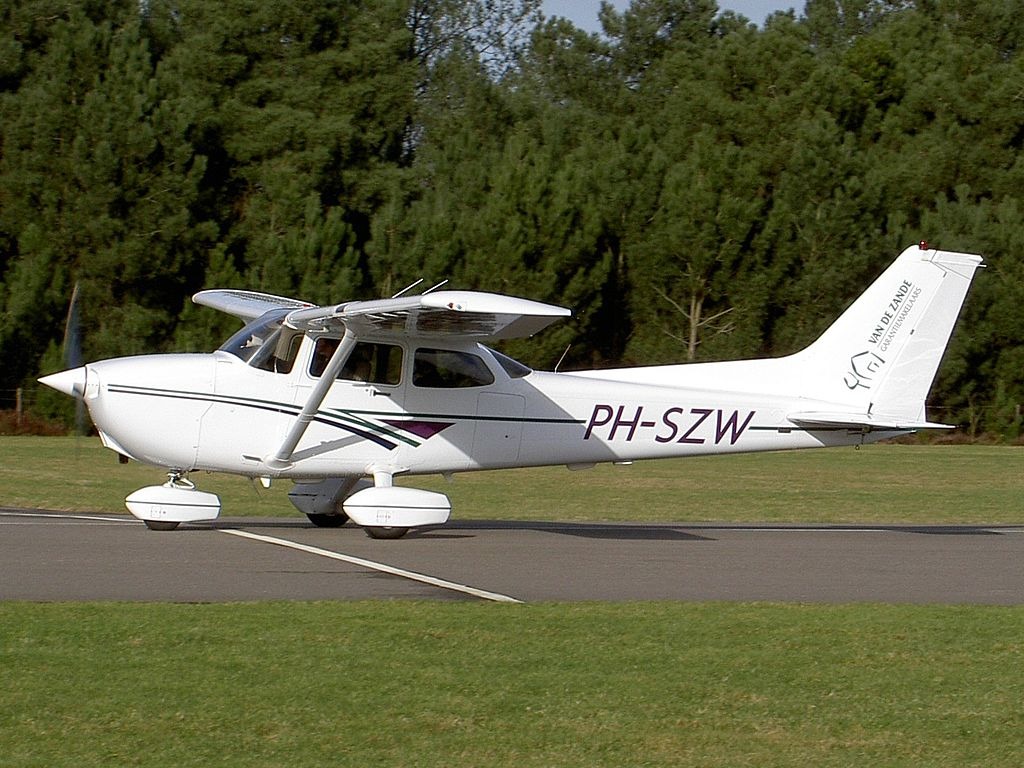
A 172 can be carbureted or it can have a fuel injected engine. Flooding can happen in both, but the clearing steps can look different. That is why the checklist matters.
Now that “flooded” is clear, let’s talk about the quick clues that tell you it happened.
Quick Clues Your 172 Is Flooded
Flooding has a pattern. Once you know it, you spot it fast.
Here are the clues many pilots notice:
- The engine fires once or twice, then quits.
- It sounds like it wants to run, but it cannot stay running.
- You smell strong fuel near the front of the airplane.
- You already added fuel, and it did not improve.
That last clue is big. If adding fuel did not help, adding more usually will not help.
The temperature trap
Temperature changes how a start behaves:
- A cold start often needs a small amount of added fuel.
- A hot start can trick you, because the engine still has heat and fuel vapor in the system.
A common mistake looks like this:
- It almost starts.
- You add more fuel “to help.”
- It gets worse.
If you feel tempted to pump the throttle, pause. That move often adds more fuel during a start attempt, which pushes a rich condition even richer.
Next, we set up a safe restart. This keeps you in control and protects the aircraft.
Before You Try Again: Make It Safe First
This part is about doing the basics in the right order. A flooded start is usually fixable, but you want to stay safe while you fix it.
Step 1: Set up for a safe start attempt
Do these items first:
- Set the parking brake or hold the brakes.
- Confirm the area in front of the airplane is clear.
- Keep your hand ready on the power control.
The engine can start suddenly, even after several failed tries.
Step 2: Respect the ignition system
A Cessna 172 uses a magneto system, so the engine can still make spark during cranking. That means ignition can happen the moment the mixture becomes right. Stay ready for that moment.
Step 3: Use the correct checklist
Now is the time to stop guessing. Use the poh or the approved checklist that matches the exact airplane. The published start procedures are built for that engine and that fuel setup.
Step 4: Protect the electrical and cranking parts
Cranking is hard on the aircraft. Use short attempts, then rest. Long cranking can overheat the starter and drain the battery.
Step 5: Keep fire risk in mind
Flooding raises the chance of an engine fire during start. It is not common, but it is serious. Know where the extinguisher is, and follow the emergency checklist right away if you see smoke or flame.
Now you are set up. Next comes the step-by-step clearing process.
Safe Steps to Clear a Flooded Cessna 172 Engine
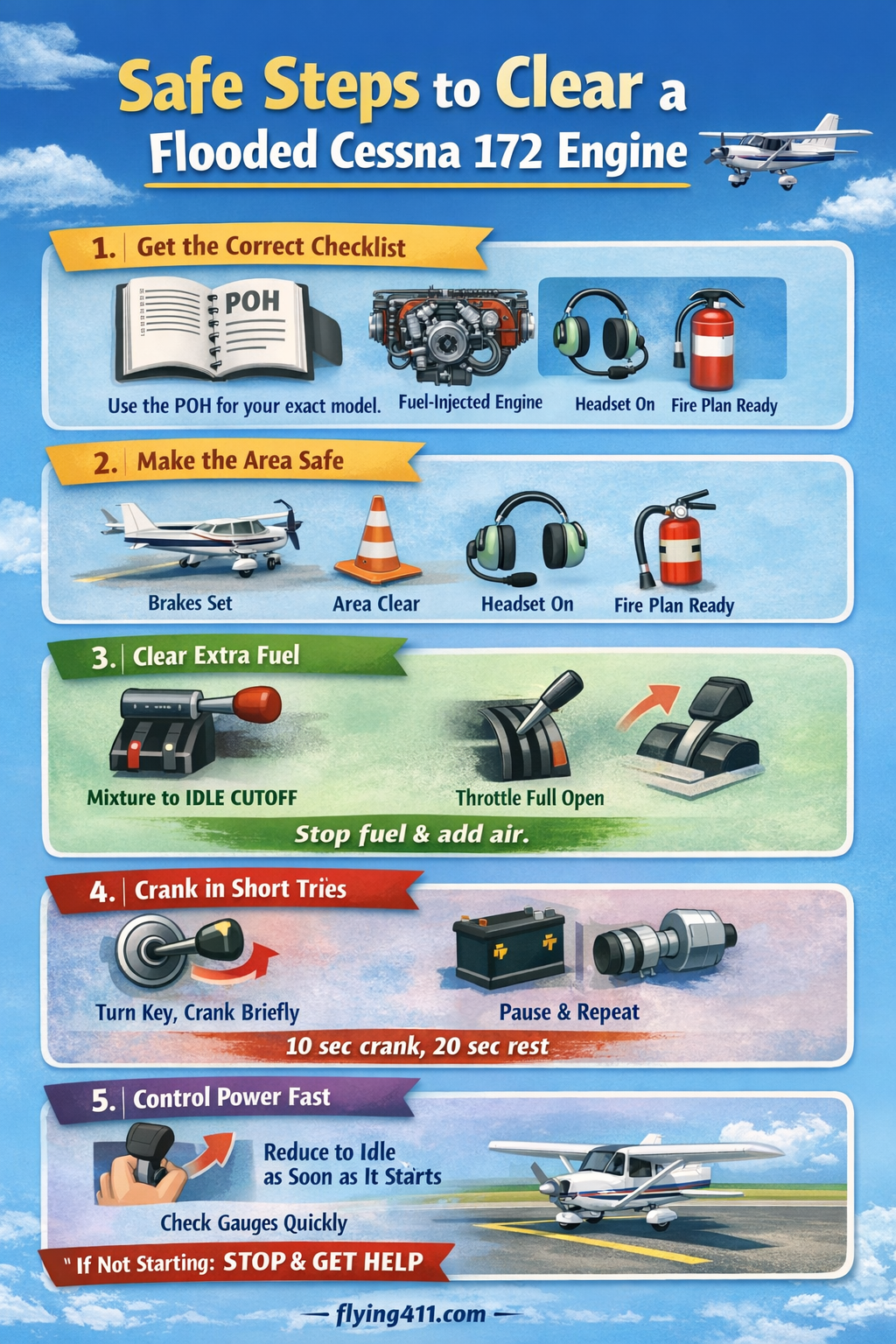
Let’s walk through a clean, calm plan. The goal is to stop adding fuel, increase airflow, and get the engine back to a normal mixture. Use these steps with your checklist as the final word.
1) Confirm the airplane type so you use the right checklist
First, match the procedure to your aircraft model. If you are unsure, look up What Are the Different Models of the Cessna 172? or check the aircraft documents with your instructor. This matters because the controls and fuel setup can differ.
2) Stop adding fuel and reset your controls
If you suspect flooding, stop adding fuel right away. Do not add more prime. Do not change controls at random. A good starting technique uses one clear plan.
Many flooded-start checklists use a fuel-cut step. You may see a direction to move the mixture to idle cutoff. That reduces fuel during cranking so the engine can clear.
3) Add airflow with the power control
Airflow helps clear the rich mix. Your checklist may tell you to open the throttle a lot during cranking. Some procedures call for full throttle. Some even call for throttle wide open while the engine clears, then a quick reduction as soon as it starts. Follow the exact wording from your checklist.
4) Crank in short, controlled tries
Crank for a short try, then pause. Listen for changes. A small “catch” often means it is clearing. If it catches, be ready to reduce power right away so it does not surge.
5) After it starts, stabilize and monitor
Once it runs:
- Bring the power back to a normal idle range.
- Check oil pressure and engine indications.
- If it runs rough for a moment, give it a short chance to smooth out.
If it keeps running rough, or it will not stay running, shut down and get help.
6) Know when to stop and call maintenance
Stop trying and ask for help if you notice:
- A stronger fuel smell that does not fade
- Smoke, flames, or any sign of overheating
- Slower cranking that suggests a weak battery
- No improvement after several correct attempts
If the airplane floods often, maintenance should inspect it. A Cessna 172 Annual Inspection is a common time for shops to catch small issues that can make starting harder.
Conclusion
A flooded start can feel frustrating, but it has a safe solution. Slow down. Use the right checklist. Make your changes on purpose. Crank in short tries. Reduce power fast when it catches.
If anything seems unsafe, stop and get help. That choice protects you, the airplane, and everyone on the ramp.
Want more clear, step-by-step flying tips? Follow Flying411.
FAQs
How long should I wait between cranking tries?
Wait long enough for the starter to cool and for you to reset your scan. Many pilots pause for a short break after each attempt.
Should I try again right away if it “almost” starts?
Pause first. Reset your plan and avoid adding extra fuel. A quick repeat often turns an almost-start into a no-start.
What if the battery is weak after several tries?
Stop and get help. A weak battery can slow cranking and make starts harder. Continuing can overheat parts.
Can I flood the engine even on a warm day?
Yes. Warm engines can still flood if extra fuel is added during the start sequence.
When should a mechanic look at repeated hard starts?
If hard starts keep happening, ask maintenance to inspect. It can point to a small issue that is easy to fix early.