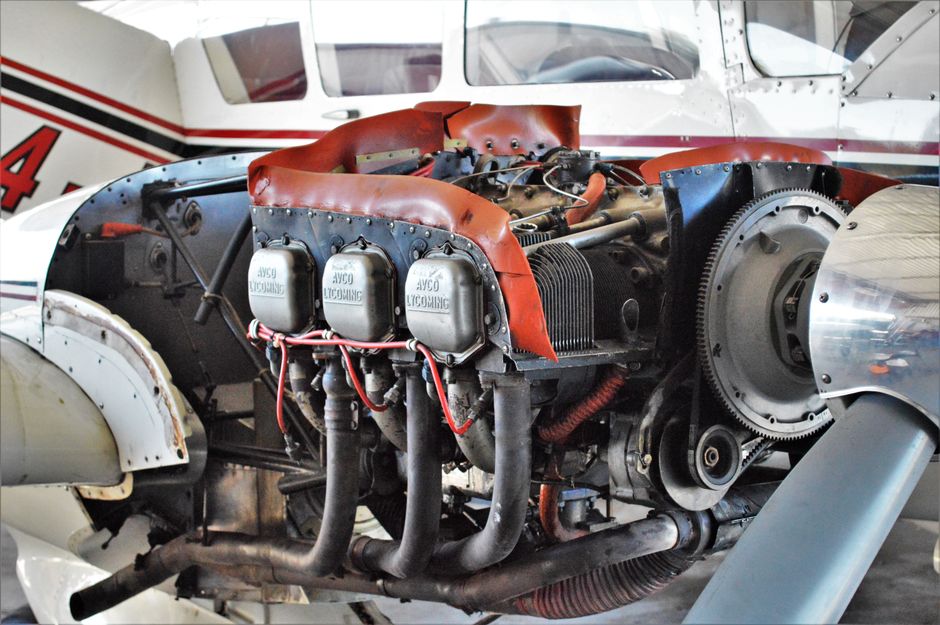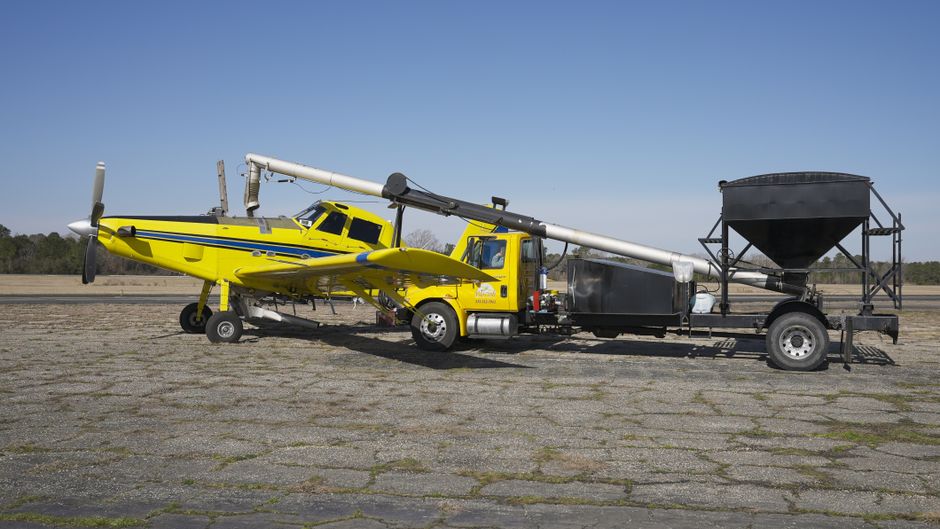
It is 5:40 in the morning on a grass strip in the Mississippi Delta. A yellow Air Tractor AT-502B sits with its tail into the wind, hopper lid open, while a loader truck pumps 400 gallons of spray into it. Fifty feet away, an old Piper Pawnee that the outfit keeps for small fields and ditch banks is already ticking as its Lycoming cools from the first load. The pilot who flies the Pawnee is 26 and washed airplanes here two summers ago. The pilot who flies the Air Tractor has 6,000 hours and a piece of the business.
That gap between the two airplanes is the whole career in one picture. Nobody hands a low-time commercial pilot the keys to a $1.5 million turbine. You earn your way up through a loader truck, a tailwheel endorsement, a season in something small and forgiving, and a stack of hours that satisfies an insurance underwriter rather than the FAA. Knowing how to become an ag pilot is less about a checkride and more about understanding who actually controls the gate.
Aerial application is one of the few flying jobs left where a pilot can make airline money without ever wearing a uniform, and one of the few where the aircraft, the chemical license and the business can all end up in your name. It is also seasonal, physically demanding and statistically among the more dangerous ways to fly for a living. This guide walks the whole path: what the FAA requires under Part 137, what training costs, how many hours you really need, what the job pays, and what the airplanes cost if you eventually want your own.
Key Takeaways
The FAA sets a surprisingly low bar. To fly agricultural operations for hire you need a commercial pilot certificate with the appropriate category and class rating and the medical qualification required to exercise commercial privileges. Under 14 CFR 137.41(c), a pilot working for an established agricultural operator must also demonstrate the knowledge and skills described in 137.19(e) to the certificate holder or its designated chief supervisor; the FAA-administered test applies during initial Part 137 operator certification to the applicant or designated chief supervisor. No instrument rating is required, and no minimum ag-specific hour count appears anywhere in the regulation. The real gatekeepers are the insurance underwriter, who typically wants 500 to 1,000 total hours plus meaningful tailwheel time before you touch a piston ag plane, and the operator, who almost always wants you to spend a season on the ground loading and mixing first. Budget roughly $70,000 to $110,000 to go from zero hours to a commercial certificate, then another $8,000 to $20,000 for a tailwheel endorsement and a one- to two-week ag flight school, plus a state pesticide applicator license. Pay is usually a percentage of the gross revenue you fly, and experienced turbine pilots in busy regions commonly clear six figures in a season that lasts five or six months.
| Question | Short answer |
| Minimum FAA certificate? | Commercial pilot (private is enough only if you spray your own land for no compensation, per 14 CFR 137.19) |
| Instrument rating required? | No, but many operators like it and some insurers price it in |
| Medical? | Second-class FAA medical for commercial privileges |
| FAA minimum hours for ag work? | None beyond the 250 hours for a commercial certificate |
| Hours insurers usually want | 500–1,000 total, with 50–200 tailwheel, before a piston ag seat |
| Extra license | State commercial pesticide applicator certification, aerial category |
| Typical total cost to be hireable | $80,000–$130,000 from zero hours |
| Season length | Roughly 5–7 months in most of the U.S. |
What an Ag Pilot Actually Does
Aerial application means dispensing something from an aircraft onto a field: liquid pesticide and fungicide, dry fertilizer, seed for cover crops, even beneficial insects. The National Agricultural Aviation Association estimates the industry covers a large share of U.S. commercial cropland each year with roughly 1,500 operating businesses and a few thousand working pilots. It is a small world. People know each other.
The flying itself is nothing like cross-country work. You fly swath runs a few feet above the crop at 130 to 150 mph, pull up hard at the end of each pass, turn around in about 12 seconds, and come back the other way. A single 160-acre field might be 30 passes. You do that from first light until the wind comes up, land, reload in four minutes, and go again. On a good July day a turbine pilot may fly eight hours and make 200 landings and takeoffs.
Why It Matters: Ag flying is repetitive low-altitude maneuvering with obstacles. Wires, towers, irrigation pivots and trees kill more ag pilots than engine failures do. Everything in the hiring pipeline, from the loader year to the insurance minimums, exists because that environment is unforgiving of inexperience.
Is it still called crop dusting?
Only by people outside the industry. Actual dust application largely disappeared decades ago in favor of liquids and dry granular products. The trade calls it aerial application, and the pilots call themselves ag pilots. If you show up to an interview saying you want to be a crop duster, they will know exactly how much reading you have done.
The Certificates the FAA Actually Requires
Do you need a commercial pilot certificate?
Yes, if you are getting paid. Under 14 CFR 137.19, an applicant for a private agricultural aircraft operator certificate must hold at least a private pilot certificate, properly rated. An applicant for a commercial agricultural aircraft operator certificate must hold a commercial or airline transport pilot certificate. The private version exists for farmers who treat their own ground and are not compensated by anyone else. Everybody who flies for a spray outfit is working under the commercial certificate.
Getting there is the same commercial certificate any charter or flight instructor candidate holds: 250 hours total time under Part 61.129, with the required cross-country, night, instrument training and complex or technically advanced aircraft time, or about 190 hours through an approved Part 141 program. If you are starting from nothing, our walkthrough on how to become a pilot covers the sequence, and the breakdown of what it really costs to go from zero hours to a commercial certificate is the number to plan around.
What is the Part 137 knowledge and skill test?
This is the piece most people have never heard of. Section 137.19(e) requires an applicant for an agricultural aircraft operator certificate — or the applicant's designated chief supervisor — to demonstrate the required knowledge and skills during the FAA certification process. Pilots subsequently working under that certificate must demonstrate the same competencies to the certificate holder or designated chief supervisor under 14 CFR 137.41(c).
The knowledge portion covers the steps to be taken before starting operations, including a survey of the area to be worked; the safe handling of economic poisons and the disposal of used containers; the primary symptoms of poisoning in people, appropriate emergency measures, and the location of poison control centers; the performance capabilities and operating limitations of the aircraft; and safe flight and application procedures.
The skill portion, for airplanes, covers short-field and soft-field takeoffs, approaches to the working area, flare-outs, swath runs, and pull-ups and turnarounds. Helicopter applicants demonstrate rapid deceleration, or quick stops, instead of the short and soft-field takeoffs. You apply on FAA Form 8710-3, and the operator must designate a chief supervisor of agricultural aircraft operations if the certificate holder is not personally supervising the work.
Good to Know: If you go to work for an established operator, the company already holds the Part 137 certificate. You still have to satisfy the knowledge and skill requirements to be listed and to dispense restricted-use materials, but you are not building a certificate from scratch until you go out on your own.
What about the pesticide license?
The FAA regulates the flying. The Environmental Protection Agency, through FIFRA and the state departments of agriculture that administer it, regulates the chemical. Applying restricted-use pesticides for hire requires a commercial applicator certification in the aerial category, issued by the state you work in. That means a core exam plus one or more category exams, a fee usually in the $50 to $200 range, and continuing education credits to keep it current. If you cross state lines to chase a season, you may need reciprocity or a second state's license.
Heads Up: A pesticide misapplication complaint can end a career faster than a bent airplane. Drift onto a neighbor's organic field or a residential subdivision becomes a state enforcement case, an insurance claim and a reputation problem in a very small industry, all at once.
Hours: What the FAA Wants Versus What the Underwriter Wants
Search for ag pilot minimums and you will find numbers all over the map, because there are two different sets. The FAA sets 250 hours and stops. The insurance company sets everything else, and the insurance company is the one that decides whether you fly.
| Seat | Typical total time sought | Typical tailwheel time | Notes |
| Loader / mixer (ground) | Any | None | The normal way in; often a full season |
| Piston ag (Pawnee, Ag-Cat, Cessna 188) | 500–1,000 | 50–200 | Some operators bring in ag school graduates lower |
| Light turbine (AT-402, AT-502) | 1,000–1,500 with 500+ ag | Substantial | Usually after one to three piston seasons |
| Heavy turbine (AT-802, Thrush 710) | 2,000+ with heavy ag time | Substantial | Fire and heavy load work often layered on |
Those ranges move with the insurance market. In a soft market an operator can get a 500-hour pilot approved in a Pawnee with an ag school certificate; in a hard market the same underwriter wants 1,000 hours and a named-pilot endorsement. Ask any operator you interview with what their carrier requires, because that answer is more useful than any general figure you will read, including this one.
Pro Tip: Tailwheel time is the cheapest thing on this list and the one that moves the needle most. A Citabria or Super Cub rents for a fraction of what an ag airplane costs per hour, and 100 hours of honest stick-and-rudder tailwheel experience makes you a plausible candidate instead of a resume in the pile.
Flying411 keeps tailwheel trainers, Super Cubs and legacy ag airframes in one place, so you can compare what hour-building and first-airplane options actually cost before you commit to a training plan.
The Loader Year and Ag Flight School
Why does everyone tell you to load first?
Because it is the interview. Working the loader truck for a season teaches you the chemistry, the mix rates, the rinse procedures, the field maps, the customer relationships and the rhythm of a turn. It also lets the operator watch you for four months and decide whether they want you in their airplane. Think of it like a restaurant: nobody walks in and runs the line on day one, no matter how well they cook at home.
Loader pay is modest, often hourly and seasonal, but it is the single most reliable entry point in the industry. Pilots who skip it and expect to be hired off a commercial certificate alone usually get nowhere.
Is ag flight school worth the money?
For most people, yes. A handful of dedicated ag schools in the U.S. run one- to two-week courses that put you in a Pawnee or Ag-Cat and teach the pattern: the entry, the swath run, the pull-up, the procedure turn, the dealing with wires. Courses generally run from around $6,000 for a short program to $15,000 or more for one that includes a larger block of ag aircraft time. That certificate does two things. It tells the operator you can already fly the pattern, and it gives the underwriter something to point at.
Beyond the schools, the industry runs its own safety training. The National Agricultural Aviation Association's PAASS program and the Operation S.A.F.E. fly-in clinics, where your aircraft's spray pattern is measured and analyzed, are standard professional development. Attending both signals that you take the work seriously.
Quick Tip: Go to a state aerial applicators association convention before you spend a dollar on ag school. You will meet a dozen operators in one weekend, hear what they are actually hiring, and learn which schools they respect.
What It Costs, Start to Finish
| Item | Typical cost |
| Private pilot certificate | $14,000–$22,000 |
| Instrument rating (optional but useful) | $10,000–$18,000 |
| Commercial certificate and time building to 250 hours | $45,000–$75,000 |
| Tailwheel endorsement | $1,500–$3,500 |
| Additional tailwheel time (50–150 hours) | $7,000–$25,000 |
| Ag flight school | $6,000–$15,000 |
| State pesticide applicator exams and license | $50–$300 plus study materials |
| FAA second-class medical | $120–$200 |
| Realistic total from zero hours | $80,000–$130,000 |
Costs vary by region, aircraft rental rates and how efficiently you train. The instrument rating is the line item people argue about. Part 137 does not require it, and plenty of excellent ag pilots do not hold one. But it is part of the standard commercial training sequence, it makes you more employable in the off-season, and some insurers give credit for it. If money is tight, it is the one to defer rather than delete.
Keep in Mind: Unlike the airline track, there is no ag-pilot cadet program writing checks for your training. Almost everyone pays their own way, often while working another job, and most take three to six years from first lesson to first ag seat.
What Ag Pilots Get Paid
Almost nobody in aerial application is paid a flat salary. The standard arrangement is a percentage of the gross billings the pilot generates, commonly quoted in the range of 15 to 25 percent, sometimes with a base or a draw during slow weeks. Operators report that the percentage depends on whether the pilot or the company covers certain costs, what aircraft is flown, and how much of the customer relationship the pilot handles.
| Stage | Typical seasonal earnings | Comment |
| Loader / mixer | $15,000–$30,000 for the season | Hourly, long days, overtime common |
| First-year piston ag pilot | $35,000–$60,000 | Smaller loads, shorter working window |
| Experienced piston or light turbine | $60,000–$100,000 | Depends heavily on acres available |
| Experienced heavy turbine | $100,000–$200,000+ | Top producers in high-acreage regions |
| Owner-operator | Highly variable | Business income, not a wage |
Read those as season figures, not annual salaries. A Midwest season might run May into September. Some pilots fill the winter with fire contracts, maintenance work, instructing, or a second season in New Zealand, Australia or South America. Others simply take four months off, which is one of the genuine perks of the job.
Fun Fact: Because pay tracks acres flown, weather is your paycheck. A wet, windy July in a spray region can cut a pilot's season earnings by a third, and a fungicide-heavy year with good flying weather can double a good pilot's expectations.
The Airplanes You Will Fly
| Aircraft | Hopper | Power | Role |
| Piper PA-25 Pawnee | About 150 gallons | Lycoming piston, 150–260 hp depending on model | Classic entry-level ag plane, small fields |
| Cessna A188 AgWagon / AgTruck | About 200–280 gallons | Continental piston | Rugged piston workhorse, now out of production |
| Grumman / Schweizer Ag-Cat | Varies by model | Radial piston, many turbine conversions | Biplane, beloved, still widely flown |
| Air Tractor AT-402B | 400 gallons | PT6A turbine | Light turbine step-up |
| Air Tractor AT-502B | 500 gallons | PT6A-34AG, 750 shp | The industry's bread-and-butter turbine |
| Thrush 510G / 550P | 510–550 gallons | GE H80 or PT6A-34AG | Main Air Tractor competitor |
| Air Tractor AT-802A | 800 gallons | PT6A-67 series, roughly 1,300–1,600 shp | Heavy ag and single-engine air tanker work |
Helicopters have a real share of the market too, especially in orchards, vineyards, hilly ground and rice. Rotorcraft aerial application runs under the same Part 137 rules with the quick-stop skill item substituted in, and the pay structure is similar. If that route interests you, our guides on becoming a helicopter pilot and getting a helicopter license cover the different training math.
Flying411 keeps turbine and piston ag aircraft listings in one place, so you can compare hopper size, engine time and airframe hours side by side instead of hunting across a dozen tabs.
What does an ag plane cost to buy?
Used piston ag airplanes are the cheapest turbine-free entry into ownership in all of aviation. A flyable Pawnee or Cessna 188 often trades for less than a well-equipped used Cirrus. Turbines are a different world: a mid-time AT-502B is a several-hundred-thousand-dollar machine, and a new heavy Air Tractor with modern spray gear runs well into seven figures. Asking prices swing hard with engine time remaining, so read the logbooks before you read the ad.
Two numbers dominate the valuation of any turbine ag plane: hours since overhaul on the PT6A and airframe hours. Ag airframes accumulate cycles and corrosive chemical exposure faster than almost anything else in general aviation, which is why airframe hours affect resale value so sharply in this segment. A prebuy that includes a hopper and structure inspection is not optional.
Good to Know: Many purpose-built agricultural aircraft are certificated in the restricted category for agricultural and pest-control operations, which carries additional operating limitations. However, Part 137 itself does not require every aircraft used for agricultural operations to hold a restricted-category certificate; the aircraft must be properly certificated, airworthy, and equipped for the operation.
Safety, Season and the Honest Downsides
Low-level maneuvering flight is where general aviation's accident record is worst, and aerial application lives there by definition. NTSB data consistently shows wire strikes, obstacle collisions and loss of control in the turnaround as leading causes in ag accidents. Section 137.42 requires the safety belt and shoulder harness to be properly secured during operations conducted under Part 137, except when fastening the shoulder harness would prevent the person from performing required duties.
The other downsides are practical. The season is compressed and brutal: 14-hour days, six or seven days a week, for months. You will live near the strip. You will handle chemicals and need to respect them. Your income depends on weather you cannot control. And there is no seniority list to protect you, which cuts both ways, because a good pilot with a good reputation can change employers in a phone call.
Pro Tip: Take the wire survey seriously every single time. Experienced ag pilots fly the field at altitude first, mark the hazards, and reconfirm after any change in the field. The accident reports are full of pilots who had flown that same field for years.
Flying411 keeps ownership cost guides, maintenance explainers and marketplace listings in one place, so you can model an ag operation's real numbers before you sign a purchase agreement.
Conclusion
The regulatory path is short and the practical path is long. Learning how to become an ag pilot comes down to five concrete steps: earn a commercial pilot certificate and second-class medical, build real tailwheel experience, get your state pesticide applicator certification, demonstrate the Part 137 knowledge and flight skills required for the agricultural operation, and spend a season on a loader truck proving you belong. Do those in order and the hours, the seat and the pay follow. Skip the ground work and the insurance company will stop you no matter how good your logbook looks.
If you already fly and are weighing this against other commercial paths, compare it honestly. Ag pays well, starts earning sooner than the airline track, and offers an ownership ladder almost no other flying job does. It also asks more of your body, your nerves and your calendar. Talk to three working ag pilots before you spend the money, and go to a state association meeting. If you are thinking about the business side instead, our guides on becoming an aircraft broker and other aviation career paths are worth a look.
When you are ready to compare listings, visitFlying411and see what is on the market today.
Frequently Asked Questions
How many flight hours do you need to be an ag pilot?
The FAA sets no ag-specific minimum. You need a commercial pilot certificate, which requires 250 hours under Part 61 or about 190 under an approved Part 141 program. In practice, insurance underwriters typically want 500 to 1,000 total hours with 50 to 200 hours of tailwheel time before approving a pilot in a piston ag aircraft, and 1,000 to 1,500 hours with prior ag experience for a light turbine.
Do ag pilots need an instrument rating?
No. Part 137 does not require one, and many career ag pilots never get one. It is still worth having: it is part of the normal commercial training sequence, some insurers view it favorably, and it opens off-season flying work that pure ag experience does not.
How long does it take to become an ag pilot?
Most people take three to six years from their first lesson to their first ag seat. That is roughly one to two years for the certificates and hours, a season or two on the loader truck, and an ag school course somewhere in there. Full-time students with funding move faster; people training while working move slower.
Is crop dusting dangerous?
It carries higher risk than most civilian flying. The work is done in low-level maneuvering flight around wires, towers, trees and irrigation equipment, which is the flight regime with general aviation's worst accident record. The industry's safety programs, mandatory shoulder harness use under 14 CFR 137.42, and disciplined field surveys exist to manage that risk, and experienced operators treat it as a professional discipline rather than a daredevil job.
Can I spray my own farm without a commercial certificate?
Yes, within limits. Under 14 CFR 137.19, a private agricultural aircraft operator certificate requires only a private pilot certificate, and it allows dispensing on land you own or lease without compensation from anyone else. You still need to pass the knowledge and skill test and hold the appropriate state pesticide certification for the products you apply.
What is the best first aircraft for a new ag pilot to own?
Most people who buy in start with a piston airplane: a Piper Pawnee, a Cessna 188 or an Ag-Cat. They are affordable, parts support exists through type clubs and specialty shops, and they let you build ag time without a turbine's operating costs. Have any candidate inspected for corrosion and hopper-area structural damage, and check the logbooks for chemical exposure history before you commit.