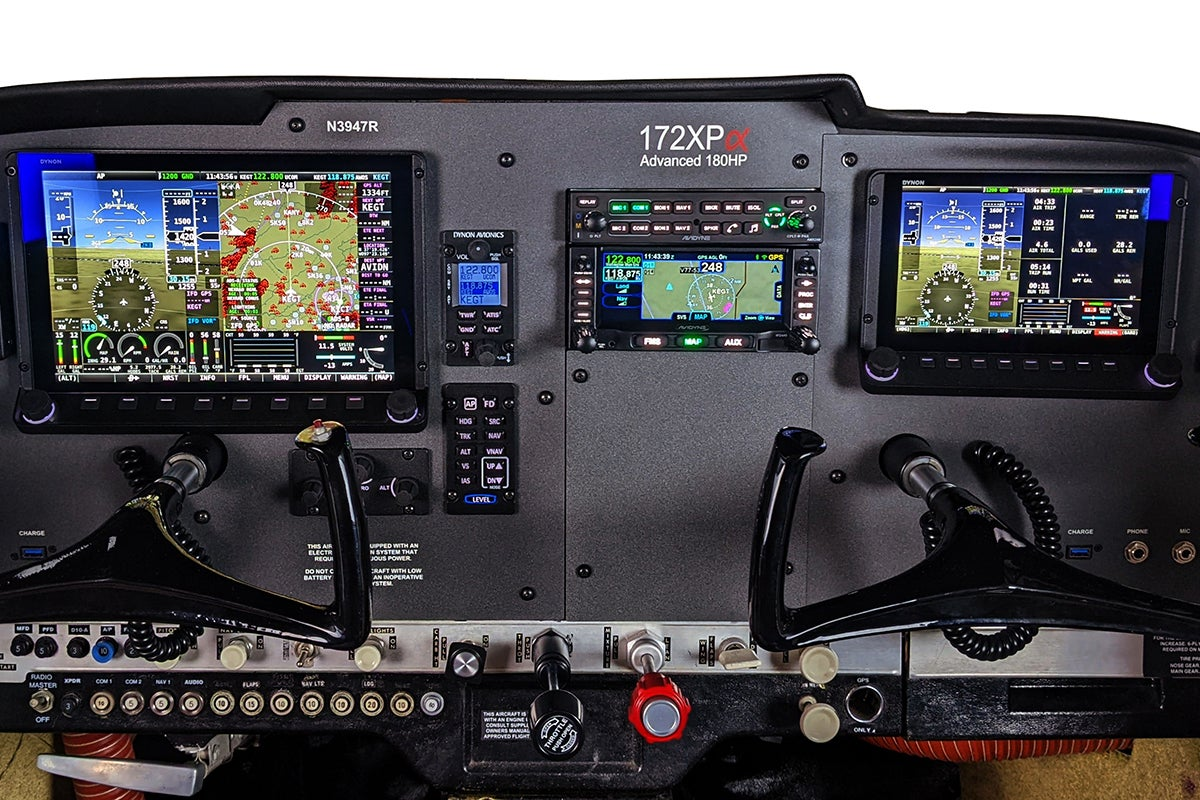
You just signed off a panel upgrade, and now there is a cardboard box on the hangar shelf holding a nav/comm, a transponder, an audio panel, a couple of indicators, and a tangle of trays and backshells. The obvious question — the one owners actually type into a search box — is "how much is my removed avionics stack worth, and what do I have to give the buyer?"
The honest answer is that the box on the shelf has two values: a hardware value set by demand for that part number, and a documentation value set entirely by what you can prove. The same GPS navigator can be nearly unsellable or a fast sale at a strong number depending on whether you kept the rack, the logbook entry, and a serviceable tag. This article covers how used avionics are priced, the condition ladder that drives the number, and the exact paperwork checklist a serious buyer or dealer will hand you.
Key Takeaways
- Documentation is a price multiplier, not a formality. An "as-removed, no paperwork" unit trades at a deep discount to the same unit with a repair station serviceable tag or an FAA Form 8130-3.
- You cannot create the good paperwork yourself. An 8130-3 or "yellow tag" for a used article comes from an appropriately rated FAA repair station after it inspects and returns the article to service. What you can supply is a clean removal entry, photos of the data plate, and an honest condition statement.
- Trays, backshells, connectors and indicators are real money. A navigator without its rack and connector kit is worth materially less because the buyer's shop has to buy an install kit.
- Regulatory obsolescence sets the ceiling. Non-ADS-B transponders, non-WAAS navigators, and units the manufacturer no longer repairs have a shrinking buyer pool no matter how nice they look.
- Negotiate trade-in credit before the install, not after. Your leverage with the avionics shop is highest while the quote is still unsigned.
- Bench-check economics matter. On low-value boxes, a shop test can cost more than the unit will bring. Test the expensive items, sell the cheap ones honestly as-removed.
Why paperwork drives price: the regulation behind it
When a shop installs a used avionics box on your aircraft, the installer has to be satisfied the article is both eligible for that aircraft and airworthy. FAA Advisory Circular 20-62E, Eligibility, Quality, and Identification of Aeronautical Replacement Parts, describes the kinds of documentation that support that determination — including maintenance releases, FAA Form 8130-3 airworthiness approval tags, and records that trace the part back to a known source.
Two practical consequences follow:
- An 8130-3 is not always legally required to put a used part on a Part 91 airplane. The installing mechanic or repair station makes the airworthiness call.
- Because the installer carries that risk, they price it. A unit with no traceable history forces the buyer's shop to bench test it, or to gamble. Either way, that cost comes out of your sale price.
This is exactly the same dynamic that governs removed engine cores and damaged propellers: the physical object matters, but the record trail decides whether it is an asset or a liability. If you have been through that with a powerplant, see our breakdowns of what a run-out engine core is actually worth on an exchange and prop strike teardown costs — the documentation logic is identical, only the dollar scale changes.
The condition ladder: four rungs, four different prices
Used avionics trade in recognisable condition tiers. Knowing which rung your box is on tells you which buyers will even talk to you.
| Rung | What it means | Who buys it | Effect on value |
|---|---|---|---|
| 1. Core / as-removed, unknown condition | Pulled from an aircraft, no test, no claim about function. Often units removed for a known fault. | Repair shops, exchange pools, parts strippers | Lowest tier — priced as a repairable core, not as a working unit |
| 2. "Working when removed," documented | Functioned normally in the aircraft; supported by a dated removal entry in the maintenance record and the reason for removal (upgrade, not failure) | Owners doing budget panel work, dealers who will test in-house | Solid mid-tier; the most common way private owners sell |
| 3. Bench-checked serviceable ("yellow tag") | A rated repair station tested the article to the maintenance data and issued a serviceable tag / maintenance release | Most installing shops, retail buyers | Meaningful premium over rung 2 — the buyer's shop can plan the install with confidence |
| 4. Overhauled / repaired with FAA Form 8130-3 | Returned to service by an appropriately rated organisation with a formal airworthiness approval tag | Part 135 operators, export buyers, corporate flight departments | Top tier — and effectively mandatory for many commercial and export transactions |
A note on terminology that trips up sellers: "yellow tag" is industry shorthand, not an FAA form. It refers to a repair station's serviceable tag documenting maintenance and return to service. FAA Form 8130-3 is a specific FAA document; for a used article, it is issued by an FAA-authorised organisation after it determines the article is airworthy — not by the aircraft owner, and not by an A&P scribbling on a shipping label.
Six factors that actually set the number
1. Regulatory currency
Since 1 January 2020, ADS-B Out has been required to operate in the airspace defined in 14 CFR 91.225. That single rule reshaped the used market: Mode C-only transponders and legacy non-extended-squitter Mode S units lost most of their retail appeal overnight, while ADS-B-capable transponders and WAAS-capable navigators (the ones that can serve as a compliant position source) held value far better. Ask yourself what a buyer can legally do with the box. That answer is the ceiling.
2. Manufacturer support status
When an OEM stops repairing or exchanging a product line, the unit stops being a maintainable asset and becomes a consumable. Check the manufacturer's product-support pages for your exact part number before you set a price. A discontinued-support navigator still sells, but it sells to buyers who accept that the next failure is terminal — and they price accordingly.
3. Completeness of the install kit
This is the single most common mistake owners make: letting the shop keep, bin, or cut the trays and connectors. A navigator, transponder or audio panel is far more attractive when it ships with:
- The mounting rack / tray, undamaged, with its hardware
- Backshell connector kits with pins intact (not chopped harness pigtails)
- Matching indicators or CDI heads sold as a set
- Antennas, if they were also removed and are in good condition
- Data cards, config modules, and any unlock or enablement cards
Write "all trays, connectors and removed indicators are returned to the owner" into your upgrade work order. Do it before the panel comes apart.
4. Part number, modification level and software version
Sub-variants matter enormously. Two boxes with the same marketing name can have different part numbers, different service bulletin status and different software loads — and only one of them may be usable in the buyer's aircraft. Under 14 CFR 45.15, TSO-approved articles carry required identification markings; photograph that data plate clearly and transcribe the part number, serial number and any mod strapping exactly. "I think it's the 'W' version" costs you money.
5. Provenance
Buyers care where it came from. A unit pulled from a flying, insured, privately owned aircraft during a voluntary upgrade is the ideal story. Units with no history at all, or units that came out of a hull loss, a fire, a lightning strike, or a submerged airframe, are a different product — and must be disclosed. Undisclosed damage history is how honest sellers end up in disputes, and how questionable parts end up in the FAA's Suspected Unapproved Parts reporting system.
6. Time of year and channel
Used avionics demand tracks upgrade season and shop backlogs. More importantly, the channel you sell through can swing your net by a wide margin — see the comparison below.
The paperwork checklist buyers and dealers will ask for
Assemble this package once, as a single PDF, and you will answer 90% of buyer questions before they are asked. Sellers who have it ready close faster and discount less.
| Document | Who produces it | Why the buyer wants it |
|---|---|---|
| Clear photos of the data plate and all faces of the unit | You | Confirms exact P/N, S/N, TSO markings and physical condition |
| Copy of the maintenance record removal entry | Your shop / A&P (14 CFR 43.9) | Establishes date, aircraft, tach/hours and reason for removal |
| Copy of the log page showing the replacement install | Your shop | Corroborates that removal was an upgrade, not a failure |
| Signed "working when removed" / condition statement | The removing A&P or shop | Puts the functional claim on someone qualified, not just a listing |
| Repair station serviceable tag or FAA Form 8130-3 | Rated repair station only | Lets the buyer's shop plan a first-time-right install |
| AD and service bulletin status for the article | Your shop, from the records | Some avionics and autopilot components carry applicable directives |
| Software / firmware version and mod level | Your shop | Determines compatibility and upgrade path |
| List of included hardware (tray, connectors, cards, antennas) | You | Prevents the number-one post-sale dispute |
| Damage-history disclosure statement | You | Rules out fire, water, lightning and hull-loss provenance |
| Bill of sale / clear-title statement | You | Confirms you have the right to sell — matters if the aircraft is financed or leased |
Two items on that list deserve extra attention.
The removal entry. Under 14 CFR 43.9 the person performing the maintenance makes a record entry, and under 14 CFR 91.417 the owner keeps the aircraft's records. Your removed box does not have a logbook of its own — the aircraft's record is its birth certificate. Ask your shop to write the entry so it reads usefully to a stranger: part number, serial number, date, aircraft registration, hours, and "removed serviceable in conjunction with panel upgrade; no known defects." FAA AC 43-9C offers general guidance on making maintenance record entries. A vague entry that just says "removed old radios" costs you real money later.
Title and lienholder interest. If the aircraft is financed, on a lease, or in a co-ownership or leaseback arrangement, read the documents before you sell components off the airframe. Loan and lease agreements commonly attach to installed equipment, and a management or leaseback agreement may not make removed parts yours to monetise. This is a five-minute check that prevents an ugly conversation.
Where to sell: four channels compared
| Channel | Typical net to you | Speed | Best for |
|---|---|---|---|
| Trade-in credit at the installing shop | Below retail, but zero effort and no shipping | Immediate | Owners who negotiate it into the upgrade quote up front |
| Used-avionics dealer outright purchase | Wholesale — they carry test, tag, warranty and inventory risk | Days | Boxes needing a bench check you don't want to fund |
| Dealer consignment | Retail minus a commission; agree the split and testing costs in writing | Weeks to months | Desirable, current-generation units |
| Direct private sale | Highest gross, but you own returns, disputes and shipping damage | Variable | Complete sets with strong documentation |
The most under-used lever is the first row. Once the new stack is installed and your removed gear is sitting in a box, your negotiating position has evaporated. While the quote is unsigned, "what will you allow me for the outgoing stack?" is a legitimate line item — and shops that resell used equipment will often answer with a real number.
What destroys value (and is entirely avoidable)
- Chopped harnesses. Cutting wires flush at the backshell instead of returning intact connector kits.
- Splitting sets. Selling a navigator without its indicator, or an autopilot computer without its servos and mode controller, when the set commanded a premium.
- No removal entry. The most expensive omission in the whole process, and it is free to prevent.
- Bad packing. Avionics are shock- and ESD-sensitive. Anti-static bags, rigid double-boxing, and connector protection. A unit damaged in transit becomes a core.
- Overclaiming. "Perfect working order" on an untested box invites returns. "Removed serviceable during upgrade, no known defects, not bench tested, sold with return privileges for X days" sells nearly as well and holds up.
- Storing it in the hangar for three years. Avionics depreciate on the shelf as mandates and support windows move. The best selling day is usually the week after removal.
Export, hazmat and other fine print
Cross-border sales add steps. Buyers in EASA states typically want an EASA Form 1 or a dual-release tag, which your domestic repair station may not be able to issue — check before you promise it. European buyers will also ask whether a comm radio supports 8.33 kHz channel spacing, because that determines whether the radio is usable in their airspace. If any of the equipment is military-derived or has a defence pedigree, US export control rules administered by the State and Commerce departments may apply; get advice rather than guessing.
Practical shipping notes: ELT and standby battery packs fall under lithium-battery transport rules and generally cannot be dropped in an ordinary parcel; some legacy instruments contain radioluminescent markings with their own handling requirements. When in doubt, ask your shop to dispose of or ship those items rather than doing it yourself.
A simple 7-step process
- Before the upgrade: put "all removed avionics, trays, connectors, indicators and antennas returned to owner" in the work order, and ask for a trade-in allowance.
- At removal: have the shop write a detailed 43.9 entry naming each part number and serial number, with the reason for removal.
- Same day: photograph every data plate and every face of every unit before anything gets boxed.
- Triage: sort into "worth a bench check," "sell as-removed with documentation," and "core / scrap."
- Test selectively: get a serviceable tag only where the premium clearly exceeds the shop time.
- Build the PDF: photos, log pages, condition statement, tags, included-hardware list, disclosure statement.
- Choose the channel and list within weeks, not years.
Conclusion
Removed avionics are not scrap and they are not treasure — they are a documented asset whose price you largely control with a work order, a logbook entry and a camera. The hardware sets the range; the paperwork decides where in that range you land. Owners who treat the outgoing stack as part of the upgrade project, rather than as an afterthought in a box, routinely recover a meaningful share of their panel spend.
If you are planning the upgrade rather than cleaning up after one, browse aircraft and equipment listings on Flying411 to see how panel configuration is described and valued in the market you'll eventually sell into — and use our ownership-cost and maintenance guides to plan the whole project, from the panel to the powerplant.
Frequently Asked Questions
Can I sell removed avionics without any paperwork at all?
Yes, but you are selling into the core market, and you should describe it that way. Without a removal entry or a tag, the buyer's shop has to establish airworthiness and eligibility on its own before installation — and the discount reflects that risk. Providing a copy of the aircraft's removal entry costs nothing and moves the unit up a full tier.
Do I need an FAA Form 8130-3 to sell a used avionics unit?
Not necessarily. Many Part 91 installations proceed on the installer's airworthiness determination supported by the documentation described in AC 20-62E. However, an 8130-3 or equivalent tag is often expected in commercial, air-carrier and export transactions, and it commands a premium in retail sales. Remember that for a used article the tag must come from an authorised organisation after it inspects and returns the article to service.
Is a bench check worth paying for?
It depends on the spread. For a current-generation navigator, transponder or autopilot component, a serviceable tag usually pays for itself and shortens time-to-sale. For an aging audio panel or a legacy indicator, the shop labour can exceed the unit's whole value — sell those honestly as-removed instead.
What happened to the value of non-ADS-B transponders?
The ADS-B Out requirement in 14 CFR 91.225 sharply narrowed the buyer pool for equipment that cannot support compliance. There is still a market — aircraft that operate exclusively outside rule airspace, and shops feeding repair pools — but expect legacy transponders to sit lower on the ladder and to move slowly.
The shop says the old trays and connectors are theirs. Is that normal?
It is common practice when nothing was agreed in advance, because shops routinely resell removed equipment. It is also entirely negotiable — which is why the ownership of removed parts belongs in the work order or quote before the panel is opened.
Does the STC or approval from my installation transfer with the box?
Does the STC or approval from my installation transfer with the box?
Generally no. Approval basis for the buyer's installation — whether by STC, approved model list, TC data or field approval — is established for their aircraft, typically using data obtained from the equipment manufacturer or STC holder. What you supply is the eligible article plus its identification and condition records, not an installation approval.
Can I write my own "working when removed" tag?
You can make a factual owner statement, and honest owners do. It carries far more weight, however, when the removing A&P or repair station signs it and it is backed by the maintenance record entry. Never use language or colours that imply a repair station return to service you are not authorised to issue.