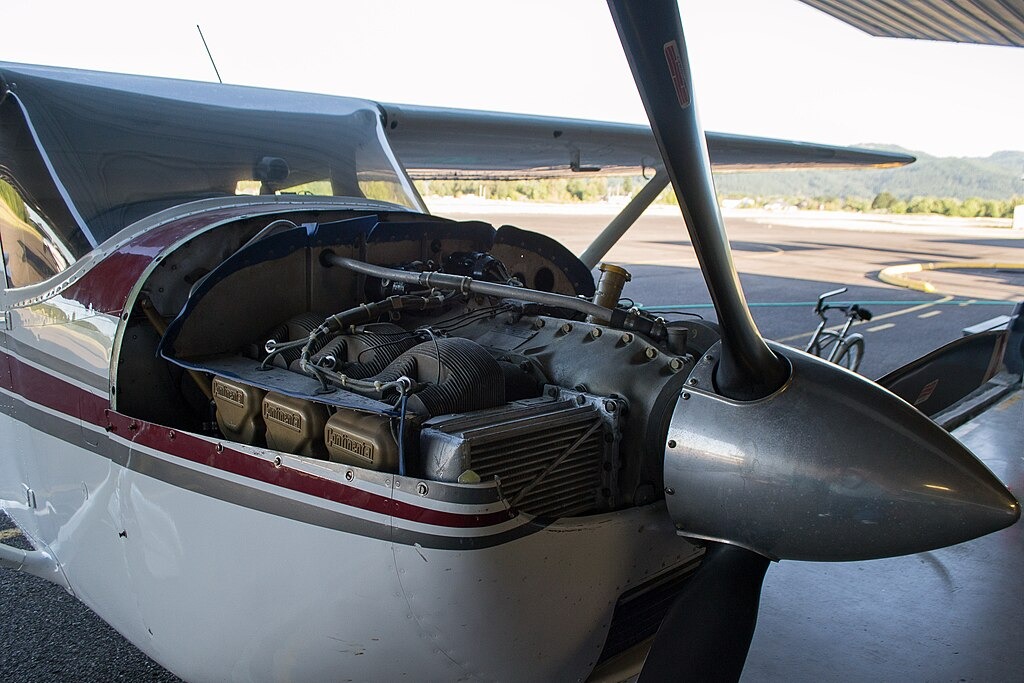
Fifuring out how to read oil analysis results for a 172 engine can feel confusing at first. You get a page of numbers. Some are bold. Some have flags. And the lab may say things like “high” or “normal.” It can make your brain go, “Wait… is my engine fine?”
Here’s a helpful fact that can lower the stress. Blackstone explains that lab testing checks metals on a tiny, microscopic level, but larger pieces of metal can get trapped in the oil filter and may not show in the lab numbers.
Here’s the good news. You can learn a simple way to read it. You do not need to be a lab scientist. You just need a calm plan and a few key checks.
Most pilots start with the same question: “What do these numbers point to, and what should I do next?” Let’s start by making sure the report matches the exact engine in your airplane.
Key Takeaways
To read the results, match the test to your exact 172 engine, check the hours on the oil, and then look for a trend over time. Focus on big changes, not tiny bumps. The lab uses ppm (short for parts per million) to show tiny amounts of metal and other stuff. If the numbers jump, you follow up with normal maintenance checks and talk with a pro if needed.
| What to check first | What it tells you | Simple action |
| Engine model and hours | Sets a fair “normal” baseline | Write it down every time |
| Hours on the oil | Helps explain higher or lower numbers | Keep intervals steady |
| Big jumps in metals | Can point to a new wear issue | Re-check, then inspect |
| Dirt, fuel, or water clues | Can point to a leak or poor sealing | Fix the cause, then re-test |
| Lab comments | Helpful hints, not final answers | Use them as a starting point |
What is the correct 172 engine?
Before you judge any numbers, make sure you are looking at the right engine family. A Cessna 172 has had several engine models over the years. That matters because “normal” can look different from one model to another.
Here’s the simple goal for this step: link the lab sheet to the exact engine on your airplane.
Step 1: Find the engine model
Look in these places:
- Your aircraft logs (engine logbook)
- The engine data plate
- Your last annual or 100-hour paperwork
Write down:
- Engine make and model
- Total engine time
- Time since major overhaul
Keep this note with your records. It saves time later.
Step 2: Track the oil time, too
Oil results make the most sense when you know:
- Hours since the last oil change
- How much oil you added during that time
Also write down the oil type and grade. Do this every time.
One more important detail: the report depends on a clean, correct oil sample. If the sample is taken from a dirty container, the numbers can look scary for no good reason.
Step 3: Keep your process steady
Try to keep these the same each time:
- Same lab
- Same sample method
- Similar oil change interval
- Similar flying style (as best you can)
This is how you make the results useful.
A Quick Example
Let’s say you switch from an older 172 to a newer 172 and you keep using the same lab. You might see different “normal” ranges because the engines can use different parts and materials. That does not mean the newer engine is sick. It means the baseline changed.
Before you move on, do one last check: make sure the report matches your airplane’s oil type and engine oil hours. Now you are ready to read the numbers with confidence.
Explain what oil analysis is (and what it is not)
Oil testing is a helpful tool, but it has limits. When you know both, you make better choices.
What it is
Think of it like this: oil analyses look for tiny traces of metal and other material mixed in the oil. The lab measures small amounts and lists them as numbers. Your job is to read those numbers in context.
The lab also gives notes. That note can be called an analysis report. It may include:
- The numbers the lab measured
- A “normal” range
- A short comment from the lab
This can help you spot early changes in wear.
What it is not
It is not a final diagnosis by itself. It cannot “prove” a part is failing. It also cannot replace hands-on checks like:
- Cutting the oil filter open
- Inspecting the screen
- Checking compressions
- Using a borescope
So treat it as a strong clue, not a verdict.
What the numbers usually try to point to
Many reports list metals that can link to engine parts. For example:
- bearing wear can raise certain metal readings
- cylinder wear can raise iron-type readings
- piston wear can raise aluminum-type readings
- valve train wear can raise other metal readings
You do not need to memorize every metal today. You just need to know the point: metals can help you narrow the next check.
Who helps make the call?
If you see a big change, bring it to your mechanic along with your log notes. The best decisions come from two things together:
- What the lab saw
- What a real inspection shows
Light humor moment: the lab can’t hear your engine. Your mechanic can. That’s a good team-up.
Next, let’s talk about how the lab finds these tiny traces in the first place, so the numbers make more sense.
How it works
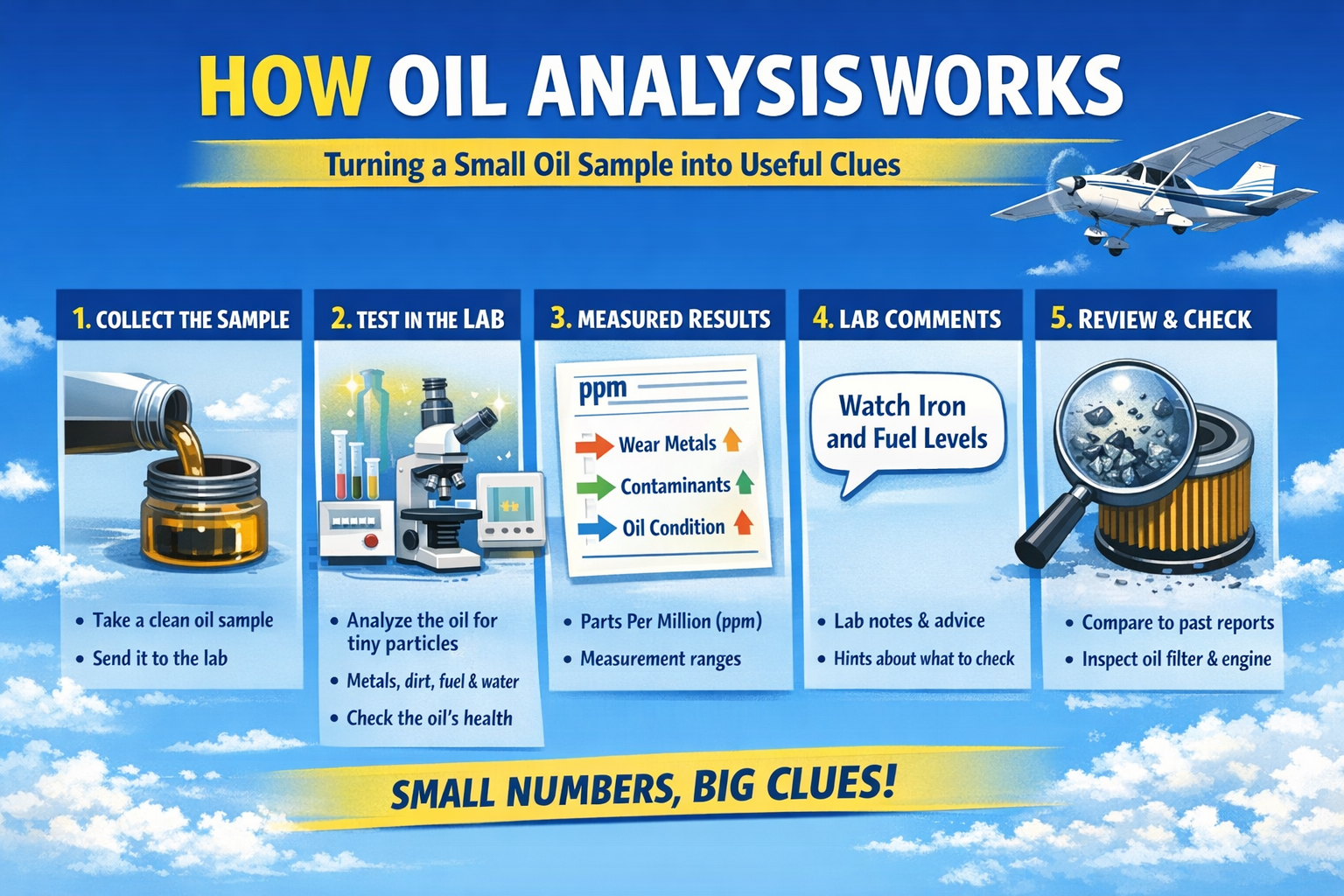
Now let’s break down how the lab turns a small jar of oil into useful data.
The sample becomes a “number sheet”
When the lab gets your sample, it runs tests and sends back an oil analysis report. It usually has a few main parts:
- Wear metal results
- Oil condition results
- Notes or flags
Wear metals and small bits
The report lists wear metals. These come from normal rubbing inside the engine. Over time, parts touch, slide, and roll. That can create tiny metal dust.
Some labs mainly “see” very small bits. That matters because a larger chip may not show well in the numbers. That is why filter and screen checks still matter.
The lab may also talk about wear particles. These are tiny solid bits floating in the oil. You may also see the word particle used for the same idea.
Oil condition checks
Many reports also check the oil itself. Two common items are:
- viscosity: how thick the oil is at a set temperature
- acid number: how much acidic byproduct has built up in the oil
Oil can change because of heat, time, and fuel blow-by. Oil can also change because of the product you use.
Additives and the oil’s job
Oil has more than one ingredient. Many oils contain an additive package. These chemicals help the oil resist wear and handle heat.
Oil is also a lubricant. Its main job is to separate moving parts and reduce friction. In plain words, it helps lubricate the engine so metal does not grind on metal.
Dirt, fuel, and water clues
The report can also point to unwanted stuff in the oil:
- A contaminant can be dirt, fuel, water, or seal material
- contamination can raise readings and speed up wear
This is why good maintenance habits matter. Clean air filtration, good seals, and good operating practice can keep oil cleaner longer.
Up next, we’ll connect this “how it works” idea to real report reading, so you can spot changes early and know what to do next.
How to Read Oil Analysis Results for a 172 Engine (Step by Step)
When you get lab results, go slow. Use the same order every time. This keeps you calm, and it keeps you accurate.
1) Aircraft Owner Maintenance Checklist for Verification
Start with your records before you stare at numbers.
Check your Aircraft logbook and maintenance history verification items:
- Engine model and serial number for your aircraft engine
- Total time on the engine
- Time since major work like an overhaul
- Oil brand and grade used last time
- Notes about hard starts, rough running, or higher oil consumption
- Any recent work on the induction, ignition, or fuel system
This step matters because the lab sheet is only a piece of the story. Your logbook fills in the missing parts.
2) Confirm the sample details first
Now look at the front of the report. Most labs list your notes at the top. Make sure these match your aircraft:
- Hours on the oil
- Date taken
- Oil type
- Engine model
Good results start with good sampling. A clean representative sample is the goal. Take it the same way each time. That helps the lab compare the results.
If you use oil analysis kits, keep them sealed until you need them. Use clean hands. Keep the cap clean.
Also, try to stay consistent with your sampling and analysis routine:
- Warm the engine oil first
- Take the sample mid-stream during a drain, or from a clean sampling valve
- Label it clearly
You can also join an oil analysis program that reminds you when to sample and helps store your history.
3) Learn the main parts of the report
Most lab pages have three “big buckets.” If you learn these, you can read an oil analysis report with less stress.
A) Wear metals section
This shows tiny metal readings in ppm. Labs may also spell it out as parts per million.
These numbers can rise from normal use, but big jumps can signal abnormal wear.
Common items you may see:
- wear metals from moving parts
- A note that points to a bearing, cylinder, piston, or valve train area
Some reports also tag metals as ferrous. That means “iron-based.” It often links to steel parts inside the engine.
B) Contaminants section
This is about unwanted stuff in the oil. The report may list:
- contaminants like dirt, fuel, or coolant (most piston planes should not have coolant in oil)
- water content levels
Many labs also show a particle count. This counts solid bits suspended in the oil. It helps support what the metals are saying.
C) Oil condition section
This is about the oil’s health. Common items include:
- oil viscosity (how thick the oil is)
- oxidation (oil damage from heat and time)
- base number (how much protective “reserve” is left in the oil)
- signs of additive depletion and oil degradation
If oil gets weak, it protects less. That can raise wear over time.
4) How to interpret the numbers like a normal pilot
Now we get practical. Your job is to spot changes that matter.
Step 1: Look for a trend first
A single test can be noisy. A steady history gives you a clear signal. So, focus on the trend:
- Do numbers stay steady over many samples?
- Do they rise fast over two or three samples?
This is how you interpret oil analysis results in a useful way.
Step 2: Watch for “big change” metals
If a metal jumps high, ask two questions:
- Did something change in how I sampled?
- Did something change in how the engine ran?
The lab may also add comments on possible excessive wear. Treat that like a strong hint, then verify with inspection.
Step 3: Understand water and rust risk
Water can enter oil from short flights and cool-down cycles. That can cause condensation inside the engine.
Over time, that moisture can lead to corrosion on steel parts. If you see water warnings, it may be a sign you need longer flights, better storage habits, or a closer look.
5) Match the report to real inspections
Lab results are helpful, but you still need physical checks. If the lab flags wear or dirt, do these basic steps:
- Inspect the filter or screen for metal in the oil
- Check for metal in the filter
- Ask your shop to cut open the oil filter and inspect the media
If you find shiny flakes or chunks, stop and talk with your A&P before the next flight. A lab test may miss larger debris that gets trapped in the filter.
Also think about the full oil system:
- suction screen condition
- oil filter condition
- oil cooler lines and fittings
- signs of leaks
This is part of good lubrication health. Clean oil and clean flow keep parts alive.
And remember what the oil is doing every second: lubricating oil has one main job. It keeps moving parts separated so they do not grind.
6) When to re-test, change oil, or call for help
Here is a simple action plan you can use. Re-test sooner if:
- One metal jumps fast
- Dirt markers rise
- Water or fuel markers look bad
Change the oil if:
- The oil looks weak
- The lab shows strong oil condition warnings
- You are already near your normal interval
Plan your next oil change based on:
- your normal schedule
- how the engine has been running
- what your mechanic sees in the filter
If you need help reading the sheet, bring it to your A&P and say, “Help me interpret your oil analysis with the logbook info and the filter findings.” That is a clean, smart request.
Many 172s have a Lycoming engine, and many owners use labs like Blackstone for engine oil analysis. No matter the lab, your best method stays the same: keep samples consistent, keep records, and confirm with real inspections.
Also, do not forget the basics: clean aircraft engine oil, clean filters, and steady operating habits help slow wear.
What is the best Cessna plane for beginners?
For most beginners in the USA, the Cessna 172 is a top pick because it is widely used for flight training and is known as a very common trainer. If you want a simpler and often cheaper two-seat trainer, many schools also use the Cessna 152 for training.
Conclusion
Now you know a calm way to handle the numbers. How to read oil analysis results for a 172 engine comes down to a few steady steps: match the test to your exact engine, log your hours and oil type, and react to big changes with smart follow-up checks. Keep your notes clean and consistent. When something looks off, pair the lab results with real inspection results and good advice from your shop.
If you want more pilot-friendly maintenance explainers like this, follow Flying411.
FAQs
What oil change interval works best for oil testing?
Use a steady schedule so your results compare well. Many owners test at each oil change and keep the time between changes consistent.
Can a “normal” lab result still hide a problem?
Yes. Some problems show up better in the filter or screen than on lab numbers. Use both checks as part of your routine.
Should I use the same lab every time?
Yes. Staying with one lab helps keep the results consistent so you can compare one test to the next.
What if I fly only short trips?
Short trips can leave more moisture and fuel byproducts in the oil. Try to get longer flights sometimes and keep your maintenance checks regular.
Do I need special tools to understand the report?
No. You need your log notes, the lab sheet, and a simple plan. If results jump, bring the sheet to your shop for a closer look.