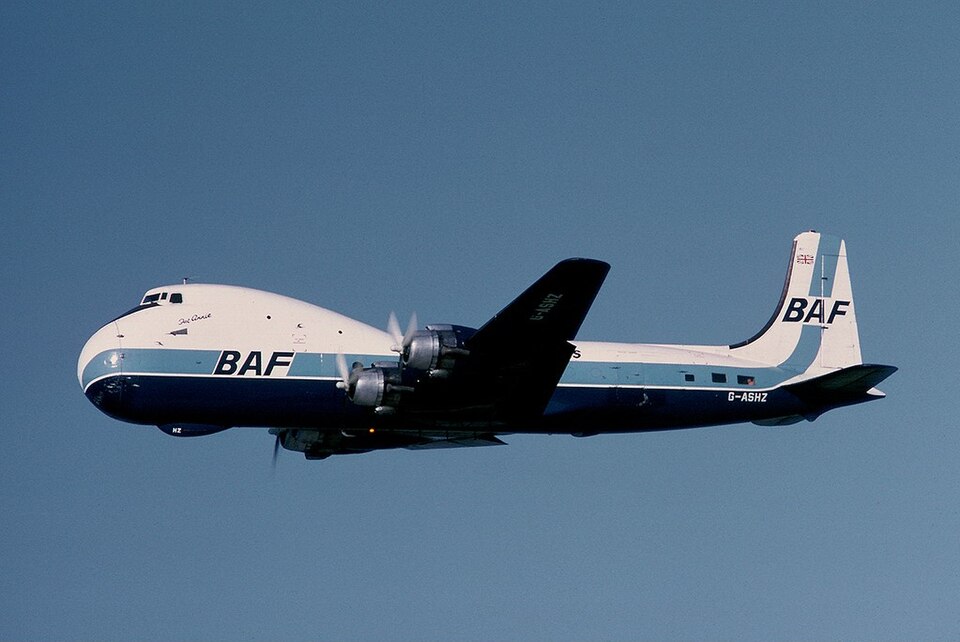
Just visualize your annual inspection just expired, a storm is heading straight for your airport, and you need to move your plane now. Or maybe you just found a great deal on a used aircraft across the country, but it needs work before it can legally fly. You know the plane can make the trip. It just does not meet the legal definition of airworthy right now. So what do you do?
You get a special flight permit.
Here is something that puts this whole topic in perspective. The average age of a single-engine piston aircraft in the U.S. general aviation fleet is 52.2 years and that number keeps climbing. Most of the planes flying around America today were built before home computers existed.
Older aircraft means more maintenance events, more wear, and more moments where an inspection lapses or a repair sends a plane to the shop. Ferry permits are not rare or unusual. They are a normal part of owning and operating these aircraft.
Most pilots do not know this until they actually need one. And when they find out it exists, the first question is usually: "How complicated is this going to be?" The good news is it is simpler than you might think. The FAA built this process specifically for situations like the ones above, and thousands of pilots use it every year to legally move aircraft that need a little TLC.
The key thing to understand is that a ferry permit is not some obscure loophole. It is an official, legal authorization that the FAA designed to handle real-world aviation situations. The rules are clear. The steps are manageable. And with the right information, you can get through the process without a headache.
Key Takeaways
A special flight permit also called a ferry permit is an FAA authorization that lets you fly an aircraft that does not currently meet airworthiness standards, as long as it is still safe to fly. You get one by having an A&P mechanic inspect the aircraft, filling out FAA Form 8130-6, and submitting it to your local FSDO. The permit is typically valid for one flight, with a 10-day window, and comes with specific operating limitations like daytime VFR only and no passengers beyond essential crew.
| Topic | Key Detail |
| Official name | Special Flight Permit (SFP) |
| Common name | Ferry permit |
| FAA regulation | 14 CFR Part 21.197 |
| Who issues it | FSDO or Designated Airworthiness Representative (DAR) |
| Application form | FAA Form 8130-6 |
| Approval document | FAA Form 8130-7 |
| Typical validity | One flight, 10-day window |
| Cost (FSDO) | Free |
| Cost (DAR) | $200–$500+ |
| Common flight conditions | Daytime VFR only, no passengers |
| Most common reason | Expired annual inspection |
| Who can apply | Aircraft owner or mechanic with owner's authorization |
What Is a Ferry Permit for an Aircraft?
A ferry permit is the everyday name for what the FAA officially calls a Special Flight Permit. The two terms mean the same thing, and pilots use them interchangeably. But when you are filling out paperwork or talking to the FAA, you will see it listed as a Special Flight Permit — so it helps to know both names.
Here is the core idea. The FAA requires all aircraft to be airworthy before they can legally fly. Airworthiness means the aircraft meets all the standards set by its type certificate and the FARs. But sometimes, an aircraft falls out of compliance — the annual expires, a repair is needed, or a system is not working right. The plane might still be perfectly capable of flying safely. It just does not meet the legal definition of airworthy on paper.
That is exactly the gap the Special Flight Permit fills.
The legal authority for this comes from 14 CFR Part 21.197. The regulation says a Special Flight Permit can be issued for an aircraft that may not currently meet applicable airworthiness requirements but is still capable of safe flight. That phrase matters. The FAA is not giving anyone a free pass to fly a dangerous aircraft. They are creating a legal pathway for aircraft that are technically out of compliance but can safely make one specific trip.
It is also worth knowing what a ferry permit is not. It is not a waiver of Part 91 rules. All the normal operating rules still apply during the flight. The permit simply allows the aircraft to operate legally despite not holding a current standard airworthiness certificate. Think of it as a temporary stand-in, a document that takes the place of the standard certificate just for that one flight.
The FAA issues the permit in the form of FAA Form 8130-6 technically called an Application for Airworthiness Certificate which triggers the issuance of a special airworthiness certificate (Form 8130-7) once approved. That pink certificate and its accompanying operating limitations are what you carry in the aircraft during the ferry flight.
Here is something that surprises a lot of pilots: this permit has been part of FAA regulations for decades. It is not a new or unusual thing. FSDOs process them regularly. The process is well-established, and most inspectors are very familiar with it. Once you understand the steps, obtaining a special flight permit is far less intimidating than it sounds.
What Kinds of Flights Qualify for a Special Flight Permit?
Not every situation calls for a ferry permit, and not every situation qualifies for one. The FAA spells out the approved purposes clearly in 14 CFR Part 21.197. Knowing which situations qualify and which do not saves you time before you start the process of obtaining a ferry permit.
Common qualifying situations include:
- Expired annual inspection — This is by far the most common reason pilots seek a ferry permit. If your annual has lapsed and your plane is not near a maintenance facility, a ferry permit lets you legally fly it to a shop where the annual inspection can be completed.
- Flying the aircraft to a maintenance base — If your plane needs repairs, alterations, or scheduled maintenance and the work cannot be done where it is currently based, you can fly it to where the work will happen. This is what most people picture when they hear "ferry flight."
- Storage flights — Need to move the aircraft to a storage facility? That qualifies too.
- Delivering or exporting aircraft — New aircraft being delivered to buyers or exported out of the country can be covered under a Special Flight Permit.
- Production flight testing — Manufacturers use Special Flight Permits during production flight testing of new aircraft before they receive their permanent airworthiness certificates.
- Customer demonstration flights — Customer demonstration flights in new production aircraft that have already passed flight tests are another qualifying use.
- Evacuating an aircraft from danger — If a hurricane or other natural disaster is threatening the airport where your plane is based, evacuating an aircraft from that area is a valid and approved reason to issue a ferry permit.
- Overweight ferry operations — Under 14 CFR 21.197(b), the FAA can authorize a flight above the maximum certificated takeoff weight when extra fuel is needed for a long over-water leg or when flying through areas with no fuel stops. The extra weight is strictly limited to additional fuel, fuel-carrying equipment, and navigation gear.
Situations that do NOT qualify:
- Aircraft the FAA determines are not safe for flight — remember, the standard is capable of safe flight, not just technically unairworthy
- Aircraft with unresolved Airworthiness Directives that prohibit further flight before compliance
- Non-U.S.-registered aircraft
- Part 121 or Part 135 commercial operations — those follow different rules
One thing worth flagging: the FAA takes ADs seriously when reviewing ferry permit requests. If an aircraft has had a prop strike and there is an AD requiring engine inspection before further flight, the FSDO is unlikely to approve a ferry permit without that work being done first. This is one area where safety and paperwork align closely.
The bottom line is that the flight permit may be issued for a wide range of practical, real-world situations. The common thread is always the same the aircraft must be capable of making the flight safely, even if it is not fully airworthy on paper.
Who Actually Issues a Ferry Permit and How Fast Can You Get One?
Once you know you qualify for a ferry permit, the next question is: who do you call? There are two main paths, and the right one depends on your situation, your timeline, and where your aircraft is located.
Path 1: Your Local FSDO
The FSDO which stands for local flight standards district office is the FAA office responsible for the geographic area where your aircraft is located. FSDOs are the most common source for ferry permits, and the big advantage here is cost: it is free.
The FSDO that handles your permit application is the one with jurisdiction over the airport where your aircraft currently sits. You do not contact the FSDO at your destination — it is always the originating location that matters.
Processing time varies by office. Some FSDOs turn permits around the same day, especially when the application is complete and the reason is straightforward. Others may take a day or two. The FAA has moved toward an online portal — found at awc.faa.gov — as the standard submission method, which has helped speed things up. If you do not hear back within 24 hours of submitting a complete application, a polite follow-up call goes a long way.
Path 2: A Designated Airworthiness Representative (DAR)
A designated airworthiness representative is an FAA-authorized individual who can issue Special Flight Permits on behalf of the FAA. DARs are not free except to pay anywhere from $200 to $500 or more depending on the DAR and your location but they offer a key advantage in certain situations.
The tradeoff is this: a DAR must physically come to your aircraft before issuing the permit. That adds a step, but it can also mean faster turnaround if your local FSDO has a long queue or if your aircraft is in a remote location with limited FAA presence.
Which should you choose?
- If your situation is straightforward and your FSDO is responsive, start with the FSDO — it is free and usually quick.
- If you are in a time crunch, in a remote area, or your FSDO is known to be slow, a DAR might be worth the cost.
Here is an important nuance: every FSDO operates a little differently. Some are very responsive by email and phone. Others prefer the online portal. A few will want more documentation than others for the same type of request. It pays to make one quick phone call to your local FSDO before submitting anything, just to understand their preferred process.
One more thing regardless of which path you take, the FAA will issue the final permit in the form of FAA Form 8130-7, the Special Airworthiness Certificate. This document, along with its operating limitations sheet, is what makes your ferry flight legal. Keep it in the aircraft for the entire flight.
Step-by-Step Guide to Getting Your Aircraft Ferry Permit Approved
This is the part most pilots want to get to right away. The good news is that obtaining a special flight permit breaks down into a handful of clear steps. None of them are complicated on their own. The trick is doing them in the right order and not skipping anything.
Let us walk through each one.
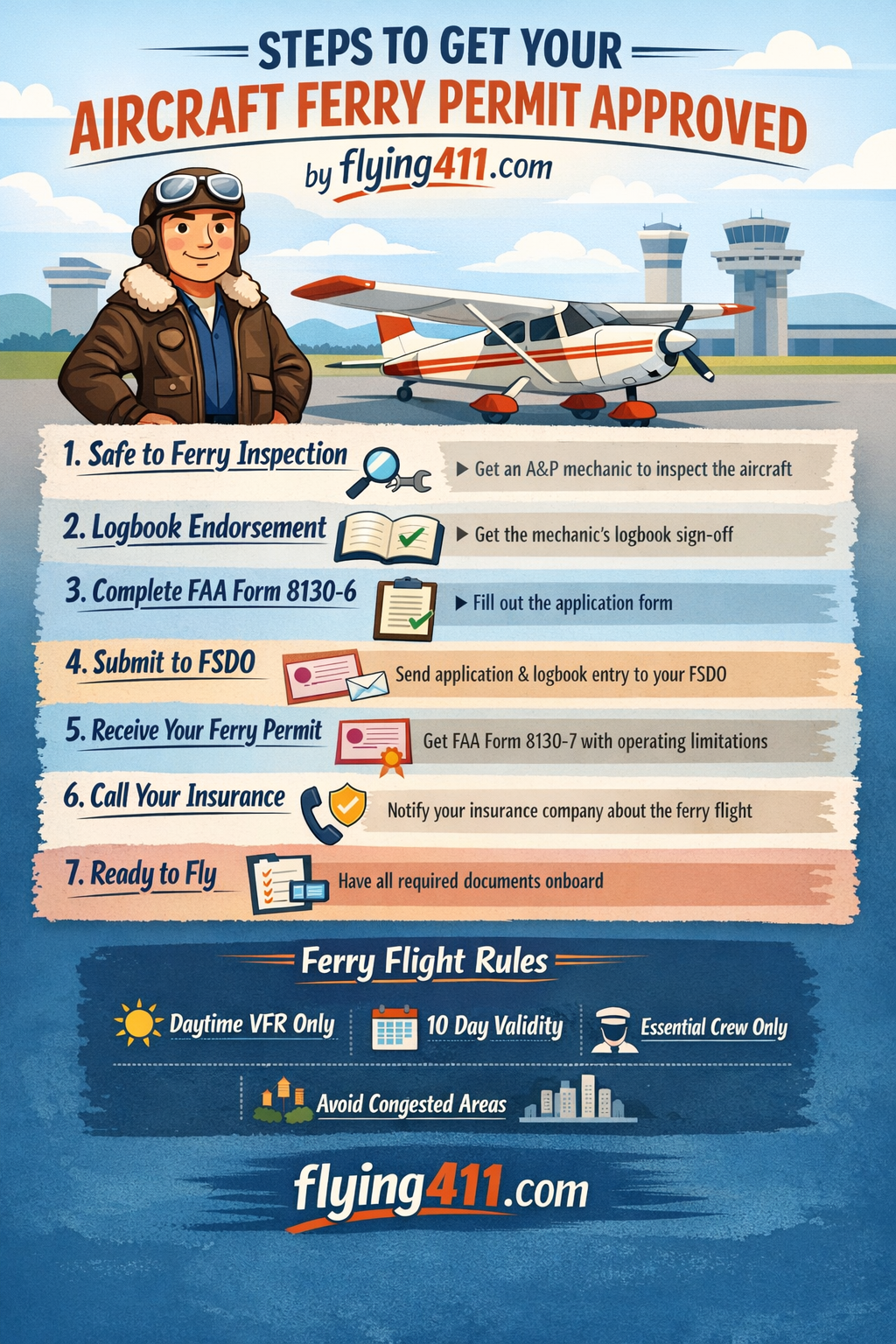
Step 1: Get a "Safe to Ferry" Inspection
Before any paperwork goes to the FAA, you need a certificated mechanic to look the aircraft over. Specifically, you need an A & P, an Airframe and Powerplant mechanic or an FAA-certified repair station to inspect the aircraft and confirm it is safe to make the trip.
Here is an important distinction worth understanding. "Safe to ferry" is not the same as "airworthy." The mechanic is not certifying that the plane meets all applicable airworthiness requirements. They are simply saying: in my professional judgment, this aircraft can safely complete this specific flight. That is a lower bar —but it still requires a real inspection with real accountability.
If the mechanic finds something that genuinely makes the aircraft unsafe, they cannot and should not sign off. This is not a step to rush or take shortcuts on. The pilot-in-command still holds final go/no-go authority regardless of what any paperwork says, so skipping a thorough inspection does no one any favors.
One practical heads-up: finding a mechanic willing to provide the endorsement can sometimes take more effort than the FAA paperwork itself. Not all A&Ps are comfortable signing off on a non-airworthy aircraft, even for a ferry flight. Call ahead and be upfront about the situation.
Step 2: Get the Aircraft Logbook Endorsement
Once the mechanic confirms the aircraft is safe to ferry, they need to make a formal entry in the aircraft logbooks. This aircraft logbook endorsement is not a return-to-service entry. It is a specific statement confirming the aircraft was inspected and found safe for the one-time flight described in the ferry permit application.
A typical logbook entry reads something like: "This aircraft has been inspected and found safe for the intended flight in accordance with the Special Flight Permit dated ____."
Do not skip this step. If you submit your application to the FSDO without a logbook endorsement, the FAA may require an Aviation Safety Inspector to personally come out and look at the aircraft. That takes more time and adds more delay. Including the endorsement upfront keeps things moving.
Step 3: Complete FAA Form 8130-6
Completing FAA Form 8130-6 is the official way to apply for a Special Flight Permit. The form's full title is Application for Airworthiness Certificate, which sounds more complicated than it is. For a ferry permit, you only need to fill out Sections I, II, IV, and VII — not the whole thing.
Here is what goes in those sections:
- Section I — Basic aircraft information: make, model, registration number
- Section II — Type of certificate being requested (Special Flight Permit)
- Section IV — Description of why the aircraft does not meet airworthiness requirements
- Section VII — Details of the proposed ferry flight: departure airport, destination, fuel stops, departure date, expected flight duration, and the specific reason the aircraft is out of compliance
This is also where you can include any conditions and limitations you are proposing for the flight. For example, if a landing gear system is impaired, you might note that the gear will remain in the down position for the entire flight. Proactively listing operational restrictions often helps the FSDO approve the permit application faster.
The aircraft owner fills out the form. If you want your mechanic to handle the application, you can give them a signed letter of authorization to apply on your behalf.
FAA Form 8130-6 is available as a downloadable PDF at faa.gov. You can also submit through the FAA's online portal at awc.faa.gov.
Step 4: Submit Your Application to the FSDO
Once the form is complete and you have the logbook endorsement in hand, it is time to submit your application. Send it along with a copy of the logbook entry to your local flight standards district office. The FSDO that handles your request is the one with jurisdiction over the airport where the aircraft currently sits, not your home airport or your destination.
You can submit by email, fax, in person, or through the FAA's online portal. Most FSDOs prefer the online portal now. A quick call to your FSDO before submitting is always a smart move — it takes five minutes and helps you understand their specific preferences.
Most complete applications get a response within 24 hours. If you do not hear back after a day, follow up. FSDOs are generally responsive when the paperwork is clean.
Step 5: Receive FAA Form 8130-7 and Your Operating Limitations
When the FAA approves your ferry permit, they issue FAA Form 8130-7 — the special airworthiness certificate. This pink certificate, along with a separate page of operating limitations, is your legal authorization to fly.
The 8130-7 acts as a stand-in for your standard airworthiness certificate for the duration of the ferry flight. Both documents must be in the aircraft during the flight — along with your regular registration and aircraft logbooks.
A designated airworthiness representative will issue the physical Form 8130-7 if you go the DAR route. If you used the FSDO, they may issue an approval letter with conditions and limitations instead. Both are valid. The key is that the permit covers the flight permit may be issued for one specific flight fuel stop included within the window stated on the document.
Step 6: Call Your Insurance Company
This one gets skipped more than it should. Before you fly, call your hull insurance provider and let them know about the ferry flight. Most aviation insurance policies cover ferry flights, but many require advance notification. A quick call protects you. If something goes wrong during the flight and you did not notify your insurer ahead of time, you could find yourself in a tough spot at claim time.
Step 7: Confirm What Must Be in the Aircraft
Before you start the engine, do a quick document check. Here is what needs to be aboard:
- FAA Form 8130-7 (Special Airworthiness Certificate / ferry permit)
- Operating limitations sheet for the ferry flight
- Current airworthiness certificate (even if expired it still must be present)
- Aircraft registration
- Aircraft logbooks
That is the package. Everything in order, documents aboard, and you are legal to fly.
What Are the Operating Limitations on a Ferry Flight?
The special flight permit comes with a set of rules specific to your flight. These are not suggestions — they are operating limitations that carry the same legal weight as any other FAA authorization. Here is what most ferry permits include by default:
- Daytime VFR only — Unless you specifically request and receive approval for IFR or night flight, the permit covers daytime visual flight rules conditions only
- 10-day validity window — The permit is tied to the departure date stated on the form. You have up to 10 days to complete the flight. If weather or other factors push you past that window, you need a new permit
- No passengers beyond essential crew — The aircraft is limited to the pilot, any crew required to operate the aircraft and its equipment, and personal baggage. Bringing a passenger along for the ride is not allowed
- No flight over congested areas — Takeoffs, landings, and routing must avoid congested areas around the airports used during the flight
- Pilot-in-command holds final authority — Even with a valid ferry permit in hand, the PIC is still responsible for the go/no-go decision. The permit authorizes the flight legally. It does not override the pilot's judgment about safety
Some permits include additional restrictions specific to the aircraft's condition. For example, if you are flying an unairworthy aircraft with a known system issue, the FSDO may add a limitation specific to that problem.
It is also worth knowing that a flight permit may be issued with an excess weight authorization under 14 CFR Part 21.197(b). This applies when a pilot needs to carry extra fuel above the maximum certificated takeoff weight for a long over-water leg or when flying through an area with no fuel available. The extra weight authorization is strictly limited to fuel, fuel containers, and navigation equipment nothing else.
Understanding your operating limitations before departure is not just good practice. It is required. Read them carefully, fly within them, and you are good to go.
Common Mistakes Pilots Make When Applying for a Ferry Permit
Even with a straightforward process, there are a few places where pilots trip up. Here are the most common ones and how to avoid them.
- Waiting too long to start the process — If a storm is 48 hours out and you need to get a ferry permit to move your aircraft, you do not have time to figure things out from scratch. Know the process before you need it.
- Skipping the logbook endorsement — Submitting FAA Form 8130-6 without the mechanic's logbook entry slows everything down. Always include it.
- Not calling the insurance company — See Step 6 above. This call takes less than 10 minutes and could matter a lot later.
- Assuming IFR or night flight is allowed — It is not, by default. If you need either, request it specifically in your application and explain why.
- Mechanic shopping for a sign-off the aircraft does not deserve — The endorsement process exists for safety, not as a formality. If one mechanic says the aircraft is not capable of safe flight, that answer matters. Finding another mechanic who will say yes to move things along is both dangerous and potentially fraudulent.
- Forgetting the permit is flight-specific — The permit covers the exact route and airports you listed. Do not change your plan mid-trip without understanding what that means for your authorization.
Selling your aircraft after a ferry flight? Make sure you understand how liability works after the sale. Check out our article on How to Avoid Liability After Selling an Aircraft for everything you need to know before you hand over the keys.
And if the reason for your ferry flight involves picking up a used aircraft with a questionable engine, it is worth reading up before you go. Our guide on 13 Things to Check Before Buying a Used Aircraft Engine will help you know what you are getting into.
The process of obtaining a ferry permit is manageable when you take it one step at a time. The FAA built it to be practical. Use it the way it was intended carefully and honestly and it will work exactly as designed.
Conclusion
Getting a ferry permit does not have to be stressful. The FAA designed the special flight permit process to be practical and accessible and once you go through it the first time, it makes a lot of sense. You identify why your aircraft is out of compliance, get a mechanic to confirm it is safe to make the trip, fill out the right form, and submit it to the FAA. That is really the heart of it.
The most important thing to remember is that the process rewards preparation. A complete application with a solid logbook endorsement almost always moves faster than one submitted without supporting documentation. Know your FSDO's preferences, call your insurance company, and make sure every required document is in the aircraft before you start the engine.
For more helpful guides on aircraft ownership, maintenance, and everything in between, head over to Flying 411 your go-to resource for straight-talking aviation content built for real pilots.
Frequently Asked Questions
Can I fly IFR or at night on a ferry permit?
Not automatically. Most ferry permits are issued with daytime VFR-only restrictions. If you need IFR or night flying authorization, you would need to specifically request it in your application and provide a clear reason. The FSDO has the discretion to approve or deny it, but it is not standard.
What happens to my ferry permit if the weather delays my flight past the 10-day window?
If your permit expires before you can fly, you will need to apply for a new one. The 10-day window is tied to the specific departure date stated on the permit. Contact your FSDO as soon as you know there will be a delay. They can sometimes work with you depending on the situation.
Can a ferry permit be used for an aircraft I am thinking about buying but do not own yet?
No. The aircraft owner must apply for the permit or authorize a mechanic to apply on their behalf. If you are considering a pre-buy on an aircraft, the current owner would need to be the one to apply, which is a common and normal part of the pre-purchase process.
Do I need to notify the tower or file a flight plan differently when flying on a ferry permit?
A ferry permit does not change how you file a flight plan or communicate with ATC. You still file and communicate normally under Part 91 rules. The permit is about your aircraft's legal authorization to fly, not about ATC procedures.
Can a student pilot or private pilot fly an aircraft on a ferry permit, or does it require a special certificate?
The ferry permit does not require any special pilot certificate beyond what the aircraft normally requires. A private pilot can fly an aircraft on a ferry permit as long as they are qualified to act as PIC for that aircraft type. The permit covers the aircraft's airworthiness status, not the pilot's qualifications.