Starting the FAA process can feel like a lot at first, especially when you want to be sure your aircraft is properly documented. The good news is that each step follows a clear system, and once you understand how everything fits together, things start to make sense. The goal here is simple: help you see how registration works, how deregistration works, and how both connect to real-world ownership.
How FAA Registration Works
Handling aircraft registration can feel technical, but each part serves a clear purpose. The faa uses this system to track every civil aircraft in the U.S., and the steps stay mostly the same for any aircraft owner, from amateur-built aircraft to older aircraft that have changed hands many times.
Key Idea
Registration links an aircraft to the person or entity responsible for it. Once faa issues a certificate, the aircraft is officially identified in the faa registry, and the registration number becomes its legal identifier.
How the Process Starts
An aircraft owner must gather basic ownership documents and then sign the aircraft registration application. You’ll often hear people call this the form 8050-1, or say they need to “register a plane.” It’s the same thing. The official version is also called the aircraft registration application.
- The application for registration gets filed with the faa.
- The aircraft registration branch reviews each form to make sure the aircraft is properly documented.
- The rules come from 14 cfr part 47, the main law that guides how an aircraft may be registered.
Once everything looks correct, the FAA sends back what is known as the certificate of aircraft registration, also called the registration certificate or certificate of registration. This is what proves the aircraft is a registered aircraft inside the aircraft registry.
What Happens After You Apply
You usually receive a temporary registration first, which gives you immediate permission to fly while the FAA finishes processing. This covers the remainder of the registration period until the permanent card arrives.
The registration becomes final when the registration certificate appears in your mailbox.
If the aircraft is based in the U.S., and registration must stay valid, you track the expiration date listed on the card. Once registration expires, you send a registration renewal. If your registration expiration date passes, the faa aircraft record becomes inactive, which means the aircraft cannot fly until fixed.
You’ll also hear terms like new registration if the new owner purchases the aircraft or if the last registered owner changes. An owner may also need to update the airworthiness certificate if other changes occur.
Special Situations
- Aircraft is subject to international rules like being subject to the Cape Town treaty, or aircraft subject to the cape requirements.
- An aircraft moving to or from a foreign country uses special steps.
- A seller must notify the faa when an aircraft is sold.
- A buyer must register an aircraft again under their name so the aircraft’s registration shows the new ownership.
- If the aircraft’s registration will expire, the last owner of record must update the file.
Here is a clean reference table to help you see the structure:
HOW FAA REGISTRATION WORKS
| Step | Description |
| Start Application | Complete and sign the aircraft registration application (form 8050-1) |
| Send to FAA | Application is filed with the faa and reviewed |
| Temporary Approval | FAA issues a temporary registration |
| Final Approval | FAA issues a certificate, creating an official registered aircraft record |
| Track Expiration | Follow the expiration date, registration expiration date, and complete renewal on time |
Registration matters because faa aircraft registration is what makes an aircraft legal to fly under the federal aviation administration. It also connects every aircraft to a clear country of registration, which helps with safety, sales, and future changes.
How FAA Deregistration Works
Deregistration begins the moment an aircraft owner no longer needs the aircraft listed in the U.S. faa registry. This often happens when the aircraft is sold to a foreign country, moved to a foreign registry, or prepared for export. In each case, the FAA handles the deregistration process through the aircraft registration branch.
Why Deregistration Matters
An aircraft cannot appear on two registries at once. So the faa must remove it from the U.S. list before it can appear somewhere else. The FAA calls this deregistration from the faa.
Sometimes a buyer in another country requests proof that an aircraft is deregistered before their authority will add it to their system. That paperwork is part of a deregistration request.
How the Process Starts
The last owner of record completes a deregistration request and sends it to the FAA. The form often includes:
- Proof of ownership
- A statement that the aircraft is sold or moved
- Any export request tied to the aircraft
- The registration certificate or ac form 8050-3, which helps confirm identity
The owner may also update contact details if the aircraft is moving to new hands. The FAA checks documents to ensure the aircraft is subject to removal from the U.S. list, and that it isn’t tied to legal restrictions or debts.
When the FAA confirms everything, they complete the cancellation of the certificate. You’ll sometimes see this called cancellation for export purposes. At this point, the aircraft is registered nowhere until the next aviation authority adds it under their own rules.
When an Aircraft Leaves the U.S.
If a foreign aircraft will take over ownership or if the laws of a foreign country require special proofs, the FAA sends documents that confirm the u.s record is closed. These steps often relate to 14 cfr rules.
This helps the next registry verify that the aircraft's registration is clean and ready to move. A new buyer may need this before they can register a plane overseas.
When Deregistration Doesn’t Go Through
Sometimes, registration may stay active if key documents are missing. The FAA cannot finish the file until the last owner of record sends everything. In other cases, the FAA rejects the request because the aircraft is based in the U.S. and still tied to an active sale or lien.
HOW FAA DEREGISTRATION WORKS
| Step | Description |
| Submit Request | Send a deregistration request with ownership proof |
| Provide Docs | Include the registration certificate or ac form 8050-3 |
| FAA Review | Ensure aircraft is subject to deregistration |
| Removal | FAA completes cancellation of the certificate |
| Export/Foreign Use | New authority confirms foreign registry placement |
Deregistration helps keep the aviation system clean, especially when an aircraft changes hands or moves away from the country of registration. It also protects new owners, including buyers outside the U.S., because the FAA ensures the aircraft is properly cleared before leaving the system.
WHAT TO DO AFTER YOUR AIRCRAFT IS REGISTERED
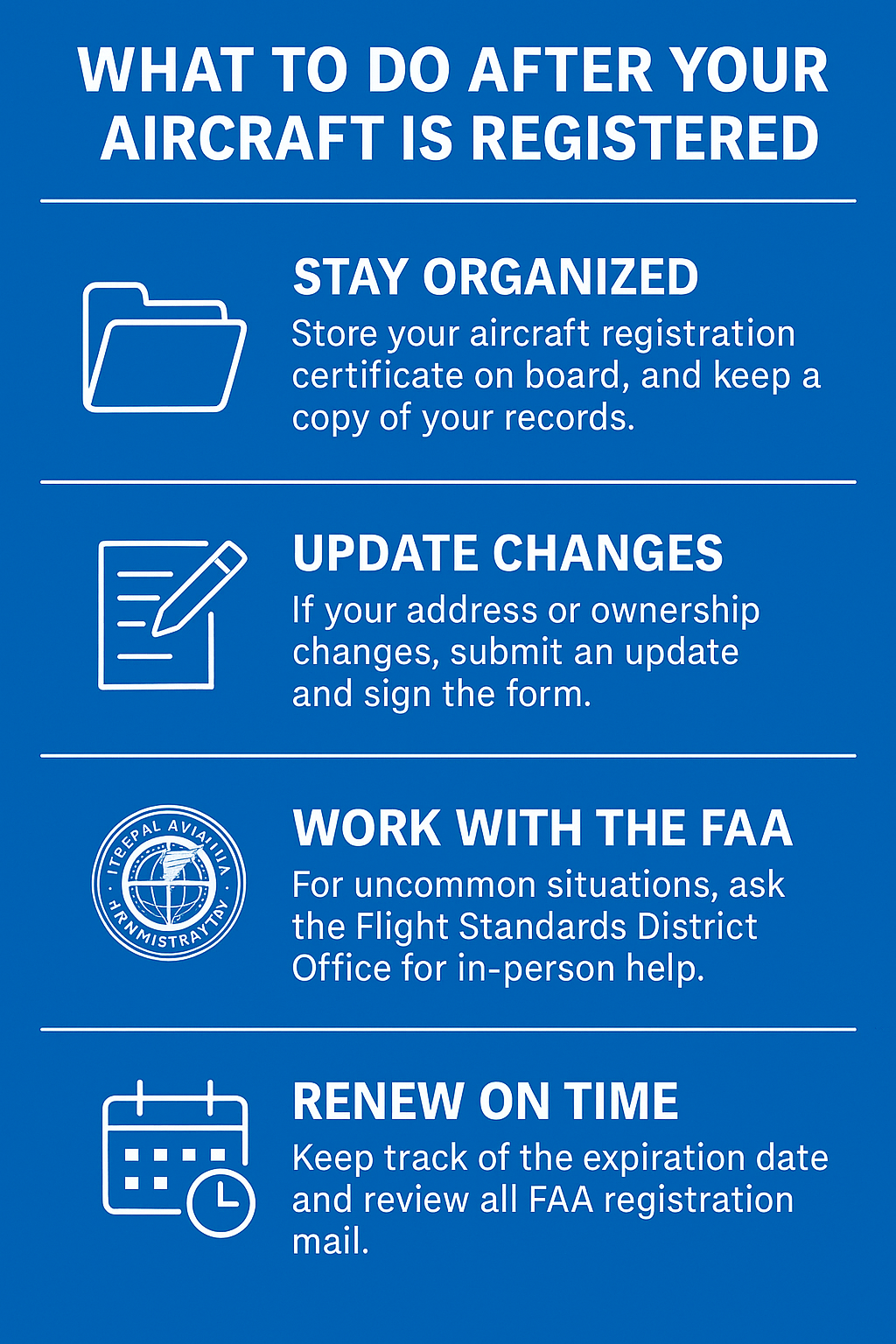
Once your aircraft is officially aircraft registered, life becomes a lot simpler. You now have legal proof that the aircraft belongs to you and that it is ready for regular operations under the U.S. system. Even though the FAA handles the paperwork, the next steps still matter because they help you stay organized, avoid delays, and keep your aircraft in good standing. Think of this part as the “after-checklist” that helps you understand what comes next.
The first thing most owners do is review the aircraft registration certificate once it arrives. The document lists basic facts about your aircraft. It shows the owner’s name, the N-number, and the address on file. It is always smart to double-check this information. For example, if you see an address you moved away from last year, you want that fixed right away. A small mistake can cause delays the next time you request an update.
Even though the FAA handles the tracking, you stay responsible for the record. That responsibility continues for as long as you own the aircraft. Many new owners set a reminder on their calendar as soon as the card arrives. It helps them avoid missing deadlines, especially those tied to renewal periods. This simple habit prevents headaches, especially when the aircraft changes hangars or moves between airports.
Staying Organized With Your Records
Once your certificate arrives, take a moment to decide where to keep it. The FAA requires it to remain inside the aircraft during operation. Most people store it in the same place they keep their airworthiness documents and weight-and-balance papers. You want everything in one folder so you can access it fast if needed.
Here are helpful practices:
- Keep all FAA letters together in a slim binder.
- Store a digital copy (photo or scan) for easy reference.
- Keep a small reminder of the renewal date in your phone.
A little organization goes a long way, especially when you need to show proof of registration during a ramp inspection or routine check.
When You Need To Update the Information
Change is normal in aviation. Owners move. Hangars change. Businesses merge. When something changes, you should update your registration record fast. A simple address change can trigger issues if the FAA tries to mail you something important. You do not want your certificate or future updates lost in the mail.
If the aircraft is sold, the new owner must take over the responsibility. The seller takes the old card and marks it clearly during the sale. Then the buyer completes a new application. Many delays happen because someone forgot to sign a form or include a supporting document.
The FAA has clear rules for this part. The person who submits the form must sign the aircraft registration in the designated section. This signature shows that the information is correct and that the owner accepts responsibility. Missing this signature is one of the most common mistakes people make. Luckily, it is easy to catch if you double-check before mailing anything.
Working With the Flight Standards District Office
Most owners send their paperwork by mail, but there are times when visiting a local FAA office helps. If you want in-person guidance, a flight standards district office can walk you through specific concerns. These offices give general support, help owners understand forms, and guide them through special cases like lost certificates or complicated sales.
This can be helpful if you bought an aircraft from an estate sale or if you purchased a plane that had unusual ownership history. Some aircraft change hands many times, and tracing the last official document can take time. A quick meeting with the district office can clear up questions before you send your paperwork.
Staying Compliant Once Flying Begins
Once the aircraft is active in your name, you want to stay compliant with the FAA’s rules. Even though registration tasks are not as demanding as maintenance or inspections, they still matter. The FAA may send you letters about renewals, corrections, or updates. Keep an eye out for those. If you move and forget to update your address, the FAA may not reach you, and you could miss a renewal notice.
Here are key habits that keep things smooth:
- Keep your card clean and readable.
- Update your address right after a move.
- Review all mail tied to the aircraft.
- Watch your renewal timeline.
These steps prevent the registration from lapsing. If the certificate expires, the aircraft cannot legally fly until it is renewed. Avoiding downtime keeps your flying schedule simple and predictable.
What to Do if Another Person Questions Ownership
From time to time, disputes or questions come up in aviation. You may meet someone who thinks they have paperwork on the aircraft. You may learn that another party filed papers before you. These situations are rare, but they do happen with aircraft whose registration history stretches back many years.
When this happens, the FAA reviews the documents on file to determine the correct owner. They look for clear bills of sale, signed forms, and supporting documents. If everything in your file matches what you submitted, the FAA confirms your ownership.
If the FAA finds missing information, they will contact you and ask for more details. You can solve most problems by sending copies of missing documents, proof of purchase, or additional signatures. Quick communication helps the FAA process your case faster.
When You Need to Replace a Lost Certificate
Life happens. Things get lost. If your certificate disappears, print a simple request form from the FAA website. Replacement requests are common, and the FAA processes them regularly. You want to take care of this right away because flying without the certificate in the aircraft is not allowed.
You can also ask questions or get status updates from the FAA’s main number. The staff can explain processing times and help you check your file.
When the FAA Requires Extra Information
Every now and then, the FAA requests extra documents to verify ownership. The goal is to keep the records safe and accurate. This is especially important for aircraft that have long histories or aircraft that came from outside the United States.
These checks help protect you and the national system. They ensure faa’s aircraft records stay correct and that the aircraft’s chain of ownership is clear.
Sometimes, the FAA asks for photos of the data plate, copies of a bill of sale, or proof that a lien was released. If they need something, they will list it clearly in the letter. You simply gather the items and mail them back.
When an Aircraft Changes Its Purpose
Some aircraft start in private use and later become training aircraft, business aircraft, or rental aircraft. In those cases, registration stays the same, but the owner may want to update business information or mailing details. Communication helps avoid delays, especially for commercial operators who depend on accurate records for their operations.
Why Attention to Detail Matters
Registration may seem simple, but the small steps matter because they help protect your aircraft and your rights as an owner. Accurate records help avoid confusion when you sell the aircraft. They also help new buyers trust your documentation. And if you ever export the aircraft, transfer it to a new country, or sell it into a business, solid records help the next step move quickly.
When you stay organized, watch your deadlines, and keep good copies of each document, everything stays clear. Registration becomes a simple routine rather than a stressful project. You know where your documents are, you know when your renewal is due, and you know your records match the FAA system.
A little effort now saves a lot of time later, and it keeps your flying experience running smoothly.
CONCLUSION
FAA registration and deregistration follow a detailed but dependable flow. Once you understand how each step connects, the process becomes easier to manage for any aircraft owner, seller, or buyer. When you know how each document works, what deadlines matter, and how both registration and deregistration support safe operations, the whole picture feels much clearer.
If you want help navigating the full process or searching for your next aircraft, visit Flying411 to continue exploring UNDERSTANDING FAA REGISTRATION AND DEREGISTRATION PROCEDURES: WHAT YOU NEED TO KNOW and find the support you need.
FAQs
1. HOW LONG DOES FAA REGISTRATION PROCESSING USUALLY TAKE?
Processing often ranges from a few weeks to a few months based on workload and document accuracy.
2. CAN I FLY WHILE WAITING FOR MY PERMANENT CERTIFICATE?
Yes. A valid temporary authorization lets you operate while the FAA completes processing.
3. DO I NEED TO RETURN MY OLD CERTIFICATE AFTER DEREGISTRATION?
You usually send back the original card when requesting deregistration.
4. CAN FOREIGN BUYERS REQUEST PROOF OF DEREGISTRATION?
Yes. Many countries require documentation proving the aircraft is removed from the U.S. registry.
5. WHAT IF MY REGISTRATION EXPIRES BEFORE I RENEW IT?
You cannot fly until the renewal is processed and the aircraft becomes active again.