Training a fighter pilot is one of the most challenging tasks in aviation. Before handling high-performance combat aircraft, every pilot must first master the military trainer aircraft built to teach precision, discipline, and skill. These aircraft bridge the gap between classroom lessons and real-world missions. They help young aviators learn control, tactics, and safety—all before they ever enter a battle zone.
Modern training aircraft are more capable than ever, using the latest avionics, realistic simulator systems, and advanced flight controls that mimic real jet fighters. From turboprop trainers used in early lessons to advanced jet trainer aircraft like the T-7 Red Hawk, each model has a purpose. The goal is to shape confident, capable pilots ready for any mission.
What makes one trainer aircraft stand out from another? And why do air forces around the world continue to improve their training systems even after decades of innovation? Let’s look at how these specialized aircraft prepare the next generation of military pilots.
What Makes a Military Trainer Aircraft Effective
A military trainer must do much more than teach the basics of flying. It must prepare pilots for complex missions while keeping costs, safety, and reliability in balance. These aircraft are built to transition pilots from basic training to lead-in fighter training, combining simple handling with advanced training capabilities.
Key Features of an Effective Military Trainer Aircraft
| Feature | Description |
| Flight Control System | A responsive fly-by-wire or manual control system that allows precise handling and safety during training. |
| Avionics and Cockpit Design | Modern multi-function displays, digital interfaces, and embedded training capability simulate real combat conditions. |
| Training Capability | Adaptable for basic and advanced lessons, including weapon use, formation flying, and tactical navigation. |
| Performance Range | A mix of subsonic and supersonic jets lets pilots experience a range of flight conditions. |
| Durability and Cost | Long-lasting and affordable maintenance make them ideal for high flight hours in aircrew training. |
The best trainer models—like the Alenia Aermacchi M-346 Master, Yak-130, T-50, and L-39 Albatros—all share these traits. Each is a capable aircraft designed for reliability, realism, and adaptability.
Many air forces use the Embraer EMB 312 Tucano or Super Tucano during basic flight training. These turboprop planes are cost-efficient yet effective for early pilot development. The advanced trainer aircraft, such as the M-346, features a realistic cockpit, fly-by-wire controls, and an integrated training system for smooth progression into fast jets like the fighter aircraft used in combat.
Even models like the Hawk, Alpha Jet, and MB-339 show how a single trainer designed decades ago can evolve with modern aviation upgrades, offering an ideal mix of simplicity and technology. Their training capability extends to light attack missions too, allowing dual-use as light attack aircraft in smaller air forces.
From Cessna and DA20 for entry-level lessons to Alenia Aermacchi and KAI models for advanced phases, the goal remains the same—safe, efficient training of pilots through reliable, capable aircraft that mirror operational jet aircraft in every way possible.
Why Military Training Aircraft Continue to Evolve
Military training aircraft must keep pace with modern technology and tactics. As fighter aircraft become faster and smarter, trainer aircraft developed decades ago can’t fully prepare pilots for today’s missions. The need for comprehensive training drives the constant evolution of these planes.
One major reason is the advancement in avionics and onboard systems. Modern military aircraft now include multi-function displays, digital mapping, chaff and flare systems, and complex sensors. To prepare for that, advanced trainer models like the Yak-130 Combat, T-38, and M-346 feature similar tools. They mimic real combat conditions without the risk of flying into battle.
Another factor is the shift to integrated training. This means simulator use, classroom sessions, and in-flight lessons all connect under one training system. Pilots can move from basic training in a turboprop to advanced training in a supersonic jet like the T-7 Red Hawk with ease. The advanced training aircraft mirrors operational combat role scenarios, including light combat and air support missions.
Modern Trends in Trainer Aircraft Development
- Efficiency and Cost: Aircraft like the Pilatus PC-21 and Texan offer high performance with lower operating costs.
- Versatility: Models like the L-159 and Hongdu can perform dual roles as light attack and lead-in fighter training aircraft.
- Safety: Advanced flight control systems, realistic simulators, and reliable engines such as turbofan designs ensure pilot safety and performance.
- Global Collaboration: Manufacturers like Alenia Aermacchi, Yakovlev, and KAI partner across nations, creating shared training aircraft platforms used by the Indian Air Force, African Air Force, and many others.
These improvements help pilots transition faster from basic flight training to operational missions. With technologies such as embedded training capability and digital cockpit environments, aircrew training has reached a new level of precision.
The future of military training aircraft will likely include AI-assisted integrated training and enhanced operational training modules, blending real flight experience with simulated combat for safer, more effective instruction.
TOP MODELS THAT DEFINE MODERN MILITARY TRAINER AIRCRAFT
When it comes to preparing pilots for advanced missions, a few names in aviation always stand out. These military aircraft combine performance, precision, and modern technology to create the best training environment possible. From turboprop models used for early lessons to supersonic jet trainers that mimic front-line combat aircraft, each plays a key role in shaping new pilots. Let’s explore some of the most well-known and proven trainer aircraft flying in the skies today.
THE YAKOVLEV YAK-130 — A LEADER IN FLEXIBILITY
The Yakovlev Yak-130 is a true example of a multi-role advanced trainer that does more than basic teaching. Built by Russia’s Yakovlev Design Bureau, this aircraft was designed to prepare pilots for 4th and 5th generation jet fighters. Its cockpit layout and control feel nearly identical to real fighter planes, which makes the transition to operational aircraft smooth.
- Design: Twin-engine with advanced aerodynamics that allows both subsonic and limited supersonic speeds.
- Training System: It’s part of an integrated training system that uses simulator sessions to match real-world flight conditions.
- Performance: The yak-130 can also serve as a light attack platform for low-cost missions, carrying air-to-ground weapons if needed.
Because of its modern systems and reliability, many air forces have adopted the Yak-130 for both advanced flight training and tactical exercises. It bridges the gap between training and real combat perfectly.
THE BAE HAWK — A TIMELESS CLASSIC
Few trainers have as much global recognition as the Hawk. Developed by BAE Systems in the United Kingdom, it has trained thousands of pilots for decades. This advanced jet trainer remains one of the most reliable aircraft for transitioning from basic training to fast jets.
- Design Strength: The Hawk offers simple maintenance and dependable performance.
- Training Focus: It teaches formation flying, air-to-air maneuvers, and weapons delivery.
- Operational Flexibility: It can double as a light attack aircraft, giving smaller nations a powerful yet cost-effective option.
Today’s upgraded versions, such as the Hawk T2, feature digital cockpit displays and integrated simulator compatibility. This ensures modern pilots experience realistic aviation conditions before stepping into actual combat aircraft.
THE L-39 ALBATROSS — A RELIABLE TRAINING ICON
The L-39 Albatross remains one of the most widely used training aircraft in history. Built by Aero Vodochody, it became famous for being affordable, dependable, and easy to maintain. Many air forces around the world still use it today for basic flight training and light combat roles.
- Performance: Powered by a single jet, the L-39 offers stable handling, ideal for beginners.
- Use Case: It’s perfect for learning formation flying, aerobatics, and landing precision.
- Legacy: The L-39 led to later variants like the L-159, which introduced more advanced systems and light attack abilities.
Even decades after its first flight, the Albatros remains a valuable part of pilot education thanks to its balance of simplicity and ruggedness.
THE AERMACCHI M-346 — COMBINING TECHNOLOGY AND PERFORMANCE
The Italian-made M-346 from Alenia Aermacchi (now Leonardo) represents the new generation of advanced jet trainers. It’s one of the most sophisticated training aircraft in use, featuring state-of-the-art avionics and performance close to a fighter jet.
- Performance Range: It can simulate both subsonic and near-supersonic flight behavior.
- Training Environment: Designed for comprehensive training, it prepares pilots for the world’s most modern fighter aircraft.
- Cockpit Technology: Dual displays, hands-on throttle-and-stick controls, and realistic digital systems.
Many countries have adopted the M-346 because it blends modern technology with reliability. It’s also part of a complete training system, pairing flight lessons with ground-based simulator programs.
THE EMBRAER TUCANO AND SUPER TUCANO — TRAINING MADE EFFICIENT
The Embraer Tucano and Super Tucano series are turboprop light aircraft known for durability and efficiency. Used by several air forces, including those in Latin America and Africa, these aircraft handle basic flight training while being cost-effective to operate.
- Power: The turboprop engine provides enough thrust for real maneuvering practice.
- Versatility: The Super Tucano can perform light attack and surveillance missions.
- Cockpit Layout: It mimics a jet interface, easing the shift to more advanced aircraft later in training.
The combination of simple operation and solid performance makes the tucano an excellent starting point for new pilots.
THE T-7 RED HAWK — THE NEXT GENERATION
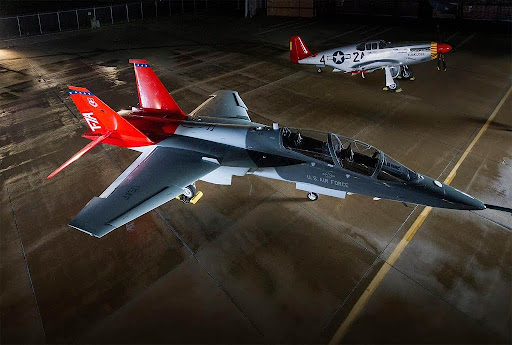
The T-7 Red Hawk by Boeing and Saab represents the future of advanced training. Designed with a digital approach, it is fully compatible with modern fighter systems.
- Performance: This supersonic capable trainer offers advanced maneuverability for real-world combat simulation.
- Digital Design: The cockpit is fully modular, meaning future software or hardware updates are easy to install.
- Training Advantage: Pairs with digital simulator programs for integrated pilot education.
The T-7 Red Hawk’s adaptability shows how aviation is moving toward smarter, interconnected training methods that prepare pilots for upcoming combat aircraft technologies.
THE HONGDU JL-10 AND CHINESE TRAINER DEVELOPMENT
China’s Hongdu JL-10 represents another leap in advanced trainer design. Built to serve both the Chinese and export markets, it provides cost-efficient yet high-performance flight training for the next generation of pilots.
- Capabilities: Can train for both subsonic and near-supersonic flight conditions.
- Systems: Incorporates digital displays and fly-by-wire controls similar to front-line jets.
- Role: Serves as both a training aircraft and light attack platform, supporting air forces that need multi-purpose options.
This model shows how international aviation industries are competing to improve global training systems for new military pilots.
THE KING AIR AND OTHER MULTI-PURPOSE TRAINERS
Not all training happens in jets. Some light aircraft like the King Air play an important part in multi-crew and navigation training. These twin-engine trainers help aircrews learn teamwork, communication, and advanced control operations.
- Practical Use: Ideal for teaching instrument flying, cargo management, and mission planning.
- Flexibility: Can be used for transport, reconnaissance, or air support training.
- Reliability: Proven design with excellent flight range and comfort for extended lessons.
These aircraft show how flight training covers far more than combat. Every part of pilot education—from basic to tactical—relies on aircraft suited to the mission goal.
HOW TRAINER AIRCRAFT IMPACT MODERN AVIATION
Training is the foundation of successful flying. Without proper preparation, pilots cannot safely handle high-performance jets or perform critical missions. Modern trainer aircraft provide a safe and cost-effective bridge between basic flight training and active combat operations.
Here’s how they shape the modern aviation landscape:
- Skill Development: Pilots learn how to manage complex cockpit systems and handle emergency procedures.
- Operational Readiness: By simulating combat aircraft behavior, trainers prepare pilots for real missions faster.
- Cost Efficiency: Using trainers instead of operational jets saves time, fuel, and maintenance costs for air forces.
- Global Cooperation: Aircraft like the l-39 albatross, hawk, and yak-130 are used worldwide, promoting shared pilot standards.
From turboprop models like the tucano to high-end advanced jet trainers, the goal is always the same—to produce capable, confident pilots ready for anything.
The evolution of trainer aircraft proves that pilot preparation remains one of the most critical parts of military strength. As aviation technology advances, so do the systems and aircraft that teach it. Each albatros, hawk, hongdu, or yak-130 represents decades of design, purpose, and passion for flight. And that commitment continues to shape the skies for the pilots of tomorrow.
Conclusion
From the Albatros to the T-7 Red Hawk, the best military trainer aircraft continue to shape skilled pilots who are ready for any mission. Each generation of training aircraft brings sharper precision, smarter systems, and stronger performance—all to prepare pilots for the complex skies ahead.
To explore more about modern aircraft models, flying systems, and aviation updates, visit Flying411.com and stay informed about the best military trainer aircraft available today.
FAQs
1. WHAT IS THE PURPOSE OF A MILITARY TRAINER AIRCRAFT?
A military trainer aircraft helps new pilots learn flight operations, combat tactics, and safety before moving to advanced jet fighters.
2. WHICH IS THE MOST POPULAR MILITARY TRAINER AIRCRAFT TODAY?
The T-7 Red Hawk, M-346 Master, and Yak-130 are among the most widely used modern military trainer aircraft.
3. HOW DOES A TRAINER DIFFER FROM A COMBAT AIRCRAFT?
A trainer is built for learning and safety, while a combat aircraft is designed for missions like air defense or attack operations.
4. WHY DO MILITARY TRAINERS HAVE ADVANCED AVIONICS?
They use advanced avionics to replicate the systems found in real fighter jets, improving pilot readiness and familiarity.
5. WHAT IS LEAD-IN FIGHTER TRAINING?
It’s the stage where pilots transition from basic trainers to advanced jets, learning combat maneuvers and mission skills safely.