
Selling an aircraft can feel exciting, but it also comes with a few things you should understand before you set the sale in motion. One of the biggest areas many owners overlook is the tax side of the process. Taxes can change the numbers you walk away with, especially when you try to figure out what applies to your deal and what doesn’t. A little clarity right now goes a long way later.
Many owners start with the same question: “How will the sale affect me once I file my tax return?” It helps to know that every aircraft sale works differently based on how the plane was used, the purchase price, and your state within the United States. Some states treat a sale as subject to sales tax, while others follow sales and use tax rules. There are also cases where a tax exemption applies, depending on your past aircraft use or the business purpose of the plane.
Before you think about paperwork or marketing the aircraft, it’s good to get a basic picture of how these rules work. This makes it easier to avoid surprises, plan ahead, and feel confident about each step. Once you understand the key points, you can move smoothly into the next part of the process and prepare for a clean transfer of ownership.
WHAT TO KNOW BEFORE YOU START THE SALE PROCESS
Before you begin the sale, take a moment to understand the factors that can influence your tax liabilities. These early checks help you stay organized and avoid surprises when it’s time to close the deal.
TABLE: WHAT TO KNOW BEFORE YOU START THE SALE PROCESS
| Key Factor | Why It Matters | What To Check |
| Purchase Price of the Aircraft | You may owe income tax on profit. | Compare your sale price to your original cost. |
| Use of the Aircraft | Personal or business use changes the tax treatment. | Review logs to show how you used the aircraft. |
| State Where the Aircraft Is Used | Each state has its own tax law and sales tax rate. | Confirm rules in the state where the aircraft is registered or based. |
| Sales or Use Tax Rules | Some states require you to pay a use tax, while others only apply sales tax. | Check if your state has potential use tax obligations. |
| Business Purpose Records | Strong logs support deductions or exemptions. | Make sure any use of a business is documented. |
BREAKDOWN OF KEY DETAILS
Understanding the basics helps you stay in control from the start:
- Some states have a tax rate that applies only when the aircraft is purchased, while others apply a use tax on the purchase when the plane later enters their borders.
- If you use the aircraft for both personal and company flights, your records help you show how the aircraft is used for tax purposes.
- In states with a state with no sales tax, the rules may shift to use tax applies, which can surprise owners who assume tax does not apply at all.
- When your logs show strong business purpose, your tax liabilities may change in your favor.
Paying attention to these points early makes the next steps clearer. Once you know what your state expects and how your aircraft was used, you can plan the sale with confidence.
HOW TO HANDLE CAPITAL GAINS AND SALES TAX FOR YOUR AIRCRAFT SALE
Capital gains and sales tax are two of the most common questions when selling an aircraft. The good news is that both follow clear rules once you understand the basics. Let's break them down.
CAPITAL GAINS
If you sell the plane for more than your purchase price, the profit is a capital gain. The federal income tax you owe depends on your income tax rate and how long you owned the aircraft. A short holding period usually leads to higher tax.
Here’s how to keep the process simple:
- Compare the sale price to what you originally paid.
- Check your receipts, upgrades, and improvements, since these can shift your tax result.
- If the plane had personal use or was used as a business aircraft, this can change your numbers.
When the plane served a business purpose, some owners can adjust the gain due to past depreciation. This is common in aviation, especially when the aircraft helped with a business trip or supported clients. Depreciation recapture may apply, so it helps to know how that works before you file.
SALES TAX AND USE TAX
Next, look at how states handle sales tax on aircraft. Some states apply the tax when you transfer ownership. Others apply sales and use tax rules instead. A few offer exemptions for aircraft used for training or certain types of business.
Here are the simple steps to follow:
- Check the rules in the state where the aircraft is based.
- Confirm if your deal is subject to use tax or if sales tax does not apply.
- Some states let you avoid the sales tax if the exemption applies, such as when the aircraft will be used for interstate operations.
- If you move the plane to another state, the new location may say you must pay use tax or must pay tax if the aircraft may now fall under their rules.
Keep in mind that tax may vary based on your use of the aircraft, the value of the aircraft, and the tax applied at the time of the transfer. A few states even have personal property tax that comes later.
By reviewing the rules early, you can plan for your tax payment and stay ahead of any tax implications tied to your sale.
WHAT HAPPENS AFTER YOU CALCULATE YOUR TAXES FOR THE AIRCRAFT SALE
Understanding what happens after you look at your tax details helps you stay calm during the final steps of the sale of an aircraft. Many owners feel unsure at this stage because they worry about missing something important. You can make this part easier by looking at the deal one step at a time and keeping your records clean and clear.
The first thing most owners look at is their past use. The use of an aircraft plays a big role in how the numbers come out. A plane used mostly for weekend trips will look different from a plane used for company flights. Some owners even find that the plane’s use across the tax year changes which rules matter most.
It also helps to think about how the aircraft was acquired. For example, a purchase of an aircraft made for regular trips can create a different outcome than a new aircraft bought for a company. The reason behind this is simple. States and the federal government do not treat every situation the same. Some states look at each aircraft in a state and ask for proof of use. Others focus more on the location of the buyer or seller.
Here are a few points that help you stay organized:
- Track your expenses from the beginning of your aircraft transaction.
- Write down how you planned to buy an aircraft and how you actually used it later.
- Keep your logs updated so the numbers match the story of your plane.
Once the basics are clear, you can focus on the most common parts of the review. These include how the plane was used, what you originally paid, and if the aircraft helped with any business activity. You also want to note any changes between the time you made the aircraft purchase and the date of the sale. These shifts can change your final results.
Some owners also look closely at state rules. For example, a state may ask you to pay a sales tax or pay the use tax, depending on how long the aircraft stayed there. A simple example is when a plane sits at a local airport for months. The state may say use tax may apply if the plane stayed long enough to count as presence.
Another thing to think about is how the plane’s purpose fits the sale. If you used the plane as aircraft for personal travel, your numbers will stay simple. But if the plane also supported company flights, even once in a while, you may need to show how you handled that part of your logs. This is where an aircraft owner sometimes finds new details they didn’t expect.
A few states also look at more specific items. For example, they may check if the aircraft was part of a business of selling transportation services. Or they may check if the plane helped with flying employees for work. These details can shape the way tax based rules apply.
Each state handles rules differently, but most follow a similar pattern. They look at where the plane is kept, how it is used, and how the owner benefits from the plane. The rules for an aircraft purchased for resale can look different again because some states offer exceptions for these deals.
When you organize your notes early, you avoid stress later. The whole process feels more manageable when you know what each part means and how it ties to your final numbers.
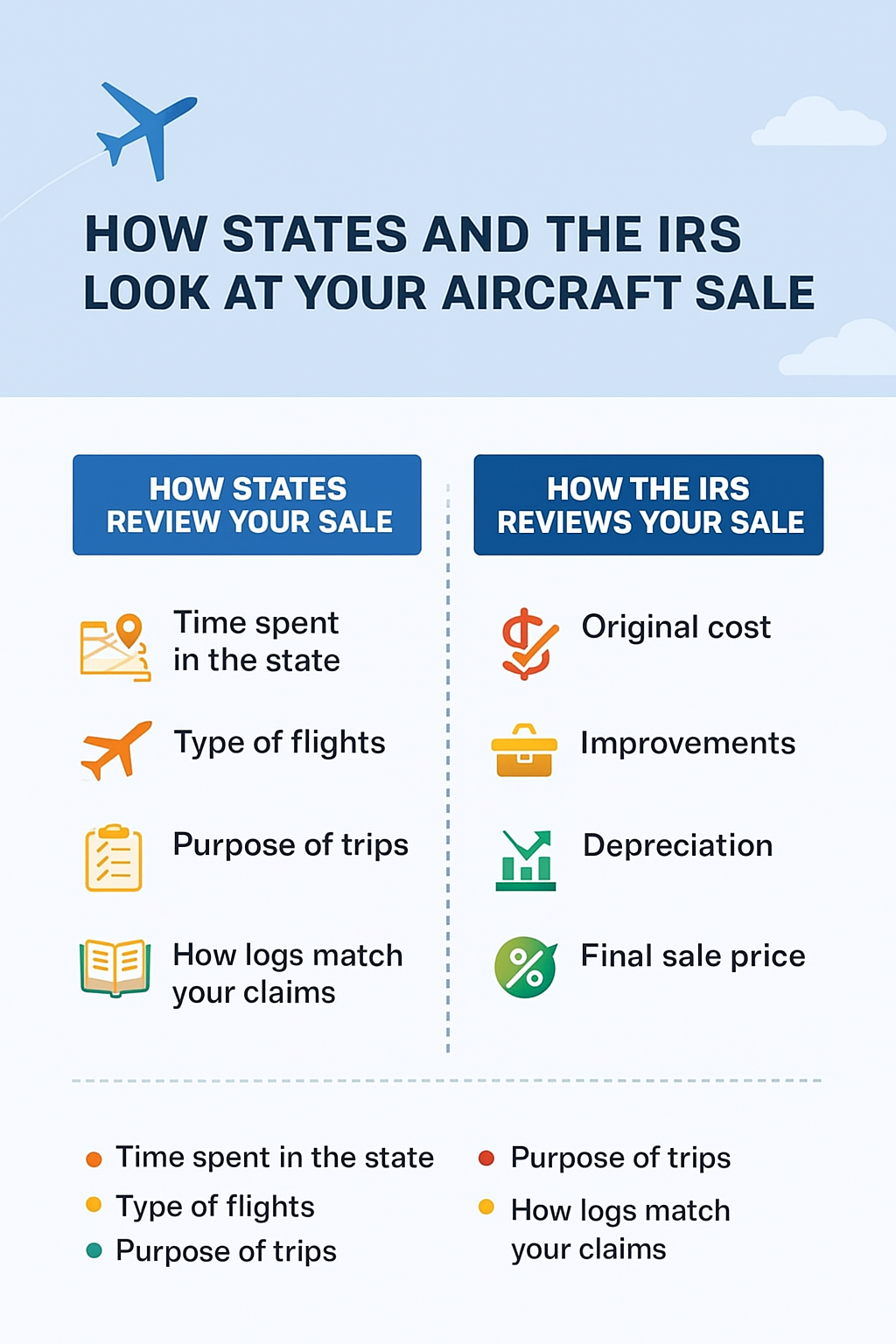
HOW STATES AND THE IRS LOOK AT YOUR AIRCRAFT SALE
States and federal agencies look at your sale in different ways. Understanding both sides helps you stay ahead of any tax issues. Many owners think the rules are confusing, but the steps make sense when you break them down and follow them slowly.
HOW STATES REVIEW YOUR SALE
States look at use, purpose, and location. If you do business in a state, the rules may ask you to show how you used the plane. Even when you prepare to purchase your aircraft, the state wants to know how you planned to use it. When you later decide on selling aircraft, the state compares records from both ends.
The location of the plane matters because a state wants to confirm that your aircraft must meet the rules for presence. A plane that sits in a hangar for months may count as aircraft in a state even if you only fly through now and then. This is why keeping a simple log helps so much.
Here are common items states review:
- Time spent in the state
- Type of flights
- Purpose of trips
- How logs match your claims
If you use the plane as aircraft for business purposes, the state may check your business records. If it was aircraft for personal purposes, the review may be easier.
Some owners also look at how each rule applies to their type of plane. If you are in the business of selling aircraft, you may qualify for different options. Certain states treat these deals differently because of the nature of your work.
Another point to watch is the fair value. Some states apply a tax on the fair market value during transfers. This usually applies when a plane moves between states or when a state reviews use over time. A sudden jump in value may lead to a new review.
HOW THE IRS REVIEWS YOUR SALE
The IRS looks at income, use, and timing. They want to confirm your final gain or loss. If you plan to purchase an aircraft, the IRS does not look at your numbers until you sell. But once you do, they review every part of the deal.
Key items include:
- Original cost
- Improvements
- Depreciation
- Actual use
- Final sale price
If the sale creates a gain, tax would fall under income rules. If the gain is large, tax would be due based on your bracket. The IRS looks for clear records and will check if your numbers match the story of the plane.
Another point to check is the tax on the purchase price. This number helps set your basis. A clean basis makes your final gain easy to calculate. If your basis is too low or too high, you may get questions later.
SPECIAL SITUATIONS TO WATCH
Some cases get more attention because of how the plane was used. Here are simple examples:
- Planes leased to companies
- Planes used partly for training
- Planes moved between states
- Planes used for both personal and business flights
If you lease the plane, some states look at sales tax on the lease or tax on the lease payments. These amounts may change your final outcome. If you operate across borders, rules for state and federal tax may both apply.
Some states also look at rules for sales tax on the lease when a lease ends and the owner decides to sell. This can sometimes result in significant tax if the numbers do not match the expected pattern.
HOW TO KEEP THE PROCESS SIMPLE
You can make this process easier by following a few steps:
- Keep clean logs of every flight
- Track the purpose of each trip
- Save receipts and maintenance records
- Save all documents from the purchase of an aircraft
- Stick to simple language in your notes
These habits help you handle questions with confidence. They also keep the process clear when you work with a tax professional.
If you ever feel unsure, look for a guide for purchasers of aircraft or sellers. These guides explain rules for each state and help you know what to expect. They also make it easier to understand the way aircraft tax rules differ between states.
In some cases, you may also deal with aviation tax rules that apply to specific operations. These are less common but can apply when the plane helps with commercial work.
This simple approach helps you stay ready and gives you a steady plan as you move through the sale. If you stay organized, your sale will feel more predictable, and your final numbers will be easier to understand.
CONCLUSION
Understanding your tax responsibilities helps you move through your sale with confidence. When you know how capital gains, sales tax, and state rules work, you can handle each step in a calm and steady way. Good records and simple planning make the whole deal easier from start to finish.
If you want help with the next steps or need support during your sale, visit Flying411 to learn more about the full process and the tax implications when selling an aircraft.
FAQS
1. WHAT RECORDS SHOULD I KEEP FOR MY AIRCRAFT SALE?
Keep logs, receipts, and past tax documents so you can show how the plane was used and support your final numbers.
2. CAN I REDUCE MY TAX BILL BY MOVING THE AIRCRAFT TO ANOTHER STATE?
Sometimes, but it depends on the rules. Each state treats tax differently, so always check before you move the plane.
3. DOES USING MY AIRCRAFT FOR TRAINING CHANGE MY TAX RESULT?
It can. Some states offer special exemptions for training use, depending on how the activity is documented.
4. HOW DO I KNOW IF MY AIRCRAFT QUALIFIES FOR AN EXEMPTION?
Check your state’s rules. Some exemptions depend on business use, training activity, or the type of flights you flew.
5. WHO CAN HELP ME REVIEW MY TAX SITUATION BEFORE I SELL?
A tax advisor who understands aviation can review your details and help you prepare for the sale with confidence.